
 Worksheets
May 6th, 2022
Total questions: 164
Worksheet time: 3hrs 44mins
What is the definition of influence?
to have an effect on someone or something
to symbolize something
to describe something
to characterize something
What is the definition of characterize?
Characterize means to describe someone or something.
Characterize means to eat pizza.
Characterize means to represent or stand for something else.
Characterize means to have an effect on someone.

What does the Statue of Liberty do?
The Statue of Liberty symbolizes new beginnings.
The Statue of Liberty evaluates new beginnings.
The Statue of Liberty characterizes new beginnings.
Select the definition of symbolize.
To describe someone or something.
To represent or stand for something.
To carefully judge someone or something.
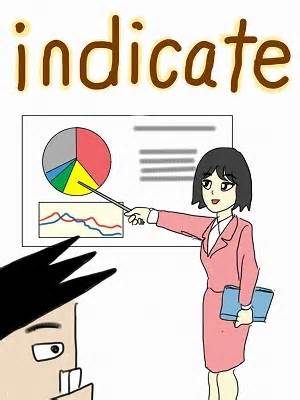

When a STAAR reading question asks you about what something 'suggests', it is referring to what the detail...
hints at, or causes one to think.
explains using examples.
show is important.
concludes.

Alex is lucky to be alive
Alex's car was damaged badly
Alex was crying after the accident
Alex injured more than just his legs

Alex lost both of his legs in the crash.
Alex used a specialized car with a hand break.
Alex became a hand cyclist and competed in competitions.
Alex had ups and downs during his racing career.

remarkable
pleasing
believable
similar

became less and less active over time
is a determined person
is using a wheelchair to get from place to place
was better at race car driving than hand cycling

Be the best at whatever you do.
Winning isn't always the most important thing.
Some things are too hard to face.
Don't give up just because something is difficult.

how much time he spent in the hospital
how he got his name
how long it took him to return to racing
how to compete in hand cycling events

He began using a specialized car with a hand break.
He started a sport and won medals.
He lost his legs in a tragic accident.
He became a successful race car driver.

the title
the first paragraph
The Crash
Return with a Vengeance

describe what Alessandro Zanardi looks like
inform the reader about the life of Alessandro Zanardi
tell the reader about a race car driver who enjoyed sports
encourage the reader to begin a new sport

In a race, Alex spun out in front of another driver and almost lost his nose.
Alex caused another driver to get in a wreck, and he barely survived.
Alex had a terrible accident at the Euro Speedway Lausitz and lost both his arms.
Alex had a horrible accident on the track that caused him to lose both his legs and changed his life forever.
In 2012, a group of scientists were exploring a rain forest in South America when, all of the sudden, they heard a familiar noise. It was the sound of frogs! When they shined their flashlights in the direction of the noise and found a tiny frog, the frog had large eyes and bright-green colored skin. However, it had one very interesting feature. The skin on its belly was so clear that the scientists could see its organs! Because it had transparent skin, the scientists knew it was a type of glass frog. They had never observed a frog like this in their previous research. “It was amazing,” said Charles Austin, one of the researchers who discovered the frog. “We had a feeling this was a species new to science.”
The author’s purpose in writing the paragraph above is to--
explain why glass frogs have certain features.
describe how scientists discovered a new species of frog.
convince readers to help protect the glass frog’s environment.
entertain the reader with fun facts about glass frogs.
If an author wanted a detail or concept to show as important they may want to put extra _________________ on it by writing it in bold text or underlining it.
contribute
emphasis
suggest
imagery
When something benefits something else it is ...
not good.
strange.
helpful.
using the 5 senses.
A viewpoint can represents the __________________of an author.
question
plot
summary
thinking or mindset
When looking at a graded paper, an X usually _______________ a wrong answer.
indicates
helps
contributes
suggests
Conversation between characters in a story is an author's use of _____________________ and will usually include quotations marks.
inference
dialect
emphasis
dialogue
Sensory language is used by an author to show...
what something was before it changed.
a decision.
what something smells like, looks like, sounds like, feels like, or how it tastes.
a good result.
What is the definition of influence?
to have an effect on someone or something
to symbolize something
to describe something
to characterize something
What is the definition of characterize?
Characterize means to describe someone or something.
Characterize means to eat pizza.
Characterize means to represent or stand for something else.
Characterize means to have an effect on someone.
What does the Statue of Liberty do?
The Statue of Liberty symbolizes new beginnings.
The Statue of Liberty evaluates new beginnings.
The Statue of Liberty characterizes new beginnings.
Select the definition of symbolize.
To describe someone or something.
To represent or stand for something.
To carefully judge someone or something.
If an author wanted a detail or concept to show as important they may want to put extra _________________ on it by writing it in bold text or underlining it.
contribute
emphasis
suggest
imagery
When something benefits something else it is ...
not good.
strange.
helpful.
using the 5 senses.
A viewpoint can represents the __________________of an author.
question
plot
summary
thinking or mindset
When looking at a graded paper, an X usually _______________ a wrong answer.
indicates
helps
contributes
suggests
Conversation between characters in a story is an author's use of _____________________ and will usually include quotations marks.
inference
dialect
emphasis
dialogue
Sensory language is used by an author to show...
what something was before it changed.
a decision.
what something smells like, looks like, sounds like, feels like, or how it tastes.
a good result.
Illustrate does not always mean to draw a picture, it could also mean to...
explain with examples to help the reader understand a message or idea.
show importance.
make a decision based on prior knowledge.
talk someone into something.
To make something clear and understandable is to...
suggest it.
contribute it.
clarify it.
factor it.
When a STAAR reading question asks you about what something 'suggests', it is referring to what the detail...
hints at, or causes one to think.
explains using examples.
show is important.
concludes.
A reference to a famous person, place, event, or work of literature
allusion
analogy
myth
The text of a play, film, or broadcast
structure
dialogue
script
A brief statement or account of the main points of something
summary
allusion
inference
A point-by-point comparison between two things that are alike in some respect
analogy
theme
allusion
Language that communicates meanings beyond the literal meanings of words
literary elements
elements of a story
figurative language
Not influenced by personal feelings or opinions in considering and representing facts
inference
objective
summary


problem, issue, cause, since, consequently, therefore, as a result
similar, alike, same, both, just like, different, unlike, in contrast, on the other hand
before, in the beginning, to start, finally, during, in the middle, after
To explain something to create a mental image in the reader’s mind - especially focusing on the five senses.
analyze
infer
summarize
describe
To make something clear by giving reasons
infer
persuade
cause
explain
onomatopoeia
This salad is sensational.
My heart isn't in it.
I haven't seen him in years.
Brrr! It's cold.
First-person point of view
You open your eyes and stretch.
He yawned and sat up in bed.
"Don't be late," his mom reminded.
I cannot believe the weekend's over.
What is fully and clearly expressed or demonstrated; leaving nothing merely implied?
Delineate
Infer
Explicit
Context
What is a movement, passage, or change from one position, state, stage, subject, concept, etc., to another?
Evaluation
Transition
Analogy
Deconstruction
To form by combining parts or elements; to bring together information from multiple source is called what?
Analyze
Infer
Synthesize
Evaluate
Stereotyping-
Persuades the audience to support the cause or buy their product due to the positive or negative results that could/will take place.
Unfairly suggests that all members of the group are the same.
A kind of extended metaphor or long simile in which an explicit comparison is made between two things (events, ideas, people, etc.).
Is the power or right to give orders, make decisions, and enforce obedience.
Which statement is an example of stereotyping?
People who speak french are usually from France.
All teachers get summer vacations.
All pit-bull dogs are aggressive.
Math is the most difficult subject to learn in middle school.

The person who writes the play is the...
director
stage
playwright
Implicit is:
When the narrator is in first person
When the answer isn't in the text at all
When the answer is hidden in the text
When the answer is obvious in the text
Explicit is:
When the answer is obvious in the text
When the answer isn't in the text at all
When the answer is implied in the text
When the narrator is in first person

STAAR Question: How does the setting advance the plot?
What is this question asking you to do?
To choose the answer choice that explains how the setting of the story is causing the plot to move forward.
To choose the answer that shows how the character's actions are causing the plot of the story to move forward.
To choose the answer choice that shows how the mood is causing the plot of the story to move forward.
To choose the answer choice that explains how the conflict is causing the plot of the story to move forward.
STAAR Question: How does the setting influence the plot of a story?
How is influence being used in this sentence?
beginning
effect
determine
apply
STAAR Question: What is the significance of the crowd returning at lunchtime to watch Maniac?
How is the word "significance" being used in this sentence?
problem
synonynm
order
importance
STAAR Question: What is the most likely reason the poet used capitalization in line 6?
What skill are you being asked to use in this question?
correct usage of writing conventions
graphical or visual elements
theme
conflict
STAAR Question: Paragraph 7 mainly focuses on ----
What skill are you being asked to use for this question?
main idea
summary
conflict
context clues
STAAR Question: The author organizes this selection by ----
What skill are you being asked to use in this question?
main idea
text structure
conflict
supporting details
STAAR Question: Which sentence from the selection states an opinion?
Which two of the following strategies will help you determine the answer to this question?
Reread the entire selection and separate all facts from opinion.
Write a summary of the selection.
Read the answer choices and look for opinion words such as: definitely, obviously, clearly, unfair.
Read the answer choices and mark the opinions with 'O' and the facts with 'F' next to each answer choice
STAAR Question: What does the break between stanzas 2 and 3 help the poet convey?
What skill are you being asked to use in this question?
figurative language
theme
graphical elements
tone
STAAR Question: The abrupt dialogue in the poem helps convey the idea that the characters are ----
How is the word abrupt being used in this sentence?
short or choppy dialogue
long or expanded dialogue
STAAR Question: The playwright uses the sounds of rain and thunder throughout selection mainly to ----
What is a playwright?
author of a poem
author of nonfiction text
author of dramas
STAAR Question: The author begins and ends the selection with this idea in order to emphasize that ----
Which of the following is the best synonym for the word emphasize?
determine
conclude
point out
STAAR Question: What lesson does the narrator learn while spending time with her grandmother?
What skill are you being asked to use in this sentence?
main idea
theme
conflict
character motivation
STAAR Question: Which sentence from the blog entry is an example of stereotyping?
What is stereotyping?
being racist against someone
denying someone the same rights
making a general statement about a group of people that is usually untrue
a type of font being used
What is the action for the testing strategy 'P' in PROVS?
There may be more than one correct answer.
make a specific PAT list
highlight the key words in the questions
highlight the answers
make a short list of key words
What is the action for the testing strategy 'O' in PROVS?
There may be more than one correct answer.
eliminate all answer choices
eliminate the two ridiculous answers first to narrow your choices down to a 50-50 opportunity
eliminate the distractor by identifying the incorrect minor details
choose only the correct answer
What is the action in the testing strategy 'R' in PROVS?
read the passage carefully, annotate with #hashtags, and highlight ideas from the PAT list
read the passage quickly, annotate with #hashtags, and highlight ideas from the PAT list
read the passage after previewing the questions and annotate with #hashtags
read the passage
What is the action in the testing strategy 'V' in PROVS?
verify the answer in the passage
verify the answer in the passage by highlighting the question and writing Q1, Q2, Q3, etc.
verify the answer in the passage by highlighting the answer and writing Q1, Q2, Q3, etc.
verify the answer in the passage by writing Q1, Q2, Q3, etc.
What is the action for the testing strategy 'S' in PROVS?
There may be more than one correct answer.
write a general statement
write a specific statement to defend why my answer choice is right
write a specific statement to defend why the other choices are wrong
write a general statement of defense with a #hashtag
The long hike up to the mountains was grueling.
Using your context clues, which is a synonym for grueling?
loud
easy
tiring
short

Look at the following picture.
Based on the context clues, what does the word affable mean?
good-natured
hostile
conversational
favorable
Which of the following is included in a summary?
only important details supported by the text that follow the BME structure
only interesting details supported by the text that follow the BME structure
only supporting details supported by the text that follow the BME structure
only minor details supported by the text that follow the BME structure
What is a commonplace assertion?
a statement that can always be proven true
a statement of personal belief, feeling, or thought
a statement that many people assume true, but is not always true
a statement of defense by the answer choice
What is a claim?
a statement that be proven with text evidence
a statement that many people assume to be true, but is not always so
a statement of personal belief, feeling, or thought
a statement of defense by the answer choice
Where can you find the main idea in a passage?
in the last paragraph
in the passage
in the first paragraph
in the title
Which strategy will you use during the STAAR Reading?
Choose all that will help you master the STAAR.
Preview the question and create a PAT list
Read the passage carefully, annotate with #hashtags, and highlight ideas from the PAT list
Eliminate the ridiculous and the distracting answer choices with careful consideration
Verify your answer choices with textual evidence by highlight the answer and writing Q# by the word, phrase, or line
Write a statement or #hashtag carefully defending why your answer is correct or why the other choices are incorrect

