wayground logo

Free Printable Worksheets

NEW

Font size

S
M
L
XL
Worksheets

Final review cyber

Total questions: 55

Worksheet time: 2hrs 21mins
Name
Class
Date
1.
According to Boyle's law of PV, at constant temperature, as the pressure of a given sample of gas is increased, the volume will –
a)
Increase
b)
Decrease
c)
Remains the same
2.
If a balloon is cooled what will happen to the volume?
a)
Volume will increase
b)
Volume will decrease
c)
Volume will not change
3.
Which of the following would increase the (gas) pressure of a system?
a)
Increase the Temperature
b)
Pump in more gas
c)
Decrease the volume
d)
All of these
4.
You have a gas that has a pressure of 2 ATM and a volume of 10L.  What would be the new volume if the pressure was changed to 1 ATM?
a)
5 L
b)
20 L
c)
It would stay at 10L
d)
1 L
5.
A gas of volume V is placed in a balloon. The absolute (Kelvin) temperature is tripled. The volume will be _____ what it was originally. 
a)
1/3
b)
1/6
c)
3 times
d)
6 times
6.
Using the ideal gas law and the ideal gas constant what information do you need to determine the volume of the gas if you know the pressure and the temperature?  
a)
the molecular mass of the gas 
b)
the number of moles of the gas
c)
the density of the gas 
d)
the percentage composition of the gas 
7.

Three gases are mixed together in a container with a total pressure of 4.8 atm. If two of the gases have pressures of 1.2 atm and 1.5 atm, what is the pressure of the third gas?

a)

2.5 atm

b)

1.8 atm

c)

2.1 atm

d)

1.3 atm

8.
In order to convert to Kelvin, you add ______ to the Celsius measurement.
a)
372
b)
273
c)
237
d)
732
9.

Calculate the volume that a 0.323-mol sample of a gas will occupy at 265 K and a pressure of 0.900 atm R = 0.082 L*atm/mol K

a)

7.18 L 

b)

7.81 L

c)

4.63 L

d)

4.36 L

10.

The potential energy diagram of a reaction is shown. Which statement below is correct relating to this reaction?

a)

#1 represents the enthalpy change for this exothermic reaction.

b)

#2 represents the enthalpy change for this endothermic reaction.

c)

#3 represents the enthalpy change for this endothermic reaction.

d)

#4 represents the enthalpy change for this exothermic reaction.

11.

During an exothermic reaction, heat content in the surroundings increases because

a)

heat energy is destroyed during reactions

b)

the reaction absorbs heat energy

c)

the energy contained in the reactants is lower then the products

d)

the energy contained in the products is lower than the reactants

12.

The diagram represents two solids and the temperature of each. What occurs when the two solids are placed in contact with each other?

a)

Heat energy flows from solid A to solid B. Solid A decreases in temperature

b)

Heat energy flows from solid A to solid B. Solid A increases in temperature

c)

Heat energy flows from solid B to solid A. Solid B decreases in temperature.

d)

Heat energy flows from solid B to solid A. Solid B increases in temperature.

13.

The amount of heat energy required to change the temperature of 12 g of gold from 45°C to 15°C is -47 J. What is the specific heat capacity of gold?

a)

0.13 J/(g°C)

b)

17,000 J/(g°C)

c)

1600 J/(g°C)

d)

0.065 J/(g°C)

14.
Refer the the following question:
2N2 + 3H2 --> 2NH3 + 46 kJ
How much energy would be produced if only 1 mol of nitrogen was reacted?
a)
92 kJ
b)
0.143 kJ
c)
23 kJ
d)
15 kJ
15.
How much energy must be used to produce 4.75 mol of gaseous water?
H2O (l) +  44.0 kJ --> H2O (g)
a)
207 kJ
b)
9.36 kJ
c)
206.8 kJ
d)
9.362 kJ
16.

During an endothermic reaction in a beaker if we are part of the surroundings and touched the beaker, it would feel _______.

a)

Warm

b)

Cold

c)

Bubbly

d)

Damp

17.
H2 + Cl2 --> 2 HCl + 1845 kJ
Is this reaction endothermic or exothermic?
a)
Endothermic 
b)
Exothermic
18.
If a 8.50g ice cube at -10o C sits out on the counter, completely melts, and then warms to room temperature (25o C) how much energy did the ice cube absorb? Use C = 2.108 J/goC for ice, C = 4.184 J/goC for water, and Hf = 334 J/g.
a)
179.18 J
b)
2839 J
c)
889.1 J
d)
3907.3 J
19.

Which part of an atom is used to identify it?

a)

number of protons

b)

number of neutrons

c)

number of electrons

20.

The atomic mass of an atom is equal to

a)

number of protons plus number of neutrons

b)

number of protons plus number of electrons

c)

number of electrons plus the number of neutrons

21.

How many protons does sulfur have?

a)

32

b)

16

c)

48

d)

12

22.
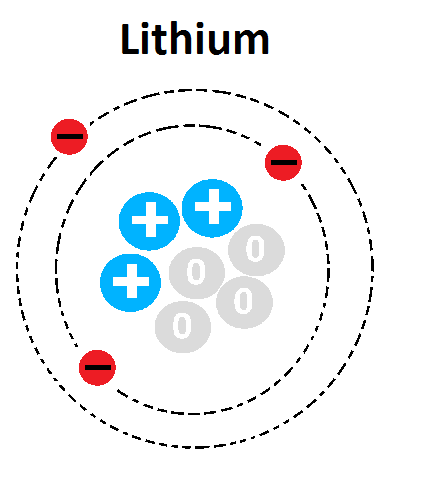
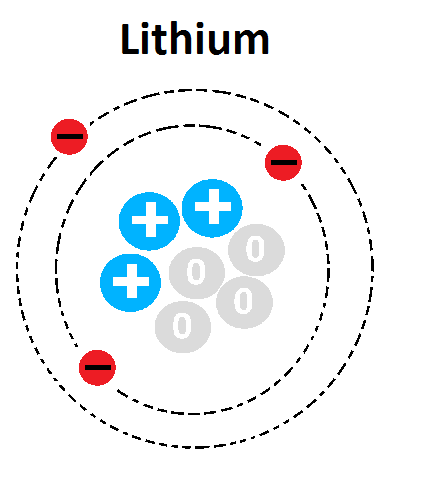
What is the atomic number of this atom?
a)
1
b)
3
c)
4
d)
7
23.

What is the atomic mass of this atom?

a)

1

b)

3

c)

4

d)

7

24.
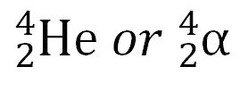
What do these symbols represent?
a)
alpha particle
b)
beta particle
c)
neutron
d)
gamma ray
25.
How many protons are in this atom?
a)
3
b)
4
c)
6
d)
10
26.
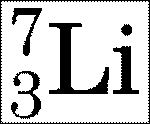
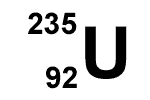
How many neutrons are in this isotope of Uranium?
a)
235
b)
92
c)
327
d)
143
27.
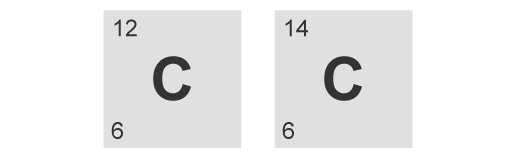
How are these isotopes different?
a)
Different atomic numbers
b)
Different number of protons
c)
Different number of neutrons
d)
Different number of electrons
28.
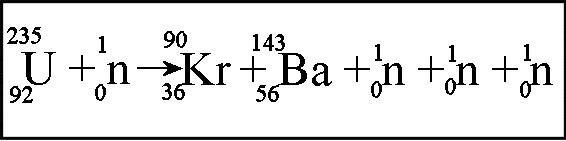
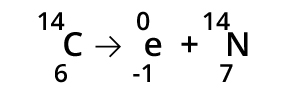
What process is modeled by the equation?
a)
alpha decay
b)
beta decay
c)
fission
d)
fusion
29.
What process is modeled with this equation?
a)
alpha decay
b)
beta decay
c)
fission
d)
fusion
30.
What is the mass number of at isotope that has 20 protons, 21 neutrons and 18 electrons?
a)
18
b)
20
c)
21
d)
41
31.
What type of nuclear equation is this?
a)
fusion
b)
fission
c)
alpha
d)
beta
32.
What happens to the atomic number during alpha decay?
a)
The atomic number decreases by 4
b)
The atomic number increases by 1
c)
The atomic number decreases by 2.
d)
The atomic number stays the same.
33.
Balance the following equation:
146C --> 0-1e + ________
a)
145B
b)
146C
c)
147N
d)
42He
34.
If we start off with element 5024X after an beta decay we get another element Y that looks like
a)
5023Y
b)
4622Y
c)
5025Y
d)
5024Y
35.
If we start off with element 5024X after an alpha decay we get another element Y that looks like
a)
5022Y
b)
 4622Y
c)
4820Y
d)
5426Y
36.
The half-life of Zn-71 is 2.4 minutes. If one had 100.0 g at the beginning, how many grams would be left after 7.2 minutes has elapsed?
a)
100.0g
b)
50.0g
c)
12.5g
d)
8.5g
37.
Barium-122 has a half-life of 2 minutes. A fresh sample weighing 80 g was obtained. If it takes 10 minutes to set up an experiment using barium-122, how much barium-122 will be left when the experiment begins?
a)
0.25g
b)
2.5g
c)
25g
d)
80g
38.
What atom matches this electron configuration?
1s22s22p63s23p64s23d10
a)
Zinc
b)
Copper
c)
Nickel
d)
Germanium
39.
What electron configuration matches an oxygen atom?
a)
1s22s22p63s2, 3p64s23d104p5
b)
1s22s22p4
c)
1s22s22p6
d)
1s22s22p63s23p64s23d1
40.
What is this element?
1s22s22p63s2
a)
Neon
b)
Magnesium
c)
Aluminum
d)
Potassium
41.
What is the maximum number of electrons that an orbital can have?
a)
1 electron
b)
2 electrons
c)
3 electrons
d)
4 electrons
42.
How many valence electrons are represented here?
a)
7
b)
5
c)
2
d)
8
43.
How many valence electrons does Chlorine have?
a)
5
b)
2
c)
7
d)
5
44.
Which element is pictured?
a)
neon
b)
fluorine
c)
magnesium
d)
argon
45.
Which element has the smaller atomic radius: potassium (K) or bromine (Br)?
a)
potassium (K)
b)
bromine (Br)
46.
Which element has the greatest ionization energy: Aluminum (Al)    or    Chlorine (Cl)?
a)
Aluminum (Al)
b)
Chlorine (Cl)
47.
Atoms that have a high electronegativity, _______________.
a)
give up their electrons more easily.
b)
hold on to their electrons more tightly.
c)
have more electron shells.
48.

Which is the correct molecular structure for carbon dioxide?

a)
b)
c)
d)
49.
Which of the following is the correct Lewis structure for the compound PBr3?
a)
structure A
b)
structure B
c)
structure C
d)
structure D
50.

The electrons in a POLAR covalent molecule are shared...

a)

Evenly

b)

Unevenly

c)

Electrons are not shared

51.

Bohr discovered that electrons are located in

a)

the nucleus

b)

inside protons

c)

electron cloud

d)

circular orbits around the nucleus

52.

The smallest particle of an element that still represents that element.

a)

Nucleus

b)

electron

c)

proton

d)

atom

53.
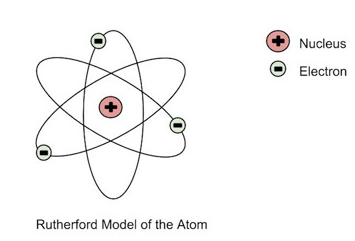
Rutherford's gold foil experiment provided evidence that...
a)
negative and positive charges are spread evenly throughout the atom.
b)
alpha particles have a positive charge.
c)
gold is not a dense as previously thought.
d)
there is a dense positively charged nucleus at the center of an atom.
54.

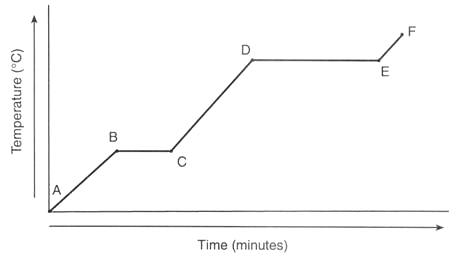
Is the substance gaining or losing energy?

a)

Gaining

b)

Losing

55.
A substance's heating curve is shown in the graph.  What is its boiling point?
a)

100 C

b)

60 C

c)

-60 C

d)

-100 C