

wayground logo

Free Printable Worksheets

Font size

S
M
L
XL
Worksheets

History STAAR People

Total questions: 100

Worksheet time: 1hrs 22mins

Name
Class
Date
1.
Born in England, I was a Quaker.  I wrote "No Cross, No Crown, and Innocency with Her Open Face," which I wrote in prison. 
a)
William Penn
b)
John Calhoun
c)
James Monroe
d)
William Carney
2.
As a French officer, I helped Americans fight against Great Britain.  I was a good friend to George Washington and became an honorary US citizen.
a)
Jean LaFitte
b)
Charles de Montesquieu
c)
Frere Jacques
d)
Marquis de Lafayette
3.
I am known as the "Father of American Democracy" and aided in the adoption of the Fundamental Orders of Connecticut in 1639.  
a)
Thomas Hooker
b)
Thomas Jefferson
c)
Thomas Jackson
d)
Thomas Blackstone
4.
I was arrested for fighting for women's suffrage.  The 19th Amendment was renamed after me.  
a)
Susan B. Anthony
b)
Mercy Otis Warren
c)
Sacagawea
d)
Ann Hutchison
5.
I was involved in the Missouri Compromise of 1850.  I ran for President 3 times but was never elected.  
a)
Alexander Hamilton
b)
Dred Scott
c)
John Paul Jones
d)
Henry Clay
6.
My most famous quote is "Give me Liberty or give me death."  
a)
John Paul Jones
b)
Alexander Hamilton
c)
John Wilkes Boothe
d)
Patrick Henry
7.
Why did the PILGRIMS and PURITANS come to America?
a)
gold
b)
slaves
c)
tobacco
d)
religious freedom
8.
"Father of the Constitution"
a)
George Washington
b)
Crispus Attucks
c)
James Madison
d)
Thomas Jefferson
9.
Who wrote Uncle Tom's Cabin, a book about the cruelties of slavery in the South?
a)
Susan B. Anthony
b)
Anne Hutchinson
c)
Clara Barton
d)
Harriet Beecher Stowe
10.
First black citizen to be elected to the US Senate (1870 - 1871) 
a)
Fredrick Douglas
b)
Hiram Rhodes Revels
c)
Harriet Tubman
d)
Crispus Attucks
11.
The first political parties in the United State were established in the 1790s largely because of political differences between--
a)
John Adams and Benjamin Franklin
b)
Alexander Hamilton and Thomas Paine
c)
George Washington and James Madison
d)
Thomas Jefferson and Alexander Hamilton
12.
Who wrote the reading Common Sense in an attempt to persuade public opinion?
a)
Thomas Hooker
b)
Thomas Paine
c)
Eliza Pickney
d)
none of the above
13.

Who is this person from US History?

a)

JFK

b)

Franklin Roosevelt

c)

Teddie Roosevelt

d)

Frederick Douglas

14.
What was the name of the first African American killed at the Boston Massacre?
a)
Crispus Attucks
b)
Wentworth Cheswell
c)
Andrew Jackson
d)
Frederick Douglas
15.

Dorthea Dix

a)

Fought for women's right to vote

b)

Fought for prison reform and better treatment of the mentally ill

c)

Fought for education reform and children's rights

16.

Dred Scott v. Sandford

a)

Supreme Court ruled that slaves were property and not citizens

b)

Supreme Court ruled that slaves were freemen and could not be owned

c)

Supreme Court ruled that children of slaves were born free
17.

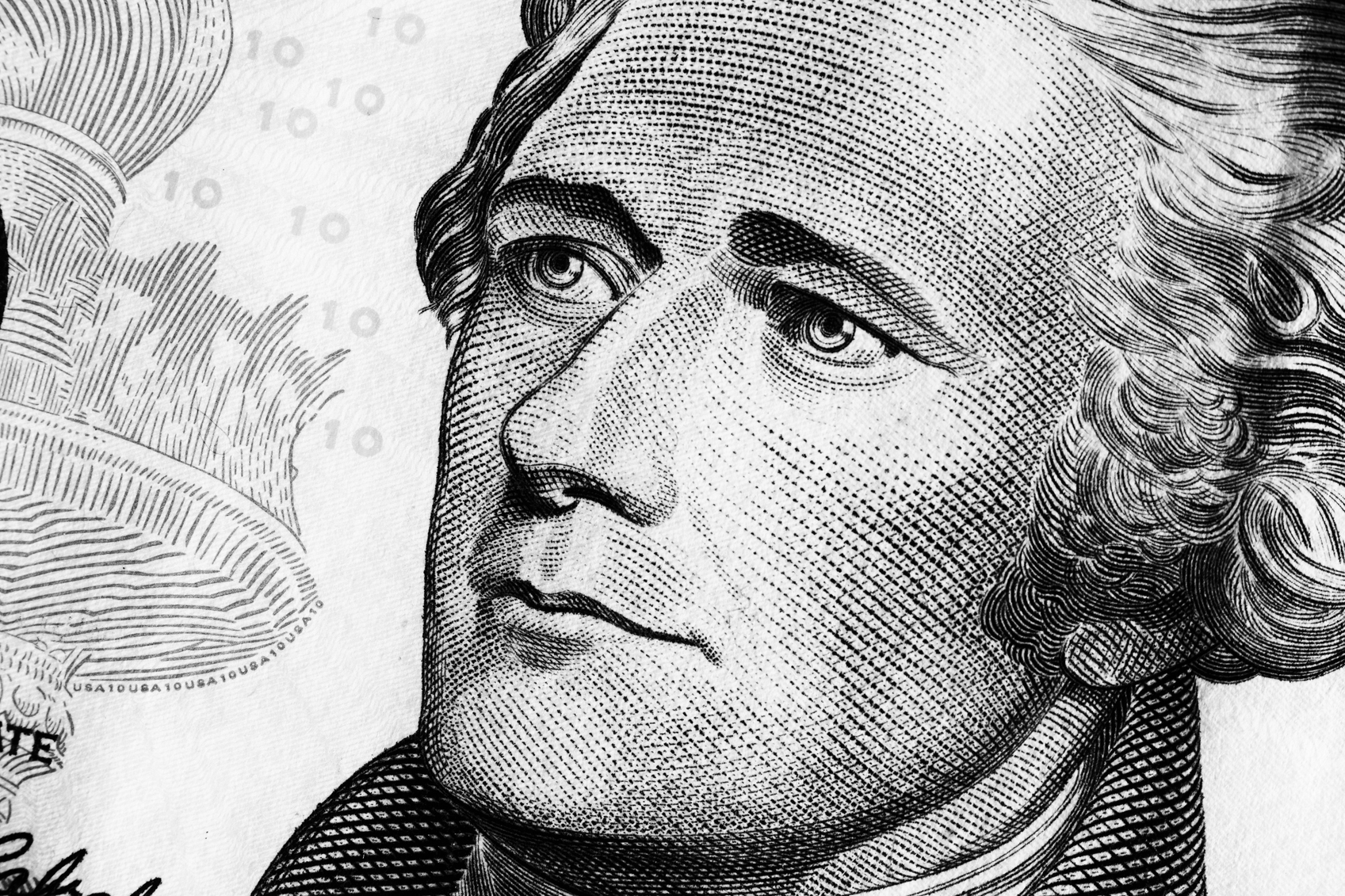
Who is known as the leader of the Federalists?

a)

Alexander Hamilton

b)

John Adams

c)

Patrick Henry

d)

Benjamin Franklin

18.
Roger Williams was famous for ...
a)
Creating the colony of Rhode Island after he was forced to leave Massachusetts
b)
Stealing American Indian lands
c)
Forcing people to practice Puritanism strictly
19.
In his Farewell Address, George Washington advised against what?
a)
Forming alliances with other countries
b)
Angering Native Americans
c)
Going to war with Spain
d)
Electing Thomas Jefferson
20.
How did Jefferson double the size of the United States in 1803?
a)
The Louisiana Purchase
b)
The purchase of California
c)
The Treaty of Ghent
21.
Francis Scott Key wrote the words to a famous song during the War of 1812,  What was the song?
a)
Yankee Doodle Dandy
b)
The Star Spangled Banner
c)
America the Beautiful
22.
Who was the US President during the War of 1812?
a)
Thomas Jefferson
b)
James Madison
c)
John Adams
d)
George Washington
23.
At the beginning of the Civil War, President Abraham Lincoln maintained that the war was being fought to 
a)
uphold national honor
b)
prevent foreign involvement
c)
free all slave 
d)
preserve the Union
24.

How did the leadership of John Smith benefit the Jamestown Colony?

a)

John Smith was a strong leader who had good trade relations with the Natives and forced the settlers to work

b)

John Smith was able to locate all the gold in Jamestown

c)

John Smith established the first Church of Jamestown

d)

John Smith became King of Jamestown, appointed by King James

25.

Why did the French choose to befriend the Natives?

a)

The French wanted access to the Natives’ gold

b)

The French wanted access to the fur trade

c)

The French wanted to make the Natives into French citizens

d)

The French wanted to convert the Natives to French polytheism

26.

Why is James Madison called the “Father of the US Constitution”?

a)

He organized the Convention, arrived early to set up, wrote down every speech, etc.

b)

He was the main author and creator of ideas in the Constitution

c)

He was President of the Convention

d)

He created the name “Constitution”

27.

His engraving of the Boston Massacre is a great example of propaganda.

a)

Samuel Adams

b)

Paul Revere

c)

Benjamin Franklin

d)

George Washington

28.

As a response to the Tea Act, members of the Sons of Liberty dressed as Mohawk Native Americans and threw crates of tea into the Boston Harbor. This event is known as the ______________________________________.

a)

Boston Massacre

b)

Boston Tea Party

c)

Massachusetts Tea Party

d)

The British Tea Party

29.
Who created this political cartoon?
a)
George Washington
b)
Benjamin Franklin
c)
Joseph Brant
d)
William Pitt
30.
Who famously led American Forces at the Battle of New Orleans?
a)
Thomas Jefferson
b)
George Washington
c)
Andrew Jackson
d)
William Henry Harrison
31.
Those that wanted and pressed for war with Britain in the early 1800s were known as?
a)
Wareagles
b)
Screaming Mimi's
c)
Warhawks
d)
Warpigs
32.
Who led the Mormons from Navoo to Salt Lake City?
a)
Joseph Smith
b)
Brigham Young
c)
God
33.
Where did Robert E. Lee surrender his Army of Virginia, effectively ending the war?
a)
Appomattox Court House, VA
b)
Richmond, VA
c)
Atlanta, GA
d)
New Orleans, LA
34.

What were minutemen?

a)

Unpaid part time soldiers who were available for full time paid duty

b)

Patriot volunteers paid and trained to be ready to fight in one minute

c)

Everyone having the same rights

d)

A document explaining why the colonies were separating from Britain

35.
The principles of government that Thomas Jefferson included in the Declaration of Independence were most influenced by...
a)
John Locke's Social Contract Theory
b)
Cotton Mather's sermons of religion
c)
King George's belief in divine right
d)
William Penn's views on religious toleration
36.
Which statement is most consistent with the views of Samuel Adams?
a)
Taxation without representation is tyranny
b)
Colonists should be grateful to be part of the British Empire
c)
Citizens, under British rule, should support King George III
d)
The English King deserves respect and loyalty from his subject.
37.
"Common Sense" was written so that the common man, or the American Colonists, would support the Declaration of Independence. Who was the author?
a)
Thomas Jefferson
b)
Thomas Paine
c)
Patrick Henry
d)
George Washington 
38.

Who was named commander in chief of the Continental Army (the Colonial Army)?

a)

Benjamin Franklin

b)

George Washington

c)

King George III

d)

Thomas Jefferson

39.

British General who surrendered to Washington at Yorktown:

a)

Lord Cornwallis

b)

George Washington

c)

Paul Revere

d)

Marquis de Lafayette

40.

Scottish-American Navy captain who was one of the United States' first naval commanders:

a)

Sam Adams

b)

Benjamin Franklin

c)

Paul Revere

d)

John Paul Jones

41.

Promoted the cause of independence;

helped set up the Colonial  governments;

First Vice President of the US; Later became the 2nd President:

a)

John Adams

b)

Thomas Jefferson

c)

George Washington

d)

James Madison

42.

Leader of the Boston Tea Party;

Made a famous engraving of the Boston Massacre;

Patriot who made a daring ride to warn colonists of British arrival in Lexington and Concord in 1775:

a)

Sam Adams

b)

Benjamin Franklin

c)

Paul Revere

d)

John Adams

43.

Founding Father, inventor, publisher, scientist, and diplomat;

Member of the Continental Congresses;

helped frame the Declaration of Independence;

helped gain French support for American independence:

a)

Marquis de Lafayette

b)

Benjamin Franklin

c)

Deborah Sampson

d)

George Washington

44.
Southern General from Virginia who led the South's largest army and lost a major battle at Gettysburg, Pennsylvania.
a)
Jefferson Davis
b)
Robert E. Lee
c)
Abraham Lincoln
d)
Ulysses S. Grant
45.
John Marshall
a)
Supreme Court Judge that established judicial review in Marbury v. Madison
b)
Federal (central) government should be small, state governments should hold power instead
46.
President James K. Polk
a)
Westward expansion president, annexed Texas, Oregon, and the Mexican-Cession after winning the US Mexican War
b)
Fought for the humane treatment of the mentally ill
47.
Henry David Theoreu
a)
Poet and transcendentalist, loved and appreciated nature
b)
Naval captain during the Am.Rev., really important navy victories, "I have not yet begun to fight!"
48.
Ralph Waldo Emerson
a)
Poet, author, abolitionist (anti-slavery), reform movements
b)
General of the Confederate Army (SOUTH), surrenders at Appomattox Court House marking end to Civil War
49.
General Ulysses S. Grant
a)
General for the Union (North) during the Civil War
b)
Anti-federalist, did not support the Constitution without a Bill of Rights
50.
General Thomas "Stonewall" Jackson
a)
General for the Confederacy (South), known for not giving up
b)
Anti-federalist, did not support the Constitution without a Bill of Rights
51.
Harriet Tubman
a)
Conductor of the Underground Railroad, helped escaped enslaved, nurse and spy during the Civil War
b)
Author of Uncle Tom's Cabin which described slavery in the South
52.
President Andrew Johnson
a)
President after Lincoln's death, did not support Reconstruction and African American civil liberties, impeached
b)
Poet and transcendentalist, loved and appreciated nature
53.
Lord Baltimore
a)
Founded Maryland as a haven for Catholics
b)
Founded Georgia, debtors, criminals
54.
Roger Williams
a)
Founded Rhode Island after disagreeing with the Puritans, religious tolerance
b)
King of England, passed acts unfair to the colonies, sent troops, Am.Rev.
55.
Thomas Hooker
a)
Founded Connecticut after disagreeing with the Puritans, Fundamental Orders of Connecticut (self-gov.)
b)
Supreme Court Judge that established judicial review in Marbury v. Madison
56.
James Oglethorpe
a)
Founded Georgia, debtors, criminals
b)
Founded Maryland as a haven for Catholics
57.
George Mason
a)
Anti-federalist, did not support the Constitution without a Bill of Rights
b)
Vice president under Washington, 2nd pres., 1 turn, federalist, XYZ affair (France wants US to pay a bribe)
58.
Alexander Hamilton
a)
Secretary of Treasury under Washington, US Bank (stable economy), Federalist, supported Constitution
b)
Wrote the pamphlet Common Sense, urging colonists to join the American Revolution, unalienable rights: life, liberty, and property
59.
a)
F
b)
G
c)
H
d)
J
60.
Who invented the telegraph in 1840?
a)
James Hargreaves
b)
John Deer
c)
Samuel Morse
d)
John Montressor
61.
The Bessemer process, invented by Henry Bessemer, was created to produce...
a)
cotton
b)
peanuts
c)
steel
d)
electricity
62.
Who invented the cast steel plow?
a)
Eli Whitney
b)
John Deere
c)
Samuel Morse
d)
Wright Brothers
63.
Who invented the Mechanical Reaper?
a)
Cyrus McCormick
b)
Eli Whitney
c)
Thomas Edison
d)
Alexander Graham Bell
64.
Who invented the steamboat 1804?
a)
Cyrus Mc Cormick
b)
Elias Howe
c)
Samuel F.B. Morse
d)
Robert Fulton
65.
Puritans settled which area?
a)
New England

b)
Texas
c)
Middle States
d)
Southern States
66.
Anne Hutchinson founded which colony?
a)
Virginia
b)
North Carolina
c)
Rhode Island
d)
Mexico
67.
What is the correct order of the first 5 presidents?
a)
Washington, Jefferson, Adams, Madison and Monroe
b)
Washington, Adams, Jefferson, Madison and Monro
c)
Washington, Lincoln, Madison, Jefferson and Monroe
d)
Washington, Jefferson, Jackson, Monroe and Madison
68.
President Monroe issued the _______________ _______________ to stay out of European affairs.
a)
US Constution
b)
Monroe Doctrine
c)
Federalists Papers
d)
Magna Carta
69.
"Father of Education"
a)
Fulton
b)
Mann
c)
Stanton
d)
Douglass
70.
Who practiced civil disobedience by not paying his taxes to protest the Mexican War?
a)
Abraham Lincoln
b)
Henry David Thoreau

c)
John Hancock
d)
Horace Mann
71.
What was a consequence of the election of Andrew Jackson?
a)
It increased opposition to slavery
b)
It changed ideas about voting rights
c)
It made people think differently about women’s rights
d)
It damaged America’s relations with Europe
72.
What religious group in the thirteen colonies argued against slavery because it violated their Christian principles? 
a)
Puritans
b)
Quakers
c)
Pilgrims
d)
Catholics
73.
What invention by Eli Whitney contribute to the expansion of the plantation system?
a)
Interchangeable Parts
b)
Steel Plow
c)
Mechanical Reaper
d)
Cotton Gin
74.
Which President was the father of Manifest Destiny and was committed to fulfilling the goal of spreading democracy from coast to coast? 
a)
James Monroe
b)
James K. Polk
c)
Andrew Jackson
d)
Martin Van Buren
75.
What best describes the reason why Lord Baltimore started a colony in Maryland?
a)
He sought a haven for England’s Catholics.
b)
He wanted a refuge for Quakers.
c)
He needed a place to send imprisoned debtors from Britain.
d)
He desired a sanctuary based on religious toleration.
76.
Which of the following was intended to solve these problems?
a)
Alexander Hamilton’s financial plan
b)
Judiciary Act of 1789
c)
Bill of Rights (1791)
d)
President George Washington’s expansion of the army
77.
Who was a violent opponent to slavery?
a)
Preston Brooks
b)
John Brown
c)
Andrew P. Butler
d)
Charles Sumner
78.
The leadership of which two generals was a key factor in the Confederates’ military success in the East?
a)
Ambrose Burnside and Joseph Hooker
b)
George McClellan and George Meade
c)
Ambrose Burnside and Ulysses S. Grant
d)
Robert E. Lee and Stonewall Jackson
79.
What was the purpose of Henry Clay’s American System?
a)
to help the economy in each section of the country
b)
to keep an even balance of power in the Senate
c)
to pass the Tariff of 1816
d)
to take away money for internal improvements
80.
DBQ: In which harbor did Francis Scott Key, the author of this song, watch anxiously through the night of September 13–14 the bombardment from Fort McHenry?
a)
Baltimore, Maryland
b)
Charleston, South Carolina
c)
Philadelphia, Pennsylvania
d)
Washington D.C
81.
Which famous African American abolitionist, speaker, and writer escaped from slavery as a runaway?
a)
Frederick Douglas
b)
John Russwurm
c)
Samuel Cornish
d)
William Lloyd Garrison
82.
I was the President of the Confederacy during the Civil War. 
a)
Thomas Edison 
b)
Andrew Johnson 
c)
Robert E. Lee
d)
Jefferson Davis 
83.
I was the commander of the Union Army in the Civil War who accepted Lee's surrender at Appomattox, After the war, I served as President during most of the Reconstruction years. 
a)
Robert E. Lee
b)
Andrew Johnson 
c)
Ulysses S.Grant
d)
Jefferson Davis 
84.
I worked with Susan B.Anthony to extend suffrage to women. 
a)
Robert E. Lee 
b)
Fredrick Douglas 
c)
Elizabeth Cady Stanton 
d)
Andrew Johnson 
85.
I debated Lincoln over the issue of popular sovereignty. I supported the Kansas-Nebraska Act. 
a)
Stephen Douglas
b)
Elizabeth Cady Stanton 
c)
Ulysses S. Grant
d)
Jefferson Davis 
86.
During the Revolutionary War period, Thomas Paine’s Common Sense was important because it
a)
 described a military plan for the defeat of England 
b)
convinced many Americans to support Independence from England 
c)
contained a detailed outline for a new form of government 
d)
argued for the addition of a bill of rights to the Constitution
87.
When John Marshall was Chief Justice, United States Supreme Court decisions tended to strengthen the power of 
a)
the National (Federal) Government
b)
state and local governments
c)
labor unions
d)
trusts and monopolies
88.

The rights listed above were -

a)

established by a series of Supreme Court decisions

b)

defined by Thomas Jefferson in the Declaration of Independence

c)

established by the ratification of the U.S. Constitution

d)

defined by President George Washington in his Farewell Address

89.

From 1690 to 1760, Parliament and the king of England allowed colonists in America to exercise a great deal of control over local and regional matters. Historians have described this practice a "salutary neglect."


Which of the following happened as a direct result of this policy?

a)

The colonies developed a strong tradition of self-government

b)

Many proprietary colonies were converted to royal colonies

c)

The colonies refused to participate in a system of common defense

d)

Many colonies sought economic aid from other countries

90.

Which of these completes this graphic organizer?

a)

Parliament repeals the Stamp and Sugar Acts

b)

King George III allows colonists to petition Parliament for tax relief

c)

Parliament passes the Intolerable Acts

d)

King George III appoints colonial representatives to Parliament

91.

Leader of the Sons of Liberty and the Boston Tea Party

a)

John Adams

b)

Samuel Adams

c)

Benjamin Franklin

d)

George Washington

92.

"Remember the ladies" she would say; archived her husbands private letters so today we know what was said at the Continental Congress meetings.

a)

Susan B. Anthony

b)

Elizabeth Cady Stanton

c)

Abigail Adams

d)

Mercy Otis Warren

93.

Polish born Jewish immigrant who helped finance the American Revolution; arrested by the British as a spy.

a)

James Armistead

b)

John Paul Jones

c)

Marquis de Lafayette

d)

Haym Solomon

94.

Former slave who served as a runaway double spy under Marquis de Lafayette.

a)

James Armistead

b)

Haym Solomon

c)

Crispus Attucks

d)

Wentworth Cheswell

95.

Anonymously wrote several propaganda pieces supporting the Patriot cause; first female historian to write an eyewitness account of the American Revolution.

a)

Abigail Adams

b)

Mercy Otis Warren

c)

Susan B. Anthony

d)

Elizabeth Cady Stanton

96.

Helped train continental soldiers and commanded French forces that helped win the American Revolution.

a)

Bernardo de Galvez

b)

George Washington

c)

Marquis de Lafayette

d)

Napoleon Bonaparte

97.

On the five-member committee that helped draft the Declaration of Independence and the United States first ever Vice-President

a)

Samuel Adams

b)

John Adams

c)

Thomas Jefferson

d)

James Madison

98.

First African American elected to public office as a Justice of the Peace. Fought at the Battle of Saratoga.

a)

Wentworth Cheswell

b)

Crispus Attucks

c)

James Armistead

d)

Barrack Obama

99.

Comanding General of the British Army who surrendered to Washington at the Battle of Yorktown

a)

Horatio Gates

b)

Nathaniel Greene

c)

Charles Cornwallis

d)

Benedict Arnold

100.

Jackson's practice of rewarding political supporters with government jobs became known as

a)

the spoils system.

b)

Jacksonian democracy.

c)

mudslinging.

d)

a corrupt bargain.
