Wayground logo

Free Printable Worksheets

Font size

S
M
L
XL
Worksheets

Biology EOC Review

Total questions: 188

Worksheet time: 4hrs 59mins

Name
Class
Date
1.

The four butterflies in the illustration represent the offspring in the F1 generation. Which statement is best supported by the phenotypes of these offspring?

a)

The F1 generation is composed only of males.

b)

Two of the offspring in the F1 generation will not be able to reproduce.

c)

The F1 generation is the result of a dihybrid cross.

d)

Two of the offspring in the F1 generation will experience a spontaneous mutation

2.

The 1918 influenza epidemic killed between 50 million and 100 million people worldwide. THis epidemic happened near the end of World War I. More people died from the influenza epidemic than were killed in the war. Which of the following explains why this virus was so deadly worldwide?

a)

Infected soldiers returning from the war spread the virus when they coughed.

b)

Food was scarce because of the war, so people were undernourished, and their immune systems were weakened.

c)

Medical personnel often became ill as a result of exposure to airborne virus particles.

d)

All of the above

3.

The amount of energy the producers in this energy pyramid provide the primary consumer is 54,000 joules. From this amount, 540 joules are provided to the tertiary consumers. Based on this model, how much of the energy was provided to secondary consumers?

a)

53,460 J

b)

5,400 J

c)

540 J

d)

54 J

4.

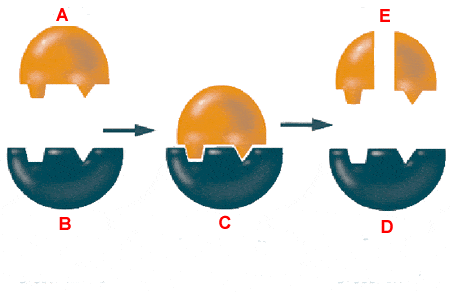
The diagram represents one way an enzyme can be inhibited. Which statement explains the effect of an inhibitor on an enzyme?

a)

A substrate will be able to bond with the enzyme.

b)

The enzyme will likely be attacked by immune cells

c)

The enzyme will be unable to produce more enzymes.

d)

A substrate will be unable to attach to the enzyme.

5.

The green frog (Lithobates clamitans clamitans) is found in many parts of the United States. The table contains some information about this frog. Why does the ability to lay 1,000 to 5,000 eggs increase the fitness of the species L. clamitans clamitans?

a)

It increases opportunities for offspring to compete for limited resources.

b)

It increases the probability that some offspring will survive long enough to reproduce.

c)

It increases the probability that moving water will promote gene flow from one population to another.

d)

It increases the chance of the recombination of alleles, leading to genetic drift in the population.

6.

Food webs such as the one shown were first used in 1927 by the animal ecologist Charles Elton. The food web below represents the feeding relationships among organisms in an Alaskan ecosystem. An environmental change that removed which of these organisms from the ecosystem would cause the most instability in the ecosystem?

a)

Auklets

b)

Foxes

c)

Salmon

d)

Zooplankton

7.

During the final stages of human gestation, receptors for the hormone oxytocin increase on the smooth muscle cells of the uterus. The release of oxytocin during labor stimulates the smooth muscle tissue in the wall of the uterus. The vigorous contraction of the uterine smooth muscle helps push the baby through the birth canal so that delivery can occur. This process involves the interaction of which organ systems?

a)

Endocrine and muscular only

b)

Endocrine and reproductive only

c)

Endocrine, muscular, and reproductive

d)

Endocrine, reproductive, and excretory

8.

During meiosis, homologous chromosomes exchange genetic material. This exchange of genetic material

a)

increases the genetic variation

b)

reduces the diploid number to the haploid number

c)

increases the haploid number to the diploid number

d)

reduces the probability of mutations

9.

Bactrian camels, dromedaries, llamas, and alpacas are all members of the same taxonomic family, Camelidae. Members of this family all have two toes, no hooves, true canine teeth, and a split upper lip. The family Camelidae originated in North America. The physical features of animals in this family and the family’s geographical origin provide evidence that all these animals

a)

live in the same type of ecosystem

b)

have slowly evolved to become herbivores

c)

have a common ancestor

d)

exchanged DNA at some point in the past

10.

Which statement best describes the relationship between the products of photosynthesis and the reactants in cellular respiration?

a)

The products of photosynthesis serve as the reactants in cellular respiration to provide chemical energy.

b)

The products of photosynthesis combine with the reactants in cellular respiration to remove ATP from cells.

c)

The products of photosynthesis inhibit the reactants in cellular respiration in the presence of light.

d)

The products of photosynthesis change the structure of the reactants in cellular respiration in the presence of light.

11.

The initial steps in gene expression are modeled. Double-stranded DNA first unwinds into two strands. Which process and product are represented in the diagrams?

a)

Process: transcription; product: mRNA

b)

Process: translation; product: protein

c)

Process: replication; product: tRNA

d)

Process: recombination; product: polymerase

12.

Some relationships between different organisms are shown in the table. Which table correctly identifies each type of interaction described?

a)
b)
c)
d)
13.

An analysis of DNA and RNA sequences can be used to classify organisms. A dendrogram, such as the one shown, is based on molecular data. It can be used to represent evolutionary relationships within a group of organisms that are hypothesized to have descended from a common ancestor. Which statement is best supported by the information in this dendrogram?

a)

Lesser pandas are more genetically similar to giant pandas than they are to raccoons.

b)

Brown bears are more genetically similar to giant pandas than they are to sun bears.

c)

Lesser pandas are more genetically similar to raccoons than they are to giant pandas.

d)

The bear species are all more genetically similar to dogs than they are to giant pandas.

14.

Some students used vinegar to dissolve a way the shells of three eggs and used these eggs as models of human red blood cells. The students observed the changes in the eggs when they were placed in different solutions. Which statement best describes the role of the cell membrane in this model?

a)

The cell membrane is an impermeable barrier that prevents water from entering the cell.

b)

The cell membrane allows solutions to enter the cell, which causes the cell to shrink.

c)

The cell membrane allows water to enter and leave the cell.

d)

The cell membrane removes solutes from the environment.

15.

Animal body systems often coordinate their actions to carry out specific functions for the whole animal. Which of these correctly describes the interaction of two biological systems for a specific purpose in the human body?

a)
b)
c)
d)
16.
Name the photosynthesizing organelle of the plant cell.
a)
G
b)
B
c)
J
d)
C
17.
Name the process in the picture.
a)
transcription
b)
mitosis
c)
translation
d)
replication
18.
Which letter is the active cycle of the virus?
a)
A
b)
B
19.
Which number contains the nucleic acid?
a)
1
b)
2
c)
3
20.
What process is occurring in the picture?
a)
DNA replication
b)
mitosis
c)
protein synthesis
d)
meiosis
21.
Name M.
a)
light dependent cycle
b)
Carbon dioxide
c)
glucose
d)
Calvin cycle
22.
Name B.
a)
phosophate
b)
glucose
c)
deoxyribose
d)
nitrogen base
23.
Which gas is filling the balloon in the experiment?
a)
Oxygen
b)
Carbon Dioxide
c)
Glucose
d)
Water
24.
These onion cells are losing water, they are suffering from .......
a)
turgor pressure
b)
plasmolysis
c)
hemolysis
d)
exocytosis
25.
What type of punnett square?
a)
codominance
b)
incomplete dominance
c)
complete dominance
d)
sex linked recessive
26.
What is happening in the picture?
a)
recombinant DNA
b)
karyotype
c)
mitosis
d)
binary fission
27.
Widow's peak is dominant to straight hair line. Cross a heterozygous widow's peak female with a heterozygous widow's peak male. What is the genotype ratio?
a)
1:2:1
b)
3:1
c)
1:1
d)
1:0
28.
What is one advantage of sexual reproduction?
a)
offspring are identical to parents
b)
offspring are resistant to viruses
c)
offspring are born live, rather thna from eggs
d)
offspring inherit a wider variety of genetic information
29.
Replicate the following strand of DNA: 
AATCATGGA
a)
AATCATGGA
b)
TTAGTACCT
c)
UUAGUACCU
d)
GGATAUCUA
30.
Colorblindness is a recessive, X chromosome sex-link disorder. Cross the parents to figure out which percentage of their offspring will be colorblind.
a)
25%
b)
0%
c)
75%
d)
50%
31.
What fraction of offspring from the cross AaBB x Aabb will be heterozygous for both traits?
a)
1/16
b)
4/16
c)
8/16
d)
3/16
32.

What is the purpose of Strand A?

a)

to act as a template for the synthesis of messenger RNA

b)

to carry the code from the DNA molecule in the nucleus to the ribosome

c)

picks up and transfers specific amino acids to the ribosome

d)

picks up and transfers nucleic acids to the nucleus

33.

What mRNA sequence will best match the section of DNA shown?

a)

C-T-A-G-G-C

b)

C-U-A-G-G-A

c)

A-G-C-U-U-C

d)

T-C-G-A-A-G

34.

What is the main purpose of the structure labeled D in the diagram above?

a)

Bring the amino acid to the ribosome

b)

Assemble the amino acids into a protein

c)

Copy the DNA strand

d)

Edit the mRNA strand

35.

The diagram above represents a biochemical process that occurs in a cell. The purpose of this process is to synthesize -

a)

deoxyribonucleic acid

b)

protein

c)

messenger RNA

d)

carbohydrate

36.

Use the mRNA codon chart to identify Amino Acid 1 in the given picture.

a)

Isoleucine

b)

Tyrosine

c)

Methionine

d)

Serine

37.
In many humans, exposing the skin to sunlight over prolonged periods of time results in the production of more pigment by the skin cells (tanning). This change in skin color provides evidence that -
a)
the inheritance of skin color is an acquired characteristic.
b)
albinism is a recessive characteristic.
c)
ultraviolet light can cause mutations.
d)
the environment can influence gene action.
38.

A mutation has occurred in a mRNA fragment that was originally CUU. Using the codon chart given above, which of the following mutated mRNA fragments would result in an amino acid sequence different from that produced by the CUU fragment?

a)

CUC

b)

CUA

c)

CUG

d)

CAU

39.

Which of the following chromosomal mutations is represented in the diagram above?

a)

translocation

b)

duplication

c)

deletion

d)

inversion

40.
An insertion of a DNA base into a gene can affect an organism by—
a)
causing future gametes to have additional chromosomes.
b)
changing the sequence of amino acids in a protein.
c)
causing chromosome fragments to form long chains.
d)
changing the structure of ribose sugar in nucleic acids.
41.
Nitrogenous bases are located on both strands of the DNA double helix. What is the significance of the nitrogenous bases?
a)
The number of adenines and cytosines determines the type of RNA that will be produced.
b)
The order of nitrogenous bases determines the order of amino acids in the proteins synthesized.
c)
The amount of thymine and guanine in the DNA molecules determines the length of the genes.
d)
The type of hydrogen bonding between the nitrogenous bases determines which amino acid will be added to the peptide chain.
42.
Which DNA strand is complementary to the top one shown in the picture?
a)
A
b)
B
c)
C
d)
D
43.
A model of a biological process is shown. What is the purpose of this process?
a)
To replicate the DNA of an organism before cell division
b)
To assemble nucleotides in an mRNA chain along a DNA template
c)
To synthesize amino acids used to unzip strands of DNA and copy the genetic code
d)
To translate the genetic code into a specific sequence of amino acids
44.
Four different types of cells are shown in picture. Which characteristic is shared by all four cells?
a)
A mechanism for transforming sunlight into energy
b)
Self-locomotion
c)
Membrane-bound organelles that transport substances
d)
Genetic material composed of DNA
45.
Which diagram demonstrates how crossing-over contributes to genetic variety during meiosis?
a)
A
b)
B
c)
C
d)
D
46.
Name this structure
a)
double helix
b)
nucelotide
c)
twisted ladder
d)
hydrogen bond
47.
How many chromosomes do humans have?
a)
46
b)
21
c)
10
48.

The 1918 influenza epidemic killed between 50 million and 100 million people worldwide. THis epidemic happened near the end of World War I. More people died from the influenza epidemic than were killed in the war. Which of the following explains why this virus was so deadly worldwide?

a)

Infected soldiers returning from the war spread the virus when they coughed.

b)

Food was scarce because of the war, so people were undernourished, and their immune systems were weakened.

c)

Medical personnel often became ill as a result of exposure to airborne virus particles.

d)

All of the above

49.

The diagram represents one way an enzyme can be inhibited. Which statement explains the effect of an inhibitor on an enzyme?

a)

A substrate will be able to bond with the enzyme.

b)

The enzyme will likely be attacked by immune cells

c)

The enzyme will be unable to produce more enzymes.

d)

A substrate will be unable to attach to the enzyme.

50.

During the final stages of human gestation, receptors for the hormone oxytocin increase on the smooth muscle cells of the uterus. The release of oxytocin during labor stimulates the smooth muscle tissue in the wall of the uterus. The vigorous contraction of the uterine smooth muscle helps push the baby through the birth canal so that delivery can occur. This process involves the interaction of which organ systems?

a)

Endocrine and muscular only

b)

Endocrine and reproductive only

c)

Endocrine, muscular, and reproductive

d)

Endocrine, reproductive, and excretory

51.

In the early 1900s a scientist hypothesized a link between DNA and the production of protein in the cytoplasm. However, the fact that DNA could not be found outside the nucleus led scientists to believe that another substance was also involved in the synthesis of protein in the cytoplasm. In the 1940s scientists performed an experiment that ultimately identified the site of protein synthesis. They also identified the molecule responsible for transporting information from the nucleus to the site of protein synthesis. What was the newly identified molecule?

a)

a gene

b)

mRNA

c)

ATP

d)

thymine

52.

Which statement best describes the relationship between the products of photosynthesis and the reactants in cellular respiration?

a)

The products of photosynthesis serve as the reactants in cellular respiration to provide chemical energy.

b)

The products of photosynthesis combine with the reactants in cellular respiration to remove ATP from cells.

c)

The products of photosynthesis inhibit the reactants in cellular respiration in the presence of light.

d)

The products of photosynthesis change the structure of the reactants in cellular respiration in the presence of light.

53.

Health professionals sometimes recommend nutritional supplements that contain a variety of species of bacteria to promote good digestive health. The product label for one of these supplements is shown. Why does this type of bacteria-filled supplement benefit human health instead of causing illness?

a)

Stomach acids and digestive enzymes kill the bacteria in this type of supplement, protecting the person against future infections by live organisms.

b)

The human digestive system contains billions of beneficial bacteria that enhance digestion and nutrient absorption, synthesize vitamins, and help limit the growth of harmful bacteria

c)

These species of bacteria remove all other species of microorganisms living in the human digestive system and ensure that no microorganisms survive to contaminate the body.

d)

These bacteria are able to deactivate viruses that may inhabit the human digestive system and are used to protect against further viral infections.

54.

In the early 1980s scientists were able to produce two biomolecules by splicing a human gene into the bacterium E. coli to make recombinant human insulin and growth hormone. Which statement best explains why this experiment was successful?

a)

Human cells are eukaryotic, and E. coli cells are prokaryotic.

b)

All living organisms share the same genome.

c)

The genes for all organisms are composed of the same building blocks.

d)

The human body contains many types of bacteria, including E. coli.

55.

Kidneys are part of the excretory system in a human body. They purify the impure blood and send it back to the rest of the body. Which system is mainly responsible for the transport of plasma to the kidneys?

a)

Respiratory system

b)

Circulatory system

c)

Muscular system

d)

Nervous system

56.

Several structures work together to allow flowering plants to reproduce. The diagram shows a typical flower. Which table correctly identifies the function of each structure or group of structures in the reproduction of the plant?

a)
b)
c)
d)
57.

The complex carbohydrates pictured below are made by linking molecules of glucose. In all three complex carbohydrates, the subunits of glucose are bonded together differently. Because they have different structures, they most likely —

a)

contain different chemical elements

b)

form different proteins

c)

carry different nucleotides

d)

perform different functions

58.

Plants called sundews have rounded green leaves with many hair-like structures. The ends of these structures contain enzymes in a sticky liquid that looks like nectar or moisture, as shown in the picture. The hairs do not react to dust or nonliving material but will bend inward when insects get caught in the sticky liquid. Sundews digest trapped insects over a period of a few days. Based on this information, what functions do the specialized leaves of sundews perform?

a)

Provide water to the plant and perform photosynthesis

b)

Respond to stimuli and anchor the plant

c)

Provide nutrients to the plant and respond to stimuli

d)

Release pollen to insects and perform photosynthesis

59.
These two systems interact to allow our bodies respond to the environment and to maintain homeostasis.  (Hint - they both send messages and one is fast, one is slow)
a)
nervous and endocrine
b)
nervous and digestive
c)
endocrine and excretory
d)
respiratory and digestive
60.

Why is blood considered a tissue?

a)

cells working together for a specific purpose

b)

tissues are always red

c)

blood moves through the entire body

d)

blood makes up an organ system

61.
What are the reactants of photosynthesis? 
a)
water, carbon dioxide, light energy
b)
oxygen and glucose
c)
oxygen and carbon dioxide
d)
oxygen and water
62.
The function of a ___ is to absorb water, store food, and anchor plants. 
a)
phloem
b)
tissue
c)
xylem
d)
root
63.
When water leaves a plants' leaves in the water cycle
a)
evaporation
b)
transpiration
c)
precipitation
d)
condensation
64.
The root performs all of the functions EXCEPT:
a)
stores food
b)
transports water
c)
draws in water
d)
takes in minerals
65.
Transports water and nutrients UP from the soil through all parts in the plant. Involved in transpiration.
a)
xylem
b)
phloem
c)
stomata
d)
roothair 
66.
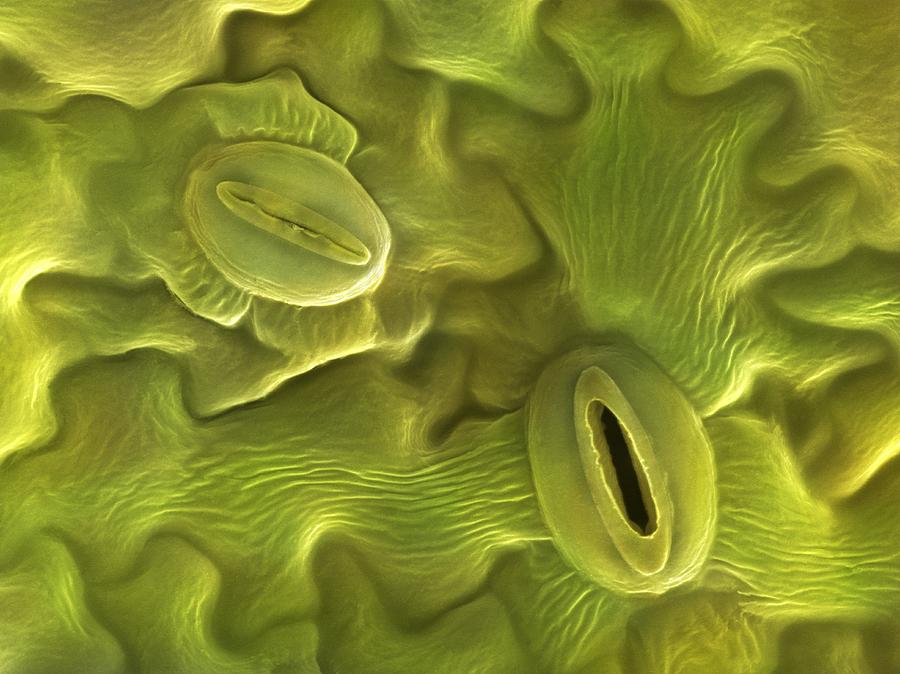
What is the structure in the picture?
a)
Stomata
b)
Leaves
c)
Roots
d)
Vascular tissue
67.
Which of the following lists these levels in the correct order of organization from the simplest to the most complex?
a)
cells, tissues, organs, organ systems, organisms
b)
organisms, organ systems, organs, tissues, cells
c)
tissues, cells, organs, organisms, organ systems
d)

organs, organ systems, organisms, cells, tissues

68.
According to the diagram, when did the common ancestor of giant pandas and spectacled bears exist? 
a)
5-10 mya
b)
10-15 mya
c)
15-20 mya
d)
20-25 mya
69.
Prokaryotes used to be classified as a single kingdom. New technology allowed them to be split into...
a)
Protista and Prokaryota
b)
Protista and Bacteria
c)
Eubacteria and Archaea
d)
Archaea and Eukarya
70.
Movement of materials down the concentration gradient through a protein channel is an example of 
a)
facilitated diffusion
b)
active transport
c)
respiration
d)
osmosis 
71.
Which list includes only structures that would be found in a prokaryotic cell? 
a)
Cell wall, plasma membrane, mitochondria
b)
Central vacuole, cell wall, lysosome
c)
Cell wall, plasma membrane, cytoplasm
d)
Plasma membrane, nucleus, mitochondria
72.
What structures do protists and paramecium use to remove waste?
a)
Cillia
b)
Flagella
c)
Psuedopods
d)
Contractile Vacuole 
73.
Humans are made up of different cells that preform different functions. From which cells do nerve cells develop? 
a)
Muscle cells
b)
Stem cell
c)
Sperm cells
d)
White blood cells 
74.
In a cell, what does a buffer help maintain?
a)
A constant temperature
b)
A low temperature 
c)
A constant pH
d)
A low pH
75.
Which of the following statements vest describes the cell cycle? 
a)
Interphase is the reproductive phase, mitosis is the growth phase
b)
Interphase is the growth phase, mitosis is the reproductive phase
c)
Cytokinesis is the growth phase, S-phase is the reproductive phase
d)
Cytokinesis is the reproductive phase, S-phase is the growth phase
76.
Which uses cilia for movement?
a)
Euglena
b)
Amoeaba
c)
Paramecium
d)
Volvox
77.
What is the function of this molecule in organisms? 
a)
Storage of genetic information
b)
Structure and support
c)
Short term energy storage
d)
Long term energy storage
78.
Which best describes the function of enzymes?
a)
to speed up chemical reactions in a cell
b)
to produce cellular energy
c)
to produce proteins
d)
to speed up cell division
79.
Which factor determines the shape and function of a protein?
a)
The density of ribosomes in the cell
b)
The peptide bonds between amino acids
c)
The order of the amino acids in the peptide chian
d)
The sequence of the phosphate molecules in the DNA chain. 
80.
What are the products of photosynthesis? 
a)
glucose and oxygen
b)
glucose and carbon dioxide
c)
glucose and water
d)
water, carbon dioxide, and energy
81.
Which process uses ATP to move materials across the plasma membrane against the concentration gradient?
a)
passive transport
b)
active transport 
c)
facilitated diffusion
d)
osmosis
82.
Which process of the carbon cycle removes carbon dioxide from the atmosphere? 
a)
photosynthesis
b)
cellular respiration
c)
combustion of fossil fuels 
d)
death and decomposing organisms 
83.
In very hot or dry conditions, land snails may enter a state of inactivity and low metabolism. What is the name of this adaptation? 
a)
Hibernation
b)
Estivation
c)
Imprinting
d)
Migration 
84.
Which statement best describes how the use of antibiotics on certain bacteria affects natural selection? 
a)
Natural Selection is altered because bacteria are killed
b)
The rate of selection is decreased because antibiotics kill only young bacteria
c)
Antibiotics alter natural selection by causing bacterial DNA to mutate 
d)
The rate of selection is increased because antibiotics do not kill bacteria that are naturally resistant to them. 
85.
What type of growth is shown by the human population? 
a)
Carrying capacity
b)
Logistical
c)
Exponential
d)
Stabilizing 
86.
Which method would be most helpful in preventing eutrophication of lakes and waterways?
a)
recycling aluminum
b)
conserving fossil fuels 
c)
reducing run-off from farms 
d)
using less pesticide 
87.
Which statement describes how complementary strands of DNA are linked?
a)
each sugar in one strand is paired with a complementary base in the other strand. 
b)
Each sugar in one strand is pained with a complementary phosphate in the other strand
c)
Each phosphate in one strand is paired with a complementary phosphate in the other
d)
Each base in one strand is paired with a complementary base in the other 
88.
Enzymes catalyze reactions by ___________ Activation Energy.
a)
Increasing
b)
Decreasing
89.
An experiment is performed on plants to see how different liquids affect plant growth. Each plant in the experiment is given a different liquid; water, apple juice, or milk. Each plant has the same amount of soil, sunlight, and listens to the same music. In this investigation, the independent variable is ...
a)
The type of plant
b)
The amount of sunlight
c)
The type of music
d)
The type of liquid
90.
The amount of energy that usually transfers from one trophic level to the next...
a)
10%
b)
20%
c)
80%
d)
50%
91.

Which of the following converts food into energy for the cell?

a)

vacuole

b)

mitochondria

c)

cytoplasm

d)

cell membrane

92.
What is something that prokaryotic and eukaryotic cells have in common?
a)
They have a nucleus. 
b)
They are multi-cellular. 
c)
They have DNA. 
d)
They have organelles that are membrane-bound.
93.
Active transport does not require energy.
a)
True 
b)
False 
94.
Which 2 molecules forms the sides (backbone) of the DNA ladder?
a)
deoxyribose and adenine
b)
deoxyribose and a hydrogen bond
c)
sugar and the nucleus
d)
deoxyribose (sugar) and phosphate
95.
These molecules represent which organic molecule?
a)
proteins
b)
lipids
c)
nucleic acids
d)
carbohydrates
96.

The light independent reactions (Calvin Cycle) of photosynthesis happen where?

a)

stroma of chloroplast

b)

mitochondrial matrix

c)

stem

d)

thylakoid membrane

97.
In this image, the cell is using which type of molecular transport?
a)
Osmosis
b)
Diffusion 
c)
Endocytosis
d)
Exocytosis 
98.
What are the two reactants of cellular respiration?
a)
C6H12O6 & 6CO2
b)
6 CO2 & 6H2O
c)
C6H12O6 & 6O2
d)
6CO2 & 6O2
99.
Name structure #5.
a)
rough ER
b)
nucleus
c)
vesicle
d)
cytoplasm
100.

Plant cells are able to produce their own food. This process happens in which structure?

a)

cell wall

b)

chloroplast

c)

mitochondrion

d)

vacuole

101.

These diagrams show a variety of cells from the same organism.

How can cells from the same organism have such different shapes and functions?As each cell differentiates, the DNA changes so that each type of cell has different DNA once it reaches maturity.

a)

As each cell differentiates, the DNA changes so that each type of cell has different

b)

Mutations in the cells’ nuclei lead to new combinations of DNA, resulting in different shapes and functions in the different types of cells.

c)

During differentiation, different parts of the DNA in each type of cell are activated, resulting in the different structure and function of the cells.

d)

During differentiation, different types of cells produce proteins which destroy the nonactive DNA, leading to cell specialization.

102.

Which statement best explains how sweating during exercise maintains homeostasis?

a)

It regulates mineral concentrations in cells

b)

It regulates body temperature

c)

It maintains water balance

d)

It maintains sugar balance in cells

103.

The chemical colchicine disrupts cell division. Which cell process would most likely stop if colchicine were added to a culture of human liver cells?

a)

mitosis

b)

meiosis

c)

crossing over

d)

active transport

104.

Which statement best explains why animals are considered heterotrophic?

a)

They are able to produce food through the process of photosynthesis.

b)

They are able to produce food through the process of respiration.

c)

They are able to obtain nutrients by decomposing plant and animal tissue.

d)

They are able to obtain nutrients by consuming other organisms or their products

105.

In some ecosystems, wolves have been eliminated due to their threats to humans. How can the reintroduction of wolves benefit the ecosystem?

a)

It can eliminate weak animals from a prey population, thereby decreasing competition for natural resources

b)

It can eliminate the most fit animals among the prey population, which will cause an increase in birth rates of the prey

c)

It can cause the prey population to migrate to other areas, resulting in more fit prey.

d)

It can cause the prey population to better blend in with their environment.

106.

What will most likely be the result as humans move into new areas, forests are clear cut and housing developments are built?

a)

Global temperatures will decrease because trees are removed.

b)

Many organisms will lose their homes because their habitats have been destroyed.

c)

Better sanitation in the area will reduce the amount of pollution.

d)

The rainfall in the area will increase because there will be increased runoff.

107.

What activity most contributes to the depletion of the ozone layer?

a)

burning of fossil fuels

b)

release of CFCs

c)

deforestation

d)

overuse of fertilizers

108.

Which effect could a mutation in mRNA have on the production of proteins?

a)

The protein produced will have a different identity

b)

The protein produced will have a coiled shape.

c)

The protein produced will produce excess nitrogen.

d)

The protein produced will produce excess water

109.

What carries the instructions for making amino acids in a protein?

a)

the nitrogen base on the tRNA

b)

the hydrogen bonding between nitrogen bases

c)

the sequence of nitrogen bases on the mRNA

d)

the nitrogen base bonding on the DNA molecule

110.

What do both prokaryotic and eukaryotic cells contain?

a)

membrane-bound organelles

b)

linear chromosomes

c)

cytoplasm

d)

a nucleus

111.

Which of these cells in the human body is specialized to transport oxygen throughout the body?

a)
b)
c)
d)
112.

What would most likely be produced when a cell with eight chromosomes undergoes mitosis?

a)

two cells with four chromosomes each

b)

two cells with eight chromosomes each

c)

four cells with four chromosomes each

d)

four cells with eight chromosomes each

113.

This diagram shows a Paramecium, a unicellular protist. When a chemical is added to the pond water in which the Paramecium lives, the Paramecium stops moving. Which structure is most likely affected?

a)

1

b)

2

c)

3

d)

4

114.

Which adaptation do ferns, gymnosperms, and angiosperms have that mosses do not have?

a)

chloroplasts

b)

flowers

c)

stomata

d)

vascular tissue

115.

Which graph best illustrates the growth of a population introduced into an environment with limited resources?

a)
b)
c)
d)
116.

Which will most likely result in a negative growth rate in the human population of a country?

a)

The death rate is higher than the birth rate

b)

The birth rate is higher than the death rate

c)

The country has improved economic conditions

d)

The country has made improvements in sanitation

117.

Why are many farmers encouraged to plant different types of crops on the same land throughout the year?

a)

It prevents insects from destroying crops

b)

It provides more food to other countries

c)

It allows for more genetic variation in palnts

d)

It helps preserve the quality of the soil

118.

During translation, what does the tRNA deliver to the ribosomes?

a)

amino acids

b)

DNA

c)

mRNA

d)

proteins

119.

Which will most likely cause an increase in the frequency of genetic mutations in humans?

a)

increased exposure to mold spores in the air

b)

increased exposure to the rising levels of atmospheric CO2

c)

increased exposure to bacteria in drinking water

d)

increased exposure to X-rays

120.
An illustration of two insects is below.
Which of the paired statements could be used to distinguish the insects, using a dichotomous key?
a)
six legs, eight legs
b)
large hind legs, small hind legs
c)
two pairs of spots on wing cover, three pairs of spots on wing cover
d)
antennae absent, antennae present
121.
A dichotomous key for insects is shown below. To what order does an insect with two pairs of scaly wings belong?
a)
Coleoptera
b)
Diptera
c)
Heteroptera
d)
Lepidoptera
122.
The diagram provided shows a breakdown of the genomes of humans, mice, chickens, and zebra fish. The numbers in overlapping regions indicate homologous sequences, similar genes that indicate shared ancestry. The data in the diagram best supports which of the following conclusions?
a)
There are no gene sequences that are common to all these animals.
b)
The common ancestor of the mouse and the chicken lived very recently.
c)
The mouse and the zebrafish share the closest relationship of all animals shown.
d)
Humans are more closely related to zebrafish than to chickens.
123.
An analysis of DNA and RNA sequences can be used to classify organisms. A dendrogram/evolutionary tree, such as the one shown below, is based on molecular data. It can be used to represent evolutionary relationships within a group of organisms that are hypothesized to have descended from a common ancestor.
Which statement is best supported by the information in this dendrogram/evolutionary tree? 
a)
Lesser pandas are more genetically similar to giant pandas than they are to raccoons.
b)
Brown bears are more genetically similar to giant pandas than they are to sun bears.
c)
Lesser pandas are more genetically similar to raccoons than they are to giant pandas.
d)
The bear species are all more genetically similar to dogs than they are to giant pandas.
124.
Below is the illustration of the bones of the forelimbs (wing or arm) of three animals. While only birds and bats have wings, the underlying skeletal structure is more similar in bats and humans.
What is the most reasonable conclusion one can draw from a comparison of these structures?
a)
Birds and bats are closely related to each other, while humans are unrelated to both.
b)
The common ancestor of birds and bats must have had wings and flown.
c)
Humans live in habitats very different from the habitats of both birds and bats.
d)
Humans and bats share a closer evolutionary history with each other than with birds.
125.

According to Darwin's theory on natural selection, the traits that survive and continue in future generations are –

a)

caused by response to stress

b)

made by environmental change

c)

already present in the population

d)

introduced by immigrating species

126.

Survival of the fittest can best be described as –

a)

the process by which only the strongest of a species will be able to survive and reproduce

b)

the process in which organisms that are better adapted to their environment will have a better chance of surviving and reproducing

c)

the reason the strongest of the species will not be able to reproduce as often as others

d)

the reason weaker organisms in a species will always be killed by predators

127.

Which process results in greater genetic diversity in offspring?

a)

genetic linkage

b)

recombination of DNA during meiosis

c)

crossing-over during mitosis

d)

rearrangement of chromosomes in germ cells

128.

Scientists can determine relatedness among organisms by comparing partial amino acid sequences. The table shows four partial amino acid sequences from four organisms. Which organism is the LEAST related to the other three organisms?

a)

Organism 1

b)

Organism 2

c)

Organism 3

d)

Organism 4

129.

The relationships among different orders of millipedes are shown in the cladogram. Based on this cladogram, which statement best describes relationships among millipede orders?

a)

Stemmiulida is more closely related to Merocheta than Penicillata is to Merocheta.

b)

Spirostreptida is more closely related to Glomerida than Sphaerotheriida is to Glomerida.

c)

Polyzoniida is more closely related to Glomeridesmida than Sphaerotheriida is to Glomeridesmida.

d)

Merocheta is more closely related to Glomeridesmida than Glomerida is to Glomeridesmida.

130.
A virus killed most of the seals in the North Sea (e.g. dropped the population from    8000 to 800).  In an effort to help preserve the species, scientists caught 20 of the   remaining seals and used them to start a new population in the northwest Pacific   Ocean.  Which of the following statements would accurately describe the new   population?  
a)
The new seal population is genetically less diverse than the original population 
b)
The new seal population is genetically more diverse than the original population
c)
There is equal genetic variety compared  to the original population 
d)
None of the answers
131.
Genetic drift is change in the allele frequency of a population due to...
a)
random chance
b)
natural selection
c)
non-random mating (sexual selection)
d)
artificial selection
132.
This mechanism of evolution occurs when populations migrate.
a)
Extinction
b)
Gene flow
c)
Genetic drift
d)
Natural Selection
133.
Which of the following cannot introduce new alleles into a population's gene pool?
a)
Mutataion
b)
Natural selection
c)
Gene Flow
d)
All of the above introduce new alleles into the population
134.
The type of genetic drift that follows the colonization of a new habitat by a small group of individuals is called
a)
the Hardy-Weinberg principle
b)
the founder effect
c)
directional selection
d)
the bottleneck effect
135.
What is this an example of?
a)
diversity of species
b)
variation
c)
vestigial structures
d)
DNA studies
136.
Inherited trait that helps an organism survive is a(n) __________.
a)
Fossil
b)
Adaptation
c)
Ancestor
d)
Natural selection
137.
Which of the following is an example of the founder effect?
a)
Bald Eagles are hunted until near extinction, population recovers.
b)
Small group of iguanas floats to an island, starts a new population.
c)
Red fox pups are more likely to survive in a snowy environment if they are born white.
d)
Farmer chooses seeds from largest apples to plant next year.  This results in larger apples from year to year.
138.
Which of the following is an example of the bottle neck effect?
a)
Bald Eagles are hunted until near extinction, population recovers.
b)
Small group of iguanas floats to an island, starts a new population.
c)
Red fox pups are more likely to survive in a snowy environment if they are born white.
d)
Farmer chooses seeds from largest apples to plant next year.  This results in larger apples from year to year.
139.

Which of the following is an example of natural selection?

a)

Bald Eagles are hunted until near extinction, population recovers.

b)

Small group of iguanas floats to an island, starts a new population.

c)

Red fox pups are more likely to survive in a snowy environment if they are born white.

d)

Farmer chooses seeds from largest apples to plant next year. This results in larger apples from year to year.

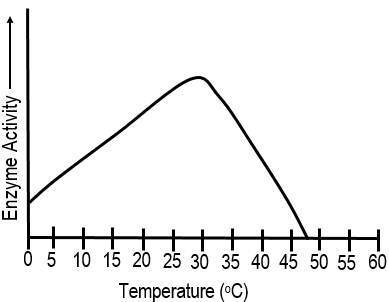
140.
How do enzymes increase the speed of chemical reactions?
a)
reducing the number of products   
b)
reducing the activation energy
c)
increasing the temperature of the cell
d)
increasing the concentration of reactants 
141.
Which of these is NOT true?
a)
Enzymes can denature (change shape) when the temperature gets too high.
b)
Enzymes can only be used once in a chemical reaction. 
c)
Extreme pH can denature enzymes.
d)
Enzymes speed up chemical reactions. 
142.
What molecule is this
a)
sucrose
b)
protein
c)
glucose
d)
cellulose
143.
What process is going on in this photo? 
a)
Transcription 
b)
Translation 
c)
Replication 
d)
All the above 
144.
This picture represents which type of cellular transport?
a)
passive transport
b)
endocytosis
c)
exocytosis
d)
osmosis
145.
The cell below is in a _________ solution.
a)
Hypotonic
b)
Hypertonic
c)
Isotonic
146.
Which of these is not a way in which biotechnology can benefit agriculture?
a)
increase crop population
b)
reducing the loss of crops to insects
c)
producing better-tasting fruits
d)
improving farm machinery
147.
What two products does a plant make during photosynthesis?
a)
Water and Glucose
b)
Oxygen and Glucose
c)
Oxygen and Water
d)
CO2 and Glucose
148.

What is the role of the pioneer species in Primary Succession?

a)

To kill any remaining organisms from before the disturbance

b)

To break down rock and rebuild soil

c)

To provide food for large animals

d)

To put fresh oxygen into the air

149.

What are some abiotic factors that could be limiting factors in the Iowa River ecosystem?

a)

Temperature, fertilizer runoff from fields, drought or flood

b)

Invasive species, floods

c)

Temperature, predators, droughts, floods, over fishing

150.
The diagram below represents a cell. Which organelle is the site where amino acids are synthesized into proteins? 
a)
1
b)
2
c)
3
d)
4
151.
An offspring will receive how many alleles from each parent to determine a specific trait?
a)
one
b)
two
c)
three
d)
five
152.
G = green, g = yellow
The genotype for a yellow plant is...
a)
GG
b)
Gg
c)
gg
d)
all of the choices result in yellow
153.
Which process is used to make mRNA from the DNA in the nucleus?
a)
transcription
b)
translation
c)
replication 
154.
Which RNA bases would pair with TACGAA in transcription? 
a)
AUGCUU
b)
ATGCTT
c)
GCATCC
d)
GCAUCC
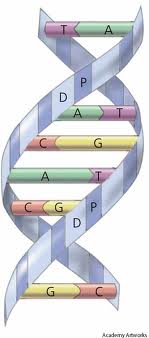
155.
Where does transcription take place?
a)
nucleus
b)
cytoplasm
c)
ribosome
156.
How many amino acids are coded for by this sequence of nucleotides:
ATG GGA ACT CCA
a)
4
b)
2
c)
6
d)
12
157.
What is occurring in this picture?
a)
Translation
b)
Replication
c)
Translocation
d)
Transcription
158.
Which species’ DNA is most similar to the DNA of the toothed whale? 
a)
Hippopotamus 
b)
Baleen Whale
c)
Grazing Mammals
d)
Camels
159.
The white feathers of a snowy owl allow it to blend in with its environment during the winter months (snow). This is an example of ________________
a)
Species
b)
Environmental Change
c)
Adaptation
d)
Variation
160.
What is the advantage of having different shaped beaks?
a)
To look different from other species.
b)
To be able to eat the food readily available in the environment.
c)
To protect itself against predators.
d)
To protect itself against prey.
161.
Cattle egrets forage (feed) in fields among cattle. The egret gets easy access to flying insects stirred up by the cattle, and the cattle don't care if they are there or not.
a)
mutualism
b)
commensalism
c)
competition
d)
parasitism
162.
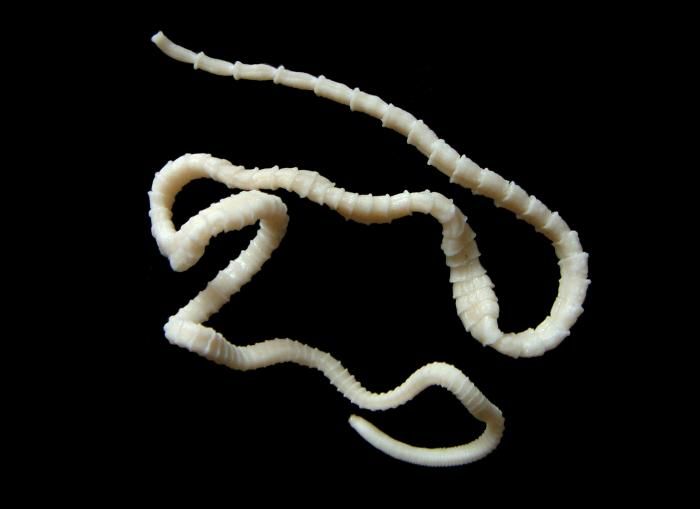
A tapeworm and a cat have this type of relationship.
a)
mutualism
b)
parasitism
c)
commensalism
d)
competition
163.
What type of symbiosis?  Hummingbirds feed on nectar from flowers.  The flowers are pollinated by hummingbirds as they move from flower to flower.
a)
commensalism
b)
mutualism
c)
parasitism
d)
predation
164.
Which type of cell has no nucleus?
a)
Eukaryote
b)
Prokaryote
c)
Animal
d)
Plant
165.
Which type of cell?
a)
Prokaryote
b)
Eukaryote
166.
Which type of cell?
a)
Prokaryote
b)
Eukaryote
c)
Mixed
167.
Has ribosomes
a)
Prokaryote
b)
Eukaryote
c)
both
d)
nihn
168.
What property of water makes it the 'universal solvent'?
a)
it is a polar molecule
b)
it is an ionic compound
c)
it contains hydrogen bonds
d)
it steals electrons from other atoms
169.
Carbohydrates are made of... 
a)
C H O
b)
C H O N
c)
C H O N P
d)
C H O N S
170.
How many different amino acids are there?
a)
4
b)
20
c)
6
d)
46
171.
Glucose is a _____.
a)
carbohydrate
b)
lipid
c)
protein 
d)
nucleic acid
172.
Proteins are composed of what smaller building blocks?
a)
amino acids
b)
nucleic acids
c)
fatty acids
d)
nucleotides
173.
Which group of organic molecules serve as long-term energy storage and make the cell membrane is?
a)
proteins
b)
carbohydrates
c)
lipids
d)
nucleic acids
174.
The primary purpose the body uses monosaccharides for is?
a)
Building muscles
b)
Helping the Immune System
c)
Immediate Energy
d)
Generating Heat
175.
Which of the following is LEAST likely to dissolve in water?
a)
nonpolar fats and oils
b)
polar sugar molecules
c)
salt made of a positive sodium ion and a negative chloride ion
d)
all of the substances will dissolve easily in water
176.
Also known as simple sugars, these are the monomers of carbohydrates.
a)
lipids
b)
nucleotide
c)
monosaccharide
d)
monomer
177.
Attractions between water molecules are called
a)
Covalent bonds
b)
Ionic bonds
c)
Polar bonds
d)
Hydrogen bonds
178.
In red blood cells, a protein called ________ binds to oxygen.
a)
hemoglobin
b)
ATP
c)
RNA
d)
DNA
179.
The building blocks of nucleic acids are called ...
a)
amino acids
b)
nucleotides
c)
carbohydrates
d)
proteins
180.
ATP is...
a)
a unit of energy in the cell
b)
a type of lipid
c)
a molecule of DNA
181.
Phospholipids have a _________ head and a __________ tail.
a)
hydrophilic, hydrophobic
b)
hydrophobic, hydrophilic 
182.
Enzymes are _________ that __________ chemical reactions.
a)
proteins, slow down
b)
proteins, speed up
c)
lipids, slow down
d)
lipids, speed up
183.
The cell membrane is formed mostly by...
a)
carbohydrates
b)
proteins
c)
phospholipids
d)
nucleic acids
184.
Nucleotides are made up of three parts. The three parts are...
a)
DNA, RNA, and a sugar
b)
a lipid, a fat, and an oil
c)
a carbohydrate, a protein, and a fat
d)
a sugar, a phosphate, and a base
185.
Based on the graph, what temperature does this enzyme work best? 
a)
15 C
b)
40 C
c)
30 C
186.
Which of the following binds to the active site of an enzyme? 
a)
substrate
b)
product
c)
codon
d)
none of the above
187.
What happens when enzymes are heated to a high temperature?
a)
The enzymes die.
b)
The shapes of the enzyme are altered or denatured
c)
The enzymes' amino acid sequence changes.
d)
The enzymes remain the same
188.

Enzymes _ activation energy

a)

raise

b)

lower