
 Worksheets
2022 US Final Exam Review
Total questions: 123
Worksheet time: 2hrs 40mins

Which statement best represents Theodore Roosevelt's foreign policy?
"buy our way in"
"Take what is ours and leave nothing behind"
"Speak softly and carry a big stick"
"Stay within our own borders, because that is what is most important"
How did the United States gain Puerto Rico?
Treaty with Portugal
Bought from Spain
War with Cuba
Spanish-American War

What were the two main locations of fighting during the Spanish-American War?
Alaska and Hawaii
Puerto Rico and Guam
Cuba and the Philippines
Spain and the United States
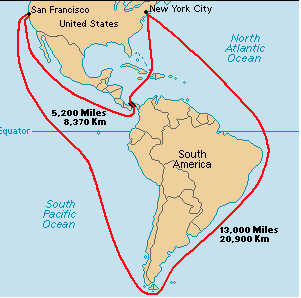
Why did Theodore Roosevelt help support a revolt against Columbia?
Columbia refused to comply with trade agreements
He wanted to establish a naval base in Columbia
He wanted to establish a colony in Columbia
He wanted to build the Panama Canal
What was the main worry that Americans had about joining the League of Nations?
the US might get dragged into another war
the US would have to pay for most of the cost
Germany would be a member of the league
the US would have to host its headquarters
Which of the following was effect of the Red Scare?
migration of African-Americans to Northern cities
the creation of the Espionage and Sedition Acts
restrictions on new immigrant arrivals
the formation of the Communist Party in the US
Which of the following was NOT one of Woodrow Wilson's Fourteen points?
freedom of the seas
end of imperialism
reduction of arms production
expansion of production of submarines
self-dermination
What was the League of Nations?
an organization established to promote international cooperation and world peace
a post-war military alliance between Britain, Italy, France, and the US
an organization that promoted trade between Italy France & the US
the countries that met and drafted the Treaty of Versailles following WWI
What was the main worry that Americans had about joining the League of Nations?
the US might get dragged into another war
the US would have to pay for most of the cost
Germany would be a member of the league
the US would have to host its headquarters
Which of the following was effect of the Red Scare?
migration of African-Americans to Northern cities
the creation of the Espionage and Sedition Acts
restrictions on new immigrant arrivals
the formation of the Communist Party in the US
All of the following were contributing factors to the US entering WWI except
unrestricted submarine warfare
freedom of the seas
the Zimmerman telegram
the spread of socialism

The political cartoon refers to which cause of the the US entering the war?
Zimmerman telegram
sinking of the Louisitania
unrestricted submarine warfare
the Roosevelt Corollary
Which of the following describes the primary foreign policy objective of Woodrow Wilson after the US entered WWI?
expand US territorial boundaries
rebuild America's military forces
re-establish the balance of power in European diplomacy
shape a new international order supportive of democracy

The following image best reflects which of the following?
Patriot Act
Espionage & Sedition Acts
fight over ratification of the Treaty of Versailles
Oriental Exclusion Act
What was the main impact of WWI on black Americans?
more black Americans were voted into office
it unified black leaders, who all supported the war effort
many black Americans moved North due to the Great Migration
black Americans fought alongside white Americans in the war
What was the main purpose of the Committee on Public Information?
to persuade public opinion against migration
to publicize the American cause and encourage patriotism
to encourage socialism and reform
to discourage the war effort
WWI led to all of the following impacts in the US economy EXCEPT
Mexican migrant workers were recruited to fulfill vacant farm jobs
women filled factory positions
car manufacturing decreased
black Americans migrated north and worked in factories
In what way did WWI impact the movement for women's suffrage?
only women involved enlisted in the military could vote during WWI
the women factory workers were leaders in National Women's Suffrage Association
women finally received the right to vote due to their help in the war effort
women industrial workers threatened to strike during the war if they did not receive the right to vote
In what ways did WWI encourage ratification of the 18th amendment?
there was a movement to eliminate alcohol because it made workers more productive
the soldiers wanted to drink after trench warfare
victory gardens were used to produce alcohol
efforts were made to ration grain
Which of the following was NOT one of Woodrow Wilson's Fourteen points?
freedom of the seas
end of imperialism
reduction of arms production
expansion of production of submarines
self-dermination
What was an effect of the Red Scare?
restrictions on new immigrant arrivals
African Americans moving north in the Great Migration
the creation of the Espionage & Sedition Acts
the formation of a Communist Party in the US
Which amendment is appropriately matched?
17th - Prohibition
18th - Jim Crow laws
15th - Direct election of senators
19th - Women's suffrage


What one advance led to the mass production of goods and “consumerism” ?
assembly line
television
tanks
propaganda
What encouraged the new “consumerism” of the 1920’s ?
advertising
television
Red Scare
propaganda
Victory Gardens, Buying War Bonds and women filling men's jobs while they were away at war, were.....
not a successful plan in supporting the war effort
way too difficult to achieve
ways Americans at home supported the war effort
ways that people in Britain supported the US

What technology served as a unifying force in the 1920s?
assembly line
tv
radio
electric light

The cartoon above represents what movement/response to the Red Scare?
prohibition
nativism
the great depression
none of the above

The cartoon above best demostrates
high protective tarifs on foreign goods
immigration restrictions such as the Emergency Quota Act & National Origins Act
the growing movement to join international affairs
the Roosevelt Corollary in the Americas
What encouraged the new “consumerism” of the 1920’s ?
advertising
television
Red Scare
propaganda


Why did many midwestern farmers migrate from the Great Plains to California?
There was no unemployment on the West Coast
California was experiencing a gold rush
The Dust Bowl pushed farmers out of the Great Plains
The Stock Market crash led farmers to lose their homes on the Great Plains
President Franklin D. Roosevelt believed that declaring a bank holiday and creating the Federal Deposit Insurance Corporation (FDIC) would help the nation’s banking system by
restoring public confidence in the banks
reducing government regulation of banks
restricting foreign investments

Which New Deal organization created jobs by encouraging national park projects?
Works Project Administration
Civilian Conservation Corps
Federal Deposit Insurance Corporation
Tennessee Valley Authority

What was the major reason for U.S. neutrality in the 1930's?
The U.S. didn't care.
The U.S. had committed itself to a policy of total nonviolence.
The economic and emotional effects of WWI made Americans reluctant to get involved in another war
The U.S. was confident that Britain and France could handle the situation.
This U.S. law provided increased support for the Allies by including the "cash and carry" provision.
Neutrality Act of 1935
Neutrality Act of 1936
Neutrality Act of 1937
Neutrality Act of 1939
What was the purpose of the Lend-Lease Act that was passed in March of 1941?
It was part of the New Deal.
It was to help American farmers get new farming equipment.
It solidified the U.S.'s commitment to neutrality in the war.
It allowed the United States to sell, lend, or give ships, planes, tanks, or other equipment to the Allies.
The attack on Pearl Harbor...
directly led to the U.S. declaring war on Japan.
healed the political divisions between isolationists and interventionists.
Germany and Italy declared war on the U.S.
All of the above.
What was Japan's strategy in its surprise attack on Pearl Harbor?
Japan wanted to prevent American resistance to Japanese expansion by destroying America's Pacific naval and air presence.
Japan wanted distract the U.S. with Pearl Harbor while Germany coordinated a larger attack in Britain.
Japan wanted to annex Hawaii.
Japan wanted to draw all U.S. military attention to the Pacific so that Germany could attack from the Atlantic front.
Created to oversee the conversion of peacetime industry to war industry.
War Production Board
United Nations
Double V Campaign
Manhattan Project
During WWII, women and minorities made economic gains mainly because
a shortage of traditional labor created new opportunities in the workplace
more educational opportunities increased the number of skilled workers
labor unions successfully demanded equal opportunities
new civil rights legislation forced businesses to change their hiring practices
Executive Order 9066 called for
desegregation of factories
desegregation of the military
internment of Japanese Americans
internment of German Americas

What is the purpose of this propaganda poster?
buy war bonds
women should join the military
women should join the wartime workforce
women should fight for victory gardens
African American fighter squadron that played a key role in the saturation bombing of Germany.
Tuskegee Airmen
kamikaze
Hiroshima/Nagasaki
War Production Board
Controversies involving McCarthyism and Julius and Ethel Rosenberg reflected the post-World War II concern over
testing nuclear missiles
joining the United Nations
placing weapons in outer space
spying by Communists in the United States


_____________________________ was passed to help veterans with buying houses, education, and starting businesses.
Veterans Administration
Levittown
Soldier's Bill of Rights
GI Bill
JFK's tactic during the Cuban Missile Crisis was to
Embargo
Invasion
Quarentine
Long-range missles

What was a govt. sponsored creation of infrastructure and US military moved more efficiently?
GI Bill of Rights
National Interstate and Defense Highways Act
Marshall Plan
Truman Doctrine
In 1961 the American CIA tried to support Cuban revolutionaries in a failed uprising against the communist USSR backed Cuba, this was known as...
Cuban Missile Crisis
Cuban Revolution
Bay of Pigs
Bay of Cuba
1. Which of the following amendments contains the Equal Protection Clause that was used to dismantle racial segregation beginning with the Brown v Board of Education Supreme Court Case?
13th amendment
14th Amendment
15th Amendment
16th Amendment
The Supreme Court ruled in Brown v. Board of Education of Topeka, Kansas, that
Affirmative action constituted reverse discrimination
Poll tax requirements for voting in federal elections were illegal
Segregated public schools were unconstitutional
Companies could not use intelligence tests to screen potential employees
Which of the following is an example of de facto segregation?
poll taxes
Jim Crow laws
a larger number African Americans in slum areas
a voter literacy test given to African Americans in the South
Students staged a sit-in at the Woolworth’s in Greensboro, North Carolina to protest
the store’s policy against hiring African American workers
the store’s segregated lunch counters
the store’s refusal to let African Americans enter
the store’s segregated drinking fountains
Martin Luther King, Jr. delivered his “I Have a Dream” speech ________ to help gain support for the ________.
after four African American girls were killed by a bomb in Birmingham / Children’s Marches
during the March on Washington / Civil Rights Act of 1964
while he was imprisoned in the Birmingham jail / Montgomery Bus Boycott
during the Selma March / Voting Rights Act of 1965

Which US president signed the Voting Rights Act of 1965?
Lyndon B. Johnson
John F. Kennedy
Harry S. Truman
Franklin D. Roosevelt

What role was played by SNCC during the Civil Rights Movement?
Scheduling events for MLK
Planning and coordinating non-violent protests
Protecting students in integrated public schools
Enforcing voting regulations
What was the "March on Washington" in 1963?
a march of Black Panthers to confront the KKK in Washington
a rally in support of jobs, freedom, and JFK's proposed civil rights bill at Lincoln Memorial
a gathering of southern politicians to protest civil rights legislation
a rally in support of legislation that would increase segregation in the South
What was a result of the War Powers Resolution?
Allowed congress to limit military authority of the executive branch.
Gave the executive branch a majority of military power.
Limited the ability of congress to impact the government
Allowed the president to be the ultimate deciding factor when going to war.

Which organization promoted equal rights for women?
NOW
NAACP
NBA
NFL
This person organized economic boycotts to improve working conditions for migrant workers.
Coach Hill
Abe Lincoln
Cesar Chavez
Martin Luther King Jr.

What influenced President Nixon's signing of the SALT I Treaty?
Creating better diplomatic relationships with China.
Promote Watergate
Withdraw soldiers from Indochina
Support French imperialism
What took place that hurt Jimmy Carter's confidence and chances at re-election?
Iran Hostage Crises
Global energy crises
Us boycotting the Olympics
Sending too many troops to Vietnam
A diplomatic standoff between Iran and the United States in which 52 American diplomats and citizens were held hostage for over a year.
Iranian Revolution
Iran Hostage Crisis
Camp David Accords
Iraq Hostage Crisis
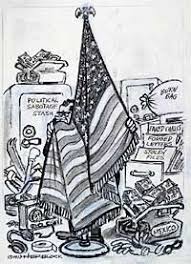
The cartoon above was published in May 1973. With which event was this cartoon associated?
Teapot Dome Scandal
Iran Hostage Crisis
Watergate Scandal
Iran-Contra Affair
Which president pardoned Richard Nixon?
Jimmy Carter
Ronald Reagan
Gerald Ford
Lyndon B. Johnson
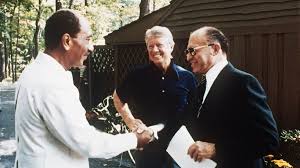
The photograph above shows foreign leaders meeting with President Carter at Camp David in 1978. What was the outcome of this meeting?
The United States and its allies halted grain sales to the Soviet Union
The United States persuaded Egypt and Israel to sign a future peace treaty
The United States signed a treaty promising the return of the Panama Canal Zone
The United States successfully rescued hostages held by Iranian students in Tehran
Which president was impeached, but not removed from office?
Clinton
Bush
Obama
What was put into place to help the government prevent terrorist attacks and allowed gov. to see private information
Patriot Act
New England Patriots
Freedom Act
USA Intervention Act
The policy objectives of Reaganomics were based on the theory that —
borrowing from foreign countries would help cover the costs of domestic programs
significant increases in government spending would help reduce unemployment
large tax cuts, less government spending and financial deregulation would promote economic expansion
reducing trade barriers would result in a budget surplus
Which political leader introduced programs that moved the USSR away from totalitarianism, and increased economic freedom and political rights?
Mikhail Gorbechev
Joseph Stalin
Boris Yeltsin
Vladimir Putin
What was President Reagan referring to when he stated "tear down this wall"?
Iron Curtain
Berlin Wall
German Border with Soviets
Soviet Bloc Border
Broad tax cuts, cuts to the federal budget, and increased military spending, Reagan believed all of these would promote economic expansion, these are examples of what policy:
Reaganomics
Strategic Defense Initiative
Containment
Fiscal Responsibility

