
 Worksheets
World History Fall Semester Final Review
Total questions: 79
Worksheet time: 53mins

This is a type of government where the people get to elect their leaders
Democracy
Monarchy
Dictatorship
Republic
Which Enlightenment thinker believed in the Natural Rights: life, liberty property?
John Locke
Thomas Hobbes
Mary Wollstoncraft
Baron de Montesquieu
Cesare Bonesana Beccaria
Estate
What did the European slave traders trade for enslaved African people?
Guns
Rum
Beads
Food

What is one factor that would explain the demographic change in the chart ?
Natives being killed by Asians coming over to dominate the new world
Old world diseases being introduced to the new world
Europeans conquering North America and having bad relations with the Natives
Maroons rebelling against old world Europeans
Martin Luther's 95 Thesis addressed abuses within the Catholic Church including:
selling indulgences
immorality of the clergy
selling church positions
all choices are correct
All of the following were early Islamic gunpowder empires EXCEPT
Safavid Persia
Ottoman Turkey
Mughal India
Tokugawa Japapn
What were the effects (Results) of the Black Death?
New economic opportunities and the rise of Islam
New economic opportunities and a strengthened Church
The Church was weakened and new economic opportunities were created
The Church was weakened and the lords of England reasserted their authority over the people
How did religion and the church change in Europe from 1500 to 1700?
Normal people began to truly accept the teachings of the Catholic Church for the first time.
The Catholic Church became way more chill and definitely didn't launch the Inquisition afterwards.
The Catholic Church gained wealth and authority as a result of the Protestant Reformation. Luther and King Henry VIII created more Catholic churches which accepted the Pope’s authority.
The church lost wealth and authority as a result of the Protestant Reformation. Luther and King Henry VIII began their own Protestant churches which rejected the Pope’s authority.
How did humans live before the Agricultural Revolution?
In large complex societies
In small groups that hunted and gathered together.
In warring tribes who fought over territory
None of the Above
This is the name for the process in which humans slowly settled down to create small farms instead of hunting and gathering?
The Agricultural Revolution
The Neolithic Revolution
The Hajj
Both A and B

Select the technology that was developed in the Song Dynasty.
Increased stability of the compass
Gunpowder being used in warfare
Developed drought-resistant rice
Continuation of the woodblock printing
This knowledge allowed traders along the Indian Ocean to travel efficiently
Knowledge of the sea currents
Knowledge of the monsoon winds
Knowledge of the capacity of dhow ships
Knowledge of the stars

Which disease struck Europe by spreading along trade routes from Asia?
Black/Bubonic Plague
Typhus
Smallpox
the Spanish Flu
What did the Mongols do to improve economics?
opened many jobs to the peasants in China
they lowered taxes
they used only paper money, creating an easy standard
Provided protection to traders on the silk road
The Devastating Effects of the Black Plague resulted help spark what later events in Europe
The Scientific Revolution
Reformation
Renaissance
All the Above
Division into the Three Estates in France before the French Revolution was based on...
Who were the Spanish colonists fighting against during the Mexican Revolution?
The Mexican government
The American government
The Spanish government
The New Spain government
What is the PRIMARY significance of the Mexican Revolution?
Mexico became a free and independent country
Augustin de Iturbide declared himself emperor
The war left the land in Texas destroyed and it was difficult to rebuild
All of the above
What are the three branches of government, created by Baron de Montesquieu?
The Executive
The Judicial
The Congress
The Legislative
The Declaration of Independence was influenced by what enlightenment thinker who suggested, "men are free" under the social contract?
Locke
Hobbes
Rousseau
Montesquieu
What group of people helped influence the American and French Revolution, with the ideas of challenging the "divine right of kings"?
The Humanist Thinkers
The Scientific Thinkers
The Revolutionary Thinkers
The Enlightenment Thinkers
The original goal of both the American and French Revolution was to....
To produce more food
To get rid of the monarchy rule
To create a new religion
To allow the people to become aristocrats
What challenge did the Incas face to a much larger extent than other peoples in the Americas?
speaking many dialects
surviving a severe climate
building homes in wetlands
controlling a very large empire
Why did Incan farmers terrace their fields?
to keep wild animals away
to increase available cropland
to get enough water in the desert
to do required labor for the emperor
The sets of strings called quipus helped solve what problem of the Incas?
shortage of water
lack of transportation
lack of a written language
shortage of administrators

Human sacrifice was an important part of Mexica/Aztec culture.
True
False
Buddhism spread from India, and into which region?
Western Europe
Northern Africa
China/Eastern Asia
Middle East
Which phenomenon heavily influenced trade along the Indian Ocean?
Monsoons
Pirates
Blizzards
Warlords

What valuable products came from the Trans Saharan Trade Route of Africa?
Gold, ivory, salt, leopard skins, slaves
Cotton, pepper, cinnamon
Wool, wine, olive oil
Fir, timber, fish, wood
What 2 goods did North and West Africa exchange in the Trans-Saharan Trade?
Ivory-Shells
Cotton-Tea
Gold-Salt
Nutmeg-Cloves

Which remarkable animal made possible the long trek across the Sahara desert?
Elephants
camels
horses
llamas
Which disease struck Europe by spreading along trade routes from Asia?
Black/Bubonic Plague
Typhus
Smallpox
the Spanish Flu
Identify one of the four states of the Mongolian Empire
The Great Khanate
The Golden Horde
The Ilkhanate
All the above
What did the Mongols do to improve economics?
opened many jobs to the peasants in China
they lowered taxes
they used only paper money, creating an easy standard
Provided protection to traders on the silk road
What some specific examples of the technological causes of increased trade along the Indian Ocean?
caravenserai, flying cash and banking houses
lateen sails, maps, compass and dhow ships
compass, astrolabe, maps and camel saddles
dhow ships, maps and saddles
What are some specific examples of inventions that increased trade along the SIlk Road?
caravenserai, Paper Money and mongol passport system
lateen sails, maps, compass and astrolabe
compass, astrolabe, maps and camel saddles
dhow ships, maps and compass
What were the major items traded along the Trans Sahara Trade route
gold, slaves and porcelain
silk, porcelain, paper and gunpowder
gold, slaves and spices
gold, salt, slaves and ivory
What were the major items traded along the Silk Road?
gold, slaves and porcelain
silk, porcelain, paper and gunpowder
gold, slaves and spices
gold, salt, slaves and ivory
lower population in urban areas, peasant revolts and the end of the middle ages were all effects of
The Black Death
Mongol invasions
Turk invasions
The expansion of Islam
The Devastating Effects of the Black Plague resulted help spark what later events in Europe
The Scientific Revolution
Reformation
Renaissance
All the Above
Select the technology that was developed in the Song Dynasty.
Increased stability of the compass
Gunpowder being used in warfare
Developed drought-resistant rice
Continuation of the woodblock printing
What changes did Trade bring to West Africa?
Islam was introduced to Mali
Buddhism was introduced to Mali
Women gained more rights
Great Zimbabwe became a center of learning
What was an achievement of the Mongolian Empire? (More than 1 answer)
1st postal system
Policing on Silk Road, safer, improved trade
1st Chinese written language created
Religious toleration
Low crime rate
Which was not a contribution of the Chinese?
Compass
Silk
Gunpowder
Lanteen Sale
Which of the following was related to Confucianism and used to lower the status of women beginning in Song Dynasty China?
Foot Binding
Neck Elongation
Inheritance Laws
Civil Service Exams
How was flagellants an extreme action related to the Black Plague in Europe?
It was an extreme form of medicinal practice to remove bad blood from one’s body
It was an extreme way to remove black plague boils from one’s body
It was an extreme form of prayer one would use to help please God, and ask him to stop the Black Plague in Europe
It was an extreme way to keep rats away from one’s body so they couldn’t bite you.
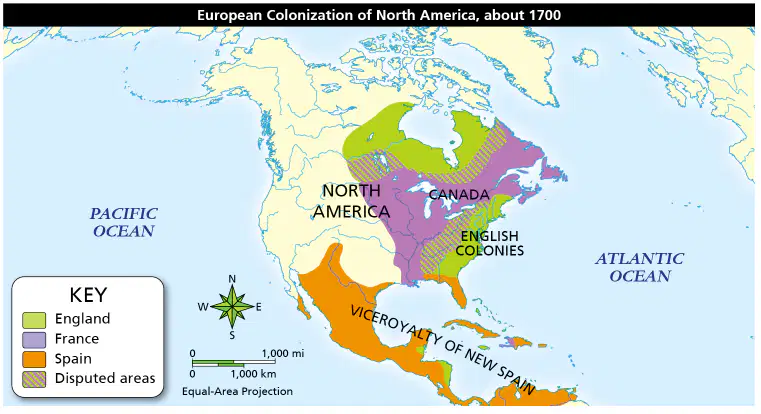
The map displays vast territorial claims of European powers in North America around 1700. Which of the following best describes the overarching reason these European empires established such extensive claims?
To promote religious freedom and establish utopian societies for their subjects.
To form military alliances with indigenous populations against rival European powers, primarily for defense.
To gain access to raw materials, develop trade networks, and expand economic and political influence globally.
To create uninhabited buffer zones in North America to prevent conflict between existing colonies.
“The royal power is absolute… Without this absolute authority the king could neither do good nor repress evil. It is necessary that his power be such that no one can escape him.”
– French bishop and court preacher, Jacques Bossuet, “Politics Drawn from the Very Words of Scripture,” 1679
Although not explicitly detailed in this specific excerpt, what common source of a king's power does Bossuet's work, "Politics Drawn from the Very Words of Scripture," strongly suggest?
Being chosen by common people through a system of direct democracy.
Power given to the king by a strong and independent parliament.
Divine Right (Power granted by god), which stated that a king's power came directly from God.
The king's ability to keep power only through military conquest and rebellion by the people.
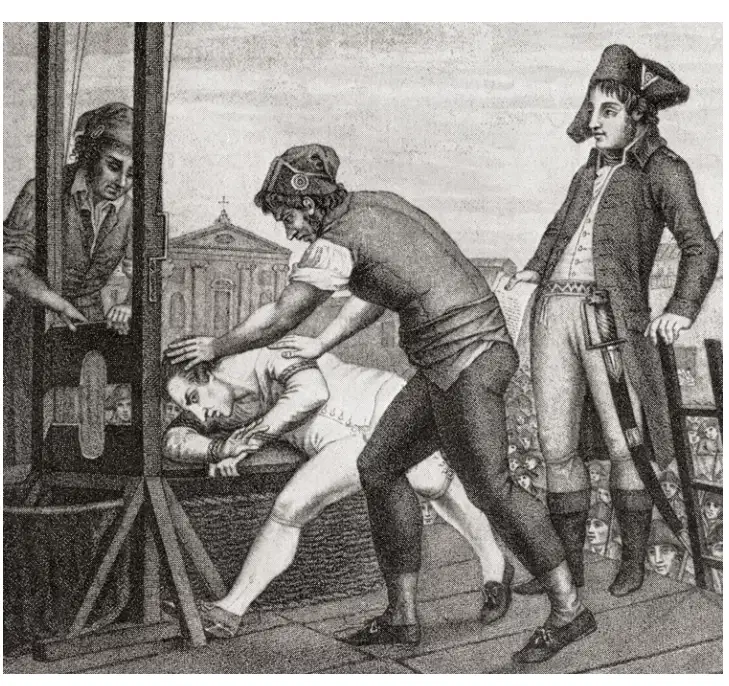
By 1793, The Committee of Public Safety was established in the new French Republic to deal with issues they considered threats. The committee ended up gaining absolute control over France, and was led by Maximilien Robespierre. He was responsible for starting the Reign of Terror, a time during which many people were executed. Robespierre said that terror was needed to protect the Revolution and to achieve its goals. About 17,000 people were executed.
What is the most significant lesson about the nature of revolutions that can be made from the Reign of Terror during The French Revolution?
Revolutions can lead to new forms of extreme violence, in pursuit of revolutionary ideals
Once a monarchy is overthrown, peace and stability are immediately achieved.
Revolutionary leaders are always successful in establishing lasting, democratic institutions.
The primary aim of most revolutions is to reduce government power and enhance individual freedoms universally.

