Worksheets
Chemistry G9 T3 Revision 1st Evaluation 2021/2022
Total questions: 47
Worksheet time: 1hrs 7mins
What is the basis of a metallic bond?
the attraction of neutral metal atoms.
the attraction between protons and neutrons.
the attraction between positive metal ions and interlocking electrons.
the attraction between positive metal ions and free moving electrons.
Which of the following is NOT a property of metals?
Hard
Can conduct electricity
Very brittle (breaks easily)
Malleable (can bend without breaking)
Why are metals good conductors of electricity?
The electric current can easily travel along the surface of the metal because it is smooth.
A negative charge can easily push the sea of electrons in one direction, making a current.
Metals attract electricity.
Metals are malleable.
Why are metals malleable? (They can bend without breaking.)
Metals are very smooth.
Metals have a sea of electrons.
The sea of electrons form a strong metallic bond.
Even though the metal ions repel each other, the electron sea holds all the atoms in place.

What do we call electrons that move freely in a metallic bond?
sea of electrons
lone electrons
unpaired electrons
covalent electrons
Can NEVER conduct electricity
ionic
covalent
metallic
bond between 2 or more non-metals
ionic
covalent
metallic
shares electrons
ionic
covalent
metallic
1. Which substance contains metallic bond?
Sodium chloride ,NaCl
Iron nail, Fe
Carbon dioxide, CO2
water, H2O
How metallic bond is formed?
Metal atoms donate its valence electron
Non metal atoms share its valence electron
Negatively charge sea of electron from strong electrostatic forces with positively charge metal ions
Positively charge of ions formed strong electrostatic forces with negatively charge of non metal ions.
Why covalent compound cannot conduct electricity in all states?
The ions cannot move freely
No presence of free moving ions, the compound only consist of neutral molecules
There are strong electrostatic forces between the ions
There are strong covalent bond bonds between the atoms
Identify which substance is a covalent compound
NaCl
Copper
CO2
NH4+
Which pair of characteristics is most closely associated with metallic solids?
I. low melting point
II. high malleability
III. low thermal conductivity
IV. high electrical conductivity
I and II
I and III
II and III
II and IV
III and IV

The image shows :
A substitutional alloy since the yellow atoms replaced the empty space between the blue atoms
An interstitial alloy since the yellow atoms are the same size as the blue atoms
A interstitial alloy since the yellow atoms filled the empty space between the blue atoms
Why do copper and zinc form a substitutional alloy and not an interstitial alloy

Which property of metals is represented by the image ?
Ductility
Malleability
Durability
Name the type of bonding in which the electrons are shared.
Ionic bonding
Covalent bonding
Metallic bonding
The covalent bond forms between
a metal and nonmetal
a nonmetal and nonmetal
a metal and metal
The number of electron pairs shared in double bond.
One
Two
Three
Name the bond in which the orbitals overlap head to head
Ionic bond
sigma bond
pi bond
Number of covalent bonds can form in group 16
three
two
four
As bond length increase the strength...
increases
decreases
no change
The energy required to break the bonds between two covalently bonded atoms
bond dissociation energy
activation energy
none of these
NaBr
H2O
How is covalent bonding represented?
by writing its valence electrons
by writing its Lewis structure
by writing its number of bonds
by writing its number of protons
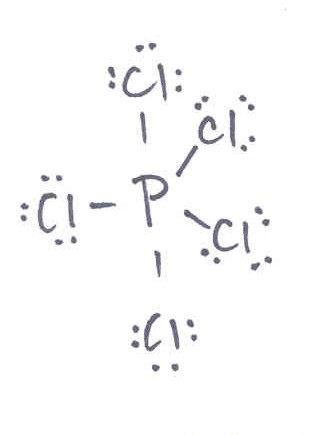
1




CO2 has how many lone pairs?
0
1
2
3
4
NH3 has how many lone pairs?
0
1
2
3
CCl4 has how many double bonds?
0
1
2
3
In HCN (Carbon is usually the central atom) what kind of bond is between the C and N
Single
Double
Triple