

wayground logo

Free Printable Worksheets

Font size

S
M
L
XL
Worksheets

Health Practice Quiz

Total questions: 44

Worksheet time: 24mins
Name
Class
Date
1.
Which of the following statements is not part of the cell theory?
a)
Cells are the basic unit of structure and function in all living things.
b)
All cells are produced from other cells.
c)
Only animal cells are composed of cells.
d)
All living things are composed of cells.
2.
What is one way in which all living things on Earth are alike?
a)
All living things have hair.
b)
All living things are made of cells and come from other cells.
c)
The cells of all living things have chloroplast.
d)
All living things can move. 
3.
What structures distinguish a plant cell from an animal cell?
a)
Plant cells have cell walls and ribosomes.
b)
Plant cells have cell walls and chloroplasts.
c)
Plant cells have chloroplasts and ribosomes.
d)
Plant cells have chloroplasts and mitochondria.
4.
______________ are the basic unit of life.
a)
DNA
b)
RNA
c)
Cells
d)
Takis
5.
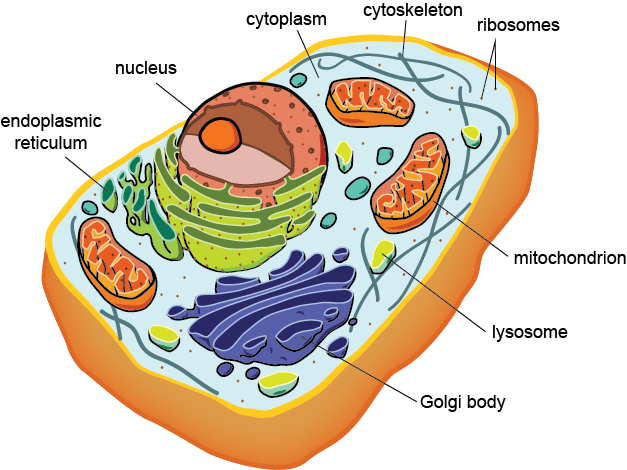
This organelle acts like a gatekeeper, allowing some materials to pass through it, but not others. 
a)
Cytoplasm
b)
Cell Membrane
c)
Mitochondria
d)
Vacuole
6.
What structure is in plant cells but not animal cells?
a)
Cell Membrane
b)
Mitochondria
c)
Cell Wall
d)
Vacuole
7.
This organelle is a gel-like fluid that takes up most of the space inside the cell. 
a)
Cytoplasm
b)
Cell Membrane
c)
Vacuole
d)
Golgi Body
8.
Where is the genetic material found in the cell? 
a)
Nucleolus
b)
Cytoplasm
c)
Nucleus
d)
Chloroplast
9.

Organelles where photosynthesis occurs, are green due to chlorophyll pigment found in them.

a)

Chloroplasts

b)

Cell Wall

c)

Cell Membrane

d)

Cytoplasm

10.

Powerhouse of the cell, organelle that is the site of ATP ( energy production ) and cellular respiration in plants and animals.

a)

Nucleus

b)

Ribosomes

c)

Mitochondria

d)

Vacuoles

11.

Saclike structures that store materials such as water, salts, proteins, and carbohydrates.

a)

Nucleus

b)

Ribosomes

c)

Organelles

d)

Vacuoles

12.
Processes materials and move them around INSIDE the cell. (highway system)
a)
endoplasmic reticulum
b)
ribosomes
c)
Golgi bodies
d)
cell membraine
13.
Sorts and packages materials and moves them  OUT of the cell.
a)
cell membrane
b)
endoplasmic reticulum
c)
golgi bodies
d)
vacuole
14.
Powerhouse of the cell. It releases energy from food.
a)
mitochondria
b)
chloroplasts
c)
golgi bodies
d)
ribosomes
15.
What structures are only found in plant cells?
a)
cell wall, cell membrane, nucleus
b)
chloroplast, cell wall, large vacuole
c)
chloroplast, large vacuole, Golgi bodies
d)
large vacuole, cell wall, mitochondria
16.

Which parts are found in plant cells? Choose ALL that apply.

a)

cell membrane

b)

cell wall

c)

chloroplasts

d)

mitochondria

17.
What is the function of the lysosome?
a)
site of digestive enzymes
b)
site of ATP (energy) production
c)
site of photosynthesis
d)
site of protein production
18.

Organisms whose cells do not have a nucleus are called . . .

a)

Eukaryotes

b)

Multicellular

c)

Prokaryotes

d)

Unicellular

19.

An organism made of only one cell is called . . .

a)

Eukaryotic

b)

Monocellular

c)

Multicellular

d)

Unicellular

20.
What is the difference between rough and smooth Endoplasmic Reticulum?
a)
There is no difference.
b)
Plants have rough ER, animals have smooth ER.
c)
What type of injuries the Doctors treat.
d)
Rough has ribosomes, smooth does not.
21.

Which system brings in oxygen (O2) and takes out carbon dioxide (CO2) ?

a)

digestive system

b)

respiratory system

c)

nervous system

d)

immune system

22.

Which system protects the body from foreign pathogens (invaders) like viruses, bacteria, and fungi?

a)

immune system

b)

endocrine system

c)

nervous system

d)

skeletal system

23.

Contains kidneys, ureters, bladder, and urethra:

a)

Skeletal System

b)

Urinary System

c)

Lymphatic System

d)

Endocrine System

24.

Which system is depicted here?

a)

Circulatory

b)

Digestive

c)

Integumentary

d)

Nervous

25.

Which system is that?

a)

Circulatory System

b)

Lymphatic System

c)

Digestive System

d)

Nervous System

26.

Which best describes an organ?

a)

A collection of tissues intended to carry out a specific job in the body

b)

A collection of atoms that makes up cells

c)

A collection of cells that interacts to carry fluids

d)

A collection of ecosystems that interacts

27.

Which is NOT a function of the muscular system?

a)

Regulating body temperature

b)

Movement

c)

Protecting delicate organs

d)

Preventing disease

28.

1. What is an organ system?

a)

a. It is a set of cells that work together to perform an intricate function in the body .

b)

b. It is a set of tissues that work together to perform an intricate function in the body .

c)

c. It is a set of organs that work together to perform an intricate function in the body .

d)

d. It is a set of organism that work together to perform an intricate function in the body .

29.

The heart and blood vessels are the primary organs of the ________ system.

a)

Lymphatic

b)

Respiratory

c)

Integumentary

d)

Cardiovascular

30.
Major organs of the digestive system
a)
Kidneys, nephrons
b)
Stomach, intestines, mouth
c)
Heart, blood vessels, blood
d)
Liver, kidneys, heart
31.
Major organs of the nervous system
a)
Kidneys, nephrons
b)
Stomach, intestines, mouth
c)
Heart, blood vessels, blood
d)
Brain, spinal cord, nerve
32.
Major organs of the skeletal system
a)
Muscles, tendons
b)
Bones, ligaments
c)
Marrow, periostium, nerves
d)
Ribs, quadriceps, femur
33.
A group of similar cells that come together to perform a specific function is a/an
a)
organ
b)
organism
c)
organ system
d)
tissue
34.

How many bones does the adult human body have ?

a)

106

b)

206

c)

306

d)

406

35.

Which bone of the skull is known as to protect the brain from damage ?

a)

clavicle

b)

scapula

c)

cranium

d)

mandible

36.

Name of the thigh bone which is the largest bone in the body is ....

a)

humerus

b)

scapula

c)

patella

d)

femur

37.
What is the name of the collar bone?
a)
Clavicle
b)
Scapular
c)
Sternum
d)
Xiphoid
38.

What is the main function of the skeletal system?

a)

clean the body

b)

support the body

c)

deliver nutrients to the body

39.

Part of the bone that manufactures red blood cell.

a)

Spongy Bone

b)

Red bone marrow

c)

Compact bone

d)

Joint

40.
Skeletal muscles are responsible for which of the following?
a)
Movement of the body
b)
Movement of the heart
c)
Movement of the ligaments 
d)
Movement of the extremities
41.
Which 2 systems work together to help a person stand erect?
a)
skeletal / muscular
b)
skeletal / digetive
c)
skeletal / respiratory
d)
skeletal / cardiovascular
42.

a place where two or more bones meet

a)

joint

b)

cartilage

c)

marrow

d)

tendon

43.

Strong band of tough tissue that attach muscle to bone

a)

Cartilage

b)

Ligaments

c)

Tendons

d)

Involuntary muscle

44.
A sprain occurs when you tear what type of tissue?
a)
Tendons
b)
Ligaments
c)
Cartilage
d)
Muscle
