
 Worksheets
FINAL CRUNCH TIME QUIZIZZ
Total questions: 25
Worksheet time: 27mins
The formula for density is
D = M/V
D = V/M
D = M x V
The amount of space an object takes up is its
Density
Mass
Weight
Volume
The two factors that will influence the amount of gravity are
Distance
Time
Weight
Mass
The reactants in photosynthesis reactions are
CO2 & H2O
Glucose & ATP
O2 & Glucose
The formula for speed is
Speed = Time/Distance
Speed = Distance/Time
Speed = Time x Distance
Match the description to the graph:
"The car is stopped."


Match the description to the graph:
"The car is stopped."
Match the description to the graph:
"The car is traveling at a constant speed."
Match the description to the graph:
"The speed of the car is decreasing."
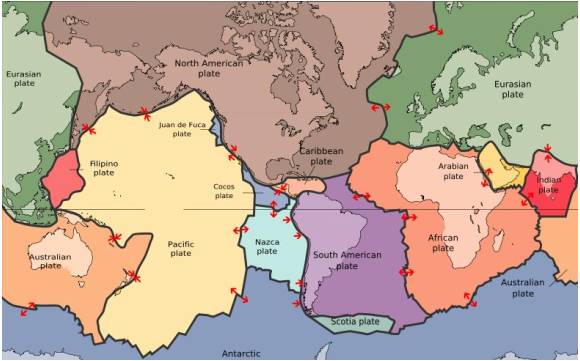
The map in the picture shows tectonic plate boundaries. This map would be useful in predicting the location of future
droughts
hurricanes
earthquakes
tornadoes
Cellular respiration happen in which of the following organisms (select all that apply)
Plants
Animals
Fungi
Protists
Which of the following are pure substances? (Choose all that apply)
24k Gold
Salt
A muffin
Milk
Which of the following are suspensions?
Milk
Oobleck
Ketchup
Koolaid
Which of the following is NOT evidence of a chemical change?
Unexpected color or temperature change
Production of light, smell, or bubbles
Formation of a precipitate
Change of State
In which type of rock do we typically find fossils?
Sedimentary Rock
Igneous Rock
Metamorphic Rock
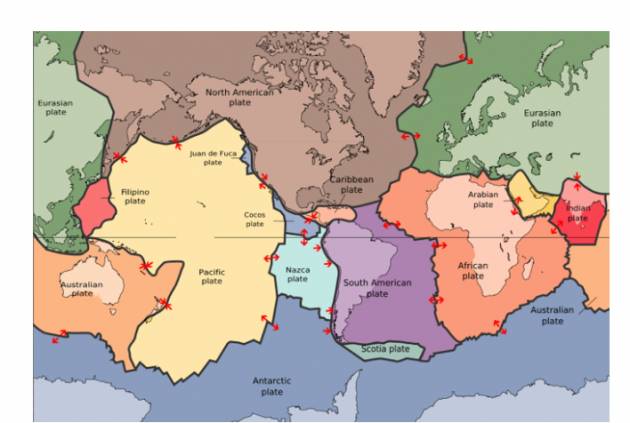
Where are earthquakes MOST LIKELY to occur?
close to the equator
close to the center of tectonic plates
at divergent or convergent plate boundaries
at transform plate boundaries
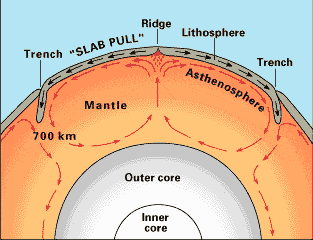
What is the source of energy that drives plate movement?
the subducton of the sea floor
the different densities of the oceanic and crustal plates
convection currents in the asthenosphere
the friction force between the plates that move past each other
Which organelles do plant cells have but animal cells DO NOT have?
Chloroplast and Cell Walls
Mitochondria and Cell Walls
Vacuole and Chloroplast
Nucleus and Mitochondria
Which places the levels of organization in the right order?
Tissue -> Organ -> Organelle -> Organ System -> Organism
Atom -> Molecules -> Organelle -> Cells -> Tissue
Molecules -> Cells -> Organelles -> Organ -> Organism
Molecules -> Organelle -> Cells -> Organ -> Tissue

Which of the following is a prokaryotic organism?
A tree
Bacteria
Mushroom
A kitten
The independent variable in an experiment is also known as the _________ (choose all that apply)
test variable
dependent variable
responding variable
manipulated variable
When I do multiple trials in my experiment to help ensure that my test results are valid, I am engaging in what?
replication
repetition
exploration
data evaluation

