
 Worksheets
Understanding Atom
Total questions: 30
Worksheet time: 23mins
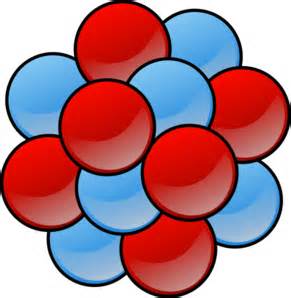

Which scientist proposed this model for atoms?
Dalton
Democritus
Rutherford
Thomson
Which of the following found that atoms have a nucleus?
Aristotle
Dalton
Rutherford
Thomson
In _______, the atomic number increases by one.
alpha decay
beta decay
gamma decay
omega decay
Which of the following determined that cathode rays are negatively charged?
Aristotle
Dalton
Rutherford
Thomson
________ does not change an element into another element
Alpha decay
Beta decay
Gamma decay
Omega decay
In 1896, the French scientist Henri Becquerel discovered
light-emitting polymers
a process to turn natural rubber into a hard, stretchable polymer
radioactive decay
how to make alloys
Based on his research of the atom, James Chadwick concluded that
a cathode ray has a negative charge
the electrons are found in an electron cloud
the nucleus contains neutrons as well as protons
the mass of an atom is concentrated in its center
Two neutral atoms that have the same atomic number and different mass numbers are
ions
isotopes
alpha particles
different elements
An ion that has a negative charge is formed when an atom
loses neutrons
loses electrons
gains neutrons
gains electrons
If an ion contains 10 electrons, 12 protons, and 13 neutrons, what is the ion's charge?
-2
-1
+2
+3
The atomic number of iron is 26. One of the naturally occurring isotopes of iron is iron-59. How many neutrons are found in the nucleus of this isotope?
30
33
56
59
What is a substance called that consists of a single type of atom?
element
quark
proton
molecule
Who discovered electrons?
Dalton
Aristotle
Democritus
Thomson
Bohr proposed that electrons are located in the
nucleus
electron cloud
circular orbits around the nucleus
quark
The atomic number decreases by two.
alpha decay
beta decay
gamma decay
ion
Area around an atomic nucleus where an electron is most likely to be found.
electron cloud
nucleus
mass number
atomic number
Process that occurs when an unstable atomic nucleus changes into another more stable nucleus by emitting radiation.
nuclear decay
radioactive
spontaneous
isotope
Describes elements that spontaneously emit radiation.
radioactive
isotope
ion
nuclear decay

