
 Worksheets
Unit 5 & 6 Final Exam Review
Total questions: 223
Worksheet time: 3hrs 39mins
How many stages are in the water cycle
3
5
9
7
What is not a stage in the water cycle?
Evaporation
Precipitation
Drizzle
Runoff
What is the last stage in the cycle?
Condensation
Infiltration
Runoff
Transpiration
How does the water cycle begin?
Condensation
Runoff
Sublimation
Evaporation
Where can the cycle begin
Ocean
Sand
Mountain
Lake
Where does precipitation happen?
Rivers
Clouds
Ocean
Plants
What is needed for the water cycle?
Moon
Venus
Mars
Sun
Is the water cycle important?
Yes
No
Maybe
So
Another name for the Water Cycle is the
Moisture Cycle
H2O Cycle
Hydrologic Cycle
Drenched Cycle
What is a run-off?
Where two or more main or independent clauses are joined without a word to connect them or a punctuation mark to separate them
A further competition after an inconclusive result
I forget
The movement of land water to the oceans
What is the water cycle
A bike made of water
The movement of water on, above, or below the surface of the Earth
Rain falling on the ground
Something Mrs. Driver talked about but isn't important

What is shown in this picture
Condesation
Evaporation
Runoff
Precipitation

What part of the water cycle does this picture show?
condensation
precipitation
evaporation
transpiration
An underground layer of sand, gravel or rock that stores and carries water
water table
water cycle
aquifer
Infiltration
The top of the water surface in a saturated part of an aquifer
water table
Water cycle
aquifer
Percolation
The process of changing a vapor into a liquid, which occurs when warm vapor mixes with cooler air in the atmosphere
Transpiration
Evaporation
Condensation
Precipitation
The continuous movement of water from the earth into the atmosphere
Water Table
Percolation
Aquifer
Hydrologic cycle
The process by which water moves through the soil
Precipitation
Percolation
Condensation
Evaporation
Turns frozen water into water vapors - skipping the melting stage
Sublimation
Percolation
Transpiration
Evaporation
Plants giving off moisture and releasing water into the air
Precipitation
Evaporation
Transpiration
Runoff
Water running off the land surface
Evaporation
Sublimation
Transpiration
Run-off
When clouds get too heavy and water falls back to earth in the form of rain, snow, hail or other forms.
Precipitation
Evaporation
Percolation
Transpiration
Changes liquid and frozen water into water vapor gas which floats up into the skies to become clouds
Evaporation
Precipitation
Condensation
Runoff
What is a river basin?
the water in a river
land that water flows across or under on its way to a river
land around smaller streams, lakes, or ponds
the channel that a river flows in
In which river basin is Wake Forest located?
French Broad
Neuse
Broad
Tar-Pamlico
How many river basins are in NC?
20
13
15
17
The top of an aquifer is known as:
the water table.
an artesian well.
the hydraulic gradient.
a geyser.
The _________ is where streams/rivers begin.
Source
Confluence
Tributary
Mouth
A _________ is a smaller stream/river that contributes to the main river a drainage basin.
Tributary
Mouth
Watershed
Source
What is the energy source for the hydrological cycle?
the Sun
the Earth
water
the Moon
What is the term for water flowing back to the sea over the land.
Groundwater Flow
Surface Runoff
Through Flow
Infiltration
How much of water on Earth is FRESH SURFACE water?
0.3%
3%
97%
30%
Where is the majority (>60%) of the world's surface freshwater?
Canada
Near unpopulated areas
In large cities
On islands
How many gallons of water are used from Lake Michigan EACH DAY?
100
1 billion
3 million
1 million
What is virtual water?
Water on a computer screen
Water that is salty
Amount of water to create a product
Water that is frozen
Which of the following is NOT a major use of freshwater?
Residential
Agricultural
Industrial
Clouds
Which of the following affects how freshwater is used?
Age
Population size
Education
GPA
What does "potable" mean?
Safe to drink
Frozen
Liquid water
Dirty water
Which of the following is an unsafe material that can be found in drinking water?
Fish
Pathogens
Minerals
None of these
In a residence, how is most (26%) of the water used?
Toilet
Bath/shower
Faucet
Dishwasher
In industrial water use, what is most of it used for?
Toilets
Cooling power plants
Making goods
Waste disposal
What is water used for in agriculture?
As a pesticide
Cleans crops
Water parks
Irrigation
The point at which the earth and moon swing around each other is called...
their orbit
a tide
false, the earth doesnt move
the barycenter
Check three of the following factors that affect the tides
the temperature
the moon-earth interaction
the sun
the shape of the continents
What causes the high tide area that is opposite the moon?
the centrifugal force of the earth
the moon
the sun
high wind speeds
Tides are not affected by the Coriolis Effect.
True
False
The sun influences the tides just as much as the moon.
True
False
Spring tides are when the sun and moon are lined up and working together.
True
False
Neap tides are when the sun and moon are lined up and working together.
True
False
Diurnal tides are when there is one high and one low tide per day.
True
False
Semidiurnal tides are when there are 2 high tides and 2 low tides per day that are equal.
True
False
Mixed tidal patterns are when there are 2 high tides and 2 low tides per day that are equal.
True
False
The moons rotation around the earth is what causes the tides to change daily.
True
False
Ebb is when the tide is...
rising
falling
The bulge of water on the side of the Earth closest to the moon produces ___________.
high tide
low tide
How many tides (both low & high) do we have each day if it mixed semidiurnal?
3
4
1
2

Carolina beaches have 2 high and 2 low tides every day. If the beach at 12 pm (noon) and it is high tide, then what tide will you see If you return about 6 hours later?
high
low
none
spring


What happens to the shape of the Earth due to the Moon's gravity?
Slightly football- or "M&M"-shaped
Soccer ball-shaped
Nothing
Hockey puck-shaped
Which layer of the atmosphere has meteors?
troposphere
stratosphere
mesosphere
thermosphere
Which layer of the atmosphere contains the ionosphere?
troposphere
stratosphere
mesosphere
thermosphere
Which layer of the atmosphere has weather?
troposphere
stratosphere
mesosphere
thermosphere
Which layer of the atmosphere contains the ozone?
troposphere
stratosphere
mesosphere
thermosphere
Temperature increases with height in the ______ due to solar radiation.
troposphere
stratosphere
mesosphere
thermosphere
Temperature increases with height in the ______ due to the ozone trapping heat.
troposphere
stratosphere
mesosphere
thermosphere
Temperature decreases with height in the ______ because there is nothing but thin air.
troposphere
stratosphere
mesosphere
thermosphere
Temperature decreases with height in the ______ because the heat from the surface rises and cools.
troposphere
stratosphere
mesosphere
thermosphere
Which is not a factor that influences daily weather?
heat
air pressure
elevation
moisture
What is the term for the day to day conditions of the atmosphere?
weather
climate
hurrican
global wind
Which prevailing wind can be found between 30 and 60 degrees latitude?
trade winds
horse winds
eaterlies
westerlies
Which prevailing wind can be found between 60 and 90 degrees latitude?
trade winds
horse winds
eaterlies
westerlies
Which prevailing wind can be found between 0 and 30 degrees latitude?
trade winds
horse winds
eaterlies
westerlies
Which gas makes up the largest portion of air?
oxygen
nitrogen
carbon dioxide
methane
What do you call the part of the atmosphere where molecules escape into space?
doldrums
ionosphere
exosphere
dead zone
Ray of sunlight hitting the equator directly results in:
fires
cold weather
a low pressure system
a high pressure system
What protects the earth from harmful UV rays from the sun?
clouds
ionosphere
nitrogen gases
the ozone

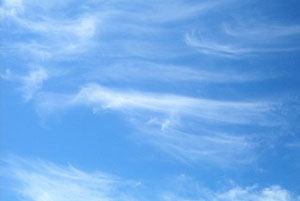
Which type of cloud is this?
cirrus
stratus
cumulus

Which type of cloud is this?
cirrus
stratus
cumulus

Which type of cloud is this?
cirrus
stratus
cumulus

What results from livestock and other agricultural practices and by the decay of organic waste in municipal solid waste landfills?
Carbon Dioxide
Methane
Water Vapor
Fluorinated Gases
Nitrous Oxide
Which of the following natural events is NOT a source of carbon dioxide?
Wildfire
Decomposing plants and animals
Volcanic eruption
Earthquake
Cutting down large forests (deforestation) can result in:
little to no changes
more homes for animals
less plants to absorb carbon dioxide, a greenhouse gas
The amount of water vapor in the air is known as ___.
dew point
humidty
relative humidity
rain
Which one of the following is an accurate relative humidity reading?
32 degrees
24 mL
45%
15 NW
When the air is full of water and has a relative humidity of 100% it is said to be ___.
full
humid
saturated
warm
The condition of the atmosphere at a certain time and place is referred to as ___.
weather
climate
relative humidity
dew point
Which will hold more water, warm air or cold air?
Warm Air
Cold AIr
Dew is what?
Water that is pushed out by plants
Water that was a gas in the atmosphere, but when it cooled turned into liquid water touching a solid object
Water from the ground

colder air = higher humidty
warmer air = higher humidity
How many oxygen atoms are in ozone?
1
2
3
4
"Criteria to be considered an air pollutant" was established by which federal agency?
Environmental Protection Agency (EPA)
Department of the Interior (DI)
Center for Disease Control (CDC)
United Nations (UN)
Which of the following is the most common source of carbon monoxide (CO):
vehicle emissions
swamp gases
industrial sources
solar panels

Which of the following are considered "Good Ozone" (Select the TWO that apply)
Tropospheric ozone
Stratospheric ozone
The ozone layer that is higher in our Earth's atmosphere that protects us from solar radiation
The ozone layer that is at the Earth's surface that creates unique weather events like temperature inversions
The ozone layer that is at the Earth's surface that creates smog
Which of the following are considered "Bad Ozone" (Select the TWO that apply)
Tropospheric ozone
Stratospheric ozone
The ozone layer that is higher in our Earth's atmosphere that protects us from solar radiation
The ozone layer that is at the Earth's surface that creates unique weather events like temperature inversions
The ozone layer that is at the Earth's surface that contributes to smog
Chlorofluorocarbons (CFCs) is a chemical that has been banned across the world because it destroys ozone. Why do you think it has been banned?
It was reducing the amount of smog
It was reducing the ability of our atmosphere to protect against solar radiation
The world is trying to boycott the aerosol industry
It was increasing the amount of smog

You can find the AQI on your iPhones / androids weather app... What is AQI?
Air Quality Index - determines the amount of pollutants in your immediate area to see if there are any health risks
Average Quality Independent - determines the amount of pollutants in your immediate area to see if there are any health risks
Air Quality Intervention - determines what color the sunset will be

An AQI of 41 falls into the green category and means...
Safe for all
Unsafe for people in sensitive groups
Unhealthy for all people to spend a lot of time outside
Hazardous for anyone to be outside

An AQI of 188 falls into the red category and means...
safe for all people
safe except for people in sensitive groups
unhealthy for all people to spend a lot of time outside
hazardous for anyone to be outside

Which gas emission from cars causes the formation of acid rain and photochemical smog?
carbon dioxide
nitrogen oxide
oxygen
ozone
In the 1970's scientists began investigating the chemical reactions that caused the destruction of the ozone in the upper atmosphere. Which of the following was a result of their investigations?
Global positioning technology was invented. (GPS)
Research on a reusable space shuttle was started.
Alternatives to ozone depleting aerosols were invented because of the Montreal Protocol.
Plastic bags were invented as an alternative to paper bags.
A local car company noticed the paint of several brand new vehicles was peeling off. Which was most likely causing the paint to peel off?
acid rain
radon pollution (occurs naturally in the ground)
dust and flying dirt
smoke from campfires

Which of the following are sources of primary pollutants? (Select all that apply)
Airplanes
Cruise ships
Factories
Industrial practices
Agriculture
Which of the following are examples of secondary pollutants? (Select all that apply)
CO2
NOX
VOCs
O3
SOX

What is the overall trend of the number of unhealthy AQI days since the year 2000?
Upward trend
Constant trend
Downward trend
Which of the following could be responsible for the downward trend we see in this figure? (Select all that apply)
Increasing popularity with electric vehicles
Catalytic converters on gas powered vehicles
Wet scrubbers on smokestacks
The burning of fossil fuels
Increased mining and construction operations
A type of pollution found both indoors and outdoors, which includes pollen, dander, soot, carbon, and dust.
Water droplets
Allergens
Particulate matter
Combustibles
Which of the following government agencies is responsible for the Clean Air Act?
the USGS
the USDA
the EPA
the USDOJ
What is the major cause for noise & air pollution?
deforestation
oil spills
transportation
factories


How does a thunderstorm turn into a tornado?
updraft starts to rotate
a water source
pressure gets lower
downdraft forms
What is a tornado?
a violently rotating column of air
a rotating tropical storm
a winter storm characterized by high winds and snow
a storm that occurs in cumulonimbus clouds
Which state has the most twisters per year? How many?
Texas, 120
Oklahoma, 120
Texas, 1000
Kansas, 500
What are large thunderstorms that have winds already in rotation called?
supercells
blizzards
hurricanes
tornadoes
Why do most tornadoes occur in the afternoon?
the sun has had more time to heat the ground/atmosphere & produce thunderstorms
the winds need a few hours to build up before they can become a tornado
there aren't any clouds in the morning to form tornadoes
the ground has had time to cool off and produce ideal conditions for tornadoes
When do tornadoes form?
when warm, humid air collides with cold, dry air
when cold, humid air collides with warm, dry air
when cold air rises through warm air
when the air cools rapidly and forms storm clouds
What is a funnel cloud?
the cloud that forms before a storm turns into a tornado
another name for a tornado
a rotating updraft
when warm air rises through cold air
How does the Fujita scale measure a tornado's intensity?
by analyzing the damage the tornado has done & matching that to wind speeds
by only looking at the wind speed
by looking at the number of buildings the tornado destroys
by analyzing the wind speeds and width of the tornado
Which level on the Fujita scale corresponds to incredible damage and wind speeds of 261 mph?
F5
F1
F3
F2
What is the difference between a tornado watch and a tornado warning?
A watch is when a tornado has been sighted & a warning is when the weather is conducive to a tornado
A warning is when a tornado has been sighted & a watch is when the weather is conducive to a tornado
They are both the same thing
A watch is when there is a tornado is within 5 miles, & a warning is when there is a tornado within 1 mile
What are the perfect atmospheric conditions for a tornado?
When a cold/dry air mass and a warm/moist air mass meet in addition to falling pressure & variable winds.
When a cold/moist air mass and a warm/dry air mass meet in addition to falling pressure & variable winds.
When a cold/dry air mass and a warm/moist air mass meet in addition to rising pressure & steady winds.
When a cold/moist air mass and a warm/moist air mass meet in addition to rising pressure & variable winds.
What speed must the winds be in order for a tropical storm to be a hurricane?
74 mph
119 mph
47 mph
39 mph
Do the center of hurricanes have high or low pressure?
high
low
Where are a hurricanes most violent winds?
Eye wall
Feeder bands
left side
right side
Which direction do hurricanes turn in the Northern Hemisphere?
clockwise
counterclockwise
What are usually the most dangerous part of a hurricane?
storm surge
floods
landslides
wind
What atmospheric conditions are necessary to form hurricanes?
warm water, high humidity, and low pressure
cool water, high humidity, and low pressure
cool water, low humidity, and high pressure
warm water, low humidity, and low pressure
What are the 3 ingredients necessary for a thunderstorm?
moisture, instability, & a lifting mechanism
dry air, high pressure, & a lifting mechanism
moisture, instability, & cool air
moist cool air, high pressure, and differential heating
What is the mature cumulus stage of a thunderstorm?
Strong updrafts & downdrafts coexist
Air within the cloud is dominated by updraft
The downdraft cuts off the updraft and the storm no longer has a supply of warm moist air
When cloud height reaches up to 20,000 feet
To correctly identify a cloud formation, you must determine the cloud's _____________________
color and composition.
altitude in the sky and shape.
color and shape.
altitude and color.
That Latin root alto means
precipitation
high altitude
low altitude
middle altitude

Which type of cloud is white and puffy?
cumulus
cirrus
stratus
cumulonimbus
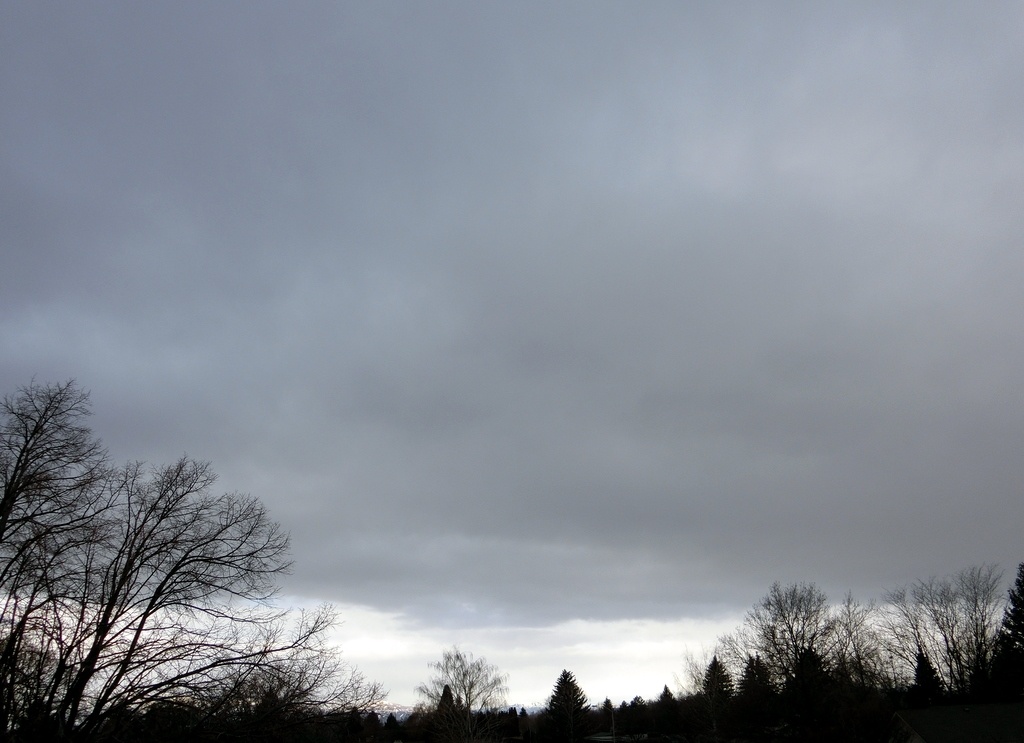

Characteristics of a Stratus cloud are..
high clouds, look like tiny cotton balls
low, puffy, gray clouds
low level clouds, usually in layers, kind of like a blanket
flat on bottom, fair weather
Which type of cloud is made of water (or supercooled water)
low level clouds
mid level clouds
high level clouds
vertical development clouds
How can looking at the sky color help predict the weather?
If the sky is deep blue, then there is little humidity and little chance of cloud formation.
If the sky is deep blue, then there is quite a bit of humidity and a good chance of cloud formation.
Skys are white or hazy when the nitrogen level is higher
A sky's color can not help predict the weather
If cirrus or cirrostratus clouds are increasing then
better weather is on the way
they will turn into cumulus clouds
rain within 12 hours
rain within 24 hours
If altocumulus clouds are whipping around the sky, normally from west to northwest, it is a fair assumption
the weather will get better
rain within 24 hours
there will be a hard and heavy rain or hail storm very soon.
The day will stay overcast
cumulus clouds
are bad weather predictors
if they are not doing much the day will be fine
predict rain within 12 hours
very dangerous- run for cover.
wind speed

