
 Worksheets
Physics (Physical Science) Semester Review (in order)
Total questions: 52
Worksheet time: 31mins
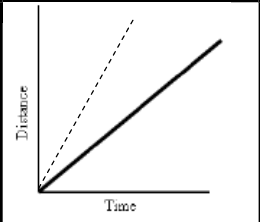
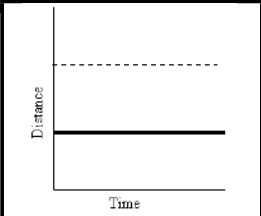

A ball of clay is thrown at a wall at a velocity of 28.0 m/s forward. After it hits the wall, it takes 0.020 s to stop. What is the acceleration of the clay when it hits the wall?
+1400 m/s2
-1400 m/s2
+0.56 m/s2
-0.56 m/s2
Displacement is
Vector
Scalar
Distance is
Vector
Scalar
A quantity that needs both magnitude and direction to be fully described.
Vector
Scalar
A quantity described by magnitude and does not need direction
Vector
Scalar
As an object falls through the air, the forces acting on the object are:
air resistance and fluid friction
gravity and air resistance
gravity and static friction
weight and rolling friction
An object's tenancy to stay at rest is called its ___.
force
momentum
inertia
motion
Is the following situation an example of balanced or unbalanced forces:
You are in a tug-of-war match with your twin and it is a tie.
Balanced
Unbalanced
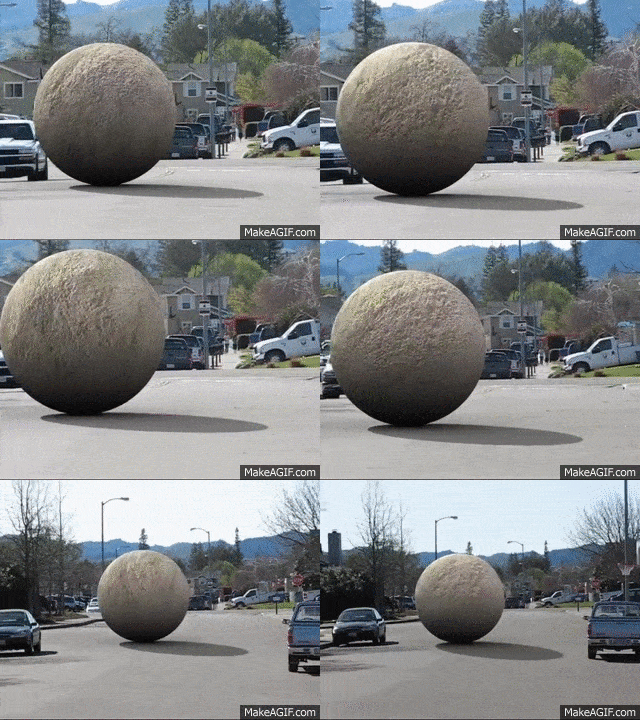
If a 10 kilogram object accelerates left suddenly at 15 m/s2, approximately how much force was applied to the object?
150 Newtons left
15 Newtons right
150 kilograms left
100 kilograms right
If balanced forces are acting on a box, is it accelerating?
Yes
No
Suppose that an astronaut throws a baseball in outer space at a location far from significant influences of gravity and air resistance. One would expect that the baseball would ____.
eventually stop since all objects ultimately "lose their steam"
eventually stop as its inertia slowly becomes used up
continue in motion with the same speed and direction
either a, b, or c -- depending on whether the astronaut continues to push it
Weight is a _______, therefore, it is measured in _________.
force, Newtons
force, kg
mass, Newtons
mass, kg

800 N
600 N down
800 N down
400 N down
The unit for work is a ___.
Watt
Newton
N*m
Joule
Energy stored in objects due to their height above the ground is called?
Chemical Potential Energy
Heat Energy
Gravitational Potential Energy
Light Energy
What is the approximate gravitational potential energy done in lifting a 50 kg barbell 6 m above the floor?
150 J
300 J
1470 J
2940 J
Which takes more work to complete?
Moving a pen from the floor to the table.
Holding a 2,234,662,235,222 lbs weight above your head still.
A 2-N box sitting on the ground
A 550-N car parked
The principle of energy conservation states:
Energy can be created but not destroyed
Energy cannot be created, nor destroyed.
Energy can be destroyed but not created
Power can be expressed through the units of
Watts
Newton
Joules
Person A and Person B are both using the same amount of work to lift something. Person A takes half as much time to do it. Who has greater power.
Person A
Person B
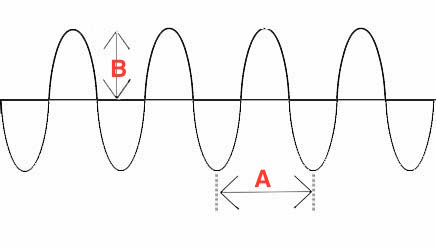
What property of this wave is represented by the letter "A"
amplitude
crest
trough
wavelength

A car horn is honking as it drives towards you. The perceived frequency will be ___ than the actual frequency
higher
lower
the same
The color that you see in an object is the color it is
absorbing
blocking
reflecting
A straw in water looks as if it is bent. This is an example of __.
Reflection
Refraction
Dispersion
Diffraction
A rainbow from a prism is an example of __.
Reflection
Refraction
Dispersion
Diffraction
What is the wavelength of a 264-Hz sound wave when the speed of sound is 345 m/s ? (v = λ⋅f)
0.77m
1.31m
6.09m
9.11m

What do you call matter in which sound waves travel through?
Medium
Pitch
Science
Wavelength

These are examples of
Insulators
Conductors
SI unit of current is
ampere
metre
ohm
volt
SI unit of voltage is
ampere
metre
ohm
volt
SI unit of resistance is
ampere
metre
ohm
volt


The circuit pictured below is an example of a …?
Series circuit
Parallel circuit
Direct circuit

