
Font size
 Worksheets
Science Final Review for Barbieri
Total questions: 57
Worksheet time: 36mins
Joining of an egg cell and sperm cell from two different organisms
sexual reproduction
asexual reproduction
growth
development
Identify three animal behaviors that increase their odds of reproduction
nest building
bright flowers
colorful feathers
herding
Identify three animal behaviors that help plants increase their odds of reproduction
transfer seeds
pollinate flowers
animal waste provides fertilizer
herding
Pair of genes where one is dominant and he other is recessive
heterogeneous
homogeneous
genotype
phenotype
Both genes are the same
heterogeneous
homogeneous
genotype
phenotype
Actual gene make-up (bb,Bb)
heterogeneous
homogeneous
genotype
phenotype
Physical appearance (brown hair, blue eyes)
heterogeneous
homogeneous
genotype
phenotype
Two brown-eyed parents can produce a child with blue eyes. Which of the following best explains how this is possible?
Blue eyes are an adaptation that can help the survival of humans.
Eye color is always a mixture of the traits of both parents.
Over many generations some characteristics become more frequent.
The genes passed on by the parents can combine in a new way in the child.

What is the likelihood that the offspring will be green (G)?
25%
50%
75%
100%
Dominant alleles are represented by a:
capital letter
lowercase letter

AA and Aa will both show up as ___________________ traits.
dominant
recessive

Each one of the boxes on the Punnett Square represents what percentage?
25%
1%
10%
0%

What is the likelihood that the offspring will be yellow?
0%
25%
50%
75%
Traits are passed on from one living thing to another through
DNA
blood
minerals
calories

What is the likelihood that the offspring will have brown eyes (B)?
0%
100%

What adaptations do plants have that allow them to survive?
stem size
root systems
height
all of the above

True or False.
A self contained living thing is called an environment.
True
False

For a seed to survive, which of these factors play an important role (check all that apply).
rainfall
sunlight
type of soil
space

The process of increasing in size and maturity is called
adaptation
growth
genetic factors
environmental factors

Identify the term.
The process of becoming better suited to an environment.
growth
genetic factor
adaptation
environmental

True or False.
Gravitropism is a plants growth toward a light source.
true
false

True or false.
Tropism is a directed growth or movement based on a stimulus, either negative or positive.
true
false

True or false.
Weather affects growth patterns of trees, which can be observed in their rings.
true
false
A point mutation in the organism's DNA
Environmental Factor
Genetic Factor
A deleterious (harmful) allele inherited from parents
Environmental Factor
Genetic Factor
A drought (drastic decrease in rainfall)
Environmental Factor
Genetic Factor
Size of habitat
Environmental Factor
Genetic Factor
Recessive trait showing. For example, a mouse showing white fur.
Environmental Factor
Genetic Factor
Pollutants
Environmental Factor
Genetic Factor

Which type of pollution is shown in the image below?
Air pollution
Water pollution
Acid precipitation
Global warming

Which type of human impact is shown in the picture below?
Desertification
Deforestation
Urban sprawl
Land pollution
Which of the following is an example of a non-renewable resource?
Solar Energy
Wind Energy
Hydro Energy
Fossil Fuel Energy
What is the Greenhouse Effect?
A federal law that requires all houses to have a greenhouse in their yard
Explains how the atmosphere protects the Earth
The way certain gases, like water vapor and carbon dioxide absorb and reradiate energy from the sun
Explains how plants grow better inside than outside
Which of the following is one way that we can preserve water resources?
Leave the water running while you are washing dishes or brushing your teeth
Only do laundry on certain days even if you don’t have full loads
Take shorter showers
Set your irrigation systems on timers so they only water at certain times, rain or shine
Which of the following is NOT a greenhouse gas?
Carbon dioxide
Methane
Water vapor
nitrogen
Examples of Chemoreceptors are....
Touch and hearing
Sight and time
Taste and smell
Pain and tissue damage
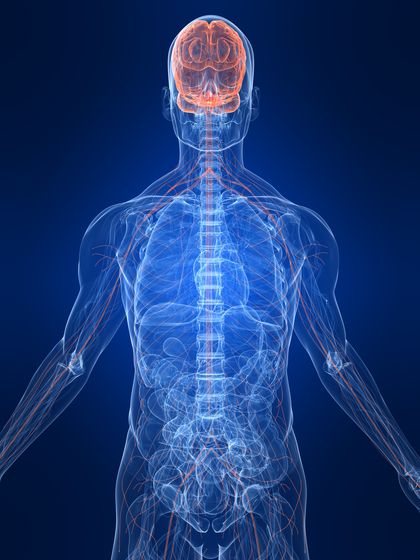
What is the main function of the nervous system?
Responsible for control of the body and communication among body parts
Responsible for production of offspring
Helps to rid the body of toxins, water, and other unwanted materials and transports lymph, a fluid containing infection-fighting white blood cells, throughout the body
Provides oxygen to the body's cells, while moving carbon dioxide

A receptor that detects light and darkness it's called...
Photoreceptor
Mechanoreceptor
Chemoreceptor
brightnessreceptor

What receptor detects pain?
Thermoreceptor
Mechanoreceptor
Proprioceptor
Nocioreceptor

What receptor allows you to see a rainbow?
Photoreceptor
Thermoreceptor
Mechanoreceptor
Gravitonreceptor
___________ are nerve endings that send signals to the nervous system when stimulated.
Cells
Sensory receptors
Organ systems
Brain

