wayground logo

Free Printable Worksheets

NEW

Font size

S
M
L
XL
Worksheets

Balancing Chemical Equations Check

Total questions: 30

Worksheet time: 50mins

Name
Class
Date
1.
What is the left part of a chemical equation called?
2H2 + O2 --> 2H2O
a)
Reactants
b)
Products 
c)
Yields 
d)
Chemical Equation 
2.
What is the right part of a chemical equation called...
2H2 + O2 --> 2H2O
a)
Reactants
b)
Products 
c)
Yields 
d)
Chemical Equation 
3.
Which of the following shows the correct way to balance the chemical equation?
Fe + O2 -> Fe2O3
a)
4Fe + 3O2 -> 2Fe2O3
b)
2 Fe + 3O2 -> Fe2O6
c)
4 Fe + O6 -> 2Fe2O3
d)
None of the options are correctly balanced.
4.
Which of the following reactions is balanced?
a)
2CH4 + O2 -> CO2 + H2O
b)
CH4 + 2O2 -> CO2 + H2O
c)
CH4 + 2O2 -> CO2 + 2H2O
d)
None of the chemical equations are balanced.
5.
Balance this equation...
HgO --> Hg + O2
a)
It is balanced 
b)
2HgO --> Hg + O2
c)
2HgO --> 2Hg + O2
d)
I don't know...Oh well!
6.
How many HCl molecules do you need to balance this equation? 
Mg +  __HCl --->  MgCl2 + H2
a)
1
b)
2
c)
3
d)
4
7.
Balance this equation.
_CF+ _Br-- _CBr+ _F2
a)
2,1,2,1
b)
1,2,2,1
c)
1,2,1,2
d)
2,2,2,2
8.
Balance this equation.
_CH4 + _O--> _CO+ _H2O
a)
1,2,1,1
b)
2,1,2,1
c)
1,2,1,2
d)
0,2,0,2
9.
Balance this equation
_Al +_HCl --> _H+_AlCl3
a)
2, 6, 3, 2
b)
it is already balanced
c)
4, 12, 3, 4
d)
2, 1, 4, 5
10.
Balance this equation.
_SnO+_H2-->_Sn +_H2O
a)
1,1,2,1
b)
1,2,1,1
c)
1,2,1,2
d)
1,2,2,1
11.

How many different elements are present in H2COCH2

a)

5

b)

4

c)

3

d)

2

12.

Calculate the number of Oxygen atoms in Al(OH)3

a)

1

b)

2

c)

3

d)

4

13.

The ______ are numbers found on the lower right-hand side of an element symbol.

a)

Coefficient

b)

Exponent

c)

Multiplier

d)

Subscript

14.

Coefficients in chemical formulas...

a)

Multiply just the first atom

b)

Add to the subscripts at the end of the molecule

c)

Multiply elements without subscripts

d)

Multiply EVERYTHING!

15.

4CF2Cl2

a)

C = 4, F = 4, Cl = 2

b)

C = 1, F = 8, Cl = 8

c)

C = 4, F = 8, Cl = 8

d)

C = 1, F = 4, Cl = 8

16.

H2SO4

a)

H = 2, S = 4, O = 4

b)

H = 2, S = 1, O = 4

c)

H = 8, S = 4, O = 4

d)

H = 2, SO = 4

17.

A ______ is a number written in front of a chemical formula.

a)

Coefficient

b)

Subscript

c)

Exponent

d)

Coordinator

18.
2H2 + O2 ----> 2H2O What is the product?
a)
------>
b)
2H2O
c)
2H2+ O2
19.
How many O's are in Al₂(SO₄)₃
a)
4
b)
12
c)
7
d)
24
20.
The law of conservation of matter states that
a)
chemical reactions change matter.
b)
in chemical reactions, the identity of reactants and products is conserved.
c)
atoms are neither created nor destroyed in chemical reactions.
d)
a chemical equation must be balanced.
21.
Why is the following chemical equation not balanced?
H2 + O2 --> H2O
a)
each side of the equation has a different number of oxygen atoms
b)
each side of the equation has a different number of hydrogen atoms
c)
each side has the same mass
22.
Is the following equation balanced or unbalanced?
Fe + S --> FeS
a)
balanced
b)
unbalanced
23.
What is the part of the chemical equation in green called? 
Fe + S --> FeS
a)
products
b)
reactants
c)
yield
d)
chemical formula
24.
Is this balanced?...
Al + O2 --> 2Al2O3
a)
Yes!
b)
NO!
25.
The Law of Conservation of matter states that the total amount of matter ______________ after it undergoes change.
a)
disappears
b)
stays the same
c)
weighs less
d)
explodes
26.
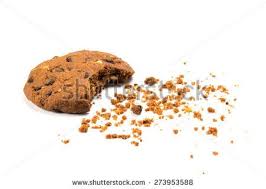
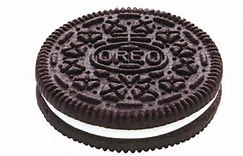
An oreo cookie weighs 20 grams.  It gets crushed into crumbs for a recipe.  How much do its crumbs weigh?
a)
15 grams
b)
25 grams
c)
20 grams
27.
What is the Law of Conservation of mass?
a)
Mass is created in a chemical reaction
b)
Mass is created in a physical change
c)
New chemicals formed from a chemical reaction have a larger overall mass than the original reactants
d)
Mass is never created or destroyed
28.
The coefficient in  3H2O is
a)
6
b)
2
c)
3
d)
5
29.

Which of the following are Subscripts in this Chemical Formula: 3Fe2O4

a)

3,4

b)

3,2

c)

2,4

d)

6

30.

How many oxygen atoms are in this chemical formula?

a)

6 oxygen atoms

b)

2 oxygen atoms

c)

3 oxygen atoms

d)

4 oxygen atoms