wayground logo

Free Printable Worksheets

Font size

S
M
L
XL
Worksheets

semester 2 review

Total questions: 56

Worksheet time: 11hrs 9mins

Name
Class
Date
1.
A process where one cell forms two identical daughter cells is called...
a)
cell cycle
b)
cell division (mitosis)
c)
interphase
d)
cytokinesis
2.
The cell cycle is ______________.
a)
the process of cells circling throughout the body
b)
the process of splitting the organelles
c)
a process where one cell gets energy
d)
the sequence of stages of growth and division that a cell undergoes
3.
During interphase the cell ___________.
a)
divides into two cells
b)
divides its nucleus
c)
replicates its DNA
d)
replicates the organelles within the cell
4.
Where does replication occur within the cell?
a)
in the cytoplasm
b)
in the nucleus 
c)
in the ribosome
d)
in the chromatin
5.
What is one half or one rod of the condensed chromatin called?
a)
DNA
b)
chromatin
c)
chromatid
d)
chromosome
6.
What is the  two daughter strands of replicated chromatin that are condensed into two rod shaped structures and connected by a centromere called?
a)
DNA
b)
chromatin
c)
chromatid
d)
chromosome
7.
The following describes ________  during mitosis. The chromosomes line up along the center of the cell and the spindle fibers attach to each chromosome at the centromere.
a)
prophase
b)
metaphase
c)
anaphase
d)
telophase
8.
Which process and type of resulting cells are represented?
a)
mitosis, gametes
b)
mitosis, body cells
c)
meiosis, gametes
d)
meiosis, body cells
9.
The chromosomes that pair up during meiosis, are called __________ chromosomes.  
a)
homozygous 
b)
asexual
c)
homologous
d)
genes
10.
Compared to the number of chromosomes contained in a body cell, how many chromosomes would normally be contained in a gamete?
a)
The same number
b)
One-fourth as many
c)
Twice as many
d)
Half as many
11.
What causes genetic variation in meiosis?
a)
chromosomes lining up
b)
crossing over of chromosomes
c)
separation of chromosomes
d)
chromosomes pulling apart
12.
Crossing over helps promote 
a)
male genotype
b)
genetic variation
c)
DNA replication
d)
mitosis
13.
What is a phenotype?
a)
The expression of a trait; what you see.
b)
refers to the genetic makeup of an individual
c)
An organism that has the same genes for a trait (ex. TT or tt)
d)
the passing of traits from parent to offspring
14.
A corn plant heterozygous for tall sprouts mates with a corn plant with short sprouts. If tall sprouts are dominant, how many different phenotypes are possible in the offspring?
a)
1
b)
2
c)
3
d)
4
15.
If T=Tall & t=short, what is the genotypic ratio?
a)
1:3
b)
3:1
c)
1:2:1
d)
2:2
16.
A dog gives birth to 5 puppies. What percentage of the chromosomes does each puppy share with the mother?
a)
25%
b)
50%
c)
75%
d)
100%
17.
If you cross a black guinea pig with a white guinea pig and the offspring are gray, what type of dominant trait would that be.
a)
incomplete dominance
b)
codominance
c)
codependant
d)
cooperative
18.
Why are there no white rabbit babies?
a)
The white gene is not present in any of the babies.
b)
It takes two recessive genes to show the trait.
c)
Grey is a better color.
d)
Baby five will be white.
19.
What is the term for a feature that allows an organism to survive in its environment?
a)
adaptation
b)
variation
c)
homologous structure
d)
vestigial structure
20.
a)
analogous structures
b)
homologous structures
c)
vestigial structures
d)
none of the above
21.
All the individuals of a species that live in a particular area are called a 
a)
group
b)
population
c)
variation
d)
fossil
22.

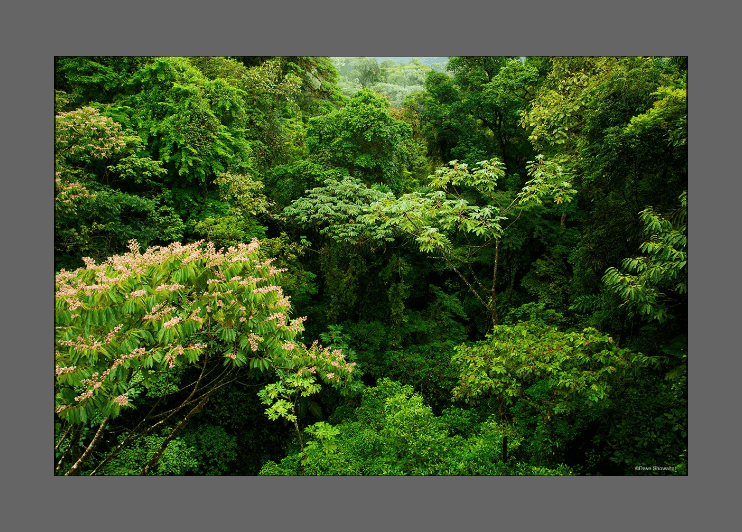
A yellow morph and green morph of an insect lives in the rainforest canopy. You would expect:

a)

the green population to increase and the yellow to decrease

b)

both populations should stay the same

c)

both populations will increase

d)

the green population to decrease and the yellow to increaseThis is a wrong answer
23.
Survival of the Fittest and Evolution were proposed by what scientist?
a)
Charles Darwin
b)
Albert Einstein
c)
Steven Hawking
d)
Isaac Newton
24.

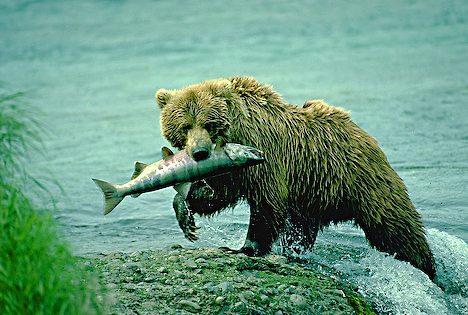
A grizzly bear survives because he is well-adapted to his environment. When he reproduces he passes on those traits to his offspring. this process is called

a)

Natural Selection

b)

Selective Breeding

c)

Random mutations

d)

Variations in a species

25.
All of the living and nonliving things in an area that interact with each other are called a/an ______.
a)
community
b)
habitat
c)
population
d)
ecosystem
26.
An area where an organism finds food, shelter and water in a specific arrangement
a)
niche
b)
biosphere
c)
biome
d)
habitat
27.
The living part of an ecosystem
a)
Biotic
b)
Abiotic
c)
Mother Earth
d)
Flowers
28.
Different populations living and interacting with each other in the same area
a)
Biome
b)
Ecosystem
c)
Community
d)
Niche
29.
Bacteria which convert nitrogen gas into bio-available forms of nitrogen, such as ammonia and nitrate, are known as _____
a)
De-nitrification bacteria 
b)
Nitrogen fixing bacteria
c)
Oxidizers
d)
Buffers
30.
Fungi are a  ________
a)
Autotrophs
b)
Heterotroopers
c)
Decomposers
d)
Primary Consumers
31.

In the woods, there are ducks and mice. They both compete for grasshoppers as the only source of food in that area at that time. The ducks outcompete the mice, and the mice die out in that area. This is an example of:

a)

Neutralism

b)

Commensalism

c)

The competitive exclusion principle

d)

Mutualism

32.

What is this picture describing?

a)

It is describing natural selection.

b)

It is describing direct competition between flamingos and ducks.

c)

It is describing abiotic factors of the tundra.

d)

It is describing the niche of each bird.

33.

The trophic pyramid is a triangular shape because

a)

90% of energy is lost to heat, movement, and survival, and only 10% of energy goes to the next level

b)

People see the top of the pyramid so it is important to know the keystone species.

c)

10% of energy is lost to heat, movement, and survival, and only 90% of energy goes to the next level

d)

the top of the pyramid is the pinnacle organism of an ecosystem

34.

The carnivore level in this diagram are also known as

a)

Producers

b)

Primary consumers

c)

Secondary consumers

d)

Tertiary consumers

35.

The food web shows

a)

many possible interactions and feeding relationships beween the organsims in the ecosystem

b)

a nice picture of what lives in the ecosystem

c)

the symbiotic relationships

d)

the keystone species

36.
When a specific population grows past the ecosystem's carrying capacity, what happens to the population?
a)
Density Independent limiting factors start to occur resulting in the population going farther above carrying capacity.
b)
Density Dependent limiting factors start to occur resulting in the population going back below carrying capacity.
c)
The population will go extinct due to lack of resources
d)
The population grows then finds a new carrying capacity
37.
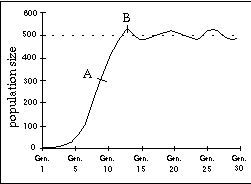
What is the carrying capacity of the graph?
a)
around 500
b)
more than 500
c)
less than 500
d)
around 600
38.
The total number of individuals a habitat can survive with the resources it has available.
a)
Carrying capacity
b)
Limiting factors
c)
Resources
d)
Population
39.
An environmental factor such as storms and extreme heat or cold that decrease a population are considered to be. 
a)
density- dependent factor
b)
population density
c)
dispersion
d)
density- independent factor
40.

Since lynx prey on hares, an increase in the hare population causes an increase in the lynx population.

a)

Density-Dependent: Competition

b)

Density-Independent: Competition

c)

Density-Dependent: Predator-Prey

d)

Density-Independent: Predator-Prey

41.
The ecological niches of three bird species are shown in the diagram. What is the advantage of each bird species having a different niche?
a)
As more birds feed higher in the tree, available energy increases.
b)
More abiotic resources are available for each bird.
c)
Predators are less likely to feed on birds in a variety of locations.
d)
There is less competition for food.
42.

What is a keystone species?

a)

A species that helps to hold an ecosystem together

b)

A species that lives in or around rocks

c)

Keys and stones have nothing to do with ecology

d)

A keystone isn't a living thing, it's just a stone

43.
When put together, one organism outcompetes the other for resources.  This is an example of:
a)
competitive exclusion principle
b)
speciation
c)
biological niche
d)
evolution
44.
Based on the graph shown, how can you tell sea otters are a keystone species?
a)
as the sea otter population decreases, biodiversity increases
b)
as sea otter population increases, biodiversity increases
c)
changes in the sea otter population have little effect on biodiversity 
d)
the sea otter population dereases due to the presence of urchins
45.

the variety of species in an ecosystem is called

a)

biogeography

b)

biodiversity

c)

resilience

d)

resistance

46.

sequence of biotic changes that restore/rebuild a damaged community

a)

pioneer species

b)

succession

c)

richness

d)

evenness

47.

first time establishment and development of life in an area that previously had 0 species

a)

primary succession

b)

secondary succession

c)

finale succession

48.

the first species of an area that previously had 0 species

a)

fresh species

b)

resilient species

c)

keystone species

d)

pioneer species

49.

regrowth of species from the soil after a disturbance

a)

primary succession

b)

secondary succession

c)

finale succession

d)

keystone species

50.
 Which biome is more likely to survive a change in the environment?
a)
High (rich) biodiversity
b)
Low (poor) biodiversity
51.
What is the difference between biotic and abiotic?
a)
Biotic are non-living things
b)
Abiotic are living organisms
c)
Biotic is life,
Abiotic is non-living
d)
Biotic is non-living, Abiotic is living
52.

True or false: An ecosystem with high genetic diversity is healthier than an ecosystem with low genetic diversity.

a)

True

b)

False

53.

A new species moves into an area that has the right sort of conditions for the species. Which of the following would MOST likely limit the spread of the species in the new area?

a)

unfamiliarity with the new area

b)

competition with native species

c)

habitat fragmentation

d)

lack of mates

54.

An invasive species refers to

a)

an organism that is not native

b)

an organism that disrupts the ecosystem

c)

both of these are correct

55.

The breaking of habitats into smaller pieces is called _______.

a)

habitat breaking

b)

habitat pollution

c)

habitat destruction

d)

habitat fragmentation

56.

Which of the following pose a threat to biodiversity? Choose all that apply.

a)

invasive species

b)

habitat destruction

c)

population growth

d)

pollution