wayground logo

Free Printable Worksheets

Font size

S
M
L
XL
Worksheets

Virtual 4th quarter

Total questions: 118

Worksheet time: 4hrs 30mins
Name
Class
Date
1.
regular disturbances that carry energy through matter or space
a)
crest
b)
energy
c)
wave
d)
trough
2.
In a longitudinal wave, the particles move...?
a)
back and forth
b)
up and down
c)
vertically
d)
in the direction of the hertz
3.

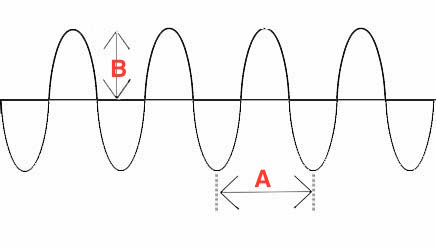
What property of this wave is represented by the letter "A"

a)

amplitude

b)

crest

c)

trough

d)

wavelength

4.
The type of waves that require medium to pass:
a)
Mechanical Waves
b)
Electromagnetic Waves
5.
When the frequency of a wave increases, what happens to the wavelength?
a)
The wavelength is not directly affected by the frequency of a wave.
b)
The wavelength increases.
c)
The wavelength decreases.
d)
More specific information is needed to form a conclusion about the wavelength.
6.
A mechanical wave cannot travel through...
a)
a vacuum(empty space).
b)
water.
c)
air. 
d)
glass.
7.
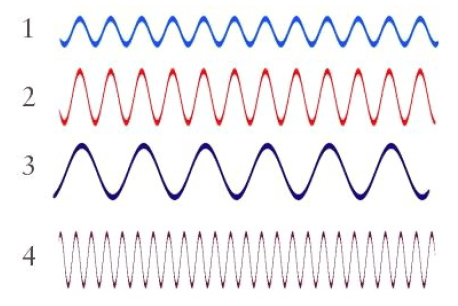
Which wave in the diagram has the greatest frequency?
a)
1
b)
2
c)
3
d)
4
8.
Which of the following can sound travel through?
a)
solid
b)
liquid
c)
gas
d)
all of the above
9.

Electromagnetic waves include the following except

a)

radio waves

b)

X-rays

c)

ocean waves

d)

microwaves

10.
The number of wavelengths that pass a point each per second is:
a)
frequency
b)
period
c)
longitudinal 
d)
transverse wave 
11.
All waves carry
a)
energy
b)
light 
c)
matter
d)
particles
12.
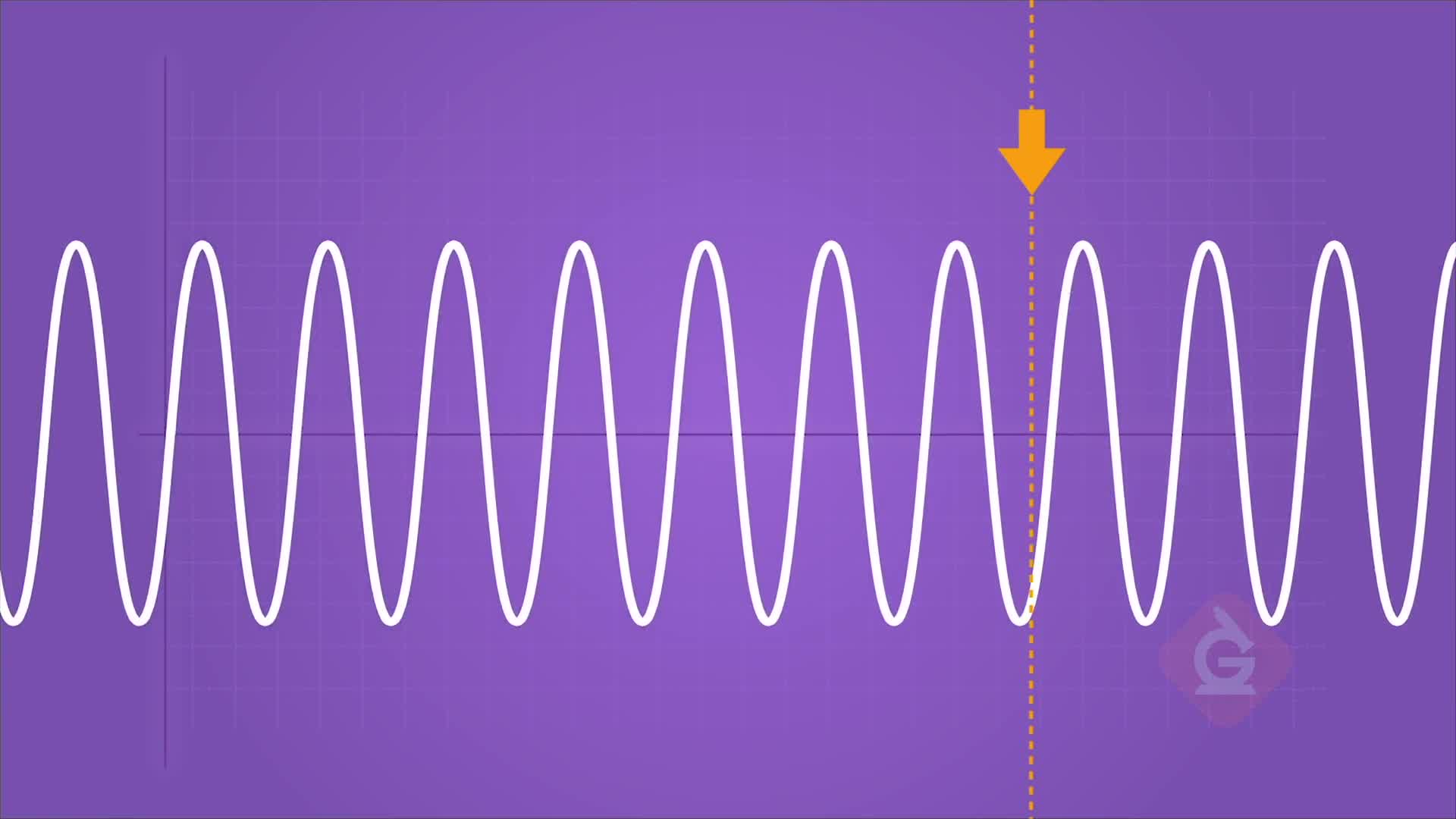
What kind of wave is pictured below?
a)
compressional wave
b)
transverse wave
c)
sound wave
d)
mechanical wave
13.
Which type of wave is pictured here?
a)
Longitudinal
b)
Transverse
c)
Light 
d)
Electromagnetic
14.

Which type of wave moves parallel to the direction of the wave?

a)

transverse

b)

longitudinal

c)

surface

d)

electromagnetic

15.

It is the high pressure part of the wave where the particles are close together. It is part A on this picture.

a)

Compression

b)

Amplituide

c)

Rarefaction

d)

Wavelength

16.
The distance from one point to the next corresponding point on a wave is called the ________________.
a)
waveform
b)
peak
c)
amplitude
d)
wavelength
17.

High pitched waves would have wavelengths that are...

a)

at a rarefaction

b)

far apart

c)

close together

d)

at the trough

18.
When the sound source moves, the frequency changes
ex. police car siren sounding lower pitch after the car passes
a)
pitch
b)
frequency
c)
Doppler Effect
d)
medium
19.
A wave with a large wavelength will have a ______ frequency and _____ energy
a)
high, low
b)
high, high
c)
low, high
d)
low, low
20.
Which has the LONGEST wavelength and, therefore, the lowest frequency/energy
a)
Gamma Rays
b)
Radio Waves
c)
Visible Light
d)
Infrared rays
21.
Which has the SHORTEST wavelength and, therefore, the highest frequency/most energy
a)
Radio waves
b)
Ultraviolet Rays
c)
Gamma Rays
d)
X-rays
22.
Which section of the spectrum is the ONLY one we can see?
a)
X-rays
b)
Visible Light
c)
Gamma Rays
d)
Ultraviolet Rays
23.
How are electromagnetic waves different from other waves? 
a)
They have very short wavelengths 
b)
They transmit energy instead of matter 
c)
They can travel through empty space
d)
They can change direction by reflection 
24.
Which of the following electromagnetic waves has the lowest energy?
a)
gamma ray
b)
infrared wave
c)
visible light wave
d)
microwave
25.
As the frequency of an electromagnetic wave increases, the amount of energy in that wave...
a)
increases.
b)
decreases.
c)
stays the same.
26.
High frequency waves have _________ wavelengths.
a)
varying
b)
long
c)
the same
d)
short
27.
The distance between two crests or two troughs of a wave is called:
a)
frequency
b)
amplitud
c)
wavelength
d)
hertz
28.
How much of the electromagnetic spectrum is visible?
a)
All of it
b)
None of it
c)
Most of it
d)
Only a small part
29.
The height of the wave from the rest position is known as the _____________.
a)
amplitude
b)
crest
c)
trough
d)
wavelength
30.
What are electromagnetic waves?
a)
sound waves
b)
electric & magnetic fields (energy) that travel through empty space very quickly
c)
Someone's name
d)
things like longitudinal waves
31.
Light behaves like both a particle and a ______.
a)
Mass
b)
Wave
c)
Current
32.
What happens to the energy of a photon as the frequency of the wave increases? 
a)
The energy increases
b)
The energy decreases
c)
The energy stays the same 
33.
What is the number of waves that pass a point in one second?
a)
Amplitude
b)
Frequency
c)
Period
d)
Wavelength
34.
Which of the following has wavelengths longer than microwaves?
a)
Infrared waves
b)
Radio waves
c)
Visible light
35.
A disturbance that travels through a medium as a longitudinal wave
a)
sound
b)
wavelength
c)
pitch
d)
frequency
36.
Bending of waves around an object (such as through a doorway)
a)
sound
b)
diffract
c)
pitch
d)
volume
37.
travels through solids fastest because the molecules are closer together
a)
speed of sound
b)
wavelength
c)
frequency
d)
amplitude
38.
The number of wavelengths that pass a point each second
a)
frequency
b)
wavelength
c)
pitch
d)
amplitude
39.
Material (matter) through which a wave travels
a)
medium
b)
Doppler Effect
c)
sound
d)
pitch
40.
A wave in which the vibration is in the same direction as that in which the wave is traveling; sound waves
a)
longitudinal wave
b)
ocean wave
c)
transverse wave
d)
mechanical wave
41.
The part of a longitudinal wave where the particles of the medium are close together.
a)
rarefaction
b)
compression
c)
crest
d)
trough
42.
A part in a longitudinal wave where the particles are spread apart
a)
compression
b)
rarefaction
c)
crest
d)
trough
43.
A disturbance that transfers energy from one place to another without transferring energy
a)
wave
b)
trough
c)
pitch
d)
sound
44.
A reflected sound wave
a)
frequency
b)
pitch
c)
echo
d)
rarefaction
45.
A wave that requires a medium through which to travel
a)
mechanical wave
b)
chemical wave
c)
electromagnetic wave
d)
pitch
46.
You and your father inspect an empty house with the hopes of buying it. You walk through the rooms talking to one another, and you notice that your voices and footsteps are echoing in the big, empty house. What causes the echo?
a)
sound waves reflecting off smooth, flat surfaces throughout the house
b)
sound waves moving around the large rooms
c)
sound waves moving slowly through air
d)
sound waves refracting around corners in the empty rooms
47.
Cletus wants to make ear protectors for people who work around loud jet engines at Hartsfield Airport in Atlanta. Which of the following materials should he experiment with for the best results?
a)
a material that produces sound
b)
a material that absorbs sound
c)
a material that transmits sound
d)
a material that amplifies sound
48.
As the fire truck approached Mary, the pitch of the siren got higher. Once the fire truck passed and moved away, the siren's pitch got lower. This change in pitch is because of a change in the sound wave's
a)
concussion. 
b)
amplitude. 
c)
reflection.
d)
frequency. 
49.
After the train passed, the pitch of the train whistle became lower. This change in sound would be represented by what change in the diagram above? 
a)
The distance represented by C would increase. 
b)
The distance represented by C would decrease. 
c)
The distance represented by D would increase. 
d)
The distance represented by D would decrease. 
50.
Light behaves like both a particle and a ______.
a)
Mass
b)
Wave
c)
Current
51.
What color has the shortest wavelength, or the highest frequency?
a)
yellow
b)
blue
c)
red
d)
violet
52.
What does reflection mean?
a)
bending light
b)
bouncing light
53.
What does refraction mean?
a)
bending light
b)
bouncing light
54.
What type of waves does light travel in?
a)
transverse
b)
compression
c)
high and low waves
d)
waves like the ocean
55.
What is this a picture of?
a)
reflection
b)
refraction
56.

Why does light refract?

a)

speeds up

b)

gets hot

c)

slows down

d)

gains energy

57.

Light travels through an object during

a)

absorption

b)

reflection

c)

transmission

d)

diffraction

58.
The full spectrum of light energy is called the__________
a)
broad spectrum
b)
electromagnetic spectrum
c)
helium spectrum 
d)
natural light spectrum
59.
Electric and magnetic fields produce
a)
electricity
b)
magnets
c)
longitudinal waves
d)
light
60.

What is the earth's primary source of light energy?

a)

moon

b)

sun

c)

waves

d)

fire

61.

The height of the sound waves

a)

Frequency

b)

Amplitude

c)

Wavelength

62.
4 is 
a)
radio
b)
UV 
c)
Visible Light
d)
X-ray
63.
EM waves have the same speed but different:
a)
frequency & medium 
b)
wavelength & frequency
c)
medium & wavelength
d)
color & medium
64.
When the surface of a mirror curves inward, like the inside of a bowl, it is called a
a)
Plane Mirror
b)
Convex Mirror
c)
Concave Mirror
d)
Diffuse Mirror
65.
Which wavelength of visible light has the lowest energy?
a)
Red
b)
Yellow
c)
Orange
d)
Blue
66.
Which of the following types of radiation has the shortest wavelength and the highest frequency?
a)
Radio Waves
b)
Infrared
c)
Visible
d)
X-Rays
67.

Which part of the ear is a thin membrane that is made to vibrate by sound waves?

a)

ear drum

b)

cochlea

c)

auditory nerve

d)

ear canal

68.

What type of waves are sound waves?

a)

transverse

b)

longitudinal

69.

In the ear, what amplifies the vibrations from the ear drum?

a)

cochlea

b)

ossicles (tiny bones)

c)

auditory nerve

d)

ear canal

70.

What are the common names of the ossicles (tiny bones) in your ear?

a)

hammer, anvil and stirrup

b)

hammer, nail and screws

c)

iron, stirrup and leather

d)

block, mallet and nail

71.

Where are the tiny hairs found, which detect vibrations and create electrical signals?

a)

ear drum

b)

cochlea

c)

auditory nerve

d)

ossicles

72.

What carries electrical signals from the ear to the brain?

a)

ear canal

b)

cochlea

c)

auditory nerve

d)

olfactory nerve

73.

Inside the cochlea, what causes the membrane to detect different frequencies of sound?

a)

The membrane is thicker at one end than the other

b)

There are different number of hairs in different parts of the membrane

c)

The hairs are of different lengths along the membrane

d)

There is more fluid at one end than the other

74.
Gel-like fluid posterior to the lens
a)
Aqueous Humor
b)
Retina
c)
Vitreous Humor
d)
Optic humor
75.
What is letter B
a)
Optic nerve
b)
Lens
c)
Cornea
d)
Retina
76.
What is letter E?
a)
Vitreous humor
b)
Retina
c)
Cornea
d)
Optic nerve
77.
What is letter F?
a)
Retina
b)
Pupil
c)
Vitreous humor
d)
Iris
78.
What is letter G?
a)
Sclera
b)
Retina
c)
Lens
d)
Vitreous humor
79.
What is letter H?
a)
Cornea
b)
Optic nerve
c)
Iris
d)
Retina
80.
What is letter I?
a)
Cornea
b)
Lens
c)
Vitreous humor
d)
Optic nerve
81.
Why does your pupil increase in size when you enter a dark room?
a)
To protect the eye
b)
to allow more light to enter the  eye
c)
to allow less light to enter the eye
d)
to look like a  pirate
82.
What part of the eye are the cones located
a)
Iris
b)
lens
c)
retina
d)
pupil
83.
What part of the eye holds the lens in place?
a)
cornea
b)
ciliary muscles
c)
pupil
d)
retina
84.
When you enter a dark room, what does the pupil do
a)
get larger
b)
get smaller
85.
what is the iris
a)
the colored part of the eye that controls the size of the pupil
b)
Transparent jellylike fluid that fills the eye and refracts light.
c)
Sends messages picked up by the retina to the brain 
d)
Hole passes different amounts of light
86.
This part of the eye has photoreceptors called rods and cones.  They help us to see color and see at night.  It is called:
a)
optic nerve
b)
brain
c)
retina
d)
cornea
87.
This part of the eye focuses light/images onto the retina.
a)
lens
b)
cornea
c)
cones
d)
vitreous humor
88.
This part protects the eye, especially the iris, pupil and lens.
a)
rods
b)
cornea
c)
optic nerve
d)
retina
89.
Identify this simple machine
a)
Lever
b)
Wheel & Axle
c)
Inclined Plane
d)
Screw
90.
Two examples of a pulley...
a)
knife & axe blade
b)
lightbulb & screw
c)
flagpole hoist & window blinds
d)
catapult & teeter totter
91.
Which of the following does a simple machine do?
a)
allows the users to apply less force over a longer distance
b)
reduce the amount of force needed to do work
c)
change the direction of the applied force
d)
all of the above
92.
Which is an example of someone using a simple machine to do work?
a)
a boy runs across a football field
b)
a banker counts money
c)
a mother pushes a stroller up a ramp
d)
a girl eats a sandwich
93.
The device used to raise a flag up a flag pole is an example of a 
a)
wheel and axle 
b)
lever
c)
inclined plane 
d)
pulley 
94.
An inclined plane wrapped around a rod forms this simple machine 
a)
lever
b)
pulley
c)
screw
d)
wedge 
95.
A simple machine that consists a rigid bar that pivot about a fixed point
a)
lever
b)
pulley
c)
wheel and axle
d)
fulcrum 
96.
A seesaw is an example of a  
a)
wedge
b)
lever 
c)
inclined plane 
d)
pulley 
97.
Stairs
a)
wedge
b)
pulley
c)
inclined plane
d)
wheel and axle
98.
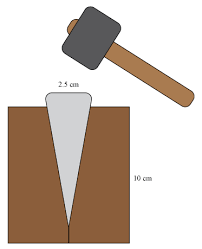
This device
a)
wedge
b)
lever
c)
incline plane
d)
wheel and axle
99.
The fixed point on the lever is called 
a)
load
b)
resistance
c)
bar
d)
fulcrum
100.
Name this simple machine. 
a)
Pulley
b)
Wheel and Axle
c)
Inclined Plane
d)
Lever
101.
What is effort (input) force?
a)
the force required by a machine in order to accomplish work (the force you put on the machine)
b)
the force which an effort force must overcome in order to do work on an object via a simple machine.
c)
the force the machine exerts on a object
d)
the output work times the input distance
102.
What is resistance (output) force?
a)
the force required by a machine in order to accomplish work (the force you put on the machine)
b)
the force which an effort force must overcome in order to do work on an object via a simple machine.
c)
the force the machine exerts on a object
d)
the output work times the input distance
103.
Using a lever, Joe is able to lift a 10,000 N car off of the ground with a force of 1000 N. What is the mechanical advantage of the lever?
a)
1
b)
10
c)
100
d)
1000
104.
The mechanical advantage of this inclined plane is.....
a)
2.4
b)
3.4
c)
4.4
105.
How much work is being done with 200 N of force over 426 meters?
a)
85,200 J
b)
45,620 J
c)
90,480 J
d)
62,329 J
106.
If 150 Joules of work is needed to move a box 10 meters, what force was used? 
a)
1500 N
b)
15 N
c)
1.5 N
d)
150 N
107.
Work is done when a weightlifter holds a barbell still above his head.
a)
True
b)
False
108.

You push against the back of your friends car that is stuck. You push and be become very tired, but the car does not move. Did you do work?

a)

Yes, work was done

b)

No, work wasn't done

109.
The amount of work done in a certain amount of time is known as 
a)
work
b)
effort force
c)
resistance force 
d)
power
110.

If you increase your work and decrease your time, you will have

a)

more power

b)

less power

c)

same amount of power

d)

power rating can not be determined

111.

If you have the same work as someone, but in less time

a)

You are more powerful

b)

You are less powerful

c)

You have the same power

112.

Person A and Person B are both using the same amount of work to lift something. Person A takes half as much time to do it. Who has greater power.

a)

Person A

b)

Person B

113.
How much work is done in holding a 15 N sack of potatoes while waiting in line at the grocery store for 3 minutes?
a)
15 J
b)
45 J
c)
0 J
d)
5 J
114.
The more POWER you use to move an object, the more work you do. 
a)
True
b)
False
115.
If 68 W of power is produced in 18 seconds, how much work is done?
a)
1,224 J
b)
0.264 J
c)
3.77 J
d)
12.24 J
116.
How much time is needed to produce 720 Joules of work if 90 watts of power is used? 
a)
0.125 s
b)
8 s
c)
64800 s
d)
80 s
117.
If 68 Joules were necessary to move a 4 Newton crate, how far was the crate moved?
a)
272 m
b)
17 m
c)
4.05 m
d)
272 cm 
118.
The unit used to measure power is the 
a)
Watt
b)
Newton
c)
Joule
d)
Newton*meter