
 Worksheets
Exam Style
Total questions: 121
Worksheet time: 3hrs 8mins


Which of the following choices best represents the length reading from the metric ruler pictured?
0.8 cm
0.80 cm
0.800 cm
8 cm

The diagram shows the height of a stack of identical coins. What is the thickness of one coin?
0.20 mm
2.00 mm
0.24 cm
2.00 cm

The measurement by this vernier calliper is
9.60 mm
10.60 mm
11.60 mm
12.60 mm

The measurement by this micrometer is
5.18 mm
5.68 mm
6.18 mm
6.68 mm
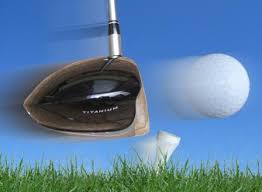


A ball is moving at constant speed around the circle. Which letter represents the acceleration of the ball?
A
B
C
D
Nonsense. The ball can't be accelerating while moving at a constant speed.
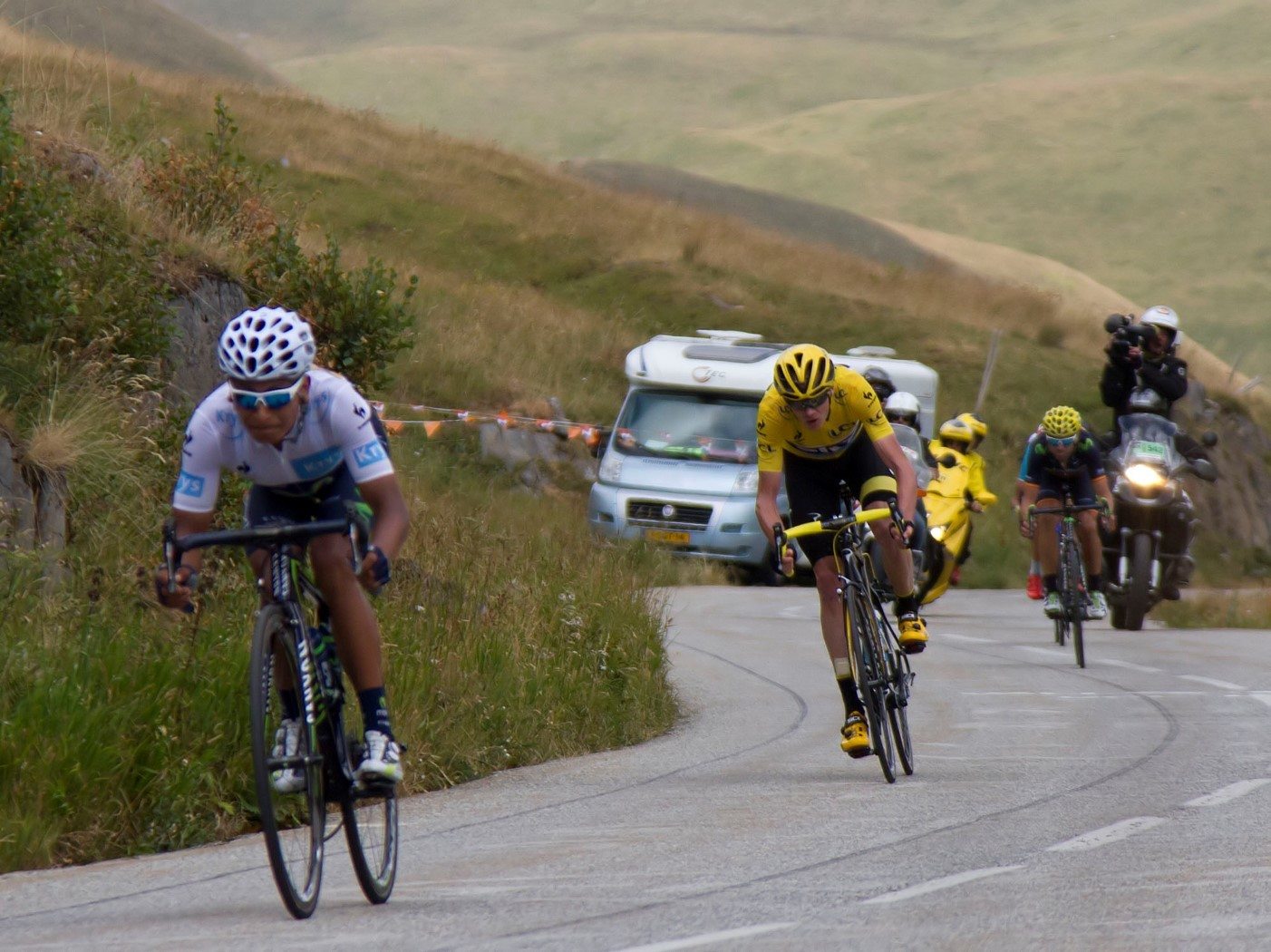
Why do objects experience centripetal acceleration even though they can have a constant speed?
Because they are speeding up as they move in a circle
Because they are constantly changing direction and hence, velocity changes, and that net change is directed inward.
Because they are constantly changing both speed and direction
Because when you have 100 people pedaling, you can speed up more easily.

The graph shows the relationship between force and extension as a spring is extended. What is the name of point A?
Point A is the optimum force.
Point A is the limit of extension.
Point A is the limit of force.
Point A is the limit of proportionality
The graph shows the relationship between force and extension as a spring is extended. What is another name for point A?
Point A is the elastic limit
Point A is the elastic summet
Point A is the plastic limit
Point A is the extension limit
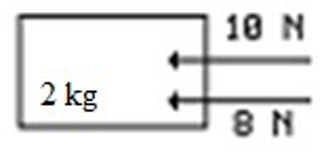
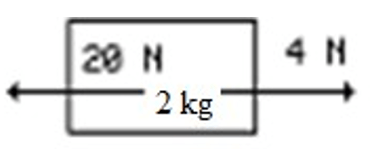
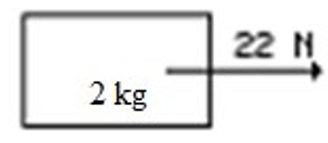
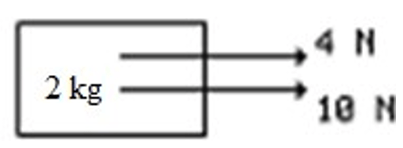
Which of the following produces the largest acceleration when forces are applied on a block?
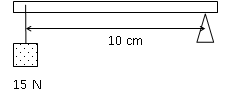
What is the moment produced by the 15 N?
15 Nm
150 Nm
1.5 Nm
0.15 Nm
A wrench is used to tighten a nut. A 15N perpendicular force is applied 50cm away from the axis of rotation, and moves a distance of 10 cm as it turns. What is the moment of force applied to the wrench?
7.5 Nm
1.5 Nm
750 Nm
150 Nm
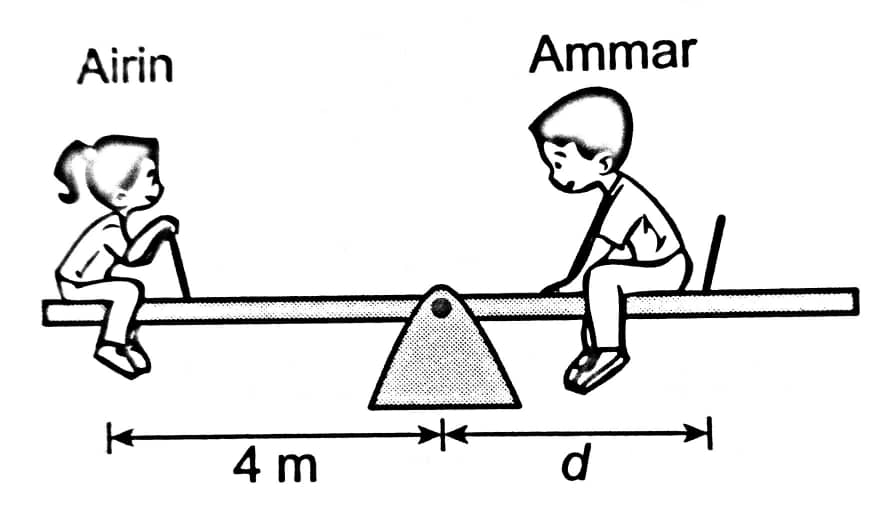
Diagram shows Airin and Ammar sitting on a see-saw. The weight of Airin is 300 N while Ammar is 400 N. What is the distance of Ammar from the fulcrum so that the see-saw is balanced?
1 m
2 m
3 m
4 m
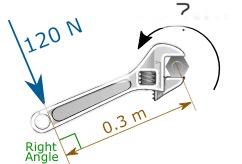
What is the size of the moment shown by the black arrow?
30 Nm
36 Nm
40 Nm
60 Nm
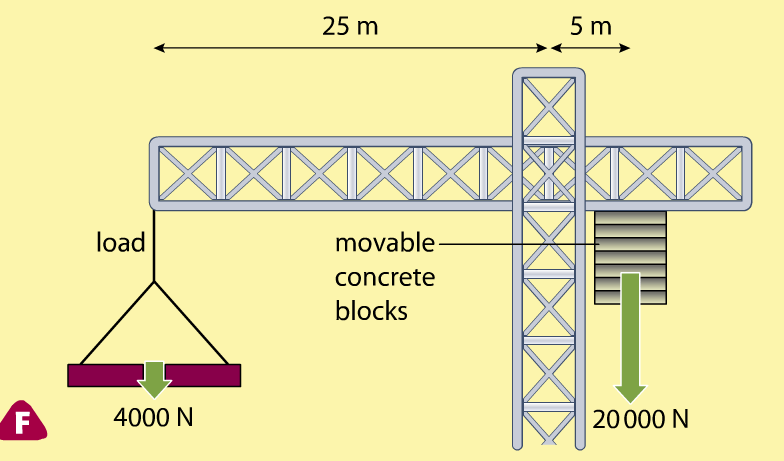
State the principle of moments.
When a system is in equilibrium, the sum of the total clockwise moment is equal to the sum of the total anti-clockwise moment about the same pivot.
When a system is in equilibrium, the sum of the total clockwise moment is greater the sum of the total anti-clockwise moment about the same pivot.
When a system is in equilibrium, the sum of the total clockwise moment is less than the sum of the total anti-clockwise moment about the same pivot.
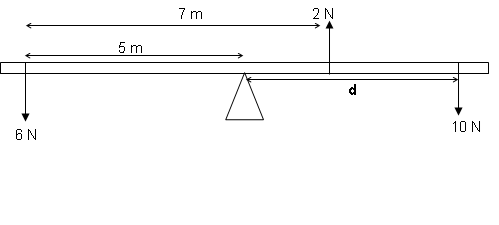
Assuming the system is in equilibrium, calculate the missing distance d
3.4 m
2.8 m
4.4 m
1.6 m
Define Centre of Gravity
An objects ability to maintain a stable position
The area around the contact points with the ground. The larger it is, the greater stability a person has.
Base of support contributing factors
The point at which all parts of an object are equally balanced

The illustration shows a bunsen burner in 3 different positions. Which of these positions is the most stable?
X
Y
Z
W

In this illustrations, which factors affecting the stability of an object?
Area of the base
Position of CG
Weight of an object
Condition of equilibrium


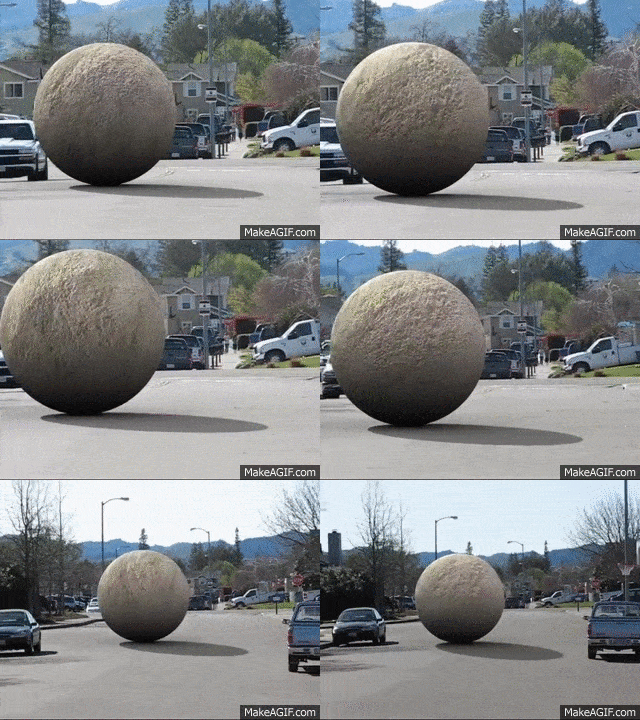

Two skaters begin at rest. Skater 1 has a smaller mass than Skater 2. After they push off each other,...
Skater 1 experiences a greater change in momentum
Skater 2 experiences a greater change in momentum
Skater 1 has a greater speed than Skater 2
Skater 1 experiences a greater force
A 5 N force is applied to a 3 kg ball to change its velocity from +9 m/s to +3 m/s. The impulse on the ball is ______ N s.
-2.5
-10
-18
-45
Which energy path shows one way energy can get to a light bulb?
sun → water → dam → light bulb
sun → air → wind turbine → light bulb
sun → corn → ethanol plant → light bulb
All of the answers are correct.

What source of energy causes winds to blow around the Earth?
wind turbines
the Sun
the ocean
a chicken
__________________ is the process in which two or more smaller nuclei combine to create a larger, more stable nuclei.
Nuclear Decay
Nuclear Fission
Nuclear Fusion
None of the above
A __________________ is a nuclear fission reactor that produces more nuclear fuel than it consumes.
Fission Reactor
Breeder Reactor
Core Reactor
Fusion Reactor


Two equal mass marbles are at the top of a ramp. One marble falls to the ground off the back while the other rolls down the ramp. What is true about the marbles when they reach the ground?
The marble that rolled down the ramp is moving faster than the marble that fell.
The marble that fell down the back of the ramp is moving faster than the marble that rolled.
The marble that rolled down the ramp is not moving when it reaches the ground.
The two marbles are moving with the same speed.

Suppose a cart has a kinetic energy of 0.5 J. If you add enough mass to double the mass and make the cart go three times as fast, its kinetic energy is now ---.
6 J
3 J
18 J
9 J
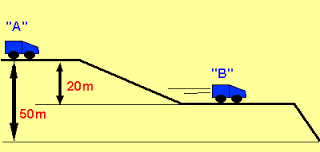
In diagram 2, if the 600 kg cart is initially at rest, what is its velocity at point B?
19.8 m/s
15.0 m/s
10.3 m/s
3.8 m/s

A crane lifts an 8-m long steel girder weighing 2600 N up 15 m off the ground. The crane did ___ of work.
0 J
39000 J
20800 J
2600 J
A 40-kg person is climbing 3 m up a flight of stairs in 6 seconds. How much work did they do climbing the stairs?
400 J
1200 J
200 J
120 J
How high up is a 3200-kg plane if it has 960000 J of potential energy?
10 m
30 m
307200000 m
300 m
How does conservation of energy explain why something that is falling should speed up?
It gains kinetic energy because it gains potential energy.
It loses kinetic energy because no work was done on it.
It gains kinetic energy because it loses potential energy.
It loses kinetic energy because the Earth gains potential energy.
A 100 N force is applied to move an object a horizontal distance of 5 meters at constant speed in 10 seconds. How much power is done?
50J
50W
500J
500W
Fluids exert pressure because they
contain force particles
are confined to small area
have constantly moving particles
all of these are correct
A submarine is found 20 meters below the surface of the sea. The density of sea water is 1020 kg m-3 and g = 10 m/s2 What is the pressure due to the sea water acting on the submarine?
20.4 Pa
2.04 x 10³ Pa
2.04 x 10² Pa
2.04 x 10⁵ Pa
2.04 x 10⁻² Pa
The pressure due to water at the base of a pond is measured as 50 kPa. What is the depth of the pond?
[density of water is 1,000 kg m-3]
10 meter
12 meter
8 meter
5 meter
At what depth is the pressure due to water on a diver equal to the atmospheric pressure
[Atmospheric pressure at sea level = 100 kPa;
density of water = 1,000 kg m-3]
1 m
10 m
20 m
100 m

Calculate the pressure exerted by the water on the fish.
[Density of water = 1 000 kg m−3
Atmospheric pressure at sea level, Patm = 1.0 x10⁵ Pa]
5.0 × 10⁴ Pa
5.0 × 10⁷ Pa
5.0 × 10⁶ Pa
5.0 × 10⁻¹ Pa
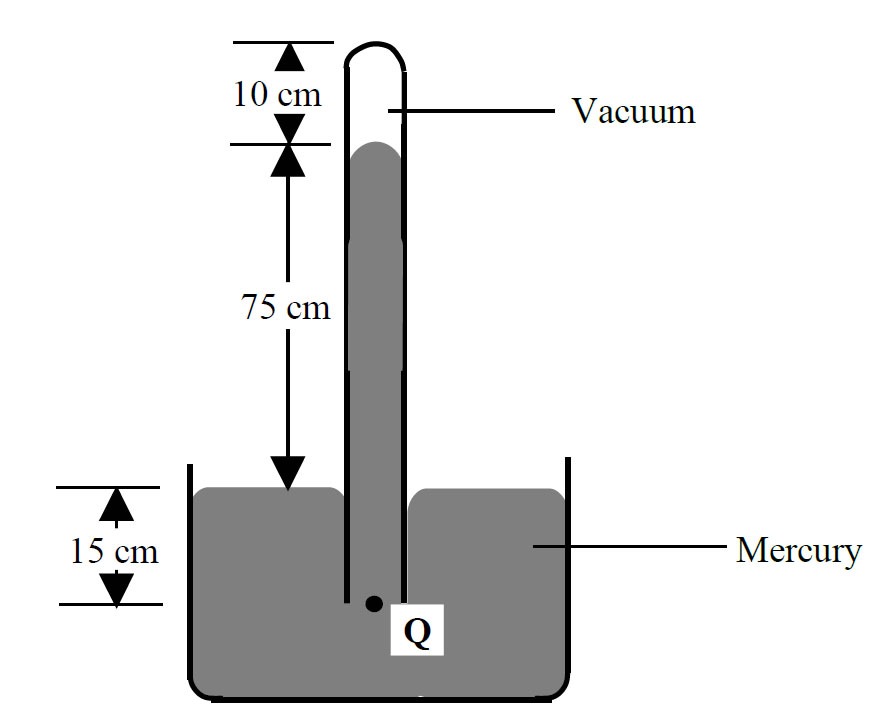
The diagram shows an apparatus set up to measure atmospheric pressure.
Calculate the pressure at point Q.
10 cm Hg
85 cm cm Hg
90 cm Hg
15 cm Hg
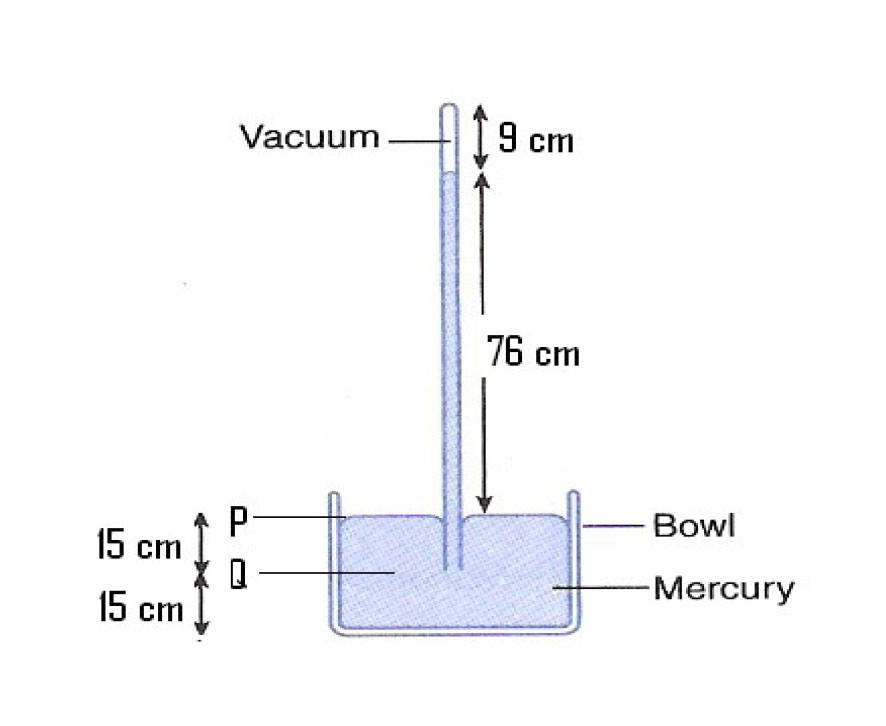
The diagram shows a set up of apparatus for measuring atmospheric pressure. If the density of mercury is
13,600 kgm-3, determine the atmospheric pressure as measured by the instrument.
100,000 Pa
101,000 Pa
123,760 Pa
103,360 Pa

What is the pressure difference, in cm of water, shown by the manometer?
9
16
20
25

A manometer is used to measure the pressure of an unknown gas. What is the Pressure of the unknown gas? (atmospheric pressure = 100 kPa, density of mercury = 13,600 kg/m3)
121.8 kPa
128.6 kPa
106.8 kPa
93.2 kPa

The pressure inside the toy is
more than the air pressure
less than the air pressure
equal to the air pressure
equal to the gauge pressure

What is the pressure of trapped gas
76 cm of Hg
66 cm of Hg
86 cm of Hg
10 cm of Hg
The kinetic model of matter states that
atoms and molecules move in continuous and non-random motion.
atoms and molecules move in continuous and random motion.
the kinetic energies of atoms and molecules increase with increasing temperature.
the pressure of atoms and molecules is due to the collision of these particles with the walls of the container they are in.
Using a microscope, Peter observes that some pollen grains suspended in water move in an irregular manner. This is due to the
pollen grains colliding with one another.
pollen grains repelling one another.
bombardment of pollen grains by water molecules.
bombardment of water molecules by pollen grains.
Solids have high densities relative to liquids because
1 the particles in solids are far apart.
2 the particles in solids have large masses.
3 the particles in solids do not move about.
1 only
2 only
2 and 3 only
None of the above
What effect does Evaporation cause ?
Heating Effect
Magnetic Effect
Cooling Effect
Warming Effect
What happens when a liquid perfume is sprayed on your palm ?
The liquid gain heat from the sanitizer and evaporate
The liquid gain heat from the surroundings and evaporate
The liquid gain heat from the palm and evaporate
The liquid gain heat from the palm or surroundings and evaporate
What is the difference between boiling and evaporation ?
Boiling happens at any temperature while evaporation happens at 100 C for pure water
evaporation happens at any temperature while boiling happens at 100 C for pure water
Boiling happens only at the surface of the liquid
No difference
A liquid is evaporating. The liquid is not boiling.
Which statement about the liquid is correct?
Any molecule can escape, and from any part of the liquid.
Any molecule can escape, but only from the liquid surface.
Only molecules with enough energy can escape, and only from the liquid surface.
Only molecules with enough energy can escape, but from any part of the liquid.
Which two variables must be held constant for Boyle’s Law to apply?
pressure & volume
volume & temperature
temperature & mass (amount of gas)
volume & mass (amount of gas)
In CHARLES'S LAW, volume and temperature have a ______ proportionality.
direct
inverse
linear
exponential
1. Chlorine gas occupies a volume of 1.2 liters at 720 torr pressure. What volume will it occupy at 1 atm pressure?
42 L
1 L
8 L
6 L
A resistor whose resistance changes a lot over a small temperature range is called...
thermocouple
thermistor
thermal
thermometer
the total energy of all particles is called...
energy
internal energy
thermistor
thermocuple

Which thermometer has the greatest sensitivity and which thermometer has the greatest range?
greatest sensitivity:P greatest range:R
greatest sensitivity:P greatest range:S
greatest sensitivity:Q greatest range:R
greatest sensitivity:Q greatest range:S
The liquid -in-glass thermometer contains mercury.Which physical property of the mercury varies with temperature, enabling the thermometer to operate?
mass
melting point
resistance
volume
Which statement defines the thermal capacity (heat capacity) of a solid body?
the energy needed to melt the body without a change in temperature
the energy needed to raise the temperature of the body by one degree Celsius
the increase in the volume of the body when its temperature is raised by one degree Celsius
the total amount of internal energy in the body
A liquid X of mass 1 kg requires 3800 J of heat to raise its temperature by 10C.
Calculate the total heat required to raise the temperature of 1 kg of liquid X by 30C.
3800 J
7600 J
11 400 J
The time taken by an electric heater to raise the temperature of 4 kg of water from 250C to 300C is 1 minute. If the specific heat capacity of water is 4200 J kg-1 oC-1, calculate the power of the heater.
70 W
140 W
700 W
1400 W
The specific heat of a liquid is 1000 J kg-1 K-1. What amount of heat is needed to raise the temperature of 4.0 kg of liquid from 30°C to 40°C?
4.0 × 10³ J
2.0 × 10⁴ K
4.0 × 10⁴ J
4.0 × 10⁴ K
A 2.0 kg solid has a specific latent heat of of fusion of 220 kJ kg-1. An electric heater of power 1500 W is used to heat the solid. Assuming no heat loss, how long does it take to completely melt the solid at constant temperature?
290 seconds
290 minutes
150 seconds
150 minutes
Find the energy released by a copper block when it is cooled from 100°C to 20°C. Given that the heat capacity of the block is 770 J°C-1.
7.70x10⁴ J
8.61x10⁴ J
6.16x10⁴ J
5.02x10⁴ J
Latent heat is
the heat absorbed or released at a boiling process during a change of phase
the heat absorbed or released at a constant temperature during a change of phase
the heat absorbed or released at a constant temperature during a change of phase of 1 kg object
the heat absorbed or released by an object to increase or decrease its temperature by 1 degree Celcius
The heat absorbed by melting a solid is known as
latent heat of fusion
latent heat of solid
latent heat of liquid
latent heat of vaporisation
Calculate the energy absorbed by 30 g of 100 ⁰C water that is turned into 100 ⁰C.
67 800 J
6 7800 J
678 J
67.8 J
How much energy is required to change 5 kg of ice at 0 ° C into water at the same temperature? (latent heat of fusion is 3.36 X 10⁶ J/kg )
16.1 XundefinedJ
16.8 XundefinedJ
15.1 Xundefinedcal
16.8 Xundefinedcal
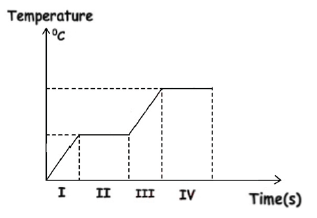
Consider the following temperature-time graph when a solid is heated. which part of the graph involves latent heat of vaporization?
Part I
Part II
Part III
Part IV

The transfer of energy through molecules in direct contact is ...
Heat
Conduction
Convection
Radiation


What is thermal conductivity?
The rate at which particles move in a substance
The ability of a substance to have a large thermal energy
A factor that determines the amount of thermal energy of a substance
The rate at which a substance transfers heat

Oil storage tanks are painted white because white surfaces are
good absorbers of radiation
good emitters of radiation
poor absorbers of radiation
poor emitters of radiation

Why does the ice take a long time to melt, even when the water at the top of the test-tube
is boiling?
Convection cannot occur in water.
Ice is a poor radiator of heat.
Convection is taking place.
Water is a poor conductor of heat.

Why the the cooling fins at the back of a refrigerator painted black?
black surfaces are good absorbers of radiation
black surfaces are good emitters of radiation
black surfaces are poor absorbers of radiation
black surfaces are poor emitters of radiation
In cold countries, animals grow thicker layers of fur in winter because
it is a good conductor of heat.
it is a poor conductor of heat.
it traps more air, which is a good conductor of heat.
it traps more air, which is a poor conductor of heat.
Which type of waves do the particles vibrate perpendicular to the energy?
surface
transverse
mechanical
longitudinal
What is the amplitude of a wave?
the amount of time that occurs in one cycle
the amount of cycles that occur in a given time
the distance traveled by the wave during one full cycle
the size of the disturbance
What is the wavelength of a wave?
the size of the disturbance
the distance between two crests of a wave
the amount of time that occurs in one full cyle
the amount of cycles that occur in a given time
The lowest point on a wave is the :
amplitude
trough
crest
wavelength
The number of wavelengths that pass a point in a given amount of time is:
frequency
longitudinal
period
transverse
When the frequency of a wave increases, what happens to the wavelength?
the wavelength is not directly affected by the frequency
the wavelength increases
the wavelength decreases
not enough information is given
Amplitude reflects the amount of _______________ in a wave.
energy
speed
number of cycles
number of troughs

If a wave has a frequency of 2 cycles per second and its wavelength is 5 meters, the wave speed is
2.5 meters per second
2.5 meters
10 meters per second
10 meters

Sound waves travel 343 meters per second. What is the wavelength of a sound wave whose frequency is 343 Hz?
343 m
1 m
343 seconds
1 second
The speed of sound depends on these two things:
The type of medium and the temperature of the medium
Speed of the medium and temperature of the medium
Temperature of the medium and sound of the medium
None of the above



