
 Worksheets
PhysicsMidtermReview
Total questions: 125
Worksheet time: 3hrs 13mins
Name
Class
Date
1.
A possible explanation to a problem that has not yet been tested.
a)
data
b)
theory
c)
hypothesis
d)
fact
2.
This variable in an experiment is the one being changed by the scientist.
a)
dependent variable
b)
independent variable
c)
control variable
d)
control group
3.
Should experiments be repeated over and over to see if the results are the same each time?
a)
yes
b)
no
4.
The summary at the end of an experiment that explains the results.
a)
conclusion
b)
procedures
c)
materials
d)
responding variable
5.
A series of steps used by scientists to solve a problem or answer a question.
a)
scientific method
b)
recipe
c)
data collection
d)
metric system
6.
A list of the steps anyone could follow to conduct an experiment.
a)
obervations
b)
question/problem
c)
materials
d)
procedures
7.
Mr. S. sets up an experiment to see how toy cars with different masses affects the distance they roll down a ramp. Identify the independent variable.
a)
distance traveled by the cars
b)
height of the ramp
c)
mass of the car
d)
number of cars
8.
Mr. S. sets up an experiment to see how toy cars with different masses affects the distance they roll down a ramp. Identify the dependent variable.
a)
height of the ramp
b)
distance traveled by the cars
c)
mass of the car
d)
number of cars
9.
Which variable depends on what is done at the beginning of an experiment?
a)
Dependent
b)
Independent
c)
Control
d)
Following
10.
A student is planning an experiment to find out how the height from which he drops a ball affects how high the ball bounces. The dependent variable is the _____.
a)
Diameter of the ball
b)
Force acting on the ball
c)
Height that the ball bounces
d)
Height from which the ball is dropped
11.
Every hypothesis begins with what word?
a)
Does
b)
If
c)
Which
d)
Then
12.
Does the type of shoes affect the running speed?Which is the correct testable question?
a)
If the subject wears boots, then the subject will jump the fastest.
b)
If the subject wears heels, then the subject will run the slowest.
c)
The subject wears Nike, then the subject will run the fastest.
d)
If I wear Nike, then I will run the slowest.
13.
Does the brand of bubble gum affect the bubble size? Which hypothesis is INCORRECT?
a)
If the subject chews Bubblelicious, then the subject will blow the biggest bubble.
b)
If the subject chews Big Red, then the subject will blow the smallest bubble.
c)
If I chew Juicy Fruit, I will blow the largest bubble.
d)
If the subject chews Hubba Bubba, then the subject will blow the smallest bubble.
14.
Does the type of ball affect the bouncing height?
Which hypothesis is correct?
a)
If the subject bounces a ping pong ball, then the ping pong ball will bounce the highest.
b)
If we use a big ball, the ball will bounce really high.
c)
She can use a basketball, then the ball will bounce the lowest.
d)
If the subject uses a bowling ball, the bowling ball will bounce the lowest.
15.
Does the brand of shoes affect the jumping height?
Which hypothesis is incorrect?
a)
If the subject wears Adidas, then the subject will jump the lowest.
b)
If the subject wears high heels, then the subject will jump the highest.
c)
If the subject wears Jordan, then the subject will jump the highest.
d)
If the subject wears Nike, then the subject will jump the lowest.
16.
Does the type of popcorn affect the amount of kernels left over?Which hypothesis is incorrect?
a)
If the subject pops Extra butter popcorn, then extra butter popcorn will have the most kernels left over.
b)
If the subject pops Kettle corn popcorn, then kettle corn popcorn will have the most kernels left over.
c)
If the subject pops butter popcorn, the butter popcorn will have the least amount of kernels.
17.
Does the amount of water affect the plant's height?
Which hypothesis is correct?
a)
If the plant receives 20ml of water, then the plant will grow the shortest.
b)
The plant will receive 20 ml of water, then the plant will grow the tallest.
c)
If the plant receives, then the plant will grow the tallest.
d)
If the plant receives 10 ml of soda, then it will grow tall.
18.
240 cm = ___________ m
a)
2400
b)
24
c)
2.4
d)
0.24
19.
1000 m = ___________ km
a)
100
b)
10
c)
1
d)
0.1
20.
15.6 L = ___________ mL
a)
15,600
b)
156,000
c)
1,560,000
d)
15,600,000
21.
2804 mg = ___________ g
a)
0.2804
b)
2.804
c)
28.04
d)
280.4
22.
0.57 mL = ___________ L
a)
5.7
b)
0.057
c)
0.0057
d)
0.00057
23.
0.932 g = ___________ mg
a)
9.32
b)
93.2
c)
932
d)
9,320
24.
3 km = ___________ mm
a)
30
b)
300
c)
3,000
d)
3,000,000
25.
68 cm = ___________ mm
a)
0.68
b)
6.8
c)
68
d)
680
26.
159.7 g = ___________ kg
a)
0.1597
b)
1.597
c)
15.97
d)
1597
27.
1234 mg = ___________ kg
a)
0.0001234
b)
0.001234
c)
0.01234
d)
0.1234
28.
56 L = ___________ mL
a)
560
b)
5,600
c)
56,000
d)
560,000
29.
330 cm = ___________ m
a)
3,300
b)
33
c)
3.3
d)
0.33
30.
32.9 km = ___________ cm
a)
32,900
b)
329,000
c)
3,290,000
d)
32,900,000
31.
55 mm = ___________ cm
a)
0.55
b)
5.5
c)
550
d)
5,500
32.
183 cm = ___________ m
a)
0.183
b)
1.83
c)
18.3
d)
1,830
33.

This bullseye demonstrates...
a)
High Accuracy & High Precision
b)
High Accuracy & Low Precision
c)
Low Accuracy & High Precision
d)
Low Accuracy & Low Precision
34.
Which statement is true about the significant figures (i.e. numbers) for the number 0.0054?
a)
The zeroes are not significant digits since they are beginning zeroes.
b)
The zeroes are not significant digits since they are ending zeroes.
c)
They are significant since they are between significant digits.
d)
All zeroes are not significant digits.
35.
In the number 207.00 the two (2) zeroes after the decimal are
a)
not significant since they are ending zeroes after a decimal point.
b)
significant since they are ending zeroes after a decimal point.
c)
are significant since they are after a significant digit.
d)
not significant since they are between 2 significant digits.
36.
How many sig figs are in the number below:
0.007809
0.007809
a)
3
b)
4
c)
5
d)
6
37.
How many sig figs are in the number below:
705000
705000
a)
2
b)
3
c)
5
d)
6
38.
How many sig figs are there?
0.00400
0.00400
a)
1
b)
3
c)
5
d)
6
39.
How many sig figs are in the number below:
106.00
106.00
a)
2
b)
3
c)
4
d)
5
40.
How many sig figs are in the number below:
1.90 × 10⁸ have?
1.90 × 10⁸ have?
a)
3
b)
4
c)
6
d)
8
41.
Solve to the correct number of sig figs:
5.50 cm + 5.50 cm =
5.50 cm + 5.50 cm =
a)
11 cm
b)
11.0 cm
c)
11.00 cm
d)
11.000 cm
42.
Solve to the correct number of sig figs:
2.12 + 3.5 =
2.12 + 3.5 =
a)
5
b)
5.6
c)
5.62
d)
5.620
43.
Solve to the correct number of sig figs:
20.5 - 5 =
20.5 - 5 =
a)
15.5
b)
16
c)
15.50
d)
none of the above
44.
Solve to the correct number of sig figs:
20.5 - 5.0 =
20.5 - 5.0 =
a)
15.5
b)
16
c)
15.50
d)
none of the above
45.
Solve to the correct number of sig figs:
25 x 5 =
25 x 5 =
a)
125
b)
120
c)
100
d)
130
46.
Solve to the correct number of sig figs:
25 x 5.0 =
25 x 5.0 =
a)
125
b)
120
c)
100
d)
130
47.
Solve to the correct number of sig figs:
25.0 x 5.00 =
25.0 x 5.00 =
a)
125
b)
120
c)
100
d)
130
48.
Solve to the correct number of sig figs:
24.4 ÷ 2.2 =
24.4 ÷ 2.2 =
a)
11.1
b)
11.09
c)
11
d)
11.091
49.
Solve to the correct number of sig figs:
12.34 + 1.234 + 0.1234 =
12.34 + 1.234 + 0.1234 =
a)
13.6974
b)
13.697
c)
13.70
d)
13.7
50.
Solve to the correct number of sig figs:
12.34 × 1.234 × 0.1234 =
12.34 × 1.234 × 0.1234 =
a)
1.88
b)
1.879
c)
1.9
d)
1.8790
51.
How do you write the following number in scientific notation?
52500
52500
a)
525 x 102
b)
525 x 10-2
c)
5.25 x 10⁴
d)
5.25 x 10⁻⁴
52.
Convert the following to km/hr.
30 m/s
30 m/s
a)
30 km/hr
b)
108000 km/hr
c)
0.03 km/hr
d)
108 km/hr
53.
Convert the following to m/s.
135 km/hr
135 km/hr
a)
135000 m/s
b)
37.5 m/s
c)
0.0375 m/s
d)
486000 m/s
54.
How do you write the following number in scientific notation?
0.000525
0.000525
a)
525 x 106
b)
525 x 10-6
c)
5.25 x 10⁴
d)
5.25 x 10⁻⁴
55.
How many significant figures are in the number below?
500.0
500.0
a)
1
b)
2
c)
3
d)
4
56.
How many significant figures are in the number below?
0.0505
0.0505
a)
1
b)
2
c)
3
d)
4
57.
How many significant figures are in the number below?
500
500
a)
1
b)
2
c)
3
d)
4
58.
How many significant figures are in the number below?
0.0050
0.0050
a)
1
b)
2
c)
3
d)
4
59.
What is the ratio for Tangent
a)
Opp/Adj
b)
Adj/Opp
c)
Opp/Hyp
d)
Hyp/Opp
60.
What is the ratio for Cosine?
a)
Opp/Hyp
b)
Opp/Adj
c)
Adj/Opp
d)
Adj/Hyp
61.
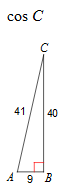
What is the correct ratio?
a)
9/41
b)
40/41
c)
9/40
d)
40/9
62.
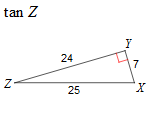
What is the correct ratio?
a)
7/24
b)
24/7
c)
7/25
d)
24/25
63.
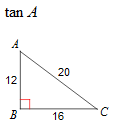
What is the correct ratio?
a)
20/12
b)
12/20
c)
12/16
d)
16/12
64.
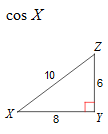
What is the correct ratio?
a)
6/10
b)
6/8
c)
8/10
d)
8/6
65.
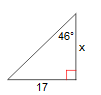
What is the correct equation to solve for x ?
a)
tan( 46 ) = 17/x
b)
sin ( 46 ) = x/17
c)
tan (46 ) = x/17
d)
cos (46) = x/17
66.
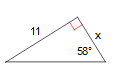
What is the correct equation to solve for x ?
a)
tan (58) = x/11
b)
tan (58) = 11/x
c)
cos (58) = x/11
d)
sin (58) = x/11
67.

What is the correct equation to solve for x?
a)
tan (45) = x/13
b)
cos (45) = x/13
c)
sin (45) = 13/x
d)
sin (45) = x/13
68.
What is the correct equation to solve for x?
a)
tan (45) = x/13
b)
cos (45) = x/13
c)
sin (45) = 13/x
d)
sin (45) = x/13
69.
What is the ratio for Sine?
a)
Hyp/Opp
b)
Opp/Hyp
c)
Opp/Adj
d)
Adj/Opp
70.

What is the formula to calculate speed?
a)
S = t/d
b)
S = d/t
c)
S = d x t
d)
S = t x d
71.

What is velocity?
a)
the quickness of an object
b)
the location of an object
c)
acceleration
d)
speed in a specific direction
72.

What is speed?
a)
how far you go
b)
how much distance is covered over a period of time
c)
how fast you accelerate
d)
the change in the location of a object
73.

A runner races in the 100 meter dash. It takes her 10 seconds to finish. What is her average speed?
a)
10 m/s
b)
1000 m/s
c)
100 seconds
d)
10 seconds
74.

Total distance divided by total time is
a)
average speed
b)
constant speed
c)
instantaneous speed
d)
acceleration
75.

The correct equation to calculate speed is
a)
distance/time
b)
time/distance
c)
distance x time
d)
distance/time2
76.

Shona cycles at an average speed of 8km/h. How far has she travelled if she cycles for 4 hours?
a)
55km
b)
32km
c)
43km
d)
32miles
77.

Bob runs from 4:50 pm until 5:20pm at an average speed of 7km/h. How far did he go?
a)
4.5km
b)
2.5km
c)
3.5km
d)
14km
78.

Alan travels 100 km in 5hrs. Find his average speed in km/h
a)
5km/hr
b)
10km/hr
c)
50km/hr
d)
20km/hr
79.

Joanna drives for 400km at an average speed of 80km/h. How long was her journey?
a)
Joanna's journey was 5hrs long
b)
Joanna's journey was 10hrs long
c)
Joanna's journey was 20hrs long
d)
Joanna's journey was 15hrs long
80.

Find speed when distance is 142 km and time is 2 hours.
a)
71km/hr
b)
52km/hr
c)
17km/hr
d)
90km/hr
81.

What does this graph represent?
a)
Constant Speed
b)
Acceleration
c)
Not moving
82.

What is the speed of an object that travels 60 meters in 4 seconds?
a)
240 m/s
b)
15 m/s
c)
0.067 m/s
d)
15 mph
83.

Can be measured in meters per second (m/s)
a)
Distance
b)
Time
c)
Speed
d)
Acceleration
84.

How far will a person go if they jog for 2 hours at a speed of 12 km/hr?
a)
6 km
b)
0.5 km
c)
10 km
d)
24 km
85.
Which of the following is a unit of distance ?
a)
miles/hr
b)
hr
c)
km
d)
min
86.
Which of the following is a unit of time?
a)
km/hr
b)
hr
c)
km
d)
mi
87.
Which of the following is a unit of speed?
a)
km/hr
b)
hr
c)
km
d)
s
88.
Velocity is both ____ and _____.
a)
speed , direction
b)
direction, mass
c)
volume, density
d)
direction, magnitude
89.
What is the speed of a car that traveled 56 m in 4 seconds?
a)
64 m/s
b)
34 m/s
c)
14 m/s
d)
0.0625 m/s
90.
Which of the following is a unit for acceleration?
a)
km/s
b)
m/s2
c)
mi/hr
d)
ft
91.
How much time does it take for a car travelling at 70 miles/hour to travel 450 miles?
a)
6.42 hours
b)
0.22 hours
c)
19,500 hours
d)
none of the above
92.
65mi/hr South is an example of...
a)
Speed
b)
Velocity
c)
Acceleration
d)
Direction
93.
It took 3.5 hours for a train to travel the distance between two cities at a velocity of 120 miles/hr. How many miles lie between the two cities?
a)
34 miles
b)
420 miles
c)
120 miles
d)
360 miles
94.
What is terminal velocity?
a)
The highest speed an object reaches because of unbalanced forces
b)
The highest speed an object reaches because air resistance offsets gravity in the real world
c)
When an object reaches its final velocity of zero
d)
Only happens in physics world
95.
The change in velocity in a given time period is?
a)
Vi
b)
Vf
c)
a
d)
d
96.
Which would hit the ground first if dropped from the same height in a vacuum—a feather or a metal bolt?
a)
the feather
b)
the metal bolt
c)
They would hit the ground at the same time.
d)
They would be suspended in a vacuum.
97.
A freely falling object starts from rest. After falling for 6 seconds, it will have a speed of about
a)
6m/s
b)
30m/s
c)
60m/s
d)
300m/s
98.
1. An object free falls for 3.5 seconds. How far does it fall?
a)
120.05 m
b)
17.15 m
c)
60.03 m
d)
34.3 m
99.

If you throw a baseball straight up, what is its velocity at the highest point?
a)
9.8 m/s2
b)
9.8 m/s
c)
0 m/s2
d)
0 m/s
100.
An object accelerates at 2 m/s2. Assuming the object starts from rest, how much time does it need to accelerate to a speed of 16 m/s?
a)
4 s
b)
8 s
c)
16 s
d)
1/16 s
101.
A freely falling object starts from rest. After falling for 6 seconds, it will have a speed of about:
a)
6m/s
b)
30m/s
c)
60m/s
d)
300m/s
102.
A ball is thrown downward from the top of a roof with a speed of 25 m/s. After 2 s, its velocity will be (down is considered a negative direction):
a)
19.6 m/s
b)
-5.4 m/s
c)
-44.6 m/s
d)
44.6 m/s
103.
Which of the following could be a unit for Distance?
a)
60 ft
b)
50 m/s
c)
70 s
d)
50 m/s/s
104.
A car Travels 30 m/s. What is 30 m/s?
a)
Distance
b)
Time
c)
Velocity
d)
Acceleration
105.
Which of the following units could be used to measure time?
a)
36 mi
b)
36 m/hr
c)
36 ft
d)
36 s
106.
A car starts from rest and after 7 seconds it is moving at 42 m/s. What is the ’s average acceleration?
a)
0.17
b)
1.67
c)
6
d)
7
107.
A train travels 6 meters in the first second of travel, 6 meters again during the second second of travel, 6 meters again during the third second. It's acceleration is __ m/s2?
a)
0
b)
6
c)
12
d)
18
108.
An object accelerates at 2 m/s^2. Assuming the object starts from rest, how much time does it need to accelerate to a speed of 16 m/s?
a)
4 s
b)
8 s
c)
16 s
d)
1/16 s
109.
An object falls for 3.5 seconds. What distance does it travel as it falls?
a)
120.05 m
b)
17.15 m
c)
60.03 m
d)
34.3 m
110.
A freely falling object starts from rest. After falling for 6 seconds, it will have a speed of about:
a)
6m/s
b)
30m/s
c)
60m/s
d)
300m/s
111.
An airplane lands on a runway with a velocity of 150 m/s. How far will it travel until it stops if its rate of deceleration is constant at -3 m/s2?
a)
525 m
b)
3750 m
c)
6235 m
d)
9813 m
112.
If the net force is equal to zero, the forces acting on the object are
a)
balanced
b)
unbalanced
113.
The unit of force is
a)
m/s
b)
m/s^2
c)
newton
d)
kg
114.
Balanced forces do not change the objects speed or
a)
direction
b)
distance
c)
time
d)
mass
115.
What is defined as a push or pull?
a)
force
b)
motion
c)
vector
d)
speed
116.
An _______ force must act on an object for it to CHANGE it's motion
a)
balanced
b)
unbalanced
c)
gravitational
d)
electrical
117.
What is Newton's First Law known as? The Law of
a)
Friction
b)
Mass
c)
Inertia
d)
Gravity
118.
What is the formula for force?
a)
F=M/A
b)
F=MA
c)
F=AX
d)
what is force?
119.
Compared to its weight on Earth, a 10kg object on the moon is
a)
the same
b)
less
c)
more
120.
If a 0.09Kg bait on a fishing pole is hanging what would be the tension force of the fishing wire?
a)
0.9 N
b)
9N
c)
0.125N
d)
33N
121.
If a person is pulling a 25 kg box with a force of 3 N what would the acceleration of the box be?
a)
12m/s2
b)
0.12N
c)
12N
d)
.12 m/s2
122.
If a person pulled a box with a force of 10.0 N and it resulted in an acceleration of the box of 0.45 m/s2. What would be the mass of the box?
a)
22N
b)
22 kg
c)
0.22N
d)
0.22 kg
123.
Calculate the gravitational force of a 0.678 kg basketball
a)
555 N
b)
6.65N
c)
665N
d)
2000N
124.
The normal force is __________ to the surface it is applied to.
a)
parallel
b)
perpendicular
c)
the same
d)
the opposite
125.
Find the gravitational force of a 67 kg object
a)
900 N
b)
657N
c)
777N
d)
0N
100 %

