
 Worksheets
4-th Quarter Revision Gr.2
Total questions: 35
Worksheet time: 20mins

When there is a long time with very little or no rain that causes the land to get very dry, it is called a ________.
drought
flood
erosion

When moving water or wind carries rocks and soil to new places, it is called ________.
drought
volcano eruption
erosion

Too much rain caused this. What does this picture show?
flood
drought
erosion


Fill in the blank.
Weathering is a ____________ process that changes Earth's surface.
Slow
Quick

How are weathering and erosion alike?
Both of them cause fast changes of the Earth's surface.
A. Both of them cause slow changes of the Earth's surface.

Melted rock (magma) began to push up through the cracks under the ground. Lava explodes onto Earth’s surface. What kind of event is it?
(a)

What are natural resources?
things people cannot live without
things people make to protect nature
things from nature that people can use

Which is a natural resource?
clothes
houses
rocks

Which product comes from trees?
A
B
C

_______ is what the air outside is like?
wind
clouds
Weather

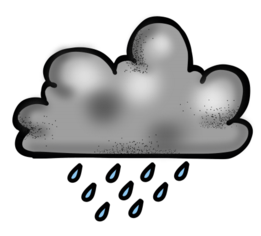
What weather will you predict looking at the clouds?
The clouds are gray, so it might rain.
The clouds are heavy so it will be very hot.
The clouds are thick and gray so it will be very windy.

Lets go swimming. The weather is ___________
Hot and sunny
Cold and windy
Wet and rainy
Which tool measures temperature?


What do we call moving air that surrounds us?
clouds
rain
wind

This tool measures how much rainfalls:
rain gauge
thermometer
weather vane


____________ is the way water moves from Earth’s surface into the air and back again.
The weather pattern
The water cycle
The solar system

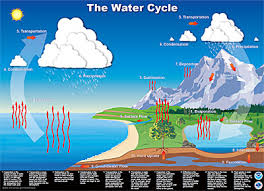


What does number 1 show?

The sun, the planets, and the planets’ moons:
weather pattern
solar system
rotation

When a planet spins all the way around itself, it _______.
rotates
orbit
constellation

A group of stars that forms a pattern is called a(n _________ .
rotation
constellation
shadow

Which describes motion in the solar system?
The planets orbit around the sun.
The sun orbits around the moon
Earth orbits around the other planets

Which kind of object is Earth?
a moon
a planet
a star

What causes day and night?
Earth’s rotation
the sun rising and setting
the moon’s orbit

It is the closest star to Earth.
It gives Earth light and heat.
(a)

About how long does it take Earth to rotate one time?
24 hours
24 days
24 year

It takes one year for Earth to make one orbit around the sun.
true
false

What are the 3 planets closest to the sun?
Write
(a)

The size, shape, and position of shadows don't change during the day.
true
false

