
Font size
 Worksheets
Global 9 Final Review All Questions
Total questions: 70
Worksheet time: 50mins
Which of the following best defines the Abbasid Caliphate?
Islamic Empire in Europe
a dynasty of caliphs(a religious leader in Islam), who ruled in Baghdad from 750 to 1258.
encouraged a Golden Age
an Islamic empire that expanded throughout Asia and Australia
They Traveled to the Americas often
Which of the following images displays an aqueduct?


After the fall of Rome, the eastern portion of the Roman Empire became known as the?
Persian Empire
Gupta Empire
Byzantine Empire
Mongol Empire
define archipelago......
chain of islands
dividing line between north and south
A land mass surrounded by water on 3 sides
A Roman weapon

A system of government in which there is single leader who rules, they often inherit power through their family tree.
Theocracy
Monarchy
Direct Democracy
Democracy

Which of the following WAS NOT a representation of a principal of Athenian Democracy?
Citizenship
Civic Participation
Power is inherited
Rule of Law

A government where the power belongs to the people and every citizen can participate in making decisions regarding their government.
Theocracy
Monarchy
Oligarchy
Democracy
How did the Black Death spread?
Bacteria carried by fleas
Jews poisoning drinking water
Lepers open wounds
Position of planets
How was the Black Death spread over oceans?
It came with conquered people.
It resulted from missionary work in other lands.
It followed trade routes.
It was carried by birds.
One reason Hammurabi's code is famous is that
it was the first set of laws recorded in writing
it was written in a sophisticated code that took years for historians to translate
it was beautifully written on a single giant stone of polished basalt
it was the first set of laws to rhyme to help people remember them

Which of the following descries the Columbian Exchange?
The exchange of people, plants, animals, diseases and ideas from Old World to New World and from New World to Old World
The sending of people, plants, animals, diseases and ideas from the Old World to New World only
The sending of people, plants, animals, diseases and ideas from the New World to Old World only
The sending of people, plants, animals, diseases and ideas from South America to North America only
Cultural diffusion is best described as...
sharing music from one culture to another
the spreading of ideas, languages, and traditions fromone culture to another
the spreading of religion

A system of writing developed by the Sumerians around 3,000 BC, using a wedge shaped stylus and clay tablets.
Cuneiform
Irrigation
City-State
Roman Numerals
Latin
Effects of the Crusades included
continued decline of feudalism
rise of a merchant class in Europe
exchange of goods and ideas between Europe and the eastern Mediterranean
increased intolerance for non-Christians
The First Crusade got started when the Seljuk Turks did what?
Prevented Christians from entering Jerusalem
Attacked the Catholic city of Rome
Burnt down the city of Jerusalem
Which country was NOT colonized by Spain?
Ecuador
Chile
Brazil
Uruguay
The agreement that divided the New World and allowed Spain to colonize the land west of the Line of Demarcation and Portugal to colonize the land east of the Line of Demarcation is called
Treaty of Tordesillas
Treaty of Paris
Treaty of Versailles
treaty of Guadalupe Hidalgo
Spanish conquerors who used horses, superior weapons, disease, and slavery to conquer Native Americans of Central and South America, and the Caribbean Islands.
Conquistadors
Viceroys
Missions
Encomiendas

Which title best completes this diagram?
Elements of a Civilization
Human Life 50,000 Years Ago
Features of a Nomadic Lifestyle
Basic Components of the Paleolithic Age
an extensive group of states or countries under a single supreme authority, formerly especially an emperor or empress. What word best matches this definition?
Republic
Empire
Dynasty
Democracy
What is the definition of "ethnocentrism"?
judging a culture based on your belief of the superiority of your own culture
believing all ethnicities are equal
Belief that every country should be independent of foreign influence
It is widely believed that human life began in
Iraq, at the Tigris and Euphrates River
Australia, from handprints of Aborigines on cave walls
Africa, from fossilized bones found in the Olduvai Gorge
Europe, as represented in cave art in France
A dynasty refers to
a succession of rulers from a single family
inherited wealth
united groups of clans that rule by right of ancestry
wealth accumulated through trade with the merchant class

What does filial piety mean?
Respecting older family members
Obedience to country
Respect to teachers
Loyalty
Why is the river Ganges significant to the Indian people?
It is a major tourist attraction.
It is a major transport route through the country
It is a spiritual place where sins are cleansed.
It has no significance at all.
Event that increased the demand for trade goods, developed banking principles and led to the Renaissance.
Black Death
Pax Romana
Crusades
Hundred Years' War
A political, social, economic, and cultural "rebirth" from the 1300's to the 1500's C.E.
Middle Ages
Reformation
Classical Era
Renaissance
Author of The Prince who believed rulers should have absolute power.
Machiavelli
Erasmus
Sir Thomas More
Petrarch
Invented the movable type printing press.
Petrarch
Johann Gutenberg
Erasmus
Sir Thomas More
Which is NOT an impact of the Gutenberg Press
Books were cheaper
Literacy rates increased
People began to study the Bible for themselves
Literacy rates decreased
The Code of Hammurabi of Sumer, the Twelve Tables of Rome, and the Justinian Code of the Byzantine Empire were similar in that they
provided a basis for behavior for medieval knights and Japanese samurai
are legal systems developed to create order for the society
became examples of religious doctrine for other societies
are documents that established and maintained the position of the upper classes
Which statement below describes the Mandate of Heaven?
the belief that the Chinese king's right to rule came from the gods.
the belief that the Chinese kings could remain in charge for ever.
the belief that the Chinese kings could carry out religious ceremonies to please the gods.
the belief that the Chinese kings could divide the kingdom into territories

What was a manor?
a small city owned by a king or lord
a palace built for the emperor
a city of refugees
a feudal castle
Monotheism is the belief in
one god
many gods
all gods
all of the above
What term describes someone who moves from place to place, usually following food supply or animals?
Cattle herder
Rancher
Nomad
City-goer
What is an aqueduct?
A stone channel carrying water to the city
A type of bridge
The name of a famous road
A curved structure over an opening
branch of geography dealing with natural features
Physical Geography
Economics
Anthropology
Ecology


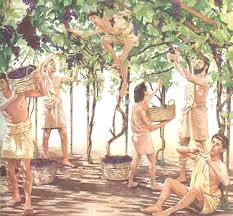
Who were the helots?
nobles who ran the country
slaves who worked the land
merchants or artisans who lived in the villages
soldiers who protected the city-state
At what age were boys sent away to the military camps?
7
8
9
10

Who were the perioikoi ?
nobles who ran the government
slaves who farmed the land
merchants or artisans who traded
soldiers who protected the city-state

At what age were Spartan men allowed to retire from the military?
20
40
60
80
Which type of agriculture might be the most successful in mountainous areas when trying to grow crops?
Terrace Farming
Chinampas
Green Houses
Nomads
Which three continents were involved in the Triangular Trade Route?
North America, South America and Africa
North America, Africa and Europe
North America, South America and Europe
North America, Africa, and Asia
What was the part of the Triangular Trade Route in which slaves were shipped from Africa to West Indies known as?
Modern Passage
Middle Passage
Modern Route
Middle Route

