
 Worksheets
Science 9 Unit E
Total questions: 64
Worksheet time: 41mins


When do solar eclipses occur?
When the earth passes between the moon and sun.
When Jupiter passes between the sun and Earth.
When the moon passes between the Sun and Earth.
When Mars gets too close to the sun and causes an eclipse.

Which planet is the largest and most massive of all the planets in our solar system?
Jupiter
Uranus
Neptune
Saturn

The outer planets have solid, rocky surfaces.
True or False?
True
False
A nebula is _____________.
a cloud of gas and dust
a group of dying stars
a star exploding

Stars are formed ('born') in a ....
nebula
black hole
nova
cluster
TRUE or FALSE: Our sun is a medium-sized star.
True
False
Which planet has the hottest average surface temperature due to its atmosphere?
Earth
Mercury
Venus
Saturn
When a meteoroid enters earth's atmosphere and experiences friction... it begins to burn and now it's called a :
meteor
meteorite
asteroid
meteoroid
The Asteroid Belt is:
space debris that causes much damage and destruction to earth on a regular basis
millions of pieces of rocks that make space travel difficult to pass through from Earth to its moon
millions of pieces of rock and crater that separate many gas giant planet
the area between Mars and Jupiter that contains millions of pieces of rock and separates the outer and inner planets

An object made of ice and rock that has a very long elliptical orbit is called a _________.
meterorite
asteroid
meteoroid
comet
When do solar eclipses occur?
When the earth passes between the moon and sun.
When Jupiter passes between the sun and Earth.
When the moon passes between the Sun and Earth.
When Mars gets too close to the sun and causes an eclipse.

The Hertzsprung-Russell Diagram tells us about a star's...
temperature and brightness
location and size
age and temperature
location and luminosity
What are the inner planets composed of?
gases and ice
rock and ice
gas and plasma
gas and liquid
What do we call a small rock which falls to earth's surface from space
an asteroid
a meteorite
satellite
a meteoroid
What are comets often called?
icy meteors
dirty snowballs
dirt balls
icy rocks
When a star runs out of fuel for nuclear fusion and dies in an explosion it's called a....
supernova
white dwarf
quasar
big explosion
Earth-centered model of the solar system is called...
heliocentric
geocentric
lunacentric
Who developed the heliocentric theory?
Copernicus
Galileo
Ptolemy
Kepler


Which of the following star 'leftovers' is the most dense?
White Dwarf
Neutron Star
Black Hole
Supergiant
All stars begin in a __________?
protoplanet
black hole
white dwarf
nebula

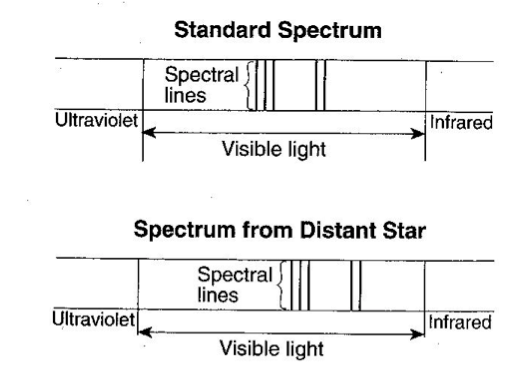
Which primary property of a star does the above spectral analysis determine?
Age
Size
Temperature
Composition
The first four planets from the Sun are called the inner planets. The four planets that are furthest from the Sun are called outer planets. Which of the tables shown lists some of the key characteristics that distinguish outer planets from inner planets in our solar system?


Sally is facing south on March 21 and is trying to find the coordinates of the Sun as it sets. Which of the following coordinates most likely describe the location of the Sun?
Altitude 85° and azimuth 90°
Altitude 5° and azimuth 270°
Altitude 5° and azimuth 90°
Altitude 85° and azimuth 270°
Which of the following factors is the main reason an astronaut’s muscle mass and bone density decrease while in space?
Astronauts do not need to support body weight in space
Astronauts are restricted to a confined living area in space.
It is not possible for astronauts to exercise vigorously in space.
It is difficult for astronauts to consume a balanced diet in space.
Which of the following statements best compares telescopes based in space to telescopes based on Earth?
Space-based telescopes are generally larger.
Space-based telescopes capture clearer images.
Earth-based telescopes, in general, cost more to build.
Earth-based telescopes explore further into deep space.


One of the measurements used to locate objects in the sky is compass direction. The compass direction measured clockwise from north is called
azimuth
altitude
zenith
Altitude is measure from the horizon which is at ___ and ___degrees from the north.
90 - 270
180 - 360
270 - 180
270 - 360
An azimuth reading of 120 degrees would be which direction?
North
East
South East
South West
the moon orbiting the earth is an example of:
natural satellite
artificial satellite
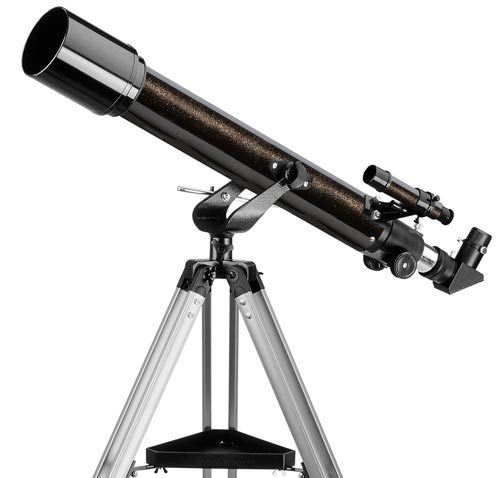
A refracting telescope uses _______ to focus light.
Lenses
Mirrors
Lasers
Water
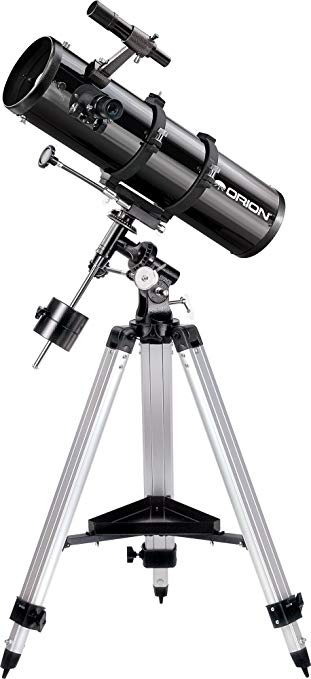
Reflecting telescopes use _______ to focus light.
Lenses
Flat mirrors
Curved Mirrors
A lens and lasers
Which of the following measurements could be calculated using the process of triangulation?
The brightness of a celestial body
The temperature of a celestial body
The distance between two celestial bodies
The speed at which a celestial body is traveling
Constellations consist of patterns of stars in the sky. The constellations we recognize today were identified by many ancient civilizations. Which of the following statements best explains why planets are never featured in
constellations?
Planets look bigger than stars.
Planets are more difficult to see than stars.
Planets have a chemical composition different from that of stars.
Planets do not maintain fixed positions relative to other planets or stars.
A geosynchronous orbit occurs when an object orbits Earth at the same rotational rate as Earth. A geosynchronous orbit allows a single satellite to
capture information about global weather patterns
capture images of the planet from many perspectives
send signals continuously to a specified area on Earth
send messages to multiple receivers anywhere on Earth

The above diagram shows …
Parallax
doppler affect
Refraction
Spectral Analysis

This is an image of the first stage in the formation of a star, also known as a ....
Main Sequence
Planetary Nebula
Supernova
Nebula

