
 Worksheets
Final Review day 1
Total questions: 150
Worksheet time: 2hrs 25mins
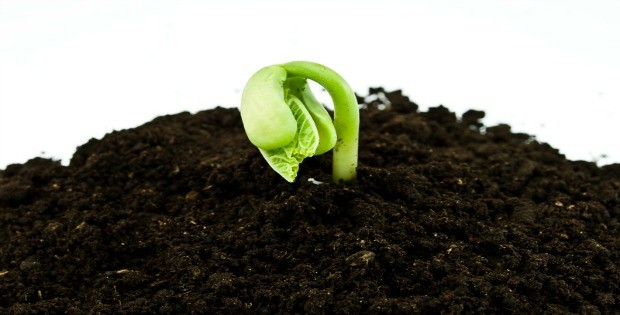

Susan said, “If I fertilize my geranium plants, then they will have more flowers.”
recognize a problem
test the hypothesis with an experiment
form a hypothesis
draw conclusions
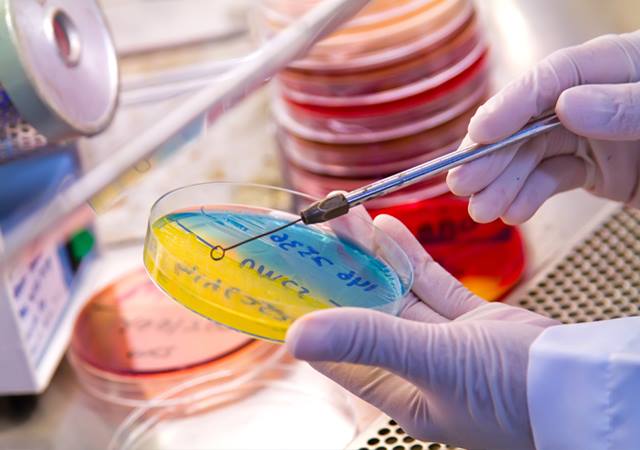
Rene grew bacteria from a person's mouth on special plates in the laboratory. She placed drops of different mouthwashes on bacteria on each plate.
recognize a problem
test the hypothesis with an experiment
form a hypothesis
draw conclusions
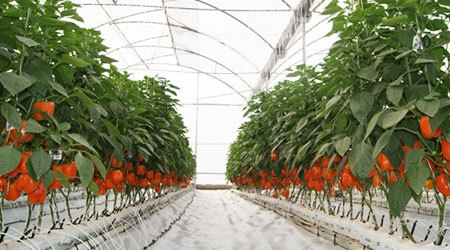
Bob read about growing plants in water. He wanted to know how plants could grow without soil.
coming up with a question
test the hypothesis with an experiment
form a hypothesis
draw conclusions
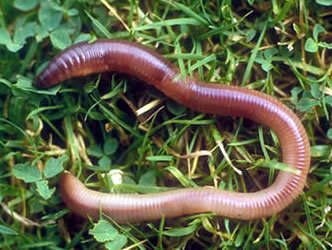
Angela’s experiment proved that her hypothesis was supported that earthworms move away from light.
recognize a problem
test the hypothesis with an experiment
form a hypothesis
make a conclusion
When experimenting with the growth of a plant, a scientist uses three (of the same type of) plants, two different fertilizers, equal light, and equal water. What type of variable is the fertilizer?
Dependent
Independent
The measurable factor (something you measure) in an experiment is known as the:
Dependent Variable
Independent Variable
Walker is testing which fertilizer will grow the tallest grass. The height of the grown grass is the __ variable.
dependent (measured)
independent (changes)
Does the type of shoe worn during a 30 meter dash affect the speed of the runner? What is the speed of the runner?
independent
dependent
What is the last step of scientific method?
hypothesis
observe
communicate
question
What is a claim?
Answers a question or problem
long and detailed paragraph
Explains why something happened
What is evidence ?
Answers a question
Anything you see, hear or read or experience that causes you to believe something is true.
Long and detailed paragraph
What is reasoning?
Answers a question
Explaining how evidence supports a claim
Used to prove something true or false
What is an example of a claim?
Mr. Brunt likes Star Wars
In the fall, because of changes in the length of daylight and changes in temperature, the leaves stop their food-making process.
The data shows that when leaves are taken away from sunlight, they change colors.
Peanut butter is a terrific snack.
Claim
Evidence
Reasoning shows ______________ and _______________
Questions and problems
How and why
Evidence and reasoning
An author's statement that can be argued and proven with evidence is ______
claim
evidence
reasoning
theme
What is a claim?
Answers a question or problem
long and detailed paragraph
Explains why something happened
What does CER stand for?
Create Evaluate Respond
Consider Evidence Relevant
Claim Evidence Reasoning
Cause Examine Real-life

High school students should be required to wear uniforms.
According to a data table there were 3 times as many Air Jordan shoes sold than other shoes types. This an example of ...
a claim
evidence
reasoning
Which sentence is the claim?
Which sentence is the evidence?
Which sentence is the reasoning?
In our experiment, the blocks had different masses, 20 g., 30 g., 44 g., 123 g and 142 g but the time for all five blocks to fall was about the same. It took between 1.5 and 1.8 seconds for them to fall. No, mass does not affect how quickly an object falls. Since the blocks had different masses but took about the same time, I know that mass does not affect how quickly something falls.
In our experiment, the blocks had different masses, 20 g., 30 g., 44 g., 123 g and 142 g but the time for all five blocks to fall was about the same. It took between 1.5 and 1.8 seconds for them to fall. No, mass does not affect how quickly an object falls. Since the blocks had different masses but took about the same time, I know that mass does not affect how quickly something falls.
In our experiment, the blocks had different masses, 20 g., 30 g., 44 g., 123 g and 142 g but the time for all five blocks to fall was about the same. It took between 1.5 and 1.8 seconds for them to fall. No, mass does not affect how quickly an object falls. Since the blocks had different masses but took about the same time, I know that mass does not affect how quickly something falls.

Which statement BEST describes the relationship between the weight and mass of an object?
If mass increases, weight will decrease.
Doubling mass reduces weight by half.
An increase in mass will not affect weight.
If mass increases, weight will increase.
Density is a physical property of matter and can be used to classify substances. Density is calculated by which of the following?
d=v/m
d=m/v
d=w/v
d=m/w

303.4 g
370.4 g
373.0 g
373.4 g
Based on the data for the four samples, determine which of the following substances has the greatest density.
Sample 1: volume = 15 cm3, mass =30 g
Sample 2: volume = 20 cm3, mass = 66 g
Sample 3: volume = 3 cm3, mass = 12 g
Sample 4: volume = 48 cm3, mass = 100 g
10 g is a measure of
Mass
Volume
Density
10 cm3 is a measure of
Mass
Volume
Density
10 g/cm3 is a measure of
Mass
Volume
Density

This object ______ in water.
Sinks
Floats

This object ______ in water.
Sinks
Floats
This object's density is ______.
Greater than 1
Less than 1

This object's density is ______.
Greater than 1
Less than 1


How much liquid is represented?
24 mL
20.4 mL
29 mL
35 mL
What instrument do we use to measure the volume of liquids
ruler
scale
graduated cylinder
balance
1 cm3 is equal to a ___
liter
milliliter
gram
kilogram
We always read the graduated cylinder -
at the top of the meniscus
at the bottom of the meniscus
we ignore the meniscus
The dip in the liquid line on a graduated cylinders is called the ______
dip
saucer
meniscus
What is the density of an object that has a mass of 4 grams and takes up a volume of 2 mL.
0.5 ml/g
2 g/ml
4 g/ml
1 g/ml
Choose which one is a physical property
Flammability
Solubility
Water Reaction
Magic
The melting point of a substance is the temperature at which the substance changes from a solid to
Gas
Liquid
Solid
Plasma
Choose the one that is a chemical property
Magnetism
Size
Color
Reactivity with water
Flammability is the ability of a substance to _________
Burn
Transfer heat
Transfer electricity
Cook
The characteristics of a substance depends on its size.
True
False
If you describe a substance as being corrosive, you have given a __________ property of that substance
Chemical
Large
Physical
Thermal
Choose the 3 that are physical properties of aluminum foil
Malleable
Luster
Oxidation
High melting point
What effect does observing the physical properties of a substance have on the substance?
Measuring physical properties changes the chemical identity of the substance
Observing physical properties has no effect on the substance
It makes to substance develop a deep seeded distrust of humans
The substance will undergo an exothermic reaction
Which of the following statements is accurate?
After observing a chemical property, the substance remains the same as before
All metals have the same physical properties
When you see water turn into steam, you have observed a chemical property
A physical property can change without causing a change in the chemical identity of the substance
What is the outcome of observing a chemical property?
Nothing
A new substance is formed with different properties
NaCl
A rise in thermal conductivity
Which of these statements best describes a chemical property of a substance?
It reacts with an acid to form water
The object has a blue color
The substance has a powdery texture
It has a density of 2.11 g/cm3
If you had two different substances that looked exactly the same, which properties would you use to tell them apart?
Sound
Size
Color
Density
Choose whether the following is a physical or chemical property: Malleability
Physical
Chemical
Choose whether the following is a physical or chemical property: Reacts with oxygen
Physical
Chemical
Choose whether the following is a physical or chemical property: Magnetic
Physical
Chemical
Choose whether the following is a physical or chemical property: Non-flammable
Physical
Chemical
Choose whether the following is a physical or chemical property: Oxidation
Physical
Chemical
Which option best describes the difference between a physical and chemical property?
There is no difference between a physical and chemical properties?
Physical properties are usually room temperature but chemical properties are very hot
Observing a chemical property results in the creation of a new substance while observing a physical change does not change the substance
The difference between physical and chemical properties are the states of matter
Which state of matter is air in a hot air balloon?
solid
liquid
gas
Which state of matter is water in a glass?
solid
liquid
gas
Which definition best describes matter?
You can pour it into a glass.
It takes up space.
It is ALWAYS the color red.
Many organisms are _____________—so small that they cannot be seen with the naked eye.
microscopic
gigantic
small
ordinary
All living things are made of __________.
wood
bone
cells
blood
Almost all cells are _______________.
animal cells
plant cells
visible to the naked eye
microscopic
Even though they are both too small to see, cells are much ___________ than molecules.
larger
smaller
The human microbiome contains approximately 100 trillion ___________. Most of these are bacteria.
microorganisms
blood cells
fungi
C. jejuni
The human body provides an environment (food and _______) for bacteria to survive.
nitrogen
blood
oxygen
space
A healthy _______________ has various helpful types of bacteria.
nanometer
micrometer
microbiome
computer
An infection of harmful bacteria in the human microbiome can make a person __________.
healthy
happy
sick
hungry
Antibiotics reduce the number of ________ and harmful bacteria in the microbiome.
dangerous
microscopic
single-cell
helpful
Living things with ________ than normal helpful bacteria in their guts can become infected more easily because there is more food and space available for harmful bacteria.
fewer
more
True or False: Fecal transplants are both gross and unable to help with bacterial issues in the gut.
True
False
True or False: Patient 23 was able to eliminate ONLY the C. jejuni bacteria and no other types of bacteria by taking an antibiotic.
True
False
Is it possible for there to be bacteria or fungus to be growing on something without it being visible to the naked eye?
Yes, bacteria and fungi are microscopic.
No, we should see it if it is there.
Which of the following accurately describes what happened between Day 1 and Day 5 in the petri dish where the scientist swabbed the hand for microorganisms?
The microorganisms reproduced to form a colony. With so many of them, scientists can see them with the naked eye.
The microorganisms grew larger, making it so scientists can see them with the naked eye.
The microorganisms all died off, so scientists could not see any of them.
What is one type of bacteria found in a healthy gut microbiome?
C. jejuni
C. difficile
Bacilli (L. reuteri)
What is a type of harmful bacteria found in the human gut microbiome?
C. jejuni
L. reuteri
B. animalis
What do harmful bacteria do in the gut microbiome?
They can make people sick.
They keep people healthy.
They just take up space in your gut.
All of the microorganisms that live in a particular environment, such as the human body is called...
organisms
microscopic
cell
microbiome
An organism that is too small to be seen with the naked eye.
organism
microscopic
cell
microorganism
Living things, such as plants, animals and bacteria are called..
microscopic
organisms
cells
microorganisms
claim
a claim supported by evidence
A proposed answer/statement to a question about the natural world
the size of things
the process in making a clear point
Microbiome
All of the microorganisms that live in a particular environment
to small to be seen
a nanometer
the width of a DNA strand
Evidence
Information about the natural world that is used to support or go against a claim
Things that do not support your claim
The tiniest bacteria living in the human microbiome
Which is larger: cells or molecules?
cells
molecules
Where do microorganisms live?
Everywhere
In the human body
On the human body
On and in the human body

There are over _____ microorganisms on and in the human body.
5,000
1 Trillion
100 Billion
100 Trillion

True or False: All bacteria are harmful.
True
False
Many organisms are _____________—so small that they cannot be seen with the naked eye.
microscopic
gigantic
small
ordinary
All living things are made of __________.
wood
bone
cells
blood
An infection of harmful bacteria in the human microbiome can make a person __________.
healthy
happy
sick
hungry
Antibiotics destroy ________ bacteria.
good
bad
good and bad
no
Living things with less than normal helpful bacteria in their guts can become infected more easily because there is more ________ available for harmful bacteria.
food and shelter
food and space
food and friends
space and room
True or False: Patient 23 was able to eliminate the C. jejuni bacteria and no other types of bacteria by taking an antibiotic.
True
False
True or False: Fecal transplants are both gross and can not help with bacterial issues in the gut.
True
False
Too small to be seen with the naked eye
microscopic
population
scale
microbiome
The space exploration program has hired you for advice on how to keep astronauts healthy in the space shuttle. How can the program's doctors make sure the astronauts’ bodies work well enough to exercise in space?
The doctors could make sure that the astronauts’ bodies can make enough energy by getting enough sleep.
The doctors could make sure the astronauts’ stomachs are getting the molecules they need from food and air.
The doctors could make sure the astronauts’ cells are getting the molecules they need from food and air.
The doctors could make sure the astronauts’ cells are getting different types of molecules from food.
2. Some types of syrup are almost entirely made of glucose molecules. If a person ate some syrup like this, what would happen to her ability to exercise?
It would be harder for her to exercise because her digestive system would need to use more enzymes to combine the glucose molecules together.
It would be easier for her to exercise because glucose moves through the circulatory system faster than other food molecules usually do.
Nothing would happen to her ability to exercise, but her respiratory system would not work as hard, since glucose has more energy than oxygen molecules.
Nothing would happen to her ability to exercise, but her digestive system would not work as hard, since glucose is already small enough to get to her cells.
Doctors tested a patient and found that his cells contained normal levels of oxygen and glucose molecules, and no starch molecules. Will this patient be able to exercise normally?
Yes, the glucose and oxygen molecules can react together to release energy for the body to function.
No, his digestive system is not breaking down food molecules; his cells need starch molecules to react with glucose, which releases energy.
No, his body systems are working, but he needs to eat different food; in cells, only amino acids can react with oxygen to release energy.
Yes, as long as his cells have glucose, they don’t need anything else to release energy for the body to function.
4. Some problems with the digestive system make it very difficult for the body to digest enough food. Why would it be harder to exercise when you have a digestion problem like this?
You would not be able to sleep, which would make you too tired to exercise.
Your cells would have molecules from air, but would not get enough molecules from food.
You would need to breathe in a lot more air because your body would have fewer molecules from food.
You would not get any of the molecules your cells need to exercise.

5. The test report above shows the level of molecules in different parts of the patient’s body. How would you expect this patient to do on an exercise test?
Well; his body is working properly.
Poorly; his digestive system is not combining glucose molecules together for the cells to use.
Poorly; his digestive system is not breaking down molecules from food into glucose.
Poorly; his respiratory system is not breaking down oxygen molecules into glucose.
6. Two soccer teams, the Bears and the Panthers, played games at the same time in two different locations. The Bears game was played at sea level, where there is a normal amount of oxygen. Before their game, the players on the Bears ate a lunch of mostly starch. The Panthers game was played at very high altitude, where there is less oxygen. The players on the Panthers ate a lunch of starch and protein. Which team probably did better in their game?
The Bears probably did better because their cells released energy from oxygen reacting with glucose, which was broken down from starch in the digestive system.
The Panthers probably did better because their cells released energy from breaking down protein in the digestive system, which then combined with oxygen in cells.
The teams did equally well because their digestive systems just need to break down starch into glucose for cells to release energy.
The teams did equally well because glucose from starch can react with oxygen or proteins to release energy.
9. Doctors tested a patient to find out what molecules were in her cells. Her cells contained normal levels of oxygen molecules, low levels of amino acid molecules, and low levels of glucose molecules. Will this patient be able to exercise normally?
Yes, as long as her cells have enough oxygen, her body will be able to exercise.
No, her cells need glucose to react with oxygen to release enough energy to exercise.
No, her cells need amino acids to react with oxygen to release enough energy to exercise.
No, her cells need glucose to react with amino acids to release enough energy to exercise.
10. Asthma is a condition in which it can be very hard for a person to breathe in enough air. Would it also be difficult for someone with asthma to exercise?
No, as long as the person is getting enough sleep, he will make enough energy to exercise.
No, as long as the person's cells are getting different types of molecules from food, he can still exercise.
No, the person's cells may not have everything they need, but his body can still exercise normally.
Yes, it will be difficult for a person with asthma to exercise because his cells need molecules from air.
Your skeletal system contains many joints, which allow
vision
movement
digestion
emotional support
your skeletal system helps store minerals, including calcium
true
false
How do the ribs support the heart and lungs?
they don't, because they are a separate system
the ribs provide protection to the heart and lungs
the ribs tickle the heart to make it beat
the ribs only support the liver and stomach
bone marrow inside the bones makes red blood cells
true
false
when a bone is broken or cracked, it is called a
sprain
dislocation
strain
fracture
When bones become brittle and weak and can break easily from a minor fall, a person might suffer from
fracture
strain
osteoporosis
cancer
what is a type of cancer that can negatively affect bone marrow and blood cell production
ovarian
leukemia
lung
breast

