wayground logo

Free Printable Worksheets

Font size

S
M
L
XL
Worksheets

2nd Semester Test, 2024/25

Total questions: 65

Worksheet time: 49mins

Name
Class
Date
1.
Which president played a role in the completion of the Panama Canal?
a)
William Taft
b)
Woodrow Wilson
c)
Teddy Roosevelt
d)
Franklin Roosevelt
2.
Which Latin American country was annexed following the Spanish American War?
a)
Cuba
b)
Puerto Rico
c)
Panama
d)
Hawaii
3.
Which policy urged all foreigners in China to obey Chinese law, and encouraged fair competition?
a)
14 Points
b)
Open Door Policy
c)
Big Stick Policy
d)
Treaty of Versailles
4.
World War I started in Europe in 1914.  For three years, the United States stayed...
a)
Neutral
b)
with Britain and fought
c)
with Germany and fought
5.
What was Wilson's plan to end all wars in the world?
a)
14 Points
b)
Treaty of Versailles
c)
Open Door Policy
d)
Big Stick Policy
6.
What was the tipping point in WWI and led to the defeat of the Germans?
a)
US Entering the war
b)
New technologies were found
c)
Germany ran out of money
d)
US leaving the war
7.
Overspeculation, expansion of credit, and banks running out of money lead to what event?
a)
Dust Bowl
b)
Flappers
c)
Stock Market Crash
d)
WWII
8.
"...the only thing we have to fear is fear itself..."
a)
Woodrow Wilson
b)
Teddy Roosevelt
c)
FDR
d)
Truman
9.
Germany bombing Great Britain is called the -
a)
Stalingrad
b)
Battle of Great Britain
c)
Pearl Harbor
d)
Midway
10.
How did the war start in Europe in 1939?
a)
D-day invasion
b)
Germany over runs France
c)
Soviets invade Germany
d)
Germany invades Poland
11.
The liberation of western Europe started after which invasion?
a)
Paris
b)
D-Day
c)
Battle of Britain
d)
Stalingrad
12.
Which US president made the decision to drop the atomic bombs on Nagasaki and Hiroshima?
a)
Wilson
b)
FDR
c)
Truman
d)
Teddy Roosevel
13.
American POW's suffered brutal treatment after the surrender of the Phillippines, known as the...
a)
Bataan Death March
b)
Hiroshima
c)
Iwo Jima
d)
Midway
14.
Germany's plan and system for eliminating the Jews, gypsies and other "undesirables" was known as...
a)
The Final Answer
b)
genocide
c)
Holocaust
15.
Which convention attempted to ensure humane treatment of prisoners of war...
a)
Geneva
b)
Paris
c)
Stalingrad
d)
El Alamein
16.
Which country, following WWII, was partitioned and divided among other countries?
a)
Britain
b)
France
c)
Germany
d)
Russia
17.
What organization was created following WWII to help prevent future wars?
a)
League of Nations
b)
United Nations
18.
This was the name for the set of programs put in place by FDR to help the depression era economy.
a)
fireside chat
b)
bank holiday
c)
New Deal
d)
packing the court
19.
This New Deal reform program insured checking and savings accounts. 
a)
Civilian Conservation Corps
b)
Fair Labor Standards Act
c)
Federal Deposits Insurance Corporation
d)
Social Security Act
20.
Which New Deal program employed young men to work on various projects to improve the country?
a)
Social Security Act
b)
Fair labor Standards Act
c)
Rural Electrification Act
d)
Civilian Conservation Corps
21.
Which New Deal program set aside savings through taxes for unemployment, the disabled or retirement? 
a)
Federal Deposits Insurance Corporation
b)
Social Security Act 
c)
Agricultural Adjustment Act
d)
Civilian Conservation Corps
22.

Can you recall what the 18th amendment is

a)

Made it illegal to make or sell alcohol

b)

Gave women the right to vote

c)

Led to a decrease in crime

d)

Gave African Americans the right to vote

23.

Young women in the 1920s who declared their independence from traditional values were known as __________________________.

a)

Fads

b)

Actresses

c)

Flappers

d)

Beyonce

24.
Which music genre was created in the 20s?
a)
Bluegrass
b)
Jazz
c)
Hip Hop
d)
R&B
25.
In State governments, all the following are used except:
a)
Referendum
b)
Initiative
c)
Recall
d)
Urbanization
26.
Causes of the Progressive Movement include dangerous working conditions – (all of the following) except:
a)
Child labor
b)
Long hours
c)
High wages
d)
No job security
27.
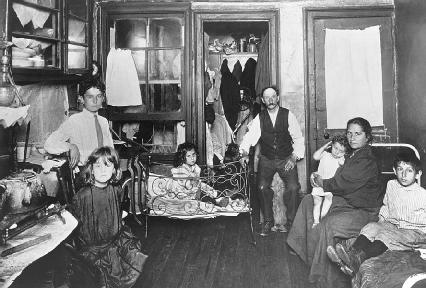
The photo demonstrates one of the problems with
a)
overcrowding urban tenements.
b)
labor union activism in urban areas.
c)
the overproduction of consumer goods.
d)
the growth of political machines.
28.

Between Civil War & WWI the US transformed into what kind of economy?

a)

Communist

b)

Egalitarian

c)

Industrial

d)

Agricultural

29.

After reconstruction, many southern state governments passed _______________ laws that separated races

a)

KKK

b)

Rustic

c)

Jim Crow

d)

White Privilege

30.

What means government should interfere the LEAST amount possible in the economy?

a)

Laissez-faire

b)

Liberalism

c)

Conservatism

d)

Socialism

31.

Who believed education was meaningless without equality and helped start the NAACP?

a)

WEB DuBois

b)

Booker T. Washington

c)

Martin Luther King Jr.

d)

Ida B. Wells

32.

What prevents any business structure that restrains trade (monopolies)?

a)

Proclamation of 1763

b)

The 19th Amendment

c)

Sherman Anti-Trust Act

d)

Clayton Anti-Trust Act

33.

In Buck v. Bell (1927), the United States Supreme Court upheld a VA statute for the sterilization of people considered genetically unfit.

a)

True

b)

False

34.
Germany's decision to exterminate all the Jews was called?
a)
Holocaust
b)
Genocide
35.
Which plan provided massive aid to rebuild Europe?
a)
Marshall
b)
Roosevelt
c)
Reagan
d)
Eisenhower
36.
The US Senator that accused many Americans of being communists?
a)
Kennedy
b)
Obama
c)
McCarthy
d)
Reagan
37.
 The Allied strategy for winning the war gave priority to
a)
defeating Germany
b)
defeating Japan
c)
 liberating death camps
d)
 starting a second front in France
38.
The Persian Gulf War took place under which President?
a)
Ronald Reagan
b)
George W, Bush
c)
Bill Clinton
d)
George H.W. Bush
39.
During the Vietnam War, Americans back home —
a)
overwhelmingly supported the war
b)
overwhelmingly opposed the war
c)
were divided over the war
d)
gave returning veterans warm welcomes
40.
How did Ronald Reagan contribute to the collapse of the Soviet Union?
a)
By asking NATO to bomb the Soviet Union
b)
By proposing perestroika
c)
By placing an embargo on trade with the Soviets
d)
By stepping up U.S. military production
41.
The Truman Doctrine was concerned with —
a)
fighting terrorism
b)
ending the Cold War
c)
containing communism
d)
ending the nuclear arms race
42.
In which case did the Supreme Court reject racial segregation in public schools?
a)
Plessy v. Ferguson
b)
Brown v. Board of Education
c)
Miranda v. Arizona
d)
Roe v. Wade
43.
The alliance formed at the beginning of the Cold War by the United States and ten other nations is called —
a)
NATO
b)
 the Warsaw Pact
c)
the League of Nations
d)
NAFTA
44.
What act is aimed at fighting terrorists in the United States?
a)
The Patriot Act
b)
The Strategic Defense Initiative
c)
The Sherman Act
d)
The Immigration Act of 1990
45.
Which of the following best explains the increase in voter registration in 1968?
a)
The Fifteenth Amendment
b)
The Twenty-Sixth Amendment
c)
The Civil Rights Act of 1964
d)
The Voter Rights Act of 1965
46.
In 2000, the largest number of immigrants to the United States came from —
a)
Africa
b)
Asia and Oceania
c)
Europe
d)
 the Americas
47.
Sandra Day O'Connor was the first female —
a)
head of the Federal Reserve Board
b)
chairperson of the Republican Party
c)
candidate for the vice presidency
d)
 Justice of the Supreme Court
48.
What do the graphs reveal about child labor and school enrollment after 1900?
a)
Both child labor and school enrollment increased.
b)
Both child labor and school enrollment declined.
c)
Child labor increased while school enrollment declined.
d)
Child labor declined while school enrollment increased.
49.
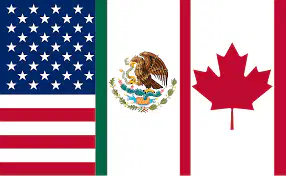
In 1992, the United States signed NAFTA, an agreement to —
a)
outlaw U.S. trade with Libya, Iran, and Iraq
b)
improve trade among the United States, Canada, and Mexico
c)
increase trade between the United States and the European Union
d)
impose heavy tariffs on goods imported from China
50.
The 1963 March on Washington 
a)
erupted into violence and launched a series of riots nationwide
b)
was the setting for Dr. Martin Luther King Jr.'s "I Have a Dream" speech
c)
was important symbolically but had little effect on civil rights legislation
d)
 was well televised but poorly attended
51.
President Bush's war on terrorism led to —
a)
the Persian Gulf War
b)
 the elimination of weapons of mass destruction
c)
military action by the United States in Afghanistan and Iraq
d)
military action by the United States in Iran and Libya
52.
What was the purpose of Ellis Island?
a)
To help immigrants settle in the United States
b)
To prevent immigrants from moving to certain areas of the country
c)
To prevent immigrants from moving to certain areas of the country
d)
To process immigrants to make sure they were acceptable
53.
What was the term 'iron curtain' used  to describe the division of?
a)
North and South Vietnam
b)
East and West Asia
c)
North and South Korea
d)
East and West Europr
54.
The United States got involved in conflicts like Korea and Vietnam because they were afraid of the domino theory. What is the domino theory?
a)
If one country fell to democracy, others would follow
b)
If one country fell to communism, others would follow
55.
Why did the United States become involved in the Korean War?
a)
to contain communism
b)
to colonize Korea
c)
to spread communism
d)
to Christianize Koreans
56.
Where was Korea divided?
a)
18 parallel
b)
34 parallel
c)
38 parallel
d)
15 parallel
57.
In the 1950s, the United States became involved in the Vietnam War. Why did the United States become involved in this war?
a)
to prevent the collapse of the government of North Vietnam
b)
to stop Vietnam from taking over Hong Kong
c)
to stop the spread of communism to South Vietnam
d)
to prevent attacks against United States shipping
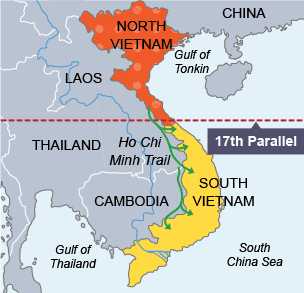
58.
Where was Vietnam divided? 
a)
17th Parellel
b)
20thParellel
c)
38th Parellel
d)
34th Parellel
59.
How did the US respond to finding out that the Soviets had missiles in Cuba?
a)
They sent the Air Force to bomb Cuba
b)
They began placing missiles in the Soviet Union.
c)
They placed a naval blockade around Cuba.
d)
They invaded Cuba and the Soviet Union.
60.
In what country is the city of Berlin located?
a)
France
b)
Germany
c)
England
d)
Soviet Union
61.
In this economic system, the government owns all property and means of production.
a)
communism
b)
capitalism
c)
socialism
d)
democracy
62.
Which foreign policy aimed at preventing Communism from spreading?
a)
Containment
b)
NATO
c)
Cuban Missile Crisis
d)
Berlin Airlift
63.
Which of the following was a failed invasion by the United States under Kennedy in an attempt to overthrow Fidel Castro?
a)
Invasion of Moscow
b)
Cuban Missile Crisis
c)
Bay of Pigs Invasion
d)
Korean Invasion
64.
Which event is the newspaper headline describing?
a)
Bay of Pigs Invasion
b)
Fall of the Soviet Union
c)
Cuban Missile Crisis
d)
Vietnam War
65.
What two nations were in competition with each other during the Cold War?
a)
Spain and Portugal
b)
England and France
c)
Germany and Italy
d)
United States and Soviet Union