
 Worksheets
US History B Final
Total questions: 70
Worksheet time: 2hrs 43mins


Disney's "Education for Death" short film is an example of ___________ during WW2 to convince Americans to join the war.
Pogrom
Propaganda
Blitzkrieg
Princess Fairytale

Roughly, how many Jews were murdered during the Holocaust?

What 3 ways did American Civilans helped on the Home Front?
Victory Gardens
Recycling Metals
Car Pooling/ Riding Bikes
Protest the war in Europe

What does the image represent?
Zoot Suit Riots
Executive Order 9066
Tuskegee Airmen
WACs

What was the purpose of rationing?
Limit use of food and fuel doing the war
Raise more money for US troops
Helping the poor and sick
Producing more weapons

What event was the reason why Japanese-Americans were put in internment camps?
Pearl Harbor
Kristalnacht
The Great Depression
The Holocaust

"I was so red, white and blue. I couldn't believe this was happening to us. America would never do a thing like this to us...This whole period of what the Japanese went through is important. If we can see the connections of how often this happens in history, we can stem the tide of these things happening again by speaking out against them."
Yuri Kochiyama is talking about Japanese internment camps in WW2, and wants people to learn from history.
Yuri Kochiyama is talking about Hiroshima and Nagasaki in the Cold War.


What did JFK have to do in exchange for the removal of Russian missiles from Cuba?
Nothing-the US charged in head first
The U.S. removed key missiles from Turkey near Russia
The U.S. threatened Nuclear war. AGAIN.

What are two accomplishments from JFK's presidency?
The Civil Rights Act of 1964
Bay of Pigs Invasion
The U.S. reaching the Moon in the Space Race
US Occupation near East Germany

Policy in which the United States and the Soviet Union hoped to deter nuclear war by building up enough weapons to destroy one another
Brinkmanship
Mutually Assured Destruction
Massive Retaliation
Demobilization

Term coined by Winston Churchill to describe the border between the Soviet satellite states and Western Europe
Iron Curtain
Blacklist
Service Sector
Containment

Independent nations under control of a more powerful nation.
satellite nations
service sector
nationalized
multinational corporations

What event in WW2 was crucial to begin the arms race in the Cold War?
The use of the A-Bomb on Hiroshima and Nagasaki
The blockade on Cuba
The use of firebombs and air raids
Cuban Missile Crisis


Which term means an "easing or lessening of tension" in Nixon's presidency?


In Brown v. Board of Education of Topeka, the Supreme Court ruled that it was
Unconstitutional to separate school children by race
Necessary to limit class size to no more than 30 students
Necessary to supply all classrooms with textbooks
Constitutional to separate school children by race
Martin Luther King, Jr.’s philosophy of protest stressed
massive protest in the streets
acceptance of discrimination until the courts could act
intensive, radical action
nonviolent, passive resistance
Which two issues led to protests, protest music, and riots in many American cities during the 1960s?
space exploration and environmental pollution
the Vietnam War and racial injustice
inadequate health care and women’s liberation
gasoline shortages and illegal immigration

The changes shown in the chart were most directly the result of the
enactment of voting-reform laws by these southern states
Supreme Court decision in Brown v. Board of Education
passage of the Voting Rights Act of 1965
executive branch’s resistance to protecting the civil rights of minorities
When necessary to achieve justice, which method did Martin Luther King, Jr., urge his followers to employ?
using violence to bring about political change
engaging in civil disobedience
leaving any community in which racism is practiced
demanding that Congress pay reparations to African Americans

What black Muslim leader took a militant, separatist approach to the civil rights struggle?
Martin Luther King Jr.
Malcom X
Marcus Garvey
Frederick Douglass

the creation of programs to reduce poverty


What group during the Civil Rights Movement allowed members to use all necessary means to defend and provide for their community?
Southern Peace Corps
NAACP
SNCC
Black Panthers

What movement during the 1920s helped inspire the Civil Rights Movement in the 1950s and 1960s?
Great Migration
Prohibition
NAACP
Harlem Renaissance
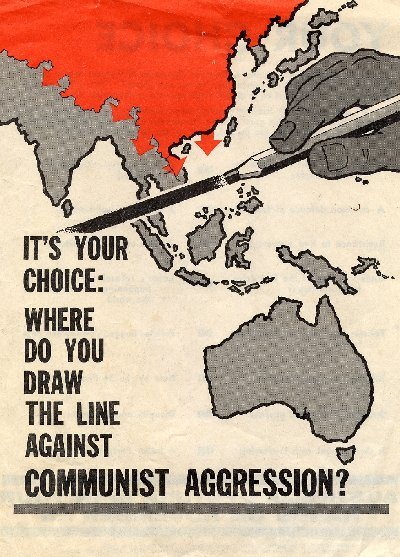
The U.S. got involved in Korea and Vietnam because of what foreign policy?
containment
Good Neighbor policy
isolationism
Roosevelt Corollary
Ronald Reagan, in his first inaugural address said....
"...Government is not the solution to our problem, government is the problem."
"...The Soviet Union is the source of our current problem, and they will be dealt with."
"...Illegal immigration is the source of our problem, and we should build a wall to stop it."
"...Discrimination and Nativism are the sources of our current problem, and we will open our doors to all immigrants."
Which of the following diseases first appeared while Ronald Reagan was president?
Polio
AIDS
COVID-19
Influenza

What was the Strategic Defense Initiative, or "Star Wars"?
Broad tax cuts, cuts to the federal budget, and increased military spending, Reagan believed all of these would promote economic expansion, these are examples of what policy:
Reaganomics
Strategic Defense Initiative
Containment
Fiscal Responsibility
Which of the following is MOST CORRECT about Reagan's economic policies
They were successful BUT they increased the national debt by 2 trillion dollars
They were extremely successful.
They were unsuccessful AND they decreased the national debt by 2 trillion dollars
They helped to end the disparity between rich and poor Americans
Russia left World War I because
they no longer supported Serbia’s attempt to take over Bosnia.
they were suffering too many casualties and feared they would lose the war.
a revolution began in their country
the Czar became ill and withdrew from the war
Most of the fighting in World War I occurred
in the Mediterranean Sea
in trenches
in Great Britain
because of airplanes
Which of the following took place from 1914 to 1918?
The Great Depression
World War II
World War I
The Spanish-American War
All dictators in Europe were able to rise to power because they took advantage of the conditions of...
The Great Depression
WWI
Weimar Republic
Roaring 20s
What was the collective name for Germany, Italy, and Japan?
Axis Powers
Allied Forces
Alliance Powers
Triple Alliance
A criticism of FDR's New Deal was
made people dependent on the Federal Government
ignored the plight of homeowners with mortgages
reduced the power of the Government
too much protection for businesses
Why was the New Deal Created?
to make a new great society
help the economy and get better jobs and relief who suffered
to trickle down from the Rich
to make a the economy worse

Bank failures resulted when people went to the banks to get out their savings and -
The banks loaned them more money and more, then ran out.
The banks had a holiday and forgave everyone of all of their debts
The banks had loaned the money for lost stocks so they couldn't give it back

What is one similarity between the murder of Emmett Till and the cause of the Tulsa Massacre?
Both involved a young black teenage who was accused of harassing a white women
They were both during Civil Rights Movement in the 60s.
Both were moments of racial equality and justice.


African American Lawyer who won the Brown v. Board of Education court case and later became the first black Supreme Court Justice.
Thurgood Marshall
MLK
Huey P. Newton
Malcom X
Refusing to use something or buy a product as a form of protest is known as
a boycott
patronizing
segregation
desegregation

This Amendment outlawed slavery
13th
14th
15th
This Amendment made African Americans citizens guaranteed equal protection under the law -
13th
14th
15th
This Amendment guaranteed African Americans the right to vote -
13th
14th
15th

Who was the NAACP member that would begin the Montgomery Bus Boycott?
Zora Neale Hurston
Ida B. Wells
MLK Jr
Rosa Parks


What key, publicized event would help inspire Rosa Parks and trigger the rest of the Civil Rights movement?
The open casket funeral of Emmett Till
Brown v. Board of Education
The beating of the Freedom Riders
MLK Jr.'s March on Washington

How did the Spanish flu death toll compare with that of World War I?
More people died in World War I
More people died from the flu than the war
World War I deaths and flu deaths and flu deaths were the same
Only a few people died from the flu

Who was the president at the start of the Iranian Hostage Crisis ?
Jimmy Carter
Donald Trump
Gerald Ford
Ronald Reagan


Was an eventual victory for the United States but it also turns people against the war
Tet Offensive
Operation Overlord
Pearl Harbor
Desert Storm

