
 Worksheets
Year in Review
Total questions: 55
Worksheet time: 47mins
What is an artifact?
a type of rock that modern gorillas find and use
a type of rock that was especially useful to chimpanzees
an object that occurs naturally in the world and is useful to humans
an object made by humans from a past culture
What is a fossil?
the remains of organisms that lived long ago
the remains of old rocks that splintered falling from mountains
a landform like a river or lake
a landform like a mountain or hill
What is megafauna?
large plants
large computer chips
only large deer
large animals
What was the name of the ancient land bridge that connected the continents of Asia and North America?
Beringia
Bora Bora
Brasilia
Big Bridge
What does "lithic" mean?
stone
old
new
modern
What is the agricultural revolution?
the gathering of berries and nuts that grow wild
the spiritual practice of ancient people worshipping the sun and moon
the seasonal change from living in summer hunting territory to winter hunting territory
the shift from hunting and gathering to growing crops and raising animals
What is the process of humans learning to raise and control plants and animals?
paleolithic
hunting and gathering
domestication
nomad
What does "neolithic" mean according to ancient Greek root words?
old style
new stone
hunting animals
gathering berries


Mesopotamians wrote on
animal hides
lava rocks like obsidian
paper or papyrus
clay tablets
What is irrigation?
a natural water source like a stream or lake
watering fields using human made systems
a type of radiation used for dating ancient civilizations
large gates on ziggurats
Rapids along a river
noble
cataract
ka
obelisk
Series of rulers from the same family
pharaoh
dynasty
noble
delta
Object inscribed with hieroglyphics that allowed historians to understand Egyptian writing
papyrus
obelisk
Rosetta Stone
delta
Long-lasting, paper-like material made from reeds that Egyptians used to write on
obelisk
hieroglyphics
papyrus
delta
Triangle-shaped area of land made from soil deposited by a river
obelisk
papyrus
delta
spinx


(Also, the largest city-state by a wide margin)
Polytheistic means...
worshipping only one god
worshipping multiple gods
only one ruler (king)
rule by a few powerful people (like rich merchants
Where did ancient Greek city-states build their acropolis?
at the highest point of the city
in the center of the city
in the marketplace of the city
where the warriors lived in the city
What is true about early Greek city-states?
They all had different languages that made it hard to create alliances.
They all had very different religious practices (monotheism and polytheism)
None of them wrote any history down, which makes it hard for historians to know much about them.
They developed their own systems of government.
Who were Darius I and Xerxes?
Athenian philosoophers
Spartan kings
Persian emperors
Trojan warriors
What is Leif Erikson famous for?
for settling in France and converting to Christianity
for starting the first permanent settlement in Iceland
for being the first European to land in North America
for being the first European to settle in Greenland
In which century did vikings start settling in Iceland?
9th century CE (800s)
10th century CE (900s)
11th century CE (1000s)
12th century CE (1100s)
Did Viking helmets have horns?
Yes
No
What was the name of one of the most important gods worshiped by the Olmec?
The Lion God
The Jaguar God
The Leopard God
The Cheetah God
In which geographical area did the Olmec live?
Lowlands
Highlands
Yucatan Peninsula
Oaxaca Valley

What culture made giant stone heads that we can still see today?
The Olmec
The Toltec
The Zapotec
The Maya
The Aztec
This civilization built its capital city of Tenochtitlan on an island in a lake.
Maya
Aztec
Inca
Olmec
This civilization settled in the Yucatan peninsula in the modern-day countries of Guatemala, Belize, El Salvador, and Hondruas.
Maya
Aztec
Inca
Olmec
This civilization settled in Western South America, mainly in the country of modern-day Peru.
Maya
Aztec
Inca
Olmec
This civilization is credited with being one of the first to use the number zero.
Maya
Aztec
Inca
Olmec
Which civilization built a 10,000 mile road system without using wheels or work animals?
Maya
Aztec
Inca
Olmec
In which civilization did farmers build terraces to grow crops on steep mountainsides?
Maya
Aztec
Inca
Who lived in the Andes Mountains?
Aztecs
Incas
Mayans
Olmec
Inca capital
Cuzco
Tenochtitlan
Pacal

The Mayans were located at what letter on the map?
A
B
C

The Aztec were located at what letter on the map?
A
B
C

The Inca were located at what letter on the map?
A
B
C
This civilization was the earliest (oldest).
Maya
Aztec
Inca
Olmec

The ______________ Empire used chinampas to grow their crops.
Aztec
Inca
Maya
Maya and Inca

Which empire was taken over by Hernan Cortes?
Maya
Aztec
Inca
All of the above

Which empire was polytheistic (believed in many gods)?
Maya
Aztec
Inca
All of the above

Saint-Domingue (Haiti) was a colony of what country?
Spain
France
England
Portugal
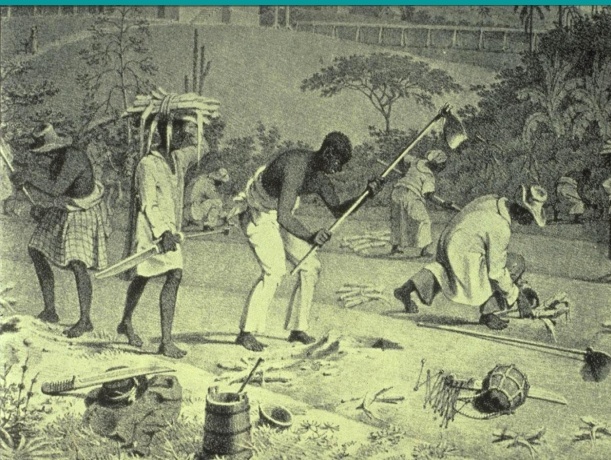
The number of enslaved Africans on Haiti was about ________ people, whereas the white/European population was about 30,000.
2,000
150
500,000
30,0000
Who declared himself emperor of Mexico in 1822?
Napoleon
Jose Morelos
Colonel Iturbide
Santa Anna
What was Simon Bolivar's nickname
The Colonizer
The Conquerer
The Liberator
The Freedom Fighter
What Was Simon Bolivar's dream
Bolivar dreamed of uniting all of northern South American into on large nation
Bolivar dreamed of ridding South America of European Powers
Bolivar dreamed of uniting North and South America
Bolivar dreamed of liberating Europe
What (modern-day) country was Simon Bolivar from?
Bolivia
Venezuela
Colomubia
Peru

