
 Worksheets
Science Review Y5-Term 3
Total questions: 177
Worksheet time: 3hrs 42mins

________is made up of a star and the planets and other space objects that revolve around it.
star
sun
solar system
asteriod
________is a large, round body that revolves around a star.
plant
planet
star
sun

The diagram shows an example of____?
muscular system
water system
solar system
skeletal system

Which group of planets do Jupiter, Saturn, Uranus and Neptune belong?
inner planet
outer planet
center planet
top planet
What is the only planet known to contain life?
Mars
Jupiter
Venus
Earth
Which is the largest planet in our solar system?
Sun
Earth
Jupiter
Mars
Which planet is the hottest?
Venus
Earth
Mercury
Mars
Mercury, Venus, Earth, and Mars are called.....?
gas giant
inner planet
outer planet
farthest planets

What is a common characteristic of the inner planets?
farthest from the sun
gas giant
closest to the sun
coldest planet
What is a common characteristic of the outer planets?
many moons and rings
large solid core
closest to the sun
short revolution

Why are all the planets round in the solar system?
They are not round.
The planets spin and that makes them round.
The planets are round because of gravity.
The planets are round because they orbit the sun.
Which statement explaining the relationship between stars and planets is true?
the sizes of the planets are same to the sizes of nearby stars
planets create light
planets orbit the sun
D. stars orbit some moon


I am the fastest planet to orbit the sun.
Venus
Mercury
Neptune
Earth
I am the brightest and hottest planet.
Mars
Jupiter
Saturn
Venus
I am red because of the iron oxide that covers me.
Mars
Mercury
Venus
Saturn
I get my color from methane gas.
Neptune
Uranus
Jupiter
Earth
I take the longest to orbit the Sun.
Neptune
Uranus
Saturn
Jupiter
It is freezing cold in the shade and really hot in the light on my surface.
Mars
Mercury
Earth
Venus
There are lots of storms on my planet.
Jupiter
Saturn
Mars
Venus
Choose components of our solar system.
planets
moons
asteroids
comets
sun
Name the star closest to Earth.
Polaris
Sun
Vega
Alpha Centauri

What's the name of the Earth's natural satellite?
(a)

Which planet in our Solar System has the most number of moons?
Earth
Mars
Saturn
Jupiter

Deimos and Phobos belong to planet __________.
Jupiter
Mars
Neptune
Uranus

Does 'dwarf planet' Pluto have any moons?
Yes, it does.
No, it doesn't.

Artificial satellites are launched into space on rockets.
True
False

Natural satellites are also called (a) .

Which 2 planets in our Solar System don't have any natural satellites?
Jupiter & Pluto
Neptune & Mars
Mercury & Venus
Earth & Saturn

What do natural and artificial satellites have in common?
They don't have anything in common
they orbit celestial bodies (objects in space)
they send information to the Earth
the float outer space with no direction
There are _______ planets in the Solar System.
five
ten
eight
nine
What is the CORRECT ORDER of the planets?
Mercury, Venus, Mars, Earth, Uranus, Jupiter, Saturn, Neptune
Venus, Mercury, Mars, Earth, Jupiter, Uranus, Saturn, Neptune
Mercury, Venus, Earth, Mars, Jupiter, Saturn, Uranus, Neptune
Mercury, Venus, Earth, Mars, Jupiter, Saturn, Uranus, Pluto
There is an ____________ between Mars and Jupiter.
Meteor Belt
Meteorite Belt
Asteroid Belt
Comet Belt
Jupiter, Saturn, Uranus and Neptune are also known as _________.
rock giants
gas giants
air giants
gold giants
The earth has a protective layer around it which is known as ________.
A-zone layer
O-zone layer
B-zone layer
OO-zone layer
The first man in space was ____________ in the year ________. He was a _______.
Yuri Gagarin, 1961, Russian
Neil Armstrong, 1969, American
Yuri Gagarin, 1965, Russian
Neil Armstrong, 1976, American
The first men on the moon were ____________ and _________ in the year __________.
Neil Armstrong, Buzz Aldrin, 1987
Neil Armstrong, Buzz Aldrin, 1969
Yuri Gagarin, Sheikh Muszaphar Shukor, 2007
Yuri Gagarin, Buzz Aldrin, 1969
What process occurs when tiny water droplets cling together in the atmosphere?
clouds
evaporation
condensation
accumulation

What is the role of the sun in the water cycle?
provide heat energy for evaporation
provide heat energy for condensation
dry out the soil for runoff to occur
provide thermal energy for accumulation
Which of the following is an example of precipitation?
sleet
hail
snow
all of the above
Which of the following is NOT a way water moves from the land to the air?
transpiration
respiration
evaporation
precipitation

What is it called when plants release water vapor through their leaves?
sublimation
respiration
transpiration
precipitation
What is the process called when water vapor turns to liquid water?
evaporation
condensation
precipitation
transpiration
What do we call water in its gas state?
rain
snow
ice
water vapor
If groundwater reaches earth's surface, how does it reenter the water cycle?
by transpiration
by evaporation
by accumulation
it can't
Water falls to Earth as rain after water vapor ________ into clouds.
evaporates
accumulates
condenses
freezes
During evaporation, water changes from a _________ to a __________.
solid, liquid
gas, liquid
liquid, gas
liquid, solid
The water cycle starts at....
evaporation
condensation
precipitation
it has not beginning or ending

What process is show by letter A in the diagram?
condensation
evaporation
accumulation
precipitation

What is shown by letter D in the diagram?
runoff
groundwater
melting
vapor

What process is shown by letter B in the diagram?
condensation
transpiration
evaporation
precipitation

What would most likely happen if letter B stopped.
the water cycle would end
there would be more clouds
water would freeze
animals in the ocean would die
The highest point on a wave
wavelength
peak
trough
amplitude
The lowest point on a wave
peak/crest
frequency
wavelength
trough
The horizontal distance between crests
amplitude
frequency
crest
wavelength
The distance from the resting position to the peak/crest of a wave.
amplitude
wavelength
frequency
pitch
What might happen to an object sitting on top of a speaker if loud music is played through the speaker?
Absolutely nothing would happen to the object.
The object could move due to the vibrations of the sound.
The object could appear a different color because the sound is absorbed.
The object could stop the sound from being transmitted out of the speaker because sound cannot travel through a solid.
How does sound travel?
in waves
only through the air
through magnets
as thermal energy
Which TWO of the following statements about sound are NOT true?
Sound is produced through vibrations.
Sound travels in waves.
Sound can travel through outer space
Sound waves can bounce off of objects to create an echo.
Sound waves can only travel through the air.
Sound waves can travel through all three states of matter. Which of the following best explains why sound travels most quickly through a solid?
Solids always produce an echo, which makes the sound seem louder to the human ear.
Only solids allow the vibrations to travel from one atom (particle) to another.
In solids, the atoms (particles) are closest together, which allows the vibrations to travel rapidly from one to another through the object.
Sound does not travel quickly through a solid. It travels most rapidly through a gas.
Why can't sound travel through outer space?
There is almost no matter in outer space, so the vibrations have no way to travel through the atmosphere. There is nothing to carry the sound waves through space.
Sound actually travels very quickly through outer space because there is no matter to slow down the sound waves.
There are too many planets and stars in outer space that absorb all of the sound waves, so they cannot travel to the human ear.
Because outer space is a "vacuum," the vibrations are irregular and travel in too many directions for us to detect the sound.
If you pluck a guitar string, it vibrates and creates a sound. In order to stop the sound, you could...
blow on the string.
pluck a different string.
place your hand on the string to stop the vibration.
pluck the same string again.

Which of these waves would produce a high pitch sound?
Low frequency wave
High frequency wave
The speed of a sound wave
Amplitude
Wavelength
Volume
Frequency
What determines the pitch of a sound?
The amount of energy used to create the vibration
The wavelength of the sound wave.
The volume of the sound.
The frequency of the vibrations.
If you pull a guitar string tighter, what will happen to the sound it creates?
The pitch will become higher because the string will vibrate more quickly.
The pitch will become lower because the string will vibrate more slowly.
The sound will get louder because more energy will be in the string.
The sound will get quieter because less energy will be in the string.
Which of the following best explains why vibrations from a thick rubber band make a lower-pitched sound than vibrations from a thin rubber band?
The thick rubber band is shorter.
The thick rubber band is longer.
The thick rubber band moves faster.
The thick rubber band moves slower.
A sound wave with low amplitude produces which type of sound?
High
Low
Loud
Soft

The ability of a plant to live in hot, dry or cold areas is called adaptation.
True
False

When an animal blends into its environment, it is called _______.
mimicry
camouflage

The ostrich having many feathers and a koala having sharp claws are both examples of which of the following?
physical adaptations
behavioral adaptations

Opossums "play dead to confuse predators", what type of adaptation is it?
structural
behavioral
Plants in the desert have long roots so that they...
take up more space
help avoid deterioration of the soil
provide food for animals underground
absorb more water.
Why do leaves and stems have a waxy coating on them?
So animals don't eat them.
Helps to reduce water loss.
To make them look beautiful.
Why do trees growing in hills have conical shape?
to look beautiful
to slide down water and snow
to make the birds comfortable
The trees that do not shed their leaves are called
Deciduous trees
Evergreen trees
Xerophytes
Mangrove trees have this feature
Stilt roots
Breathing roots
Both 1 and 2
None
Pine leaves have_________________.
waxy leaf
needle-shaped
drip-tip
leaflets
Plants that grow on land are called______
Aquatic
Terrestrial
Habitat
Mangrove
The desert regions are __________ through out the year.
Very cold
Very hot
Rainy
Cloudy
The plant commonly found in desert region is_________.
Pine tree
Cactus plant
Fir tree
Water lily plant
An example for plants growing on coastal areas.
Mango tree
Pine tree
Coconut tree
Fir tree
A place where a livings live in nature is their (a)
Trees that have cones are called
coniferous trees
deciduous tree
evergreen tree
mangrove tree
Sheesham and mango trees grow in the _______
Coastal area
desert
plains
swamps
In which part do desert plants make their food?
Thorns
Stems
Leaves
Roots
Birds have hollow bones and light body weight which support aerial adaptation.
True
False


The scaly skin of snakes
Protects them from their enemies
scares the animals around them
makes them beautiful
helps them to crawl and protects them from drying

How do adaptations help animals?
Adaptations help animals obtain food
Adaptations help animals protect themselves
Adaptations help animals survive in their environment
All of the above
Otters have webbed feet that help them swim, and nostrils and ears that close when they dive underwater. These suggest that the otter is most suited for which environment?
river habitat
forest habitat
desert habitat
arctic habitat
Which type of animals have sharp and pointed canine teeth to tear the flesh of their prey?
Herbivores
Scavengers
Omnivores
Carnivores
How do Fur, scales, hair, spines, feathers etc help animals?
they are the predators
they are different forms of mimicry
they form protective body covering
they are the adapted behaviours
The way an animal has evolved to survive in its ever changing habitat.
adaptation
social interaction
learned behaviour
hibernation

Choose the correct answer.
What do Adaptation in Animals and Plants refer to ?
The way animals play with their friends.
The interaction between two plants.
Special features that allow Animals and Plants to live and survive in a different place or habitat.
Adaptation in Animals is divided into 3, select the correct answers.
Behavioral, Structural and Physiological.
Chemical, Internal and External.
Inner, outter and mentally.

Structural adaptation refers to...
Special shoes to walk on ice.
Outer and inner body´s changes that help animals to survive in their environment.
Clothes to wear in cold regions.

Chipmunks collect and store food to eat during winter. Which type of adaptation is this?
Physiological
Structural
Behavioral

Internal or cellular features that allow animals to survive in their environment.
Structural adaptation.
Physiological adaptation.
Behavioral adaptation.

Why do some plants have thick stems and a kind of jelly inside their leaves that help them to store water?
To resist heat.
To resist cold.
To get enough light.

Some plants grow huge leaves in order to...
Be higher
Look great
Absorb more sunlight

An animal that is hunted as food
prey
predator
decomposer
producer

What part of the hummingbird is adapted to help it eat?
eyes
head
wings
beak

Camouflage is used to do what TWO things?
help prey hide from predators
keep animals warm
help predators sneak up on pray
help animals fly

Which behavior must a lion learn from its parents?
how to hunt
grow beige fur
how to walk
how to sleep

Is this animals a PREY or a PREDATOR?
A prey
A predator

Alligator
Predator
Prey

Seals
Predator
Prey

Breaking food down into small pieces by way of the teeth and twisting of the esophagus is called (a) .
Breaking food down by way of saliva, stomach acid, and absorbing nutrients is called (a) .
______ is the watery liquid that begins to chemically break down food in your mouth.
salivary glands
saliva
mucus
water
Food stays in your _____ for hours where it mixes with acid.
small intestines
large intestines
stomach
esophagus
What do you call the organ that takes food from your mouth to your stomach?
acid
stomach
esophagus
villi
Most digestion takes place in this organ. It is really long.
small intestines
large intestines
esophagus
pancreas
Food travels down your esophagus through a wavelike motion called ____.
gravity
falling
peristalsis
squeezing
The process by which the body breaks down food so that it can be used for energy.
composition
digestion
absorption
What is the best way to keep your digestive system healthy?
Eat your meals quickly
Only eat fruits and vegetables a couple times a week
Eat healthy, well balanced meals
Eat a large late night snack, about 15 minutes before bed
Nausea, heartburn, constipation, upset stomach and diarrhea are all
symptoms of digestive system problems or illness
always preventable
minor problems that should be ignored no matter how long they last
reasons to call 911
When you participate in physical activities, your body requires extra energy. The amount of energy used will depend on
the type of exercise you do
the intensity level of the exercise
the length of time you exercise for
all of the above
What is the correct order of digestion?
Mouth - stomach - esophagus - Large intestine - Small intestine - anus - rectum
Mouth - esophagus - stomach - gall bladder - small intestine - rectum - anus - large intestine
Mouth - pancreas - stomach - rectum - gall bladder - small intestine - rectum - anus
Mouth - esophagus - stomach - small intestine - large intestine - rectum - anus
Which of the following is NOT part of the digestive system?
liver
gall bladder
kidney
pancreas
The _____________ is a long tube that connects the mouth to the stomach.
Tongue
Rectum
Esophagus
Small Intestine
Which of these digestive system organs does your food NOT travel through?
Stomach
Esophagus
Small Intestine
Liver

The digestive system makes food into _____.
water
energy
intestines

The mouth, teeth, and tongue _____ food.
chew
digest
stomach


Examples of carbohydrates are:
Foods that give provide us with energy: Rice, potatoes and cereal.
Foods that build and repair our bodies for growth: Meat, eggs and nuts.
Foods that provide us with energy and helps protect our organs: Sunflower oil, butter and avocado pear.
Foods that help our bodies develop and stay healthy: Fruit and vegetables.
Examples of proteins are:
Foods that give provide us with energy: Rice, potatoes and cereal.
Foods that build and repair our bodies for growth: Meat, eggs and nuts.
Foods that provide us with energy and helps protect our organs: Sunflower oil, butter and avocado pear.
Foods that help our bodies develop and stay healthy: Fruit and vegetables.
Examples of fats and oils are:
Foods that give provide us with energy: Rice, potatoes and cereal.
Foods that build and repair our bodies for growth: Meat, eggs and nuts.
Foods that provide us with energy and helps protect our organs: Sunflower oil, butter and avocado pear.
Foods that help our bodies develop and stay healthy: Fruit and vegetables.
Examples of vitamins and minerals are:
Foods that give provide us with energy: Rice, potatoes and cereal.
Foods that build and repair our bodies for growth: Meat, eggs and nuts.
Foods that provide us with energy and helps protect our organs: Sunflower oil, butter and avocado pear.
Foods that help our bodies develop and stay healthy: Fruit and vegetables.
A balanced diet contains sufficient quantities of food from all four food groups, as well as water and fiber.
True
False
What is included in a well balanced meal?
Dairy, Protein, Grains, Vegetables, Sugar, Fruits
Protein, Grains, Vegetables, Sugar, Fruits
Dairy, Protein, Grains, Candy, Fruits
Dairy, Protein, Grains, Vegetables, Fruits
Our body needs carbohydrates for...
helping our muscles grow
stopping us getting sick
giving us energy
Our body needs __________ to help our muscles grow and repair.
vitamins and minerals
protein
carbohydrates
fats
Bread, pasta and rice are all part of which food group?
fats
proteins
fruits and vegetables
carbohydrates
Pulses, beans and eggs are all part of which food group?
protein
dairy
fats
carbohydrates
Dairy products are mainly useful for which part of the body?
bones
hair
heart
stomach
What would a footballer want to eat to give him energy for a day of training?
chicken
pasta
sweets
carrots
We need the right amount of fats for...
energy
healthy function of our organs
warmth
all of these
Which of these food items is a dairy product?
jam
jelly
yoghurt
All foods have _____________________ in them, to keep us healthy.
proteins
carbohydrates
nutrients
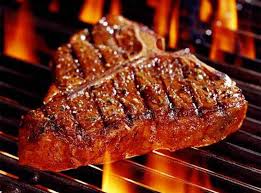


Which of the following statements is true?
A balanced diet should not include anything sweet.
Pasta and vegetables are enough to provide a balanced diet.
A balanced diet must include carbohydrates, fats, proteins, minerals, vitamins, water and fibre.
A balanced diet should not include any fats.

Which food group does this go in?
Grains
Proteins
Dairy
Fruits
Vegetables

