
 Worksheets
Question Bank for Grade 5 Science
Total questions: 175
Worksheet time: 3hrs 4mins
Why does the sun appear to move across the sky?
A
The Sun orbits the Earth
The Earth orbits the Sun
The Sun rotates on its axis
The Earth rotates on its axis
The length of time it takes Earth to make one rotation
12 hours
1 month
24 hours
365 days
The Earth rotating on its axis causes_______
the day and night cycle
the eight phases of the moon
the four seasons
it to snow
Which statement correctly describes the relationship between the sun, earth, and moon?
A
The moon orbits the Earth while the Earth orbits the Sun.
The Sun orbits the Earth
The moon orbits the Sun
The Earth orbits the Sun and moon.
What causes some stars to appear to stay In the same place, while other stars appear to move across the sky throughout a single night?
The Earth rotates on its axis
Earth revolves around the Sun
Half of the Earth faces away from the Sun
The length of nighttime changes
How could you model the rotation of Earth causing the Sun to appear to rise and set?
Hold a light at arms length and turn in a circle
Walk around in a wide circle while a light sits on a desk
Spin around in place while a light sits on a desk
Stand in place while a light is moved over your head
What would happen if the Earth stopped rotating?
The moon would no longer revolve around the Earth.
The Sun would explode.
We would no longer have the day and night cycle.
We would have no seasons.
What part of Earth is experiencing darkness at the same time?
1/3
1/4
1/2
all of Earth
True or False
Earth is tilted on its axis.
True
False
At what angle is Earth tilted on its axis?
50 degrees
23.5 degrees
90.5 degrees
10 degrees
When the sun is high in the sky, the shadows are ________
long
short
Why does your shadow change throughout the day?
The sun revolves around the Earth.
The Earth rotates on its axis.
The moon revolves around the Earth
The moon rotates on its axis.
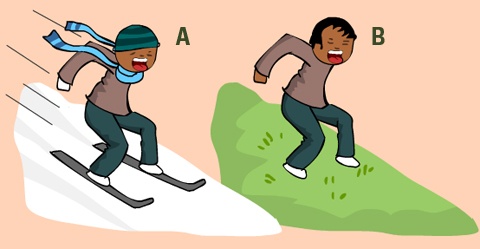
A book falls off the desk. What moves the book towards the floor?
mass
friction
gravity
speed
A boy rides a skate board down a hill. Eventually the skate board stops. Which is most responsible for causing the skateboard to stop?
gravity acting on the skateboard
friction acting on the skateboard
the mass of the skateboard
the mass of the boy


Which surface would have the least amount of friction?
A road
A carpet
An ice skating ring
Astro turff
Which surface would have the most amount of friction?
A road
Carpet
An ice skating ring
Astro turf
4 cars are at the starting line of a race. Which car will require the most force to start moving?
car with mass of 1200 kilograms
car with mass of 1500 kilograms
car with mass of 1700 kilograms
car with mass of 2000 kilograms
What was the average speed of a car that traveled 180 miles in 3 hours? (speed = distance÷time)
55 mph
60 mph
180 mph
540 mph
John pushed two identical toy cars across the same flat smooth floor. Why did both cars travel the same distance?
because he applied different forces to the two cars
because he pushed the cars at the same time
because he applied the same force to each of the two cars
because he pushed the cars at different times
As Chris and his dad add items to their shopping cart, which will most likely occur?
The cart will become easier to move because the items will increase the mass of the cart.
The cart will become more difficult to move because the items will increase the mass of the cart.
The cart will become more difficult to move because the items will decrease the mass of the cart.
The cart will become easier to move because the items will decrease the mass of the cart.
Katie was pulling a sled with her puppy in it. Katie’s sister then got into the sled with the puppy. How would the sled’s speed most likely change after Katie’s sister got into the sled?
The speed would decrease due to the change in mass.
The speed would decrease due to the change in gravity.
The speed would increase due to the change in mass.
The speed would increase due to the change in friction.
How fast was a train moving if it traveled 100 meters in 10 seconds? (speed = distance ÷ time)
90 meters per second
100 meters per second
1 meter per second
10 meters per second
Chris climbs onto a skateboard ramp halfway between the top and the bottom of the ramp. Because gravity acts on Chris, which is most likely to happen?
He won’t move.
He will roll down the ramp.
He will float above the ramp.
He will roll up the ramp.
Ana is pushing a wheelbarrow of rocks. She stops and unloads half of the rocks. How will this effect the force needed to move the wheelbarrow?
Gravity is decreased, making the wheelbarrow harder to move.
Gravity is increased, making the wheelbarrow easier to move.
Mass is decreased, making the wheelbarrow easier to move.
Friction is increased, making the wheelbarrow harder to move.
How fast was a train moving if it traveled 500 miles in 4 hours at a constant speed? (speed = distance ÷ time)
125 miles per hour
2000 miles per hour
100 miles per hour
200 miles per hour
1. How much gravity an object has depends on its ____________.
Weight
Mass
Place
None of the above
1. What has the strongest gravitational pull?
The Earth
The Moon
The Sun
The North Star
1. When will gravity be the strongest?
The farther away you are from an object.
When you are standing on the moon.
During the daytime.
The closer you are to an object.
True or False: Gravity helps the Earth to stay in orbit around the Sun.
True
False
1. What scientist is credited with first describing the mathematics of gravity?
Albert Einstein
Galileo Galilei
Isaac Newton
Charles Darwin
True or False: The more mass an object has, the more gravitational force it has
True
False
What natural phenomena occurs on Earth due to the gravity of the Moon?
The ocean tides
The Sun being yellow
Earthquakes
Clouds
Where would you weigh the most?
On Earth
On the Moon
On the Sun
At the doctor's office.
Gravity on the Moon is the gravity on Earth.
More than.
Colder than
Faster than
Less than.
Gravity and Friction are examples of
Mass
Surfaces
Forces
Velocity
________ is a push or pull exerted (or put) on an object.
Force
Mass
Weight
Acceleration
The point on a body where all weight is equally balanced around. The point where gravity seems to pull.
The Center of Gravity
The toes
The top
The surface
The force of attraction between two objects.
Friction
Mass
Gravity
Movement
Which object has the most gravitational force?
a penny
a feather
a textbook
a refrigerator
Light travels...
around corners
in a straight line
in waves
in circles
Light bounces off when it is
reflected
absorbed
refracted
transmitted
Which of the following is a synonym for the phrase "soak up"?
absorb
reflect
refract

Lenses, like camera lenses or microscopes...
reflect light
refract light
absorb light

What do smooth, shiny surfaces do?
reflect light
refract light
absorb light

When we see a rainbow, we see
light being reflected
light being refracted
light being absorbed


This is an example of?
Absorb
Reflection
Refraction
Transmition


A straw sitting in a glass of water looks broken because light travels more slowly through the water than air. This is an example of ____________.
Reflection
Refraction
Absorbing
Transmitting

What is the name of the object in the picture. Hint: it forms a rainbow
lens
telescope
prism
mirror


Light is a form of energy that creates...
water
heat
shade
matter
Light absorbs easily into dark surfaces. Which object would absorb the most light?
black t-shirt
paper
window
tree
If a black and white car were in the parking lot together, which car would be hotter?
They would be the same.
The black car would be hotter.
The white car would be hotter.
The black car would be cooler.
Pitch is defined as
How loud a sound is
The vibrations of molecules
How high or low a sound is
A medium that carries or transfers energy
What are the properties of pitch?
Tightness, Color, Thickness
Hardness, Length, Color
Tightness, Length, Thickness
Thickness, Material, Size

What would happen if you tighten the strings on this guitar?
It would have a lower pitch
It would have a higher pitch
It would have no effect on the sound

Which string on the guitar would have the lowest pitch?
Strings 1
Strings 2
String 3
They all have the same pitch

Which bungee cord has the highest pitch?
A
B
C
D

What could you do to make the drum have a lower pitch?
tighten the skin
loosen the skin
The highest pitch is made by the _________________ instrument.
longest
wooden
shortest
biggest

Which strings on the harp would you play to make a low pitch sound?
Strings A
Strings B

Which string would have the lowest pitch?
String 1
String 2
String 3
String 4
Which would have the highest pitch?
Short String
Thick String
Long String
Loose String
Ryan makes a straw whistle. If he cuts the straw in half, what will happen to the pitch of sound?
decreases
increases
the pitch will not change
no sound is produced
How is a higher pitch produced on a guitar?
by plucking the strings harder
by loosening the strings
by stopping the strings from vibrating
by tightening the strings

4 Students are given rubber bands with different lengths and thickness. Which student would produce the highest pitch sound and lowest pitch sound?
Highest pitch: Bethany; Lowest pitch: Julia
Highest pitch: Robert; Lowest pitch: Adam
Highest pitch: Julia; Lowest pitch: Adam
Highest pitch: Adam; Lowest pitch: Robert

String A and B are the same material with the same thickness but different lengths. Which statement explains the results from the table?
A shorter string vibrates more, producing sound with a higher pitch.
A longer string vibrates more, producing sound with a lower pitch.
A thinner string vibrates more, producing sound with a lower pitch.
A thicker string vibrates more, producing sound with a higher pitch.

A model of a guitar uses four strings (E-H) with different thicknesses and the same tightness.
Which is most likely correct?
H will produce the loudest volume.
G will produce the lowest pitch.
F will produce the loudest volume.
E will produce the highest pitch.

Of the instruments shown, which would have the highest pitch?
A
B
C
D

What is the correct order of pitch of sound produced by each pipe starting with the lowest pitch?
1, 2, 3, 4, 5
2, 4, 1, 3, 5
4, 5, 1, 2, 3
5, 4, 3, 2, 1
What happens to the vibrations when a higher pitch is made?
Vibrations are faster, making the pitch higher.
Vibrations are slower, making the pitch higher.
Vibrations are slower, making the pitch lower.
Vibrations are faster, making the pitch lower.
Animals can hear sounds that people cannot hear.
True
False
Which is true about pitch?
You can change a sounds pitch by changing how fast an object vibrates.
You can change a sounds pitch by changing its volume.
You can change a sounds pitch by changing how hard you shake an object.

The pitch of a stringed instrument can be affected by
the length of the bow being rubbed across strings
the size of a player's fingers
the length and thickness of its strings
how much energy is used when it is plucked
Which of these describes how a living organism depends on another living organism to survive?
Mushrooms growing on the forest floor
Frogs laying their eggs in a pond
Dandelion seeds are carried long distances by the wind
Bees pollinate the flowers on apple trees
A small fish, called a cleaner fish, picks bits of food from a shark’s teeth. What can best be concluded about this behavior?
It helps the shark blend in with its surroundings
It removes food from inside the shark’s body
It helps both the cleaner fish and the shark
It takes needed nutrition away from the shark

Energy is transferred from white-tail deer to mountain lions to wild hogs.
Energy is transferred from mountain lions to wild hogs to corn.
Energy is transferred from grass to white-tail deer to mountain lions.
Energy is transferred from corn to duck to wild hogs to white tail deer.

fish and duck
cattails and water lily
heron, raccoon, turtle
mosquito, snail, frog

a producer
a carnivore
an herbivore
an omnivore


Producers are always at the __________ of a food chain
Beginning
Middle
End
Producers are not part of the food chain
What is the producer in this food chain?
phytoplankton → krill → fish → shark
Phytoplankton
Krill
Fish
Shark
An organism that eats other organisms to live
Predator
Prey
Parasites
The organism that a parasite infects
Predator
Prey
Host


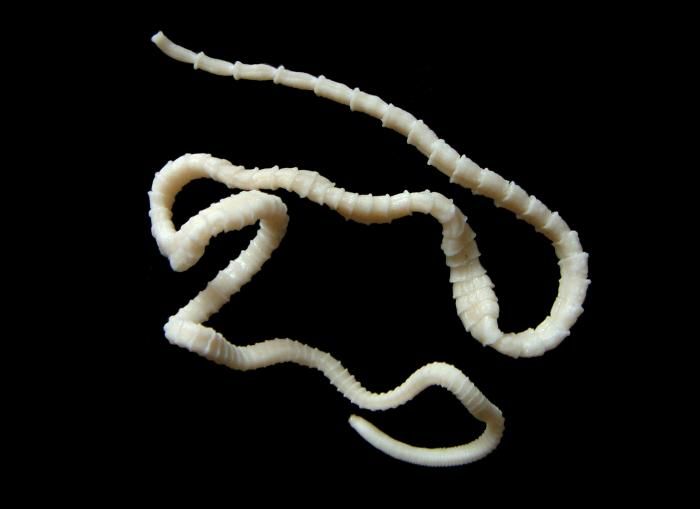
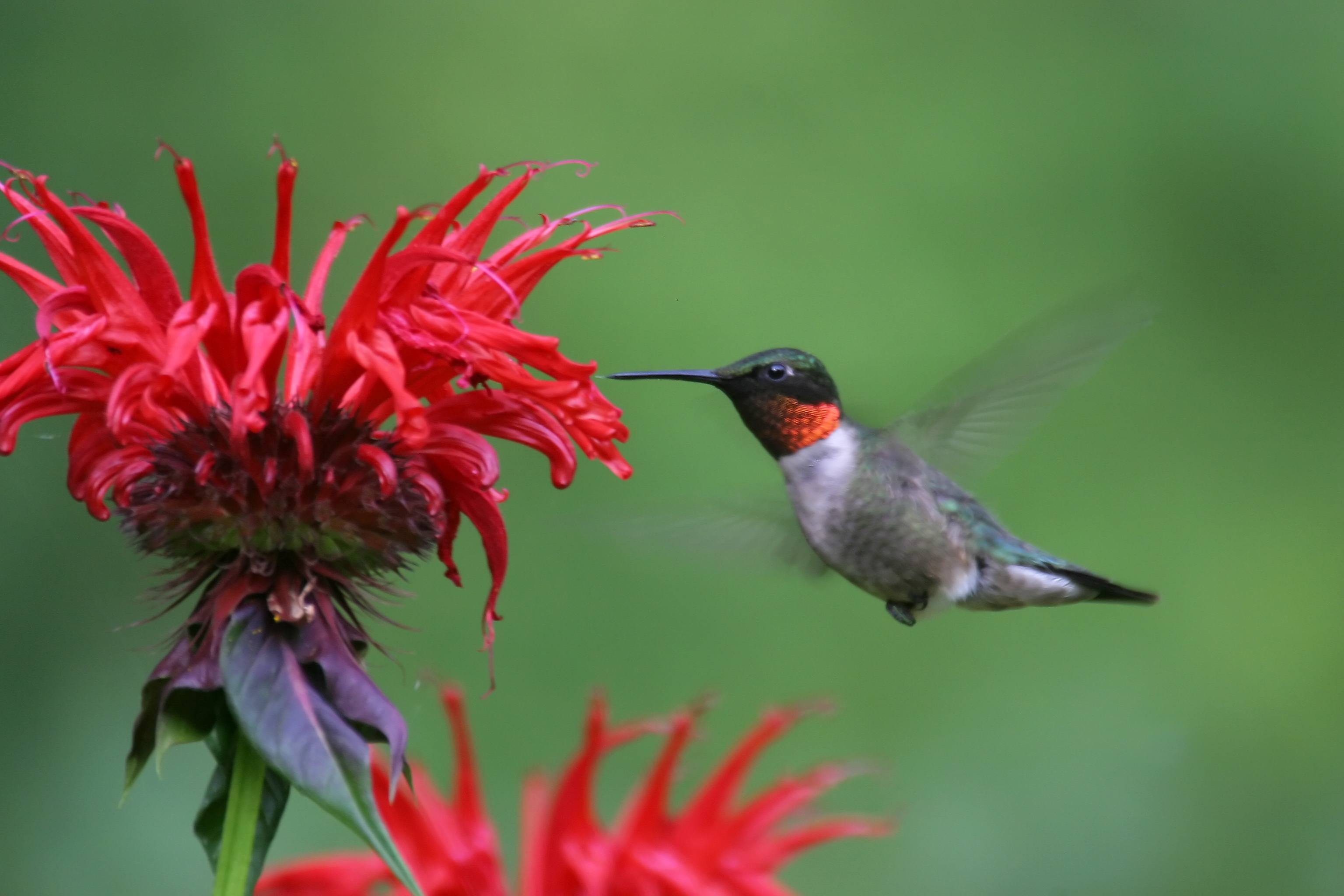
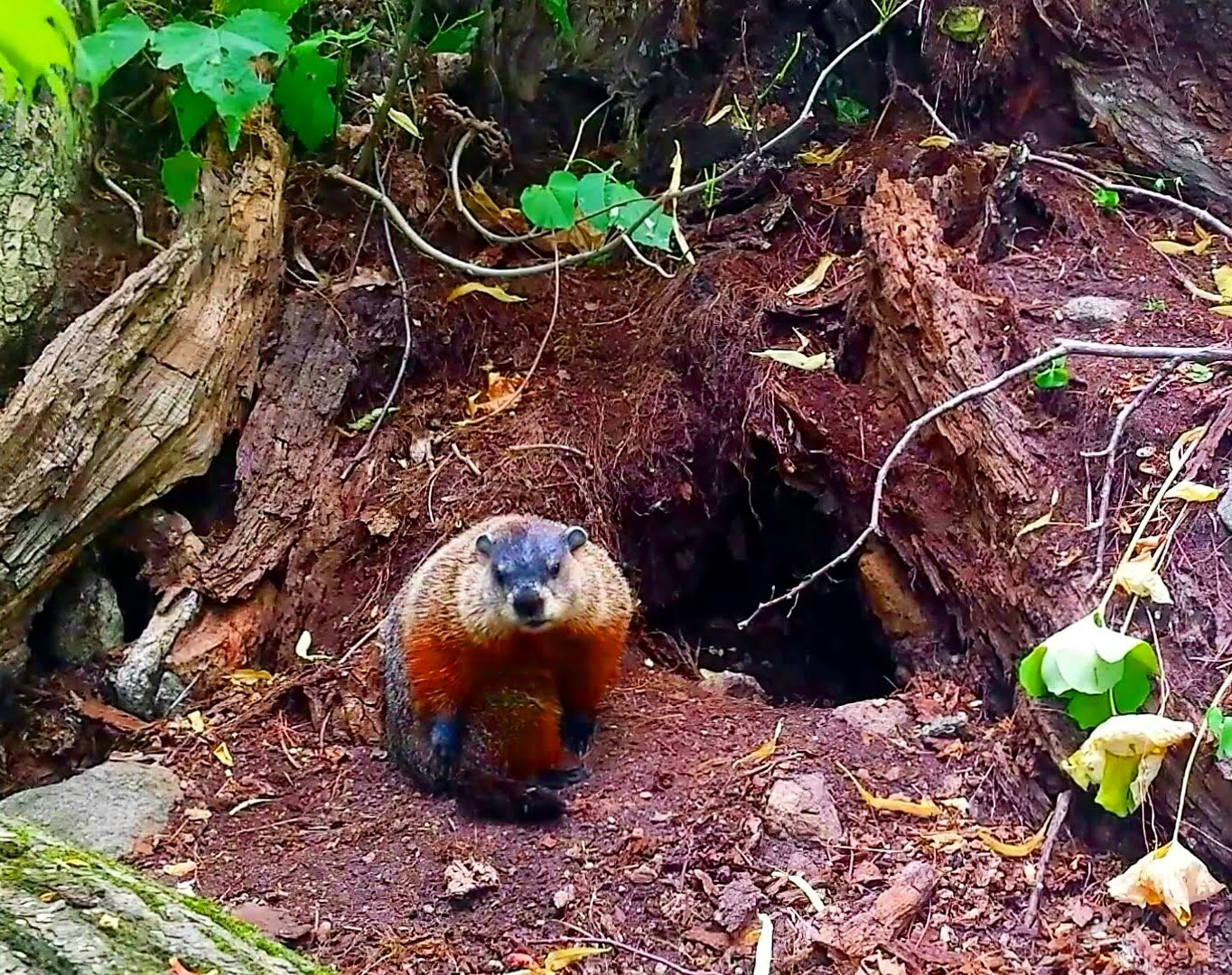
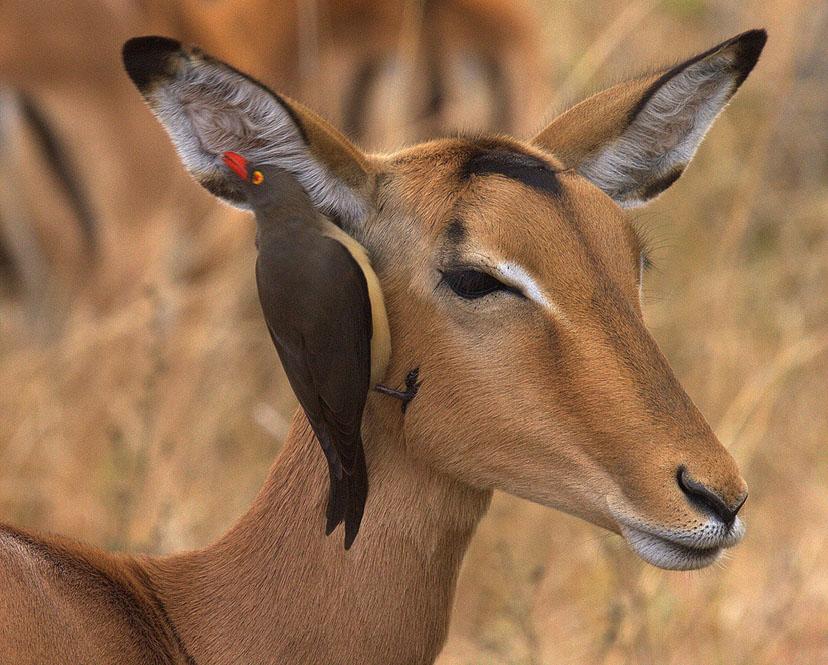
Red-billed oxpeckers are birds that often feed on parasites that infest impala. The oxpeckers get food and the impalas get cleaned. This is an example of _______.
commensalism
mutualism
neutralism
competition
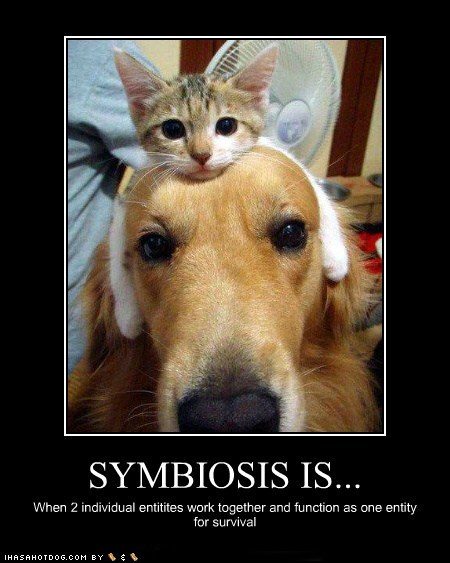
A relationship in which two species live closely together.
resource
mutualism
succession
symbiosis
Mistletoe putting its roots into its host tree.
mutualism
commensalism
parasitism


Which is NOT a characteristic of Earth?
Shaped like a sphere
Gives off its own light
Rotates on a tilted axis
It has an elliptical orbit
About how much of the Earth experiences night at the same time?
100%
About 75%
About 50%
About 25%

When the Sun is HIGH in the sky around noon, the shadows _________.
are long
are short
do not exist
What is one way that the inner and outer planets are similar?
Both have rings
Both have many moons
Both are composed of rock
Both orbit the sun
Planets composed of gas.
Inner Planets
Outer Planets
Planet that has more than 10 moons.
Mars
Venus
Mercury
Jupiter

Planet that a rover could land on and explore.
Neptune
Mars
Jupiter
Saturn
Which planet has the fastest orbit?
Mars
Jupiter
Venus
Mercury

Which explains why Pluto is now a dwarf planet.
It's too small
It's too far away
It has too many objects in its orbit
It doesn't have enough moons

Which force is responsible for the planet's constant orbit around the sun.
Gravity
Magnetism
Friction
Electric

Why does the sun appear larger than other stars that are in the night sky?
The sun is hotter
The other stars don't give off as much light
The sun is much closer than the other stars
The other stars move far away at night
How are the stars Rigel and the Sun similar?
They are both located in our solar system.
They both make their own light.
They both can be seen at night from Earth.
Which star is in our solar system?
Polaris
Rigel
Proxima Centauri
Sun
I am thinking of a space object that is small, cold in temperature, and orbits around a planet. What am I?
Star
Planet
Moon
Comet
I am thinking of a space object that is rocky, small, and orbits around the Sun. What am I?
star
planet
moon
I am a thinking of a space object that is large in size, hot in temperature, and stays stationary. What am I?
moon
star
planet
asteroid
Which of these planets' orbit is the longest?
Mercury
Venus
Earth
Mars
Which planet's orbit is longer than Earth's but shorter than Saturn's?
Mercury
Mars
Jupiter
Neptune
This planet is known for its beautiful rings
Saturn
Earth
Mars
Neptune
Rovers are on this planet right now, looking for signs of life!
Neptune
Mercury
Venus
Mars

I am thinking of a space object that is made of ice and gas. It has a very large orbit around the sun. When it gets closer the the sun, the ice melts and the gases burn. What object am I?
asteroid
comet
meteoroid
moon
m

a small rock that is out in space
meteor
meteoroid
meteorite
a piece of space rock that lands on Earth
meteor
meteoroid
meteorite

Also known as a "shooting star".
meteor
meteoroid
meteorite
Which movement causes Earth to have day and night?
Earth's rotation on its axis
Earth's orbit around the sun
The sun's rotation on its axis
The sun's orbit around Earth

