wayground logo

Free Printable Worksheets

Font size

S
M
L
XL
Worksheets

MITOSIS VS. MEIOSIS QUIZ

Total questions: 186

Worksheet time: 2hrs 55mins

Name
Class
Date
1.

What phase of mitosis is show here?

a)

Prophase

b)

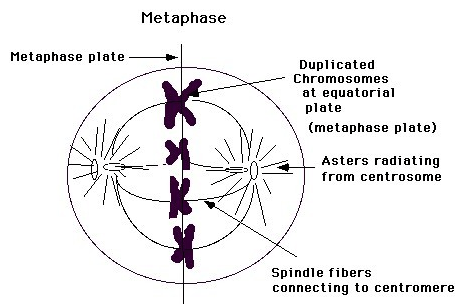
Metaphase

c)

Anaphase

d)

Telophase

2.

Which of the following is metaphase?

a)
b)
c)
d)
3.

Which of the following is not a part of mitosis?

a)

Centrioles

b)

Spindle Fibers

c)

Chromatids

d)

Cell wall

4.

What phase of mitosis is shown here?

a)

Prophase

b)

Metaphase

c)

Anaphase

d)

Telophase

5.

Cytokinesis results in the production of two of these.

a)

Centrioles

b)

Daughter Cells

c)

Clone cells

d)

Twin cells

6.

Which of the following are phases in PMAT?

a)

Cytokinesis

b)

Anaphase

c)

Metaphase

d)

Cytophase

e)

Telophase

7.

What threadlike structures rip chromatids apart and pull them back to the centrioles?

a)

Spindle Fibers

b)

Ribosomes

c)

Zygotes

d)

Centromeres

8.

Where do centrioles migrate during prophase?

a)

To the top of the cell

b)

In the center of the cell

c)

The poles of the cell

d)

To the left side of the cell

9.

Which is the correct order of the stages in mitosis

a)

Interphase, Prophase, Anaphase, Metaphase

b)

Prophase, Anaphase, Metaphase, Telophase

c)

Prophase, Metaphase, Telophase, Anaphase

d)

Prophase, Metaphase, Anaphase, Telophase

10.

Multi-cellular organisms use mitosis for all of the following reasons except...

a)

reproduction

b)

growth

c)

repair

d)

replacement

11.
What is the first phase of Mitosis?
a)
Prophase
b)
Metaphase
c)
Anaphase
d)
Telophase
12.
What phase of mitosis is occuring in the picture?
a)
Prophase
b)
Metaphase
c)
Cytokinesis
d)
Telophase
13.
In which phase does the cell spend most of it's life?
a)
Interphase
b)
Nuclear Division
c)
Telophase
d)
Mitosis
14.
What phase of mitosis is pictured?
a)
Metaphase
b)
Telophase
c)
Prophase
d)
Anaphase
15.
Why would it be important to replicate DNA before a cell divides in mitosis or meiosis?
a)
In order for genetic information to be transferred into daughter cells.
b)
In order for the cell to be able to increase in size.
c)
In order for the DNA to be contained in the nucleus.
d)
In order for the cell to re-order the DNA sequencing in the new cells.
16.
How many chromosomes do humans have?
a)
46
b)
21
c)
10
17.
Structure A refers to the _____.
a)
chromatid
b)
chromosome
c)
centromere
18.
Fruit fly body cells have 8 chromosomes. After mitosis, you would expect a resulting fruit fly daughter cell to have -
a)
16 chromosomes.
b)
46 chromosomes.
c)
8 chromosomes.
d)
4 chromosomes.
19.
Before cells can divide, what must be copied?
a)
mitochondria
b)
cytoplasm
c)
DNA
d)
Cell Wall
20.
Name the phase:
a)
Prophase
b)
Metaphase
c)
Anaphase
d)
Telophase
21.
What process does a multi-cellular organism use to replace its damaged body cells?
a)
mitosis
b)
meiosis
c)
replication
d)
transcription
22.
Before a cell can divide, what must happen?
a)
Nothing, it is always ready to divide
b)
The number of chromosomes must be cut in half
c)
The number of chromosomes must double
d)
The number of chromosomes must triple.
23.
Why don't cells just stretch when you grow, instead of making copies of themselves?
a)
The muscles in the cells can't stretch that far.
b)
The cell won't be able to bring in food fast enough or get waste out fast enough.
c)
The cell membrane doesn't like the feeling of stretching.
d)
The lysosomes don't want to work so hard.
24.
In which type of cells will mitosis occur?
a)
egg cells
b)
sperm cells
c)
jail cells
d)
Body cells except the sperm and egg cells
25.
When you start with 1 cell, at the end of mitosis, how many identical cells will you have?
a)
1
b)
2
c)
3
d)
4
26.
a)
Prophase
b)
Interphase
c)
Anaphase
d)
Telophase
27.
a)
Anaphase
b)
Cytokinesis
c)
Telophase
d)
Metaphase
28.
a)
Cytokinesis
b)
Interphase
c)
Anaphase
d)
Metaphase
29.
a)
Anaphase
b)
Cytonkinesis
c)
Interphase
d)
Prophase
30.
a)
Cytokinesis
b)
Anaphase
c)
Telophase
d)
Prophase
31.
Which is Metaphase?
a)
A
b)
E
c)
C
d)
F
32.
Chromosomes condense from long stands into rod like structures. 
a)
Prophase
b)
Interphase
33.
The phase in mitosis where chromosomes move away and are pulled apart by spindles to opposite sides of the cell.
a)
prophase
b)
anaphase
c)
metaphase
d)
telephase
34.
A chromatid is attached to a spindle fiber by the
a)
nucleolus
b)
deep furrow
c)
centromere
d)
centriole
35.
The structures that hold together sister chromatids
a)
tissues
b)
chromosomes
c)
spindle
d)
centromeres
36.
The process by which the nuclear material is divided equally between two new cells
a)
mitosis
b)
cancer
c)
spindle
d)
centromere
37.
the two halves of the doubled chromosome structure 
a)
centromeres
b)
sister chromatids
c)
spindle
d)
tissues
38.
Why would it be important to replicate DNA before a cell divides in mitosis or meiosis?
a)
In order for genetic information to be transferred into daughter cells.
b)
In order for the cell to be able to increase in size.
c)
In order for the DNA to be contained in the nucleus.
d)
In order for the cell to re-order the DNA sequencing in the new cells.
39.
In mitosis, the two resulting cells are
a)
different from the starting cell and identical to each other.
b)
different from the starting cell and different from each other.
c)
identical to the starting cell and different from each other.
d)
identical to the starting cell and identical to each other.
40.
What is the name of the structure labeled X?
a)
Centriole
b)
Centrosome
c)
Chromatid
d)
Chromosome 
41.
The time between cell divisions in the life cycle of the cell is called
a)
anaphase
b)
interphase
c)
prophase
d)
metaphase
42.
This picture shows which process?
a)
mitosis
b)
meiosis
c)
the cell cycle
43.
Fruit fly body cells have 8 chromosomes. After mitosis, you would expect a resulting fruit fly daughter cell to have -
a)
16 chromosomes.
b)
46 chromosomes.
c)
8 chromosomes.
d)
4 chromosomes.
44.
It is the process of dividing the DNA of a cell into two new nuclei.
a)
mitosis
b)
meiosis
c)
cytokinesis
d)
cell division
45.

It is otherwise known as "Resting stage" because the cell is not dividing.

a)

Interphase

b)

prophase

c)

metaphase

d)

anaphase

46.

in the cell cycle, what is the next stage after TELOPHASE (most of the time)?

a)

Metaphase

b)

anaphase

c)

cytokinesis

d)

interphase

47.

In what stage do the chromosomes line up along the equator of the cell?

a)

interphase

b)

prophase

c)

metaphase

d)

anaphae

48.
Structure (b) is a ____.
a)
chromosome
b)
chromatid
c)
centromere
49.

Structure (c) is a ____. Hint: It is one half of the X shape.

a)

chromosome

b)

chromatid

c)

centromere

50.

Name the phase:

Hint: Chromosomes are moving apart.

a)

Anaphase

b)

Telophase

c)

Metaphase

d)

Prophase

51.
Name the phase:
a)
Prophase
b)
Metaphase
c)
Anaphase
d)
Telophase
52.
Name the phase:
a)
Prophase
b)
Metaphase
c)
Anaphase
d)
Telophase
53.
Name the phase:
a)
Prophase
b)
Metaphase
c)
Anaphase
d)
Telophase
54.
The stages of mitosis in order
a)
Metaphase, Anaphase, Prophase, Telophase
b)
Prophase, Anaphase, Metaphase, Telophase
c)
Prophase, Metaphase, Anaphase, Telophase
d)
Anaphase, Prophase, Telophase, Metaphase
55.
The phase in mitosis where chromosomes are pulled apart by spindles to opposite sides of the cell.
a)
prophase
b)
anaphase
c)
metaphase
d)
interphase
56.
Which is Metaphase?
a)
A
b)
B
c)
C
d)
D
57.
In mitosis, the two resulting cells are
a)
different from the starting cell and identical to each other.
b)
different from the starting cell and different from each other.
c)
identical to the starting cell and different from each other.
d)
identical to the starting cell and identical to each other.
58.
Where does a cell contain its genetic material?
a)
nucleus
b)
nucleolus
c)
cytoskeleton
d)
chloroplasts
59.
What is the first phase of Mitosis?
a)
Prophase
b)
Metaphase
c)
Anaphase
d)
Telophase
60.
Which is telophase?
a)
A
b)
E
c)
B
d)
F
61.
The cell membrane pinches in, dividing the cytoplasm into 2 cells
a)
Metaphase
b)
Anaphase
c)
Telephase
d)
Cytokinesis
62.
a)
Anaphase
b)
Cytonkinesis
c)
Interphase
d)
Prophase
63.

This picture shows which process? (IPMAT)

a)

mitosis

b)

meiosis

c)

the cell cycle

64.

What is the image above:

a)

Chromosome

b)

Chromotid

c)

Centromere

d)

Centriole

65.

A chromosome is packaged

a)

DNA

b)

Protein

c)

Carbohydrates

d)

Lipids

66.

What stage of mitosis is depicted here

a)

Prophase

b)

Anaphase

c)

Telophase

d)

Metaphase

67.

What stage of mitosis is depicted here

a)

Prophase

b)

Metaphase

c)

Anaphase

d)

Telophase

68.

What stage of mitosis is depicted here

a)

Prophase

b)

Metaphase

c)

Anaphase

d)

Telophase

69.

What stage of mitosis is depicted here

a)

Prophase

b)

Metaphase

c)

Anaphase

d)

Telophase

70.

The picture above represents what happens after mitosis which is

a)

Interphase

b)

Cytokinesis

c)

Metaphase

d)

G1

71.

Nuclear membrane breaks down, spindle fibers form describes:

a)

Prophase

b)

Anaphase

c)

Metaphase

d)

Telophase

72.

Spindle fibers attach, centrioles line chromosomes in the center of the cell describes:

a)

Prophase

b)

Telophase

c)

Metaphase

d)

Anaphase

73.

Centrioles pull the chromosomes apart towards the opposite sides of the cell describes:

a)

Prophase

b)

Metaphase

c)

Telophase

d)

Anaphase

74.

Nuclear membranes form, cell begins to pinch to begin splitting describes:

a)

Prophase

b)

Anaphase

c)

Telophase

d)

Metaphase

75.

Cell splits into two.

a)

Metaphase

b)

Cytokinesis

c)

Interphase

d)

Prophase

76.

Select all the functions of the cytoskeleton:

a)

make up the microtubules and filaments of the spindle apparatus

b)

help position the organelles in their correct location

c)

help transport vesicles throughout the cell

d)

help hold the cell's overall shape

e)

double the cells DNA

77.

Which organelle moves the chromosomes?

a)

Centriole

b)

Nucleus

c)

Cell Plate

d)

Lysosomes

78.

Which of the following helps to "pinch" the cell into two?

a)

Cytoskeleton

b)

Centrioles

c)

Spindle Fibers

d)

Cell Wall

79.

Check the correct statement:

a)

Plant Cell - cell plate; Animal Cell - cleavage furrow

b)

Plant Cell - cleavage furrow; Animal Cell - cell plate

80.

If there are 20 chromosomes in the nucleus before mitosis how many will there be in each new daughter cell after cytokinesis?

a)

20

b)

10

c)

40

d)

200

81.
The cells produced via meiosis are called:
a)
sex cells
b)
somatic cells
c)
body cells
d)
skin cells
82.
A human usually has xx amount of chromosomes.
a)
6
b)
22
c)
4
d)
46
83.
What is it called when a sperm and egg meet?
a)
meiosis
b)
fertilization
c)
cell division
d)
mitosis
84.
Meiosis makes sperm and egg cells. In humans, sperm and egg cells each have _____ chromosomes. Therefore a fertilized human egg cell (sperm and egg cell combined) would create a cell with _____ chromosomes.
a)
23, 46
b)
46, 23
c)
2, 4
d)
50, 100
85.
Unlike mitosis, meiosis in male mammals results in the formation of
a)
one haploid gamete
b)
three diploid gametes
c)
four diploid gametes
d)
four haploid gametes
86.
What kind of cells are made in MEIOSIS?
a)
Haploid Gametes
b)
Diploid Somatic Cells
c)
Skin Cells
d)
Liver Cells
87.
Goes through P.M.A.T two rounds 
a)
Mitosis
b)
Meiosis
c)
Osmosis
d)
Transcription
88.
Which process and type of resulting cells are represented?
a)
mitosis, gametes
b)
mitosis, body cells
c)
meiosis, gametes
d)
meiosis, body cells
89.
If a somatic cell in a butterfly contains 24 chromosomes, a butterfly egg would contain
a)
3
b)
6
c)
12
d)
24
90.
The process of crossing over occurs in what phase of meiosis?
a)
anaphase 1
b)
prophase 1
c)
prophase 2
d)
telophase 1
91.
Which of these cells would be produced through meiosis?
a)
skin cells
b)
liver cells
c)
brain cells
d)
sperm cells
92.
The chromosomes that pair up during meiosis, are called __________ chromosomes.  
a)
homozygous 
b)
asexual
c)
homologous
d)
genes
93.
Crossing over helps promote 
a)
male genotype
b)
genetic variation
c)
DNA replication
d)
mitosis
94.
A male shark has 40 chromosomes in each of its sex cells. How many would be present in its body cells?
a)
20
b)
40
c)
80
d)
160
95.
What is another reason we need meiosis?
a)
So the offspring has genes from both parents
b)
So the offspring has genes from one parent
c)
So the offspring has genes from neither parents
d)
So the offspring makes its own genes
96.
Chromosomes exchange genetic material during 
a)
crossing over
b)
replication
c)
synthesis
d)
translation
97.
A human zygote should have _____ chromosomes inside.
a)
46
b)
23
c)
92
d)
64
98.
Unlike mitosis, meiosis in male mammals results in the formation of
a)
one haploid gamete
b)
three diploid gametes
c)
four diploid gametes
d)
four haploid gametes
99.
Human eggs and sperm are _____, and each has ____ chromosomes.
a)
diploid, 23
b)
diploid, 46
c)
haploid, 23
d)
haploid, 46
100.
a)

INCREASES GENETIC VARIATION

b)

TAKES PLACE IN PROPHASE I

c)

CROSSING OVER

d)

ALL ARE TRUE

101.

CROSSING OVER INCREASES

a)

LIFE SPAN

b)

GENETIC VARIATION

c)

THE NUMBER OF OFF-SPRING

d)

ALL ARE TRUE

102.

CROSSING OVER TAKES PLACE DURING

a)

PROPHASE II

b)

PROPHASE I

c)

INTERPHASE

d)

METAPHASE I

103.

__________-RE-ORDERS THE BASE SEQUENCE ;

EXAMPLE TO CREATE MORE GENETIC DIVERSITY

(ATA-CCG) TO (TTA-GGC)

a)

CROSSING OVER

b)

MITOSIS

c)

ASEXUAL REPRODUCTION

104.

DURING WHICH PHASE OF MEIOSIS DOES GENETIC VARIATION INCREASE

a)

PROPHASE II

b)

PROPHASE I

c)

ANAPHASE I

d)

ANAPHASE II

105.

WHAT TYPE OF CELLS STORE THE GENETIC INFORMATION THAT IS PASSED TO OFF-SPRING

a)

BODY CELLS

b)

MITOSIS

c)

EGG

d)

SPERM

e)

EGG AND SPERM

106.

MEIOSIS

a)

REDUCES THE NUMBER OF CHROMOSOMES BY ONE HALF

b)

PRODUCES UNIQUE SEX CELLS-1N

c)

ALLOWS TRAITS TO BE PASSED TO OFFSPRING

d)

ALL ARE TRUE

e)

INCREASE GENETIC VARIATION

107.

MITOSIS

a)

INCREASES GENETIC VARIATION

b)

ALLOWS TRAITS TO BE PASSED ON TO OFFSPRING

c)

PRODUCES 2 IDENTICAL DAUGHTER CELLS

d)

ALL ARE TRUE

108.

FERTILIZATION OCCURS WHEN

a)

THE SPERM UNITES WITH THE EGG

b)

THE SPERM UNDERGO MEIOSIS

c)

THE EGG UNDERGOES MEIOSIS

d)

THE EGG AND SPERM UNDERGOES MEIOSIS

109.

MEIOSIS PRODUCES 4 CELLS-THE CHROMOSOME NUMBER IS ...

a)

DIPLOID

b)

HAPLOID

110.

MEIOSIS PRODUCES 4 CELLS, THEY ARE

a)

N

b)

2N

c)

3N

111.

1N AND N MEAN THE SAME THING (LIKE MATH)

a)

TRUE

b)

FALSE

112.

NORMAL HUMANS HAVE 46 CHROMOSOMES, HOW MANY WILL THE GERM CELLS HAVE AFTER MEIOSIS?

a)

46

b)

23

c)

12

d)

92

113.

MOVING MOLECULES AGAINST A CONCENTRATION GRADIENT IS

a)

PASSIVE TRANSPORT

b)

ACTIVE TRANSPORT

114.

PHOTOSYNTHESIS REACTANTS

C02+H20---------> C6H12O6+O2

a)

C02+H20

b)

C6H12O6+O2

c)

C02+H20---------> C6H12O6+O2

d)

ALL ARE TRUE

115.

WHICH OF THE FOLLOWING DO NOT OCCUR DURING THE MITOSIS STAGE OF THE CELL CYCLE

a)

SISTER CHROMATIDS SEPARATE LIKE IN ANAPHASE

b)

DNA IS REPLICATED LIKE IN THE S PHASE

c)

CHROMOSOMES LINE UP AT THE EQUATOR LIKE METAPHASE

d)

CHROMATIN CONDENSES INTO CHROMOSOMES

116.

CANCER CELLS ARE DIFFERENT BECAUSE THE DON'T ENTER THE G-0 PHASE AND THEY ARE LIKELY TO DO WHICH OF THE FOLLOWING

a)

FAIL TO COMPLETE S PHASE

b)

MUTATE DURING G1 PHASE

c)

REPEAT THE CELL CYCLE CONTINUOUSLY

d)

DIE AFTER COMPLETING MITOSIS

117.
What is it called when a sperm and egg meet?
a)
meiosis
b)
fertilization
c)
cell division
d)
mitosis
118.
Which process and type of resulting cells are represented?
a)
mitosis, gametes
b)
mitosis, body cells
c)
meiosis, gametes
d)
meiosis, body cells
119.
The chromosomes that pair up during meiosis, are called __________ chromosomes.  
a)
homozygous 
b)
asexual
c)
homologous
d)
genes
120.
A male shark has 40 chromosomes in each of its sex cells. How many would be present in its body cells?
a)
20
b)
40
c)
80
d)
160
121.
Which letter(s) in the diagram correspond to cells that are haploid? 
a)
A
b)
B
c)
C
d)
A and B
122.
Compared to the number of chromosomes contained in a body cell, how many chromosomes would normally be contained in a gamete?
a)
The same number
b)
One-fourth as many
c)
Twice as many
d)
Half as many
123.
What causes genetic variation in meiosis?
a)
chromosomes lining up
b)
crossing over of chromosomes
c)
separation of chromosomes
d)
chromosomes pulling apart
124.
What is one of the advantages, why is it better to reproduce sexually versus asexually?
a)
survival of the fittest
b)
overproduction
c)
genetic variation
d)
cloning
125.
Crossing over helps promote 
a)
male genotype
b)
genetic variation
c)
DNA replication
d)
mitosis
126.
Chromosomes exchange genetic material during 
a)
crossing over
b)
replication
c)
synthesis
d)
translation
127.
A human zygote should have _____ chromosomes inside.
a)
46
b)
23
c)
92
d)
64
128.
What do experts say is the most common form of Down Syndrome?
a)
Trisomy 47
b)
Trisomy 46
c)
Trisomy 21
d)
Trisomy 23
129.
Females have ____ and males have _____ chromosomes.
a)
XX, XY
b)
XY, XX
c)
XX, XX
d)
XY, XY
130.
A human being has a somatic cell that has 46 chromosomes.  What is the haploid number found in a gamete?
a)
23
b)
46
c)
69
d)
92
131.
What is this?
a)
Trisomy 13
b)
Monosomy 21
c)
47, XXY
d)
Trisomy 21
132.
Diploid Cells are represented by
a)
2n
b)
n
c)
4n
d)
1/2 n
133.
What phase is  shown in the picture?
a)
anaphase 1
b)
anaphase 2
c)
metaphase 1
d)
telophase 1
134.
The process of crossing over occurs in what phase of meiosis?
a)
anaphase 1
b)
prophase 1
c)
prophase 2
d)
telophase 1
135.
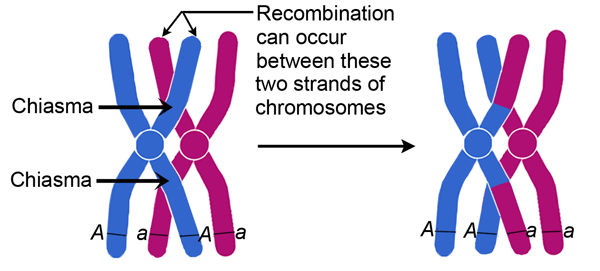
This image shows chromosomes during Prophase 1. Which of the following correctly describes the process shown?
a)
segregation of sister chromatids
b)
condensation and segregation of alleles
c)
mutationin which the DNA content of the gene is altered
d)
crossing - over in which alleles are exchanged
136.
What phase is  shown in the picture?
a)
anaphase 1
b)
anaphase 2
c)
metaphase 1
d)
telophase 1
137.
The correct order of the phases of mitosis and meiosis could be abbreviated as:
a)
MAPT
b)
PAMT
c)
TPAM
d)
PMAT
138.
The nuclear membrane dissolves during
a)
Prophase
b)
Metaphase
c)
Anaphase
d)
Telophase
139.
Which of the following phases of mitosis is represented by the diagram below?
a)
prophase
b)
metaphase
c)
anaphase
d)
telophase
140.
What phase is shown here?
a)
Prophase II
b)
Metaphase I
c)
Metaphase II
d)
Anaphase I
141.
What phase is shown here?
a)
Anaphase II
b)
Metaphase I
c)
Anaphase I
d)
Telophase II
142.
What phase is shown here?
a)
Metaphase II
b)
Telophase I
c)
Telophase II
d)
Metaphase I
143.
What phases is shown here?
a)
Prophase II
b)
Prophase I
c)
Anaphase II
d)
Interphase I
144.
What phase is shown here?
a)
Anaphase I
b)
Prophase I
c)
Metaphase II
d)
 Metaphase I
145.
What phase is shown here?
a)
Telophase II
b)
Anaphase II
c)
Metaphase I
d)
Interphase I
146.
What phase is shown here?
a)
Telophase I
b)
Metaphase II
c)
Telophase II
d)
Anaphase I
147.
What phase is this?
a)
Interphase II
b)
Prophase I
c)
Metaphase I
d)
Anaphase II
148.

What is the name of the Belgium scientist who first discovered meiosis in 1883?

a)

Edouard van Beneden

b)

Gregor Mendel

c)

Aristotle

d)

Rosalind Franklin

149.

In humans, the haploid number of chromosomes is ____.

a)

23

b)

46

c)

69

d)

92

150.

Which of the following is the best definition for MEIOSIS?

a)

the process of two haploid cells uniting

b)

the counting of chromosomes within a diploid cell

c)

a two-step process that reduces the number of chromosomes in half such that there is only one copy of all the chromosomes

d)

the equational division of a cell into two identical copies

151.

True or False? Before cells undergo meiosis they pass through interphase first.

a)

true

b)

false

152.

What is unique to Prophase I- is that the duplicated chromosomes pair up to form _______.

a)

a centrosome

b)

a tetrad

c)

the mitotic spindle

d)

sister chromatids

153.

In which stage of MEIOSIS does crossing over occur? (The exchange of genetic material between chromosomes in a tetrad.)

a)

Anaphase I

b)

Metaphase I

c)

Prophase I

d)

Telophase I

154.

In Metaphase I, tetrads line up along the _______.

a)

mitotic spindle

b)

centrosomes

c)

equatorial plane

d)

contractile ring

155.

In Anaphase I, the _________ are separated by the pulling of the spindle fibers to opposite poles of the cell.

a)

homologous pairs of chromosomes

b)

sister chromatids

c)

centromeres

d)

centrosomes

156.

Check all of the following that DO occur during Telophase I and cytokinesis.

a)

The separated homologous chromosomes are at opposite poles of the cell.

b)

The cell divides in two.

c)

The chromosomes do not uncoil, since they are getting ready for Meiosis II.

d)

Sister chromatids are pulled away from each other.

157.

At the start of Meiosis II, which of the following is NOT true?

a)

There are two cells.

b)

The cells are haploid.

c)

The chromosomes are paired up as homologues.

d)

DNA is present as two sister chromatids joined at the centromere.

158.

In Prophase II, the_________ reforms and the spindle fibers attach to each chromosome.

a)

mitotic spindle

b)

centrosomes

c)

nucleus

d)

cell plate

159.

In Metaphase II, _________ line up on equatorial plane.

a)

homologous pairs of chromosomes

b)

single chromosomes (made up of 2 sister chromatids)

c)

tetrads

d)

centrosomes

160.

In Anaphase II, the _________ separate.

a)

Homologues

b)

Sister Chromatids

c)

Tetrads

d)

Centrioles

161.

How many cells are formed at the end of Meiosis II?

a)

2

b)

3

c)

4

d)

8

162.

True or False. In Meiosis II, there are TWO cells that go through each phase at the same time.

a)

true

b)

false

163.

Which of the following does NOT happen during Telophase II?

a)

the nuclei reform

b)

each cell begins to split evenly in two

c)

the chromosomes duplicate

d)

the nuclei contain a haploid number of chromosomes

164.

Which of the following are CORRECT observations about the differences between MITOSIS and MEIOSIS? (Check all that apply.)

a)

Mitosis produces cells that identical to the parent cell.

b)

Meiosis produces cells that have half the number of chromosomes as the parent cell.

c)

All cells go through INTERPHASE as part of the cell cycle, whether it goes to mitosis or meiosis next.

d)

In both types of cell division, the chromosomes are only duplicated once.

e)

Only in Mitosis, do you see chromosomes pair up to form a tetrad.

165.

Which part of MEIOSIS is identical to MITOSIS?

a)

Meiosis I

b)

Meiosis II

166.

The products of MEIOSIS have _______ number of chromosomes.

a)

haploid

b)

diploid

167.

Before cell division takes place, DNA has to make an exact copy of itself. This is called

a)

duplication

b)

fertilization

c)

hybridization

d)

replication

168.

What stage is shown in the picture?

a)

prophase in mitosis

b)

prophase I in meiosis

c)

prophase II in meiosis

d)

interphase

169.

What phase of interphase does DNA replicate?

a)

G1

b)

S

c)

G2

d)

G0

170.

Which of the following refer to the product of meiosis (you may choose more than one)?

a)

haploid

b)

diploid

c)

somatic cells

d)

gametes

171.

Which of the following refer to the product of mitosis (you may choose more than one)?

a)

haploid

b)

diploid

c)

gametes

d)

somatic cell

172.

How many chromosomes are found in a human adult egg cell?

a)

23

b)

46

c)

23 pairs

d)

46 pairs

173.

Meiosis results in

a)

two unique daughter cells

b)

four identical daughter cells

c)

two identical daughter cells

d)

four unique daughter cells

174.

What type of cells have not begun to differentiate into specialized cells?

a)

gametes

b)

stem cells

c)

somatic cells

d)

neurons

175.

When meiosis is complete, how does DNA in the daughter cells compare to the DNA from the original parent cell?

a)

half as much and genetically the same

b)

twice as much and genetically the same

c)

half as much and genetically different

d)

twice as much and genetically different

176.

Crossing over occurs in

a)

prophase of mitosis

b)

prophase I of meiosis

c)

interphase

d)

during all stages of meiosis I

177.

The production of four haploid gametes from one mother cell is completed during

a)

anaphase meiosis I

b)

telophase meiosis I

c)

prophase meiosis II

d)

telophase meiosis II

178.

During the process of meiosis, chromosomes replicate

a)

once, during interphase I

b)

once, during interphase II

c)

twice, during prophase I and II

d)

twice, during interphase I and II

179.

All BUT one event will occur during Meiosis II? That is

a)

homologous chromosomes pair up

b)

sister chromatids move to opposite ends of the cell

c)

nuclear membrane form around newly separated chromosomes

d)

spindle fibers align chromosomes along the equator of the cell

180.

Mitosis is responsible for growth, repair, and maintenance in an organism because

a)

it occurs at a faster rate than meiosis

b)

the chromosome number is reduced by half

c)

exact duplicates of each mother cell are produced

d)

it is the only process that involves replication of genetic material

181.

Mitosis or Meiosis: Single parent (diploid) cell produces four haploid (n) daughter cells

a)

mitosis

b)

meiosis

182.

Which statement correctly lists the stages of mitosis in order?

a)

P, R, Q

b)

Q, R, P

c)

R, P, Q

d)

P, Q, R

183.

Before cell reproduction takes place, what is the correct sequence of events that must occur?

a)

chromosome replication, chromosome checking and repair, growth

b)

growth of cytoplasm, duplication of cellular organelles, chromosome replication

c)

replication of chromosomes, growth, duplication of cellular contents and organelles

d)

growth and duplication of cell organelles, chromosome replication, repair of chromosomal errors

184.

After fertilization, the zygote contains 28 chromosomes. What is the haploid number?

a)

28

b)

14

c)

56

d)

46

185.

When do homologues line up in the middle of a cell?

a)

metaphase

b)

metaphase I

c)

metaphase II

186.

How many cell divisions are in Meiosis?

a)

one

b)

two

c)

four

d)

eight