wayground logo

Free Printable Worksheets

Font size

S
M
L
XL
Worksheets

Mendelian Genetics Review

Total questions: 188

Worksheet time: 5hrs 58mins

Name
Class
Date
1.

Place these phases in cell-cycle order.

a)

Prophase I

b)

Metaphase I

c)

Anaphase I

d)

Telophase I

e)

Cytokinesis

1)
2)
3)
4)
5)
2.

Which cell-division process is mitosis?

3.

Which cell-division process is meiosis?

4.

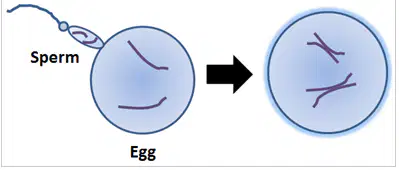
Label the processes shown in the photo.

5.

When does crossing-over happen in meiosis?

a)

Prophase I

b)

Prophase II

c)

Metaphase I

d)

Anaphase I

e)

Telophase II

6.

What is this?

a)

tetrad

b)

gamete

c)

zygote

d)

centriole

7.

For both meiosis and mitosis, DNA duplication happens in the ​ (a)   ​ phase of interphase.

Choose from the below words
S
G1
G2
M
8.

Which of the following are reasons that cells perform cell division?

a)

repair a wound

b)

make the body grow larger

c)

replace damaged or dying cells

d)

repair damaged DNA

9.

The point in the cell cycle where the cell verifies that it is ready to go to the next phase is called ​ (a)  

Choose from the below words
checkpoints
stop-start signals
gateways
markers
10.

Sort the images so that the events of the CELL CYCLE occur in order.

a)
b)
c)
d)
e)
1)
2)
3)
4)
5)
11.

Put the names of the Mitosis stages in order. (#1 = start)

a)

Prophase

b)

Metaphase

c)

Anaphase

d)

Telophase

1)
2)
3)
4)
12.

What phase of the cell cycle does a cell spend most of its time?

a)

Prophase

b)

Metaphase

c)

Anaphase

d)

Telophase/

cytokinesis

e)

Interphase

13.

Match the following stages with what happens in them.

a)

the nucleus fades away and chromosomes become visible

1.

Prophase

b)

the chromosomes line up in the middle of the cell

2.

Metaphase

c)

the sister chromatids move apart to separate sides of the cell

3.

Anaphase

d)

the division of the cytoplasm creating 2 daughter cells

4.

Cytokinesis

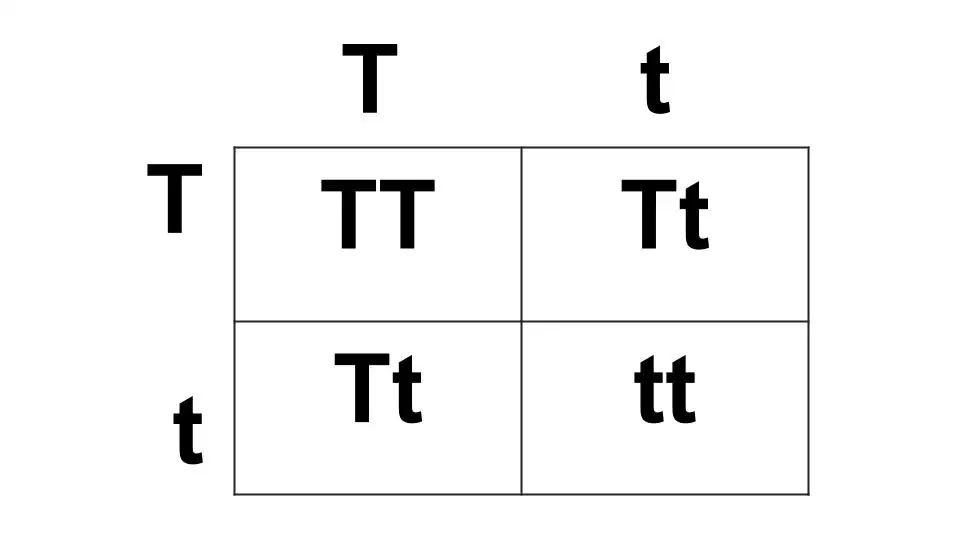
e)

the division (cleavage) of two cells appear. 2 nuclei are visible

5.

Telophase

14.

If the ​ (a)   phase failed, then the daughter cells wouldn't have enough DNA.

Choose from the below words
S
Gap 1
cytokinesis
Gap 2
15.
In mitosis, the two resulting cells are
a)

different from the starting cell, but identical to each other.

b)

different from the starting cell and different from each other.

c)

identical to the starting cell, but different from each other.

d)

identical to the starting cell and identical to each other.

16.

What is cancer? (pick 2)

a)

a premature stop in the cell cycle

b)

mitosis that is out of control

c)

programmed cell death

d)

unregulated mitosis

17.

offspring from parents with different traits

a)

genetics

b)

segregation

c)

hybrid

d)

fertilization

18.

male and female reproductive cells merge to produce a new cell

a)

genetics

b)

segregation

c)

hybrid

d)

fertilization

19.

specific characteristic of an organism

a)

trait

b)

allele

c)

gene

d)

gamete

20.

inheritable DNA that codes for a feature of an organism

a)

trait

b)

allele

c)

gene

d)

gamete

21.

different forms of a gene

a)

trait

b)

allele

c)

gene

d)

gamete

22.

sex cell containing half the DNA needed to make a new organism

a)

trait

b)

allele

c)

gene

d)

gamete

23.

when an organism has two copies of the same allele for a gene

a)

homozygous

b)

heterozygous

c)

multiple alleles

d)

polygenic traits

e)

independent assortment

24.

when an organism has two different alleles for a gene

a)

homozygous

b)

heterozygous

c)

multiple alleles

d)

polygenic traits

e)

independent assortment

25.

physical traits, how an organism looks

a)

phenotype

b)

genotype

c)

incomplete dominance

d)

codominance

26.

genetic traits, what DNA code an organism has

a)

phenotype

b)

genotype

c)

incomplete dominance

d)

codominance

27.

swapping of alleles between chromatids on homologous chromosomes

a)

mitosis

b)

meiosis

c)

tetrad

d)

crossing over

28.

fertilized egg that becomes a new individual

a)

homologous

b)

diploid (2n)

c)

haploid (1n)

d)

zygote

e)

gamete

29.

Fill in the Punnett square for the seed shape gene in pea plants:

·         round = R

·         wrinkled = r

·         male plant = homozygous dominant

female plant = heterozygous

30.

For a species of rabbit, H = long hair & h = short hair. In this 1-factor cross, the mother has short hair. What genotype is the father?

a)

H

b)

HH

c)

Hh

d)

h

e)

hh

31.

For a species of rabbit, H = long hair & h = short hair. In this 1-factor cross, the mother has short hair. What phenotype does the father have?

a)

long hair

b)

short hair

c)

Hh

d)

HH

e)

hh

32.

For a species of rabbit, H = long hair & h = short hair. What proportion of the offspring should have short hair?

(a)  

33.

For a species of rabbit, H = long hair & h = short hair. What proportion of the offspring should have long hair?

(a)  

34.

For a species of rabbit, H = long hair & h = short hair. What is the genotype ratio?

(a)  

35.

For a species of rabbit, H = long hair & h = short hair. What percentage of the offspring should have short hair?

(a)  

36.

For a species of rabbit, H = long hair & h = short hair. What percentage of the offspring should have long hair?

(a)  

37.

For a species of rabbit, H = long hair & h = short hair. If there are 12 kits in the litter, how many should have short hair?

(a)  

38.

For a species of rabbit, H = long hair & h = short hair. If there are 12 kits in the litter, how many should have long hair?

(a)  

39.

At the start of a breeding program, which generation's alleles get written in the edge boxes?

a)

P

b)

F1

c)

F2

d)

N

40.

At the start of a breeding program, which generation's alleles get written in the numbered boxes?

a)

P

b)

F1

c)

F2

d)

N

41.

The edge boxes of this Punnett Square represent the alleles in the parents'

​ (a)   .

Choose from the below words
gametes
zygotes
42.

The numbered boxes of this Punnett Square represent the possible allele combinations for the

​​ (a)   .

Choose from the below words
zygotes
gametes
43.

A nucleotide is made of three components: a phosphate group, deoxyribose sugar, and (a)  

44.

Which type of sugar makes up DNA?

(a)  

45.

____-____________ is a type of replication where half the original DNA is kept and the other half is synthesized from free nucleotides

(a)  

46.

Complementary base pair for the following sequence.

A A T C C G T T A G G C

(a)  

47.

Complementary base pair for the following sequence.

G C C T A G G A A C

(a)  

48.

The first step of DNA replication begins with helicase (a)   the DNA double helix at the hydrogen bonds between the complementary base pairs and into 2 separated strands.

49.

Label the 3 parts of the nucleotide

1. ​ (a)  

2. ​ (b)  

3. ​ (c)  

Choose from the below words
Phosphate Group
Deoxyribose Sugar
Nitrogenous Base
Hydrogen bond
Phosphodiester bond
50.

Reorder the following: Steps of DNA Replication

a)

Unzipping DNA helix into 2 separate strands

b)

Primase attaches RNA primers to DNA, starting point for DNA polymerase

c)

​DNA polymerase builds new DNA strands by adding new nucleotides.

d)

Ligase joins or glues DNA fragments together

e)

Second type of DNA polymerase scans DNA for any errors and fixes any found

1)
2)
3)
4)
5)
51.

Match the following: Enzymes to Functions

a)

Helicase

1.

enzyme unzips DNA like a zipper, creating two single strands of DNA

b)

DNA Polymerase

2.

Builder enzyme that synthesizes new strands of DNA by adding DNA nucleotides

c)

Ligase

3.

Enzyme that joins or glues fragments of new DNA together

d)

Primase

4.

Enzyme that creates a starting point for DNA polymerase

52.

Match the following: Steps of DNA Replication

a)

1. Unzipping

1.

Helicase unzips DNA helix

b)

2. Stabilizing

2.

SSB proteins prevent DNA from binding back together

c)

3. Priming

3.

Primase marks starting point for DNA polymerase

d)

4. Building and Extending

4.

DNA polymerase builds new DNA strands in 5' to 3' direction

53.

Match the following: Steps of DNA Replication

a)

5. Gluing

1.

Ligase joins DNA fragments together

b)

6. Replacing

2.

Exonuclease removes primers, DNA polymerase replaces with nucleotides

c)

7. Proofreading

3.

DNA polymerase scans DNA for errors, fixes any found

54.

Cells carry out DNA ​ (a)   to prepare for ​ (b)   . Each new cell will require its own ​ (c)   . Each new copy of DNA is an ​ (d)   copy of the parent DNA.

Choose from the below words
replication
cell division
DNA
identical
55.
What is the phenotype in the bottom right square? (Yellow is dominant and green is recessive)
a)
yy
b)
Yy
c)
yellow
d)
green
56.
Which of the following is the genotype for a homozygous recessive trait?
a)
gg
b)
Gg
c)
GG
57.
What % of the offspring in the Punnet square are heterozygous?
a)
25%
b)
50%
c)
75%
d)
100%
58.
What type of letters are used to show a trait is dominant?
a)
capital
b)
lowercase
59.
pp is an example of why type of genotype?
a)
homozygous recessive
b)
heterozygous recessive
c)
homozygous dominant
d)
heterozygous dominant
60.
PP is what type of genotype?
a)
homozygous recessive
b)
heterozygous recessive
c)
homozygous dominant
d)
homozygous recessive
61.
Pp is an example what type of genotype?
a)
homozygous recessive
b)
homozygous dominant
c)
heterozygous dominant
62.
What is one or more alternative forms of a gene?
a)
chromosome
b)
genotype
c)
phenotype
d)
allele
63.
What type of letter show s a recessive trait?
a)
capital
b)
lowercase
64.
What is a trait that can be hidden?
a)
dominant
b)
recessive
c)
sneaky
d)
recess time
65.
What is the transmission of traits from parent to offspring?
a)
heredity
b)
genetics
c)
cell bio
d)
chem
66.
What is a trait that will always show itself?
a)
recessive
b)
dominant
c)
one from the dad
d)
one from the mom
67.
This is the term for genes a person has for a trait?
a)
genotype
b)
phenotype
68.
This is the physical appearance of a trait.
a)
genotype
b)
phenotype
69.

a percent, ratio, or fraction that describes how likely it is that an event will occur

a)

ethics

b)

biotechnology

c)

probability

d)

hybrid

70.

diagram predicting the possible gene combinations that might result from a genetic cross

a)

recessive

b)

pedigree

c)

Punnett square

d)

F1 generation

71.

A _______ is an alternative form a gene.

a)

chromosome

b)

sister chromatid

c)

allele

d)

telomere

72.
Y for yellow body is dominant over y for blue body.  What alleles would produce yellow bodies?
a)
YY,yy
b)
Yy,yy
c)
YY only
d)
YY,Yy
73.
"The Great White Shark was 20 feet in length.  Phenotype or Genotype?
a)
phenotype
b)
genotype
74.
If "T" is the allele for tall and "t" is the allele for short, then Tt would produce?
a)
tall
b)
short
c)
medium
d)
not enough info
75.
A physical characteristic that can be passed from parent to offspring.
a)
behavior
b)
trait
c)
strong muscles
d)
ability to fly a plane.
76.

Red (R) is dominant over white (r). How can a flower be white?

a)

It can have RR and be white.

b)

It has to have rr.

c)

It has to have rR

d)

There is no way it can be white until the third generation.

77.
Two brown eyed parents (Bb) have a baby. What is the chance the baby is blue eyed?
a)
0 %
b)
25%
c)
50%
d)
75%
78.
If green is dominant over purple, then what is the genotype for this individual?
a)
Purple
b)
Green
c)
GG
d)
gg
79.
Brown fur color is dominant over black fur color. Which of the following is the actual genotype of ALL of the offspring in the next generation of this cross for fur color?
AA x aa
a)
AA
b)
Aa
c)
aa
d)
brown fur
80.

3.If two white rabbit produce a black offspring, the parent’s genotypes for color must be:

a)

heterozygous

b)

homozygous black

c)

homozygous white

d)

not enough information was given

81.
In Mendel's pea plants, the homozygous recessive phenotype was white flowers.  If Mendel crossed two homozygous recessive pea plants, what color flowers would be seen in the offspring?
a)
white and purple
b)
white 
c)
purple
d)
lavendar
82.
What percentage of the offspring will be purebred dominant?
a)
0%
b)
25%
c)
50%
d)
75%
83.
True or False:
A heterozygous dominant trait can be written as BB.
a)
True
b)
False
84.
D = dimples        d = no dimples 
What is the genotype for a homozygous recessive offspring?
a)
DD
b)
Dd
c)
dd
85.
Round (R) seeds are dominant to wrinkled (r) seeds.
What is the genotype for a homozygous dominant offspring?
a)
RR
b)
Rr
c)
rr
86.
If two purebred species (BB) are crossed, what percentage of their offspring would be BB?
a)
25%
b)
50%
c)
75%
d)
100%
87.
Short hair (S) is dominant to long hair (s).
What is the genotype for an offspring with long hair?
a)
SS
b)
Ss
c)
ss
88.
What percentage of the offspring will be heterozygous dominant?
a)
100%
b)
75%
c)
50%
d)
25%
89.
The "Father of Genetics"
a)
Isaac Newton
b)
Gregor Mendel
c)
Albert Einstein
d)
Robert Hooke
90.
If a trait is homozygous the letters are the 
a)
Same
b)
Different
91.
If you are homozygous recessive, the genotype would be 
a)
AA
b)
aa
c)
Aa
92.
If you are homozygous dominant, the genotype would be 
a)
AA
b)
aa
c)
Aa
93.
If a trait is heterozygous, the letters (alleles)are 
a)
The same 
b)
Different
94.
If you are heterozygous, your genotype would be
a)
AA
b)
aa
c)
Aa
95.
Another term for homozygous is
a)
Hybrid 
b)
Purebred
c)
Recessive
d)
Dominant
96.
Another term for heterozygous is
a)
Hybrid
b)
Purebred
c)
Dominant
d)
Recessive
97.
The law that states that when an organism is hybrid for a pair of contrasting traits, the dominant trait is the one that is shown. 
a)
Law of Dominance
b)
Law of Independent Assortment
c)
Law of of Segregation
d)
Law of Incomplete Dominance
98.
A __________ is a segment of DNA that codes for a particular protein, which leads to a particular trait.
a)
Gene
b)
Allele
c)
Codon
d)
Nucleotide
99.
The dominant trait in this punnett square is
a)
yellow pea seeds
b)
green pea seeds
c)
there is no dominant seed
100.
Tt is-
a)
homozygous dominant
b)
homozygous recessive
c)
heterozygous
d)
none of these
101.
The letters on the TOP AND SIDE of a punnett square represent ______________.
a)
The combination of alleles in offspring.
b)
The possible alleles given by the parents following meiosis.
c)
The genotype and phenotype of offspring.
d)
The results of genetic mutations in offspring.
102.
Why do we see only tall plants in the second generation?
a)
The gene for tall height is dominant
b)
The gene for short height is dominant
c)
The gene for tall height is recessive
d)
The parents did not have the tall gene
103.

Select all that would be considered phenotypes:

a)

Blonde

b)

Rr

c)

Short

d)

rr

104.

Select all that would be considered genotypes:

a)

Blonde

b)

Rr

c)

Short

d)

rr

105.

Which of the following are true of meiosis? Select all that apply!

a)

It results in four cells

b)

It results in two cells

c)

The daughter cells are genetically identical

d)

The daughter cells are genetically unique

e)

The daughter cells are haploid

106.

_____ are separated during Meiosis I, and _____ are separated during Meiosis II.

a)

Chromosomes; spindle fibers

b)

Non-sister chromatids; sister chromatids

c)

Sister chromatids; homologous pairs

d)

Homologous pairs; sister chromatids

107.

A piece of a chromosome is lost

a)

deletion

b)

duplication

c)

inversion

d)

translocation

108.

A piece of a chromosome is copied and remains within the chromosome

a)

deletion

b)

duplication

c)

inversion

d)

translocation

109.

A piece of one chromosome detaches and reattaches to a different chromosome

a)

deletion

b)

duplication

c)

inversion

d)

translocation

110.

The chromosomal mutation shown in the image is a

a)

deletion

b)

duplication

c)

inversion

d)

translocation

111.

The chromosomal mutation shown in the image is a

a)

deletion

b)

duplication

c)

inversion

d)

translocation

112.
Mutations affect the ________ of a protein. Because of this the proteins ______ is affected as well. 
a)
gene, function 
b)
sequence, gene
c)
shape,function
113.
T13 - What type of chromosomal abnormality do people with Down Syndrome have? 
a)
trisomy 21
b)
monosomy 21
c)
recessive inheritance
d)
dominant inheritance
114.

What is the gender of this person?

a)

Male

b)

Female

115.

Describe this karyotype.

a)

Male with no obvious disorder

b)

Female with no obvious disorder

c)

Female with disorder

d)

Male with disorder

116.
Notice the abnormal 23rd chromosome.  This individual suffers from which chromosomal genetic disorder?
a)
Klienfelter's Syndrome
b)
Down Syndrome
c)
Cris-du-Chat Syndrome
d)
Andrew's Syndrome
117.
A chromosome is found to be shorter than it's homologous match.  Which type of mutation would this most likely be?
a)
insertion
b)
deletion
c)
translocation
d)
inversion
118.
What process occurs during meiosis that can result in chromosomal disorders?
a)
crossing over
b)
non-disjunction
c)
anaphase I
d)
prophase II
119.
Complete a karyotype analysis on the karyotype provided.
a)
47, XY, +18 
b)
46, XX
c)
47, XY, +21
120.
Complete a karyotype analysis on the karyotype provided.
a)
47, XX, +23
b)
46, X, +22
c)
45, X, +23
d)
46, XX, +21
121.
If you have a parent who has GgBb as their genotype, what are the possible alleles they could donate to their gametes?
a)
GB, Gb, gB, gb
b)
GB, GB, gb, gb
c)
Gb, Gb, Gb, GB
d)
GG, BB, gg, bb
122.
T4 - What genotype is missing from this Punnett Square?
a)
RrYy
b)
RRYY
c)
rryy
d)
RrYY
123.
T4 - Based off this Punnett Square, what fraction of the offspring will have wrinkled, yellow seeds?
a)
9/16
b)
3/16
c)
1/16
d)
16/16
124.
Assume mom's gametes are on the left, what is her genotype?
a)
TTZz
b)
TtZz
c)
ttZZ
d)
TtZZ
125.
Assume dad's gametes are on top, what is his genotype?
a)
AAPP
b)
AaPp
c)
aaPP
d)
Aapp
126.
In watermelons, green rinds (G) are dominant to striped rinds (g).  What is the genotype of a heterozygous green watermelon?
a)
GG
b)
Gg
c)
gg
d)
green
127.
In cacti, long arms (A) are dominant to short arms (a).  Suppose 2 heterozygous cacti are crossed.  What percentage of their offspring are expected to have short arms?
a)
0%
b)
25%
c)
75%
d)
100%
128.
One of the two forms of a gene is called a(n)
a)
genotype
b)
allele
c)
hybrid
d)
trait
129.
A genotype is
a)
the listing of the alleles for the trait
b)
the physical appearance of the trait
c)
the separation of the chromosomes
d)
the letters seen on the outside of the Punnett square
130.
This is an example of a ______________.
a)
phenotype
b)
genotype
c)
xenotype
d)
base pairs
131.
The genetic make up of this flower is ________.
a)
homozygous recessive
b)
heterozygous
c)
homozygous dominant
d)
white
132.

What is the genotype for a pea plant homozygous for round seeds (R), and heterozygous for yellow seeds?

a)

RrYy

b)

RRyy

c)

RRYy

d)

rryy

133.
Which of the following genotypes is heterozygous?
a)
Bb
b)
BB
c)
bb
d)
B
134.
Aa, DD, bB, yy are all examples of
a)
genotypes
b)
phenotypes
135.
Which of the following genotypes is homozygous dominant?
a)
A
b)
Aa
c)
AA
d)
aa
136.
An organism’s genetic makeup, or allele combinations
a)
Recessive
b)
Genotype
c)
Phenotype
d)
Heterozygous
137.
In a certain species of plant, the color purple (P) is dominant to the color white (p).
According to the Punnett Square, what is the probability of an offspring being purple?
a)
25%
b)
0%
c)
100%
d)
50%
138.
In a certain species of plant, the color purple (P) is dominant to the color white (p).
According to the Punnett Square, what is the probability of an offspring being white?
a)
25%
b)
0%
c)
100%
d)
50%
139.
Round seeds (R) are dominant over wrinkled seeds (r). What percentage of the offspring will be round from the following cross?
Rr X Rr
a)
100%
b)
75%
c)
50%
d)
25%
140.
T - tall and t = short
In the punnett square below, what belongs in the missing square
a)
tt
b)
Tt
c)
Bb
d)
TT
141.
B = brown fur  b = white fur
In the punnett square, what is the probability for white fur? 
a)
0%
b)
25%
c)
50%
d)
75%
142.

What goes in box 15

a)

aabb

b)

AABB

c)

aaBB

d)

AAbb

143.
What goes in box 3
a)
Aabb
b)
AABB
c)
AAbb
d)
aaBb
144.
Using the dihybrid cross and key provided, what is the probability of the offspring being tall and white?
a)
9
b)
2
c)
3
d)
6
145.
What goes in box 6
a)
AaBB
b)
AABB
c)
aaBB
d)
AAbb
146.

In guinea pigs, short hair (H) is dominant to long hair (h). Also, black eyes (B) are dominant to red eyes (b).


Determine the genotype of a guinea pig with the phenotype: short hair with red eyes (select all possible genotypes)

a)

HHbb

b)

Hhbb

c)

hhBB

d)

HHBb

147.

A person with the genotype BBMm could produce which of the gametes below ...

a)

Bb

b)

BM

c)

bM

d)

Bm

148.

In horses, a straight mane (H) is dominant over a curly mane(h). Trotter horses (T) are dominant to pacer horses (t).


Determine the genotype of a horse with the phenotype: curly maned pacer horse

a)

HhTT

b)

hhTT

c)

hhtt

d)

HHtt

149.

In rabbits, grey hair (G) is dominant to white hair (g). Also, black eyes (B) are dominant to red eyes (b).


Determine the genotype of a rabbit with the phenotype: purebred for grey fur with black eyes (select all possible genotypes)

a)

GgBb

b)

GGBb

c)

GGBB

d)

GgBB

150.

What goes in box 15

a)

aabb

b)

AABB

c)

aaBB

d)

AAbb

151.

Match the following

a)

homozygous dominant

1.

GG

b)

heterozygous

2.

Gg

c)

homozygous recessive

3.

gg

152.
What is the dominant trait?
a)
yellow pea seeds
b)
green pea seeds
c)
there is no dominant seed
d)
Jolly green giant
153.

When asked to find a phenotypic ratio, we compare...

a)

all different letter combinations among offspring

b)

all the different combinations of "expressed" traits among offspring

154.

what is the genotypic ratio?

a)

1:2:1

b)

3:1

c)

1:1

155.

what is the phenotypic ratio?

a)

1:2:1

b)

3:1

c)

1:1

156.

Match the following

a)

phenotype examples

1.

green round, yellow wrinkled

b)

genotype examples

2.

GgRr, GGRr, ggrr

c)

phenotype definition

3.

physical or "expressed" traits

d)

genotype definition

4.

allele (letter) combinations

157.

If Green (G) peas are dominant to yellow peas (g) and Round peas (R) are dominant to wrinkled seeds (r), which of the following shows the genotype for a pea plant that is homozygous recessive for yellow, and heterozygous for round?

a)

GgRr

b)

GGRr

c)

GGrr

d)

ggRr

158.

If Green (G) peas are dominant to yellow peas (g) and Round peas (R) are dominant to wrinkled seeds (r), which of the following shows the genotype for a pea plant that is homozygous dominant for green, and homozygous recessive for wrinkled?

a)

GgRr

b)

GGRr

c)

GGrr

d)

ggRr

159.

what is the phenotypic ratio?

a)

1:2:1

b)

3:1

c)

1:1

160.
Which of the following identifies the phenotypes?
a)
A
b)
B
c)
C
d)
D
161.
Which of the following identifies the gametes?
a)
A
b)
B
c)
C
d)
D
162.
parent 1: GgBB
parent 2: ggBb
Find the gametes for parent 1.
a)
GB, GB, gB, gB
b)
gB, gb, gB, gb
c)
Gg, BB, GB, GB
d)
gg, Bb, gB, gb
163.
Aa is an example of
a)
homozygous dominant
b)
homozygous recessive
c)
heterozygous
d)
none of these
164.
bb is an example of
a)
homozygous dominant
b)
homozygous recessive
c)
heterozygous
d)
none of these
165.
Recessive alleles are written using
a)
capital
b)
lowercase
c)
both
d)
neither
166.
AA is an example of 
a)
homozygous dominant
b)
homozygous recessive
c)
heterozygous
d)
none of these
167.
Recessive alleles are written using
a)
capital
b)
lowercase
c)
both
d)
neither
168.
Which of the following is a genotype?
a)
long hair
b)
blue eyes
c)
Gg
d)
tall
169.
Dominant alleles are written using
a)
capital
b)
lowercase
c)
both
d)
neither
170.
Which of the following is a phenotype?
a)
AA
b)
AB
c)
black fur
d)
Tt
171.
Tall is dominant to short. A homozygous tall plant is crossed with a short plant. What will be the phenotypes of the offspring?
a)
100% tall
b)
50% tall, 50% short
c)
75% tall, 25% short
d)
25% tall, 75% short
172.
Green is dominant to yellow. Two heterozygous green plants are crossed. What are the genotypes of the offspring?
a)
100% Gg
b)
50% GG, 50% Gg
c)
25% GG, 50% Gg, 25% gg
d)
75% Gg, 25% gg
173.
Purple is dominant to white. A heterozygous purple flower is crossed with a white flower. What are the genotypes and phenotypes of the offspring?
a)
100% Pp (purple)
b)
50% Pp (purple); 50% pp (white)
c)
75% Pp (purple); 25% pp (white)
d)
25% PP, 50% Pp, 25% pp
75% purple, 25% white
174.
An organism with two different alleles for a trait is said to be: 
a)
recessive
b)
hybrid
c)
dominant
d)
purebred
175.
An allele whose trait only shows up when no dominant allele is present.
a)
hidden allele
b)
dominant allele
c)
recessive allele
d)
present allele
176.
T - tall and t = short
In the punnett square below, what belongs in the missing square
a)
tt
b)
Tt
c)
Bb
d)
TT
177.
T = tall an t = short
TT and Tt would result in  the following phenotype
a)
short
b)
tall
c)
medium sized
d)
neither tall or short
178.
B=brown eyes
b= blue eyes
What is true about these two brothers that have brown eyes:
One has genotype BB the other Bb.
a)
they have same phenotype and genotype
b)
they have different genotypes and phenotypes
c)
they have same phenotype but different genotypes
d)
they have same genotype but different phenotypes
179.
Two brown eyed parents (Bb) have a baby. What is the chance the baby is blue eyed?
a)
0 %
b)
25%
c)
50%
d)
75%
180.
If a pea plant were homozygous recessive for height, how would its alleles be represented?
a)
TT
b)
Tt
c)
tt
d)
tT
181.
Recessive alleles may not be expressed because they are
a)
masked by a dominant allele
b)
the least common allele in a population.
c)
the most common allele in a population.
d)
less likely to have crossing over.        
182.
When is a recessive allele expressed in offspring?
a)
when two copies are present
b)
when parents have no dominant alleles
c)
when the offspring is heterozygous
d)
when one copy is present
183.
An organism's genetic make-up:
a)
phenotype
b)
genotype
c)
dominant
d)
recessive
184.
What is another way of saying "purebred"?
a)
homozygous
b)
dominant
c)
recessive
d)
heterozygous
185.
Different forms of genes:
a)
alleles
b)
phenotype
c)
genotype
d)
homologous chromosomes
186.
An allele whose trait only shows up when no dominant allele is present.
a)
hidden allele
b)
dominant allele
c)
recessive allele
d)
present allele
187.
Two heterozygous (Tt) tall pea plants are crossed. Which describes their offspring?
a)
50% tall and 50% short
b)
75%tall and 25% short
c)
100%short
188.
If T=Tall & t=short, what is the genotypic ratio?
a)
1:3
b)
3:1
c)
1:2:1
d)
2:2