
 Worksheets
Biology A Study Guide
Total questions: 185
Worksheet time: 3hrs 59mins
conclusion

The tiniest bone is inside the ear. It is 3 millimeters long. It is called the stapes, or stirrup.
An object in motion continues in motion with the same speed and in the same direction unless acted upon by an unbalanced force.
The dramatic changes in climate that resulted from this huge collision were too much for the dinosaurs. They were not able to survive.
The students grades are the ___________ variable.
The heart rate is the ________________ variable.
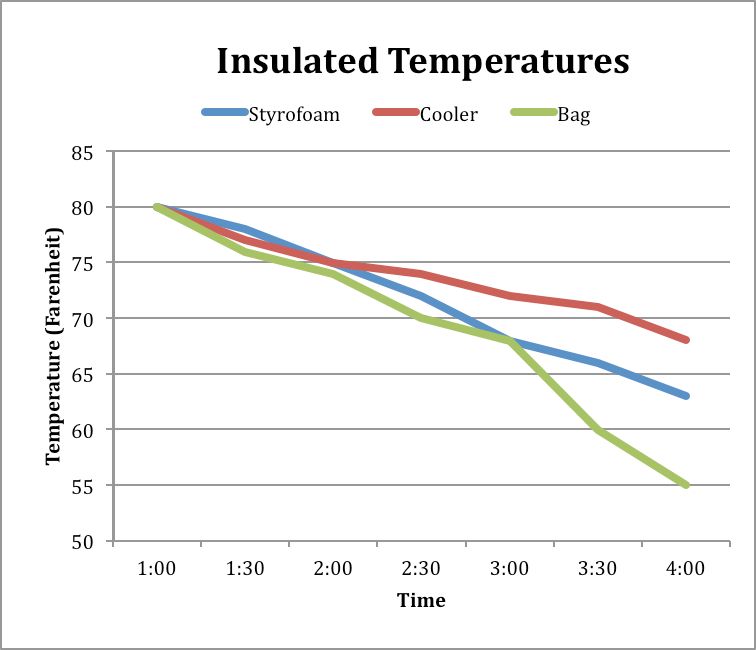
What data does this graph represent?
Change in temperature of a liquid over time in 3 different containers
How temperature can change the molecules in a material
The phase changes of a material
What type of container people use the most to store hot liquids.
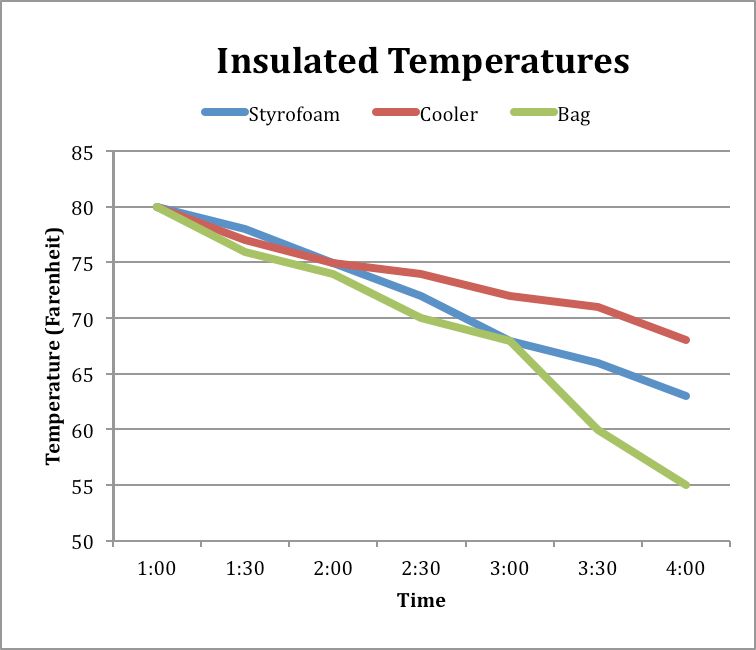
What was the temperature of the liquid in the Styrofoam container at 4:00?
55 degrees
68 degrees
73 degrees
63 degrees


A study was done to find if different tire treads affect the braking distance of a car.
The height of bean plants depends on the amount of water they receive.
Which of these is the dependent variable?
x-axis
y-axis
On a graph, which axis shows the independent variable?
x-axis
y-axis

A variable that stays the same is called....
control
independent variable
dependent variable
responding variable

What conclusions can you draw from this graph?
The deer population went down over time.
The deer population went up over time.
The dear population went up quickly, then down, but then stayed the same.
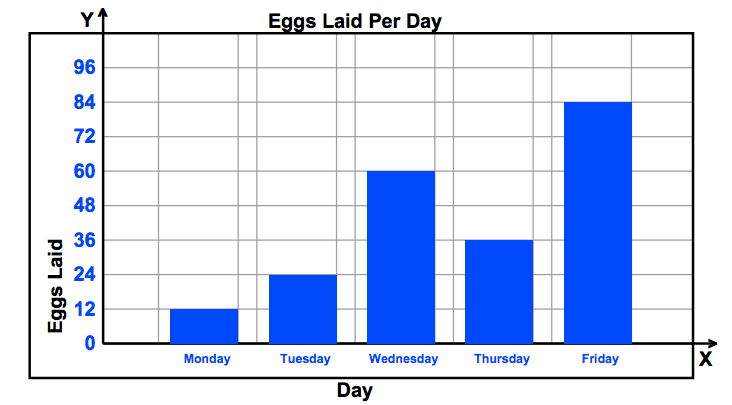
How many more eggs were laid on Friday than Wednesday?
84
36
24
60

a description that does not include numbers
qualitative observation
quantitative observation
subjective observation
accurate observation
measurements and information gathered from observations in the experiment
hypothesis
conclusion
data
inferences

When an ecosystem has a high number of different species present it means that it has a __________
High Biodiversity
Low Biodiversity
Biodiversity
Extinction
Which of the following environments would you expect to have the most biodiversity?
Desert
Tropical Rainforest
Lake
Corn Field
A human activity that causes habitat fragmentation is
Urban development
soil erosion
Desertification
Fishing
The area where a plant or animal lives
environment
location
habitat
home
Breaking up large areas of habitat into smaller pieces is called...
Destruction
Conservation
Logging
Fragmentation
A species that is not supposed to be in an ecosystem (non-native) and has no competition
invasive species
fossil fuels
direct harvesting
indicator species
Reducing the quality of habitat through pollution or invasive species is called ___________.
degradation
destruction
fragmentation
mitigation

What type of Succession is pictured in this series of images?
Primary
Secondary
Climax
What events will cause an ecosystem to start at the primary succession level?


Which organism is the predator?
Rabbit
Wolf
What happens when the rabbit population goes up?
The wolf population also increases
The wolf population declines

What is the approximate carrying capacity of this population?
0
1000
2000
2500

Imagine a disease struck the chipmunk population. Which organism would likely also see a decline as a result.
Hawk
Bush
Caterpiller
Fox

Which country is experiencing a stable growth pattern?
United States
Nigeria

Initially, population growth can be illustrated as a J-shaped curve. What is this type of growth called?
Exponential
Linear
Sinusoidal
Logistical
When an environment has reached its carrying capacity for a certain population, which of the following is true?
Growth and immigration rate is equal to death and emigration rate.
Growth and immigration rate is greater than death and emigration rate.
Growth and immigration rate is less than death and emigration rate.
Growth rate is exponential.
What does a decrease in salmon population due to an increase in river temperature indicate?
an effect of predation
an unchanging biological community
an abiotic factor affecting a biotic factor
change in population but not in abiotic factors
Which of the following is a limiting factor in a population of organisms.
reproductive replacement
life spans of the members
fluctuations in atmospheric temperature
availability of food
The number of pythons found throughout Everglades National Park has increased in recent years. These huge snakes are not native to Florida and are believed to have been released into the wild by pet owners. Wildlife biologists have initiated attempts to capture and remove these pythons. Which statement best explains the biologists' reasons for removing these pythons from the Everglades?
The pythons could upset the territorial boundaries of native organisms.
The pythons could adapt to overcome diseases common to native snakes.
The pythons could prey on native organisms and cause native population to decline.
The pythons could begin to interbreed with native snakes and produce a more successful species.

What level of ecological organization does this entire picture represent?
Organism
Population
Community
Ecosystem

What level of ecological organization do the organisms represent?
Species
Population
Community
Ecosystem
The temperate deciduous forest, the tropical rain forest, the desert, and the tundra are all examples of...
the biopshere.
biomes.
ecosystems.
communities.
Which of the following is a population?
hawks, barred owls, and eagles on NC coast
mountain stream
all the frogs in a pond
blue-tailed skinks (lizards) around a barn
The role or job of a species in a community.
habitat
diet
niche
ecosystem


In the wild, some alligators gets their teeth cleaned by birds. The birds gets their food from the alligators' teeth.
What type of symbiosis is this?
Mutualism
Commensalism
Parasitism
Neutralism
What type of organism can make its own food?
A producer (an autotroph)
A consumer (a heterotroph)
A decomposer
All of the above
The nonliving parts of an ecosystem are called
populations
organisms
biotic factors
abiotic factors
Ostriches and gazelles feed next to each other. They both watch for predators. Because the visual abilities of the two species are different, they can each identify threats that the other animal may not see as readily.
symbiosis
parasitism
mutualism
commensalism

Click on the imgae to make it larger-- Choose the herbivores in the food web....
hawk
mouse
rabbit
snake
Bears eat berries and salmon. Bears are ...
producers
carnivores
omnivores
What does a primary consumer eat?
tertiary consumers
secondary consumers
producers
decomposers


Fossil fuels
Plants
Atmosphere
All of the above
A particular golf course is using large amounts of nitrogen fertilizer. What process could move this nitrogen into a local stream?
volatilization
nitrogen fixation
runoff and leaching
ammonification
What cycle are fossil fuels part of ?
carbon
oxygen
nitrogen
phosphorus
What is the largest reservoir for water?
the ocean
rocks and minerals
the atmosphere
glaciers
What is the largest reservoir for nitrogen?
the ocean
rocks and minerals
the atmosphere
bacteria
In an ecosystem, what happens to the atoms of certain chemical elements, such as carbon, oxygen, and nitrogen?
They move into and out of living systems.
They are only found in abiotic factors.
They move out of living systems and do not return.
They move into living systems and remain there.
A place where matter/nutrients are collected/stored.
A lake
A reservoir
A cloud
The atmosphere
Why do living things need nitrogen?
To get energy
To make DNA
To make proteins
To make proteins and DNA
When water is heated in the ocean by the sun and turns into water vapor
Condensation
Evaporation
Transpiration
Human activity can increase CO2 levels in the atmosphere through
Photosynthesis
Burning of fossil fuels
Planting more trees
Removing nitrogen from fertilizer.

When carbon dioxide leaves the atmosphere and becomes part of the food chain, this transfer occurs between which types of factors?
biotic to biotic
biotic to abiotic
abiotic to biotic
abiotic to abiotic
When water evaporates from the ocean and becomes clouds in the atmosphere, this transfer occurs between which types of factors?
biotic to biotic
biotic to abiotic
abiotic to biotic
abiotic to abiotic
When an organism has cells with a nucleus, they are called _______.
Prokaryotes
Eukaryotes
Bacteria
Archaea
What is the basic unit of an organism?
Chloroplast
Organ
Organelles
Cell
What kind of organism is made of many cells, each with a special function?
Multicellular
Prokaryotic
Eukaryotic
Unicellular
What are the small structures inside of cells that carry out specific functions called?
Organelles
Tissues
Organs
One example of a prokaryote is a.....
Animal
Plant
Virus
Bacteria

Where is DNA stored in a eukaryotic cell?
Cytoplasm
Mitochondria
Ribosomes
Nucleus

This image is a model of-
Flagella
Nucleus
Endoplasmic Reticulum
Cell Membrane
Most of the cell membrane is made of...
Nucleic acids
Proteins
Lipids
Carbohydrates
What forms the channels and pumps in the phospholipid bilayer?
proteins
hydrophilic heads
lipids
carbohydrates

Hydrophobic region of the cell membrane?
E
B
C
A
___________ allow cells to recognize each other and act like ID tags.
Carbohydrates
Proteins
Phospholipids
Cholesterol
___________ strengthens and stabilizes the cell membrane.
Carbohydrates
Proteins
Phospholipids
Cholesterol
Something is ___________ ____________ when some molecules can cross the membrane while others cannot.
made of carbohydrates
Selectively (or Semi) Permeable
made of enzymes
isotonic
___ is particle movement from an area of lower concentration to an area of higher concentration.
Active transport
Passive transport
What term describes a solution that has the same solute concentration inside of and outside of the cell?
Hypertonic
Hypotonic
Isotonic

The cell shrunk in size, which means it was placed in a ____ solution.
Isotonic
Hypertonic
Hypotonic
What is the diffusion of water across a cell or semi-permeable membrane?

Which results in the productions of Four daughter cells being produced?
Mitosis
Meiosis
This method of reproduction is associated with growth and repair of damaged tissues
Meiosis
Mitosis
During this process, only two daughter cells are produced
Meiosis
Mitosis
The number of chromosomes is halved in this method
Mitosis
Meiosis
The daughter cells produced are identical to the parent cell
Mitosis
Meiosis
This method occurs in the reproductive organs
Mitosis
Meiosis

95% of the cells life cycle
Stage where DNA is copied
Interphase
Metaphase
Telophase
Prophase

Nuclear membrane disappears
Chromosomes can now be seen
Centrioles move to opposite sides
Metaphase
Interphase
Telophase
Prophase

Chromosomes line up at the equator of the cell
Spindle fibers extend from the centrioles to the middle of the chromosomes
Prophase
Metaphase
Anaphase
Interphase

Chromatids separate
Anaphase
Metaphase
Prophase
Telophase

Nuclear membrane reforms around the new daughter cells.
Cytoplasm begins to "pinch" in.
Anaphase
Metaphase
Telophase
Interphase

mitochondria
cytoplasm
DNA
Cell Wall

Metaphase, Anaphase, Prophase, Telophase
Prophase, Anaphase, Metaphase, Telophase
Prophase, Metaphase, Anaphase, Telophase
Anaphase, Prophase, Telophase, Metaphase
During what phase of the cell cycle is DNA replicated?
G1 phase
G2 phase
S phase
M phase
Put the following stages of the cell cycle in order: G2, S, G1, M.
S, G1, G2, M
G1, S, G2, M
G1, M, G2, S
M, G1, S, G2


Sac within the cytoplasm that STORES fluid, plants have a larger one that stores food and water.
vacuole
lysosome
cell wall
ribosome

This structure is only found in plants and prokaryotes (Gives it a rigid shape)
cell wall
cytoplasm
centriole
nucleus
The control center of the cell that HAS DNA
cytoplasm
ribosomes
lysosomes
nucleus

The outer part of the cell that is in both plants and animal cells.
"The fence"
cell membrane
cell wall
nucleus
cytoplasm
This organelle make PROTEINS for the cell
chloroplast
ribosome
lysosome
cell wall

Which organelle receives proteins from the ER, organises and distributes them?
Vacuoles
Golgi Apparatus
Nucleus
Chromatin

Which organelle produces the energy a cell needs to carry out its function
Mitochondria
Golgi Bodies
Cytoplasm
Nucleus

Which organelle is found inside the nucleus and produces ribosomes
Nucleolus
Cell Membrane
Lysosome
Golgi Bodies

Breakdown lipids, carbs, proteins, old organelles. Clean up crew. Also fight against bacteria, viruses, and other antigens
Lysosome
Vacuole
Centriole
Mitochondria

Short hairlike appendages. Helps in locomotion, circulation and aeration.
Flagellum
Cilia
Follicles
Hair fans

What is a mutation?
A mistake in DNA which can lead to cancer
A complete copy of DNA
A change in DNA which doesn't cause an issue
A mistake in your body that is caught and removed
1. What is chlorophyll and how does it help plants?
A.Chlorophyll is a pigment that absorbs light energy and makes glucose.
B.Chlorophyll is a protein that changes shape in the presence of sunlight.
C.Chlorophyll is a receptor that binds carbon dioxide when energized by light
D.Chlorophyll is an enzyme that catalyzes the production of glucose when exposed to light.
Aerobic respiration produces more energy than anaerobic respiration.
True
False
True or False: Plants only undergo photosynthesis and not cellular respiration.
True
False
Aerobic respiration produces more energy than anaerobic respiration.
True
False
Where do plants get the energy they need to perform photosynthesis?
The soil
The sun
The rain
The clouds
What is created as a result of Photosynthesis?
ATP Energy
Water (H2O) and Carbon Dioxide (CO2)
Proteins and lipids
Sugars (C6H12O6) + Oxygen (O2)
In which cell organelle does PHOTOSYNTHESIS take place?
The chloroplast
The mitochondria
The cytoplasm
The golgi apparatus
What do cells need to perform the process of cellular respiration?
Sunlight, water (H2O) + carbon dioxide (CO2)
Proteins, lipids, carbohydrates, and nucleic acids
Lactose (C12H22O11) + soil
Sugars (C6H12O6) + Oxygen (O2)
What is created as a result of cellular respiration?
Glucose (C6H12O6) + Carbon dioxide (CO2)
Water (H2O) + Carbon dioxide (CO2) + ATP Energy
Proteins and lipids
Chloroplasts
How are photosynthesis and cellular respiration related?
They're not, they are completely different processes and neither the products nor reactants of either process are related
Both require sunlight to take place
The products of photosynthesis (C6H12O6 + O2) are the same as the reactants of cellular respiration. The products of cellular respiration (CO2 + H2O) are the same as the reactants of photosynthesis
They both take place in animal cells
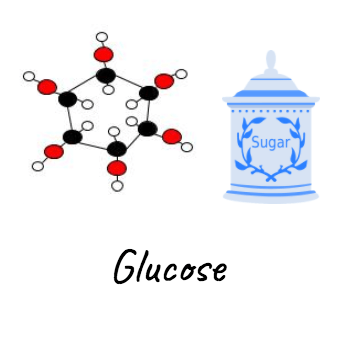
Which of these products is formed during the metabolic reactions of cellular respiration?
fructose
glucose
oxygen
water
This is an organism that obtains its energy from inorganic substances or from the sun.
Autotroph
Heterotroph
Phototroph
Hydrotroph
Autotrophs (producers) can perform photosynthesis because they have -
Mitochondria
Ribosomes
A Nucleus
Chloroplasts
Which of the following equations represents the overall chemical reaction for photosynthesis?
6O2+ 6H2O → C6H12O6+ 6O2
C6H12O6 + 6H2O→ 6O2+ 6O2
6CO2+ 6H2O→ C6H12O6+ 6O2
6O2 + 6H2O→ C6H12O6 + 6CO2

