
 Worksheets
Book (B) Unit 1 Life over Time: Lesson 1 - 5 Quiz
Total questions: 30
Worksheet time: 27mins
All living things share which of the following characteristics?
Show emotions
Reproduce
Grow & Mature
Respond to stimulus
Gravity, light, sound, & hunger are examples of __________ to which living things respond.
responses
homeostasis
stimuli
chemical reactions
Identify the characteristic: When a dog is too hot, he will sweat through his paws and pant to cool himself down.
Reproduce
Made of cells
Share similar chemicals
Homeostasis
Identify the characteristic: A tadpole will turn in to a frog.
Evolution
Reproduce
Grow and develop
Take in and use energy
The breeding of organisms for desired characteristics.
natural selection
variations
selective breeding
ancestor
The Theory of Evolution was proposed by what scientist?
Charles Darwin
Albert Einstein
Steven Hawking
Isaac Newton
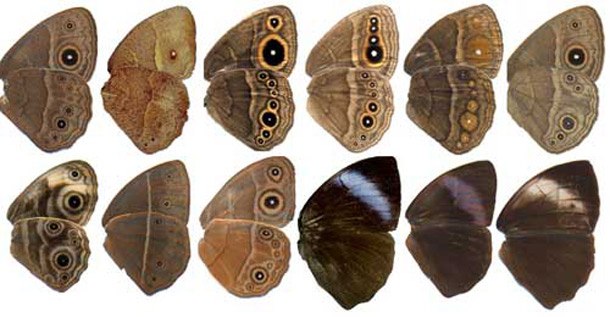
These moths are all the same species. The differences between their wings is an example of ________________
Natural Selection
Genetic Variation
Homeostasis
Extinction
Which of the following is a term for a group of similar organisms that can reproduce fertile offspring?
individual
population
species
fossil
Which is the best evidence listed for the theory of evolution
fossil record
climate change
numerical data
religious information

Which statement is correct about the evidence in this picture?
similar bones indicate a similar diet
similar bones indicate a similar habitat
similar bones indicate a common ancestor
similar bones indicate evolution happened quick


I was out fossil hunting and was lucky enough to find a fossil. Based on the geologic column, about how old would you expect my fossil to be?
25 million years (mya)
50 million years (mya)
75 million years (mya)
100 million years (mya)

The series of time divisions that mark Earth's long history.
Index fossil
Fossil record
Geologic column
Geologic timescale
Death of every member of a species
Fossil
Geologic time scale
fossil record
Extinction
Determines whether a fossil formed before or after another fossil.
Absolute dating
Relative Dating
Fossil record

Viruses can only reproduce inside a host cell.
True
False

The order of the levels of classification is:
Domain, kingdom, phylum, class, order, genus, family, species
Domain, class, kingdom, phylum, order, genus, family, species
Domain, class, kingdom, phylum, order, genus, species, family
Domain, kingdom, phylum, class, order, family, genus, species

Which kingdoms make up the domain Eukarya?
Protista, Fungi, Plantae, Animalia
Archaebacteria, Eubacteria, Protista, Fungi
Plantae, Animalia, Archaebacteria
Eubacteria, Archaebacteria
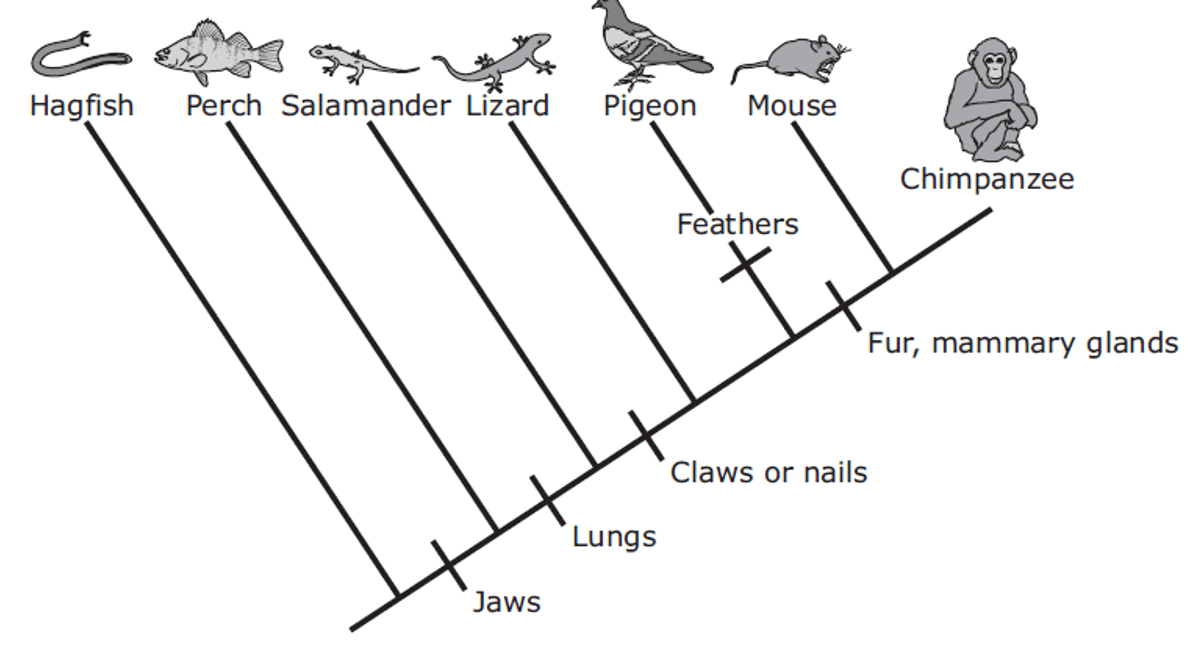
All the animals to the right of the salamander would have the common characteristic of...
Fur
Claws or nails
Lungs
Jaws

Which trait(s) do conifers have?
vascular tissue only
vascular tissue and seeds
vascular tissue, seeds and flowers
seeds only

