
 Worksheets
SCIENCE REVISION QUESTIONS
Total questions: 100
Worksheet time: 1hrs 24mins

The circulatory system is responsible for...
getting food into and out of the body and for making use of food to keep the body healthy.
the flow of blood, nutrients, oxygen and other gases, and as well as hormones to and from cells.
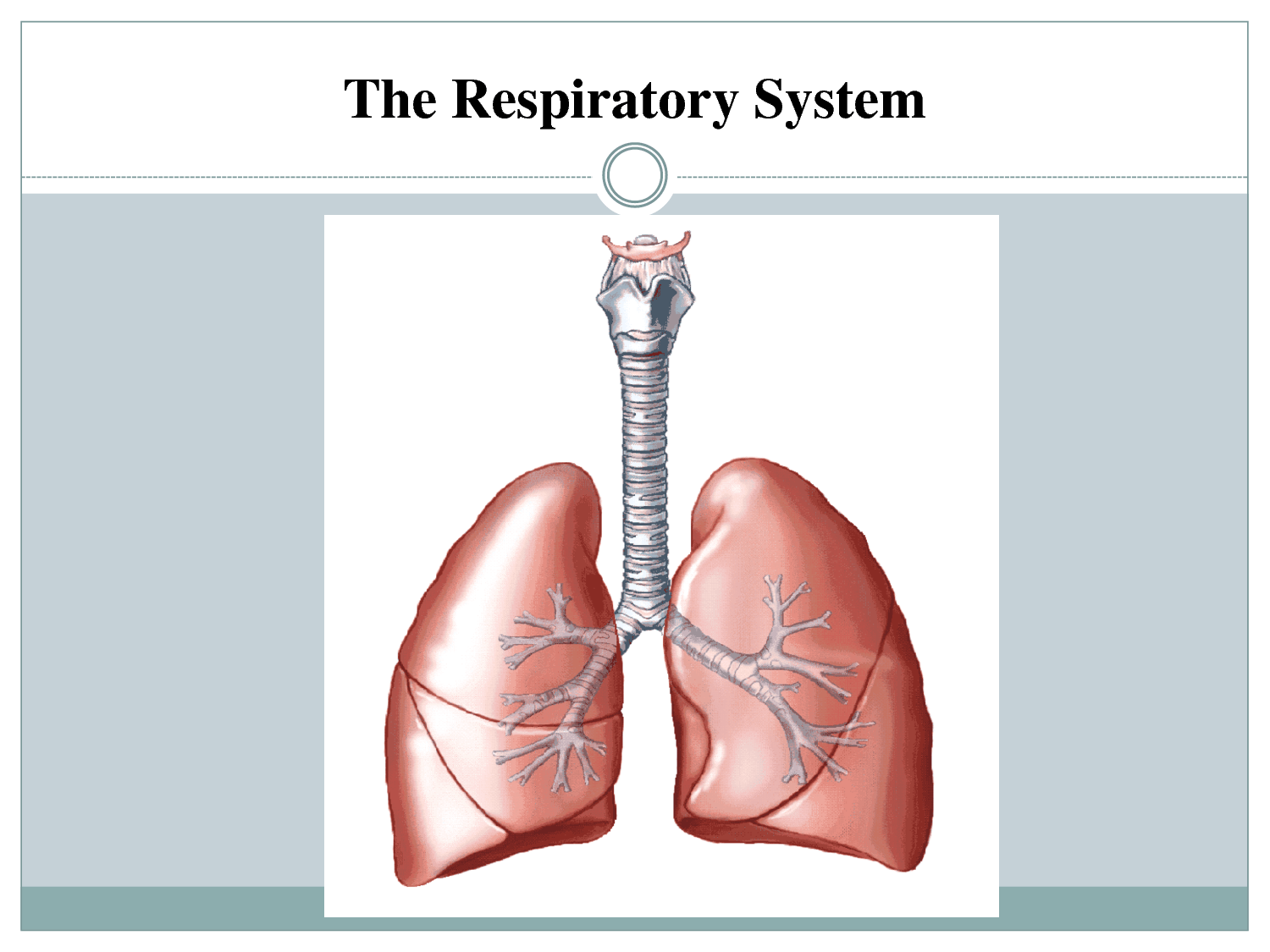
the intake and exchange of oxygen and carbon dioxide between the body and the environment and including the nasal passages, larynx, trachea, bronchial tubes, and lungs.

Arteries are...
blood vessels responsible for carrying oxygen-rich blood away from the heart to the body.
blood vessels that carry blood low in oxygen from the body back to the heart for reoxygenation.

Veins are...
two of the body's main type of blood vessels.
blood vessels that carry blood low in oxygen from the body back to the heart for reoxygenation.

Blood is made up...
by four main components, Plasma, Red Blood Cells, White Blood Cells, and Platelets.
by plasma and platelets.
by red blood cells, white blood cells.

The main organ of the circulatory system is...
veins and arteries.
the heart.
the blood.

The heart is divided in...
three atriums and two ventricles.
right and left atriums and ventricules.
pulmonary veins and aorts.
What is the main function of the circulatory system?
secrete enzymes
digest proteins
produce hormones
transport materials
Which gas is transported by the circulatory system in humans and is used by cells during respiration to release energy stored in food?
carbon dioxide
nitrogen
hydrogen
oxygen
The human body has specialized cells, such as white blood cells, to help protect it from many diseases. Describe what these specialized cells do to protect the body from the disease.
they carry oxygen
they fight and destroy germs
they give blood its color
they clot when we get a cut
The "windpipe" is also called the...
trachea
bronchi
bronchioles
alveoli


Ice cubes melting into water is an example of
chemical change
physical change

A car rusting is an example of a
physical change.
chemical change.
Which of the following changes is a physical change of matter?
water evaporating
paper burning
a nail rusting
a silver spoon tarnishing
The name of a person that studies rocks and the earth.
veterinarian
geologist
podiatrist
teacher

Name of the impression of a plant or animal, in the soil, that existed in the past
diamond
hardness
fossil
A naturally occurring solid mixture of one or more minerals or organic matter
Rock
Mineral
Glass
Gas
Rocks are classified based on
how they form
where they are found
how old they are
none of the above
Marble is a rock formed by heat and pressure. What type of rock is marble?
Igneous
Metamorphic
Sedimentary
A process in which something changes completely is
Deposition
Weathering
Erosion
Metamorphosis
The process that move sediment is
Weathering
Erosion
Deposition
Uplift

Two ways to describe types of igneous rocks are _____
Extrusive and Intrusive
Foliated and Non-Foliated
Clastic and Biochemical
Black and Gray
Several students investigate the characteristics of soil. The students observe samples of common soils. In one sample they observe that water drains through the soil easily. When they rub the soil between their fingers, it feels rough and scratchy, and its particles feel hard. The soil the students observed is most likely —
clay
silt
loam
sand
A student wants to find out which type of soil holds the most water. He uses four identical pots with holes in the bottom. He fills each pot with a different type of soil and waters the pots with the same amount of water. How can he find out how much water stays in the soil in each pot?
By planting seeds and measuring plant growth in each pot
By measuring the amount of water that drains from each pot
By observing which soil looks wettest after the water has been added to the pots
By feeling the soil before and after adding water to each pot.
Which of the following soil types has the largest particles and allows water to flow through it easily?
clay
silt
loam
sand


Which property of soil could students determine by rubbing a sample between their fingers?
The texture of the soil
The soil’s ability to support life
The color of the soil
The processes that formed the soil

Humus is ---
the dead parts of plants and animals in soil.
A food we eat with pretzels.
The tiny particles inside of soil.
The roots that come off of a plant and live in soil.
When plants, animals, and other organisms die, they break down and become part of the soil. What is this part of the soil called?
sand
silt
clay
humus

What do plants need to make their own food?
Sun, Water, and Animals
Sun, Coke, and Soil
Sun, Water, and Soil
Nothing at all
An example of a predator:
shark
mouse
rabbit
An example of prey:
lion
mouse
shark


Wearing this will control sweat and odor under your arms?
SUNSCREEN
MAKE-UP
BATHING SUITS
DEODORANT
Good Personal Hygiene will prevent disease spreading and control bacterial infections
TRUE
FALSE
Good personal hygiene helps to control all of the following EXCEPT:
viruses
germs
bacteria
food poisoning
The types of oral diseases include tooth decay, gingivitis and _________.
cavities
discharge
lice
odor
Birds eat insects off the skin of cows. If the relationship is a type of mutualism, then the organisms that will benefit are
only the cattle
neither the birds or the cattle
both the birds and the cattle
only the birds

The force that keeps us from floating off into the space is called .................
friction
mass
gravity
tension
The following force will change the shape of the objects, except ...............
pound
bend
stretch
press

When the goalkeeper catch the ball, he .........................
makes the ball move to other direction.
stops the ball from going into the net.
changes its shape.
makes the ball move faster.

An incomplete circuit is shown.
To complete the circuit, a wire should be placed from ..............
Point D to Point C
Point B to Point C
Point A to Point D
Point B to Point D
Jack wants to light a bulb. What does he need to get the bulb to lit?
A battery and a switch
A battery and a wire
A paper clip and a wire
A switch and a wire
A push or a pull that starts, stops or changes the direction of an object is called...................
force
energy
gravity
motion
If an object mass =30 kg on the Earth, what would be it's weight on Earth?
30 N
300 kg
3000N
300 N
weight is measured in...
pounds (lb)
grams (g)
newtons (N)
kilograms (kg)

What is the name of this tool?
spring balance / force meter
scale
measuring cylinder
thermometer
What is weight?
the pulling force of gravity on an object
the time it takes to get on a ride
the amount of matter in an object
the size of an object
If the weight of a body on the Earth's surface is 600 N, what would be it's weight in the space?
600 N
less than 600 N
more than 600 N
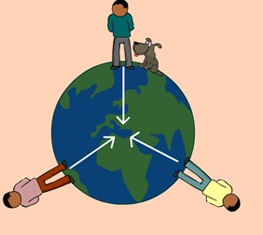

Why do astronauts feel weightlessness in space?
no contact force
they lose weight
no weight

What is another name of weightlessness?
additional gravity
zero gravity
loss of weight
When an object is partially or completely immersed in a fluid, it experiences an upthrust force which is equal to the weight of fluid displaced by it
Newton's law
Archimedes Principle
Ibn -e-batuta
Einstein
--------------- force causes water to be displaced or pushed out of the way
Upthrust
Gravitational
Friction
None
Buoyancy is the ability to
Sink
Float

A cell or battery has _____ ends?
Three
Two
Four
Five

This is the symbol for a_____.
Motor
Wire
Bell
Bulb

This is the symbol for a...
Bulb
Voltmeter
Ammeter
Motor

This is the symbol for a...
Battery
Thermistor
Motor
Fuse

What components are in this schematic diagram?
battery, switch, bulb, wire
switch, switch, bulb
battery, switch, bulb, motor
7. Choose the correct symbol of a wire.


What is the function of a switch in a circuit?
to make the current hotter or colder
to turn on and off the flow of current
to show the pathway that current flows
to add more power to the circuit
An incomplete circuit is shown.
To complete the circuit, a wire should be placed from?
point D to point C
point B to point C
point A to point D
point B to point D
An electric current requires which of the following to flow?
A closed path
A switch
An ammeter
A light bulb
What is the S.I. unit for measuring electric current?
volt
millivolt
ampere
milliampere



