
 Worksheets
AQA Space Physics 2022
Total questions: 46
Worksheet time: 35mins
Which is the correct order of celestial objects from largest to smallest
Planet, Moon, Asteroid, Star
Universe, Star, Galaxy, Moon
Galaxy, Moon, Planet, Asteroid
Galaxy, Star, Planet, Asteroid
What is the term for a vast collection of stars
Nebula
Universe
Galaxy
Parsec
Which former planet is now characterised as a dwarf planet?
Neptune
Pluto
Jupiter
Eres
What is the definition of orbit?
The spinning of the Earth on its axis
When the lit part of the moon increases
The path of a planet, moon, or other space objects travelling around a larger body
Movement of a planet around the sun
How many planets are there in our solar system?
6
7
8
9
99.85% of the mass of the solar system is found in the object(s)
Asteroid belt
Sun
Moons
Planets
What factor causes one planet to have a greater gravitational field than another?
The planets mass
The planets size
Terrestrial planets have more gravity as solid
Gas giants have more gravity as gaseous

All stars begin their life at what stage in the life cycle
Main Sequence
Nebula
Protostar
Black Dwarf

The life cycles of stars are determined by what quantity?
Mass (size)
Colour
Distance from Earth
Luminosity (brightness)

What stage follows the collapse of the core of a Red Giant
White Dwarf
Blue Supergiant
Red Supergiant
Black Hole
In which stage will a star be most dense
Neutron Star
Main Sequence
Protostar
Nebula
What is the heaviest element fused within the cores of the most massive stars
Helium (He)
Iron (Fe)
Carbon (C)
Plutonium (Pu)
What is the best description for a Red Giant?
A large, bright, cool star
A small, bright, cool star
A burnt out white dwarf star
A young star that has just started the fusion of hydrogen
What is the best description for a Black Hole?
A collapsed star so dense that light does not escape its gravitational pull.
An explosion in which some layers of a star are blown away.
A large, bright, cool star
A small, dim, hot star
Fill in the blank.
Nebula --> Main Sequence --> Red Giant --> ______________ --> Neutron Star --> Black Dwarf
Supergiant
Supernova
Black Hole
Nebula
Why will our Sun never become a black hole?
It is too massive
It is too old
It is too young
It is too small
From which stage do all elements heavier than iron originate
Red Giant
Protostar
Supernova
Main Sequence
A star is born when:
nuclear fusion starts
a nebula becomes a protostar
gases in a nebula condense
hydrogen is used up in fusion processes
When a massive star begins to cool and expand it is known as a:
Black Dwarf
Red Giant
Red Supergiant
White Dwarf
A black hole is black because:
there is nothing in it
it is too small to see
it is inherently evil
even light cannot escape its gravity
A star that has begun nuclear fusion will last for:
millions of years
a few thousand years
as long as the universe survives
forever
The stable and longest lasting period of a star’s life cycle is called:
The birth of a star
Nebula
Neutron star
Main Sequence
The combining of two or more atoms in a stars core into a new heavier atom is called what?
Fission
Fusion
Nuclear Reactions
Nucleosynthesis
What term do we use for an massive star that explodes? (These explosions are responsible for forming all atoms heavier than iron.)
Novas
Big bangs
Supernova
Thermonuclear detonation
The highly dense remains of a high mass star after a supernova. An object whose gravity is so strong that all atoms have been crushed into neutrons. What is it called?
Neutron star
Pulsar
White hole
Black hole

What are the final two stages of a star about the same size as our Sun?
white dwarf - black dwarf
neutron star - black hole
supernova - neutron star
pulsar - neutron star
After the main sequence of a star is over, a star much larger than our sun will become a ...? (clue; three words)
(a)
After the main sequence of a star is over, a star about the same size as our sun will become a ...? (clue; two words)
(a)
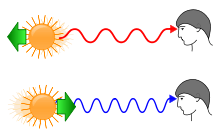
What instrument has allowed us to look deep into space to observe things far away that give us hints to the past?
The Hubble telescope
The Eiffel Tower
Binkley's barometer
The Smith Space Balloon
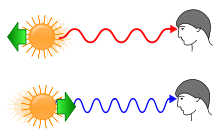

Is Galaxy A moving
Away
Towards
Stationary

What is the name of a body or object that orbits a larger body?
moon
comet
asteroid
satellite
Which two factors determine the gravitational force between two objects?
Time and temperature
Color and composition
Mass and distance
Shape and orbital speed
To find the length of the day on a different planet we would look at..
How long it takes for the planet to rotate on its axis
How long it takes for the planet to revolve around the Sun
How long it takes for the Sun to revolve around the planet
How long it takes for the Sun to rotate on its axis

