

Wayground logo

Free Printable Worksheets

Font size

S
M
L
XL
Worksheets

P103 - Weight

Total questions: 39

Worksheet time: 2hrs 8mins

Name
Class
Date
1.
What is the definition of "weight"?
a)
measure of the force of gravity on your body
b)
the time it takes to get on a ride 
c)
the amount of matter in an object
d)
the size of an object
2.
A measure of how much matter an object has is--
a)
weight
b)
gravity
c)
mass
d)
volume
3.

On which celestial object (outer space) would your mass be the greatest?

a)

Earth

b)

Jupiter

c)

Sun

d)

Your mass doesn't change on different celestial objects
4.
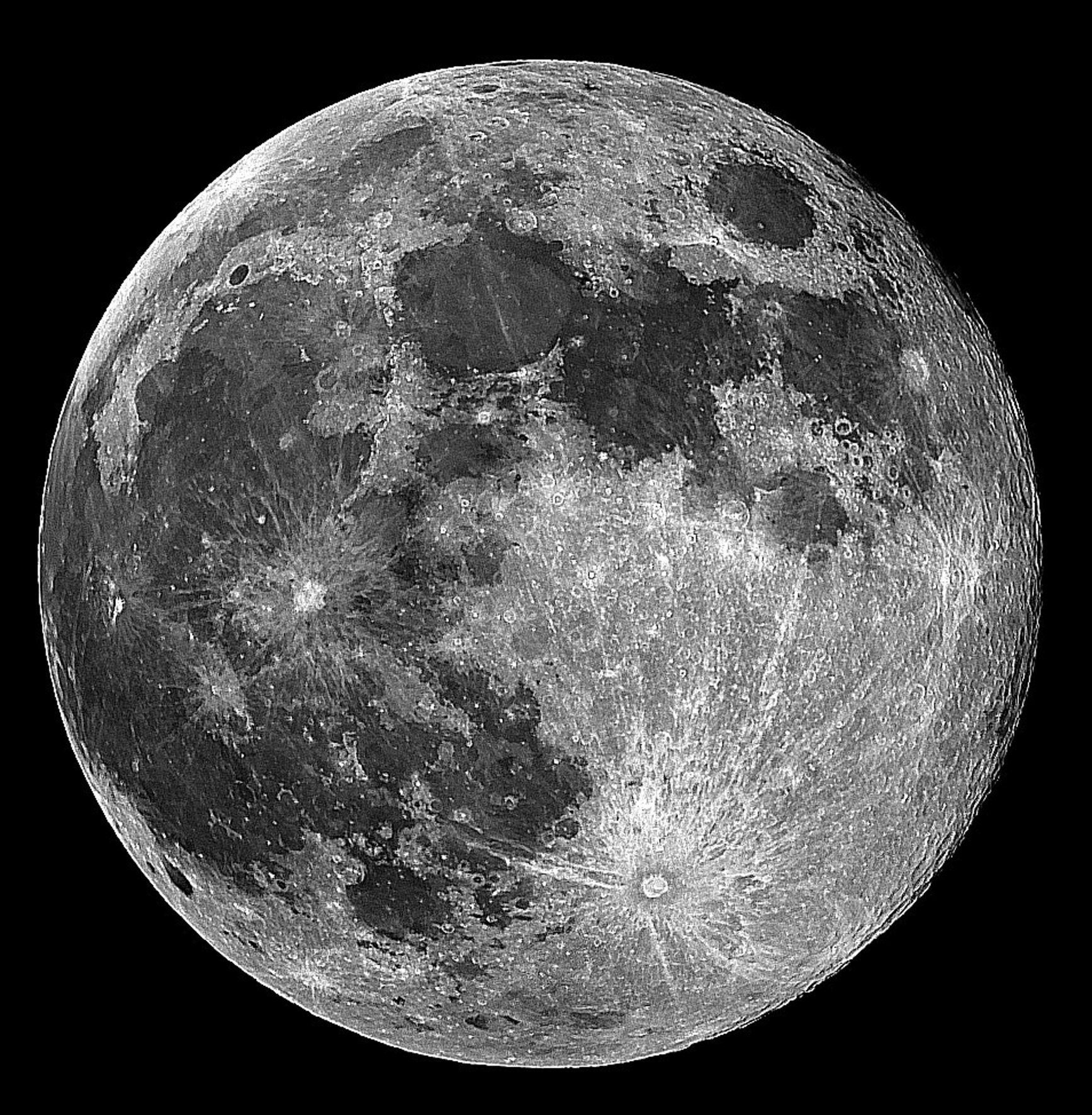
Why would you weigh less on the moon compared to Earth?
a)
less air
b)
less sunlight
c)
more gravitational pull
d)
less gravitational pull
5.
The force of gravity acting on an object is the object's ______.
a)
mass
b)
matter
c)
weight 
d)
friction 
6.
If the mass of an object is 1000 kg on Earth, what is it's mass on the moon?
a)
10kg
b)
100kg
c)
1000kg
d)
10,000kg
7.
If an object mass =30 Kg on the Earth, what would be it's weight on Earth?
a)
30 N
b)
300 kg
c)
3000N
d)
300 N
8.

The weight of a boulder on Neptune is 2,960 Newtons.  The boulder has a mass of 269 kilograms.  What is the acceleration due to gravity on Neptune?

a)
3.7 m/s/s
b)
8.9 m/s/s
c)
2.04 x 10⁶ m/s/s
d)
11 m/s/s
9.

A young girl has a mass of 40.0 kg. What is her weight in newtons?

(a)  

10.

A man weighs 800 N. What is his mass in kilograms?

(a)  

11.

A physical science text book has a mass of 2.2 kg. What is the weight on the Earth?

(a)  

12.

If your mass is 35 kg on Earth, what would you weigh on Mars (g = 3.7 m/s2)?

(a)  

13.

What will happen to your mass when you go to the moon?

a)

It will stay the same

b)

It will increase

c)

It will decrease

14.

What will happen to your weight when you go to the moon?

a)

It will increase

b)

It will decrease

c)

It will stay the same

15.

If a bike has a mass of 10.5 kg, how much does it weigh on Earth?

(a)  

16.

If you take a bike of mass 10.5 kg to Mars, where gravity is 3.71 m/s2, how much will the bike weigh there?

Give your answer to two decimal places.

(a)  

17.

If a bike of mass 10.5 kg weighs 13.02 N on Callisto, one of Jupiter's moons, what is gravity on Callisto?

(a)  

18.

The Mars Rover Curiosity weighs 8810 N on Earth. Determine Curiosity's mass.

a)

881 kg

b)

8810 kg

c)

1.13x10⁻³ kg

d)

88,810 kg

19.

A space probe on Titan has a weight of 280 N. Calculate its mass.

The gravitational field strength on Titan is 1.4 N/kg.

(a)  

20.

A space probe on Titan has a weight of 280 N. Calculate its weight on Earth.

The gravitational field strength on Titan is 1.4 N/kg.

(a)  

21.

On which celestial object (outer space) would your weight be the greatest?

a)

Earth

b)

Jupiter

c)

Sun

d)

Your weight doesn't change on different celestial objects

22.

The gravitational field strength for the Sun is 275 N/kg. How much would a man with a mass of 100 kg weigh there (before he was vapourised by the heat)?

(a)  

23.

The gravitational field strength for the Sun is 275 N/kg. How much would a man with a mass of 100 kg weigh there (before he was vapourised by the heat)?

(a)  

24.

A student has an object with a mass of 5 kg. Calculate the weight of the object.

(a)  

25.
Which of the following equations can be used to calculate weight?
a)
Weight = Mass / Velocity
b)
Weight = Mass x Gravitational field strength
c)
Weight = Mass x Force
d)
Weight = Mass / Gravitational field strength
26.
If the weight of an object is 40 N on Earth, what would be its weight on a planet with a gravitational field strength of 8 m/s²?
a)
20 N
b)
10 N
c)
32 N
d)
80 N
27.
The gravitational field strength on a distant planet is 4 m/s². If a person's weight on Earth is 600 N, what would be their weight on this planet?
a)
150 N
b)
2400 N
c)
400 N
d)
240 N
28.
Which statement accurately describes the difference between mass and weight?
a)
Mass is a measure of the amount of matter in an object, while weight is the force exerted on an object due to gravity.
b)
Mass is a measure of the force exerted on an object due to gravity, while weight is the amount of matter in an object.
c)
Mass and weight are interchangeable terms for the same concept.
d)
Mass and weight are unrelated concepts.
29.
The gravitational field strength on a planet is 15 m/s². If the mass of an object is 5 kg, what would be its weight on this planet?
a)
30 N
b)
50 N
c)
15 N
d)
75 N
30.
A person with a mass of 70 kg steps onto a scale. What would the scale read?
a)
The scale would read approximately 70 kg.
b)
The scale would read approximately 700 N.
c)
The scale would read approximately 700 kg.
d)
The scale would read approximately 70 N.
31.
If the weight of an object is 120 N and the gravitational field strength is 20 m/s², what is the mass of the object?
a)
600 kg
b)
240 kg
c)
12 kg
d)
6 kg
32.
Which of the following best describes mass?
a)
The weight of an object
b)
The force exerted on an object due to gravity
c)
The amount of matter in an object
d)
The density of an object
33.
The weight of an object on the Moon is approximately 1/6th of its weight on Earth. What would be the weight of a 60 kg object on the Moon?
a)
10 N
b)
360 N
c)
60 N
d)
100 N
34.
How does weight change as you move farther away from Earth in the universe?
a)
It depends on the mass of the object
b)
Weight remains the same
c)
Weight decreases
d)
Weight increases
35.
What is the SI unit for mass?
a)
Kilogram
b)
Newton
c)
Meter
d)
Second
36.
What happens to the weight of an object if the gravitational field strength is tripled while the mass remains the same?
a)
Weight remains the same
b)
Weight is halved
c)
Weight triples
d)
Weight doubles
37.
Which of the following scenarios would result in a decrease in weight?
a)
Moving to a location with stronger gravitational field strength
b)
Moving to a location with weaker gravitational field strength
c)
Mass of the object is doubled
d)
None of the above
38.
What is the formula to calculate weight?
a)
Weight = Mass x Gravitational field strength
b)
Weight = Mass x Force
c)
Weight = Mass / Gravitational field strength
d)
Weight = Mass / Friction
39.
Which of the following is a measure of the gravitational force exerted on an object?
a)
Density
b)
Volume
c)
Weight
d)
Mass