
Font size
 Worksheets
Electromagnetic Waves
Total questions: 29
Worksheet time: 31mins
Electromagnetic waves vary in
the speed they travel in a vacuum
wavelength and frequency
the way they reflect
the orientation of their electric and magnetic fields
Infrared rays have a shorter wavelength than
Ultraviolet ray
X-rays
gamma rays
radio waves
The full range of frequencies of electromagnetic radiation is called
visible light
the electromagnetic spectrum
radio waves
invisible radiation
The visible light spectrum ranges between
radio waves and X-rays
infrared rays and ultraviolet rays
television waves and infrared rays
ultraviolet rays and gamma rays
What happens to frequency when the energy increases?
it increases
it stays the same
it decreases
What does a wave carry?
boats
energy
matter
water
Select the correct order of waves on the EMS from low to high energy
Radio wave, Microwave, Infrared, Visible, Ultraviolet, X-ray, Gamma
Visible, Microwave, Infrared, Ultraviolet, X-ray, Gamma, Radio wave
Gamma, X-ray, Ultraviolet, Visible, Infrared, Microwave, Radio wave
Microwave, Radio wave, Visible, Infrared, Ultraviolet, X-ray, Gamma
Which of the following is true for sound waves?
They require a medium.
They are unrelated to vibrations.
They cannot travel through liquids
They can travel in a vacuum
How do electromagnetic and mechanical waves compare?
Mechanical waves can only travel through a vacuum, but electromagnetic waves can travel through a solid, liquid, or gas.
Mechanical waves can travel through a solid, liquid, or gas, but electromagnetic waves can only travel through a gas.
Mechanical waves can only travel through a solid, liquid, or gas, but electromagnetic waves can travel through a vacuum.
Mechanical waves can travel through a solid, liquid, or gas, but electromagnetic waves can only travel through a solid.
A student is measuring the distance between the crest and the rest position of both a mechanical wave and an electromagnetic wave. Which question is the student trying to answer?
What is the speed of the waves?
What is the amplitude of the waves?
What is the wavelength of the waves?
What is the frequency of the waves?
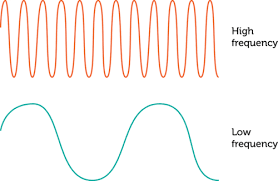
If a wave has a greater frequency, what happens to the wavelength?
increases
decreases
stays the same
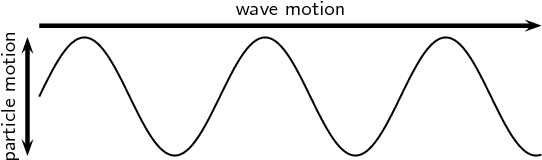
The unit to measure the wavelength of an electromagnetic wave is:
(a)
The wavelength of the visible spectrum is:
8000-4000A
4000-6000A
4000-100A
Wavelength is a characteristic that defines ___________, irrespective of its source.
colour
frequency
energy carried
1 Angstrom = 10−8 cm or 10−10 meters
True
False.
White light is
Monochromatic
Polychromatic
A prism splits white light into 7 constituent colours. In what order does this process take place?
Refraction when white light enters the prism and dispersion when it exits the prism.
Dispersion when the light enters the prism and refraction when it exits the prism.
Both refraction and dispersion happen at both points - entry and exit of light from the prism.
The velocity of light is least in _____ and highest in ________ light.
least in red, highest in violet
least in violet, highest in red
In Newton's experiment, the second prism leads to recombination of light. Which of the following best describes why?
All the 7 rays are incident upon the same point in the second prism.
Because it is a mirror action to the dispersion action in the first prism
The second prism converts the prism into a glass slab.
Persistence of vision is responsible for many things. Choose all that apply.
Newton's disc appearing as a white disc
Animation
Our seeing light for a few seconds after a firecracker has ended.
Growth of neurons
The discovery of infrared rays was made by William Herschel in 1800 AD. How did he do this?
By moving a thermometer from the violet to the red end of the spectrum. He noticed that when the thermometer went beyond the red light, there was a sudden increase in temperature. This confirmed the presence of electromagnetic radiation beyond the visible spectrum.
By moving a blackened bulb from violet to red and beyond. Since the temperature continued to rise even after crossing the red rays, he knew there was something there.
Which of these allows electromagnetic radiations of higher wavelength to pass through itself?
Glass
Rock Salt
Some of the properties are common to UV and IR rays. Mark all that apply.
They are not affected by electrical or magnetic fields.
They travel with the velocity of light.
They follow the laws of refraction and reflection.
They can be detected by a thermopile.
Mark all the uses of IR
Therapy, esp in pain relief
Special photography and night vision
Detecting diseases in crops
Detecting human and weapon presence in an area
Sterilisation of microorganisms
Mark all the uses of UV
Sterilisation of microorganisms
Stimulates the body to produce vitamin D
Detect forgery of cheques, currency, etc.
Checking adulteration of ghee and fake diamonds
Whenever electromagnetic radiation travels in space, it has:
No vector. It is carried by its own photon energy.
Two vectors - one electric and one magnetic, placed perpendicular to each other.
Two vectors - one electric and one magnetic, placed parallel to each other.
One vector - quarks, which are subatomic particles that make up photons.
When an incident ray strikes a particle, it is scattered. Which of the following conditions must be met for scattering of light to happen?
The diameter of the particle must be greater than the wavelength of the ray.
The wavelength of the ray and the velocity of the particle must be the same.
It should be either sunrise or sunset.
Which of these is the correct reason why sunsets are redder than sunrises?
At sunset, the particles in the air are smaller, so even red waves encounter small enough particles and are scattered.
At sunset, the particles in the air are larger because of dust and human activity, so even red waves encounter large enough particles and are scattered.
At sunset, the particles in the air are larger because of dust and human activity, so even violet waves encounter large enough particles and are scattered.
At sunset, the particles in the air are smaller, so even violet waves encounter small enough particles and are scattered.

