Worksheets
Homeostasis and Feedback
Total questions: 20
Worksheet time: 21mins
When glucose levels in the blood rise, your brain sends a signal to your pancreas. The pancreas releases insulin, which opens channels in cell membranes to allow glucose to enter the cell, lowering blood sugar levels. This is an example of a:
Positive Feedback Loop
Negative Feedback Loop
Which of the following scenarios describes a positive feedback mechanism?
After childbirth, high levels of prolactin induce lactation in the mother. During nursing, infant suckling triggers the release of more prolactin, which further stimulates lactation.
After eating, blood glucose levels rise, stimulating the release of insulin from the pancreas. Insulin causes cells to uptake glucose from the blood, lowering blood glucose levels.
several hours after a meal, blood glucose levels begin to drop, prompting the pancreas to secrete glucagon. Glucagon causes the liver to convert stored glycogen into glucose, raising blood glucose levels.
During exercise, an increase in body temperature causes the body to produce sweat. As the sweat vaporizes, the body cools down due to evaporative cooling.
In a negative feedback loop, what happens to a variable (like temperature) when it increases past its normal state?
It continues to increase.
It decreases until it resumes its normal state.
It decreases until it is lower than its normal state.
It does not change.
Rapid growth during puberty causes your body to release more and more growth hormones. As you grow, more and more growth hormones are released until puberty is reached, and then the hormones stop.
Positive feedback
Negative feedback
What is another word that can be used to describe "homeostasis"?
equal
complete
stable
correct
What is the point of a feedback loop?
To provide the body with more energy.
To provide the body with more food.
To make sure the conditions in the body are always changing.
To make sure the conditions in the body remain stable.
Negative feedback loops
amplify processes
prevent small changes from getting larger
are initiated during childbirth
are found only in plants
Homeostasis is described as when the body is
balanced
functioning below capacity
functioning above capacity
metabolising
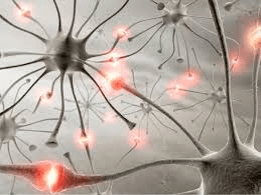
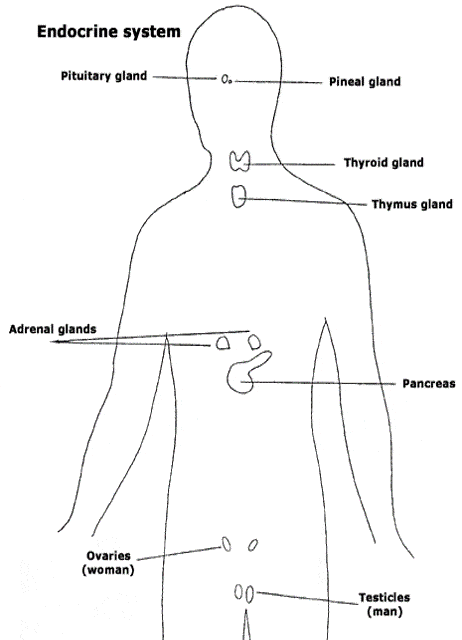
These two body systems regulate feedback mechanisms.
Skeletal & Muscular
Skeletal & Endocrine
Muscular & Nervous
Endocrine & Nervous
Feedback interactions in the human body are important because they
determine the diversity necessary for evolution to occur.
direct the synthesis of altered genes that are passed on to every cell in the body.
regulate the shape of molecules involved in cellular communication.
keep the internal body environment within its normal range.
What are the levels of organization starting from simple to complex?
cells- tissues- organs- organ systems- organisms-
organisms- organ systems- organs- tissues- cells
cells- organs- tissues- organ systems-
tissue- cells- organs- organ systems- organisms-