
 Worksheets
The Level 100 Riddles
Total questions: 45
Worksheet time: 1hrs 20mins

Look at this picture. Can you find the illusion in this block?
The square is cut in half
The pillar is just only 3
There is nothing wrong in this block
The 3 pillar is not standing right, but is twisting
What is an optical illusion?
A really cool drawing.
A picture of something you can't explain.
Something that tricks your mind and your eyes into believing something is happening when it really is not.
It is something similar to a landscape.

is the 2d or 3d
2d
3d
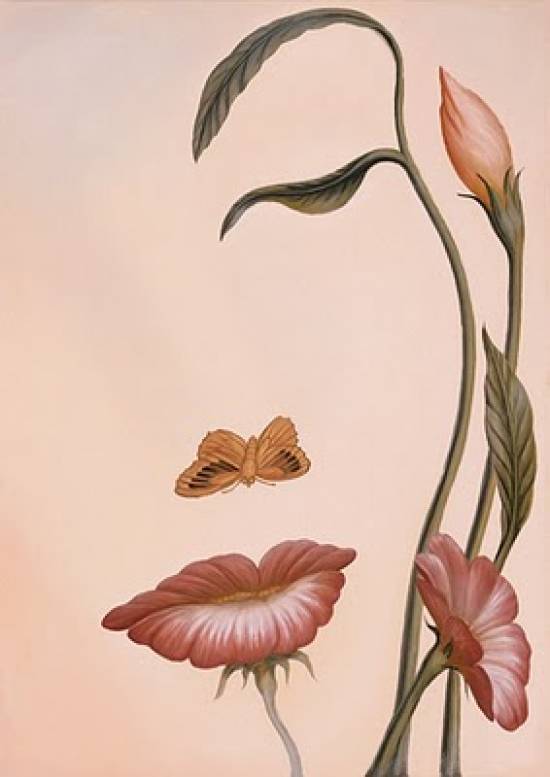
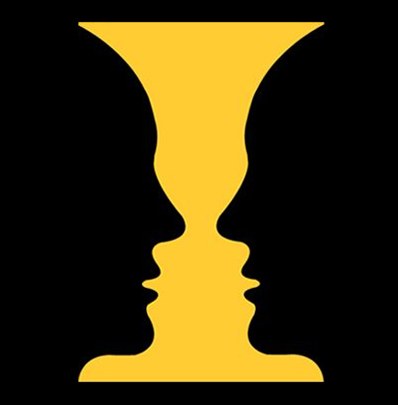

Illusions occur when:
a person does not take into consideration all
aspects of a sensation
a sensation becomes physically distorted
perception consistently differs from objective
reality
there is a failure in the biological processing
of a stimulus.

What type of optical illusion is this?
Literal
Physiological
Cognitive

What type of optical illusion is this?
Literal
Physiological
Cognitive

Which line is longer?
Top
Bottom
Both the same length.
Choose the geometric shapes below.
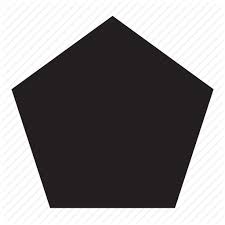


Choose the abstract shape below.

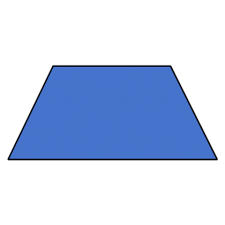

Choose the pictures that show parallel lines.


Does this picture just have black circles or are they holes?
Black circles
holes

How many legs do you see on this elephant
8 legs
4 legs
6 legs
7 legs

What do you see?
A man's face
A woman reading a book
Both
What do illusions use to trick you?
Light
Patterns
Colors
All of the above

Tree
Gorilla
Lion
Fish

What is the Illusion?
13 Flavors
BR of Baskin Robbins
31 Flavors
Other

Is this moving?
Yes
No

Does this illusion make you fell like it is spinning?
No. Because the vorteks is actually a two tunnels.
Yes, because this illusion is make you fell you were spinning
No. Because is not actually a vorteks and two tunnel. Is actually a two holes were spinning in going circle.
No. The two holes are combine into one and the vorteks is not a vorteks

its shapes, design or images that make you see things differently, called...
Eyes illusion
Optical illusion
Optical illusions occur when there is an....
Error in how the brain interprets
Error what the eyes are seeing
Which picture can be categorized as optical illusion ?


Can you see the four circle?
Yes
No

Look at this picture. What is something hidden in this illusion?
That each "brick" is surrounded by a colour in between the dark and light colour of the "bricks".
That each "brick" is surrounded by the grey line, so a colour in between the dark and light colour of the "bricks".
That each "brick" is surrounded by the grey line, so a colour in between the dark and of the "bricks".
Each "brick" is surrounded by the grey line, so a colour in between the dark and light colour of the "bricks".
What is a Muller-Lyer illusion?
The Muller-Lyer illusion is a well-known optical illusion in which two lines of the same length appear to be of different lengths
The Muller-Lyer illusion is a well-known optical illusion in which makes us see the illusion are moving
The Muller-Lyer illusion is a well-known optical illusion in which two lines of the same length appear to be of different speed
The Muller-Lyer illusion is a well-known optical illusion in which two lines of the same length that we think the left/right are not the same length
How many types of optical illusions are there?
One
Two
Three

What type of optical illusions is this?
Literal
Physiological
Cognitive

The Müller-Lyer Illusion is one in which we
mistakenly think that one parallel line is longer
than the other because of the pattern on the end
of each of the lines. The best description of the
illusion is that:
the line with the arrowheads on the ends is
perceived to be shorter than the line with the
feather-tails on the ends
the line with the arrowheads on the ends is
perceived to be longer than the line with the
feather-tails on the ends
the two lines are perceived to be the same
length but at different distances from us
the two lines are perceived to be the average
length of the outermost and innermost
measurements.

The Ponzo Illusion is a visual illusion of:
curvature
depth and distance
size and shape
motion.
Illusions occur when:
a person does not take into consideration all
aspects of a sensation
a sensation becomes physically distorted
perception consistently differs from objective
reality
there is a failure in the biological processing
of a stimulus.
The Müller-Lyer Illusion is one in which we
mistakenly think that one parallel line is longer
than the other because of the pattern on the end
of each of the lines. The best description of the
illusion is that:
the line with the arrowheads on the ends is
perceived to be shorter than the line with the
feather-tails on the ends
the line with the arrowheads on the ends is
perceived to be longer than the line with the
feather-tails on the ends
the two lines are perceived to be the same
length but at different distances from us
the two lines are perceived to be the average
length of the outermost and innermost
measurements.
The Ponzo Illusion is a visual illusion of:
curvature
depth and distance
size and shape
motion.

The Ames Room provides an illusion because
of our familiarity with the rectangular shape of
rooms. It occurs because we:
maintain size constancy at the expense of
shape constancy
maintain shape constancy at the expense of
size constancy
perceive that size and shape constancies
are maintained
perceive that neither size nor shape
constancy is maintained.

‘Motion after-effect’ is an illusion of movement
caused by:
reduced activity in motion-detecting
neurons
increased activity in motion-detecting
neurons
maintenance of motion constancy
perceptual set caused by expectancy.

MAEs may occur:
only in vision
in vision and the tactile sense
in vision, tactile senses and hearing
in all senses.

These two faces of a cube:
are the same shade
are different shades of grey
change depending on the angle from which you view them
are actually blue and black

This illusion uses the gestalt principle of
proximity
similarity
closure
camouflage

This illusion confuses the brain's use of
linear perspective
shape constancy
texture gradient
size constancy

These parallel lines were first observed
on tiles at the front of a cafe
on the walls at the subway
in an artwork by M.C. Escher
In an ink blot psychology test
These parallel lines were first observed
on tiles at the front of a cafe
on the walls at the subway
in an artwork by M.C. Escher
In an ink blot psychology test

Look at this cube. What is something wrong in this cube?
(a)
Answer This Riddle.
"When you take the whole from me, there still some left. What am I ?"
(a)
Answer this riddle.
"You will always find me in the past.
I can be created in the present, but the future can never taint me.
What am I ?
(a)

