wayground logo

Free Printable Worksheets

Font size

S
M
L
XL
Worksheets

RNA Structure and Protein Synthesis

Total questions: 142

Worksheet time: 2hrs 11mins

Name
Class
Date
1.
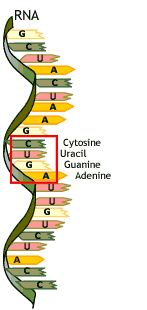
I am single stranded.
a)
DNA
b)
RNA
c)
Both DNA and RNA
2.
I am a nucleic acid.
a)
DNA
b)
RNA
c)
Both DNA and RNA
3.
I am arranged as a double helix or "twisted ladder."
a)
Both DNA and RNA
b)
DNA
c)
RNA
4.
I have the sugar ribose.
a)
RNA
b)
DNA
c)
Both DNA and RNA
5.
I have the sugar deoxyribose.
a)
RNA
b)
DNA
c)
Both DNA and RNA
6.
I include the bases guanine, cytosine, and adenine.
a)
DNA
b)
RNA
c)
Both DNA and RNA
7.
I have the base thymine.
a)
Both DNA and RNA
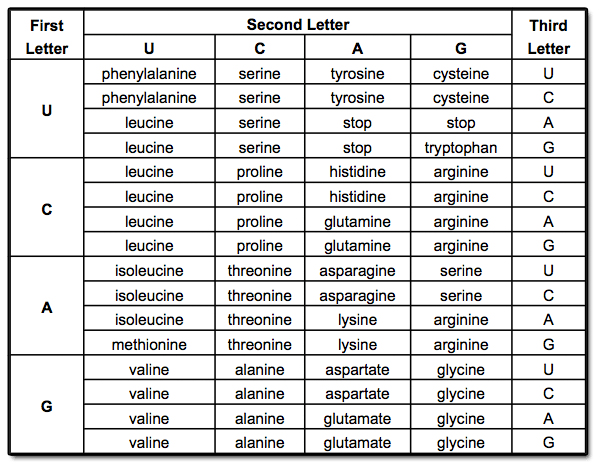
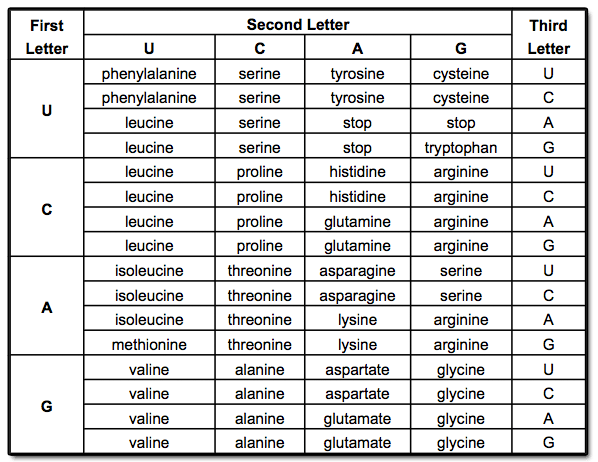
b)
RNA
c)
DNA
8.
I have the base uracil.
a)
RNA
b)
DNA
c)
Both DNA and RNA
9.
Which sequence of DNA bases would pair with this partial strand
ATG TGA CAG
a)
ATG TGA CAG
b)
TAC ACT GTC
c)
GTA AGT GAC
d)
CAT TCA CTG
10.
Guanine bonds with ______________.
a)
Adenine
b)
Guanine
c)
Cytosine
d)
Thymine
11.
Why is DNA important?
a)
it is very small and very complicated
b)
it's in everything
c)
it serves as the blueprint for traits of all living things
d)
because we eat it every day for energy
12.
What are the three components of a nucleotide?
a)
sugar, hydrogen, nitrogen base
b)
sugar, oxygen, nitrogen base
c)
sugar, phosphate, nitrogen base
d)
sugar, phosphate, protein
13.
A process in which DNA has the unique ability to make an exact copy of itself.
a)
Replication
b)
Translation
c)
Transcription
14.
The following picture must be
a)
DNA because it's double stranded
b)
RNA because it's single stranded
c)
DNA because it's single stranded
d)
RNA because it's double stranded
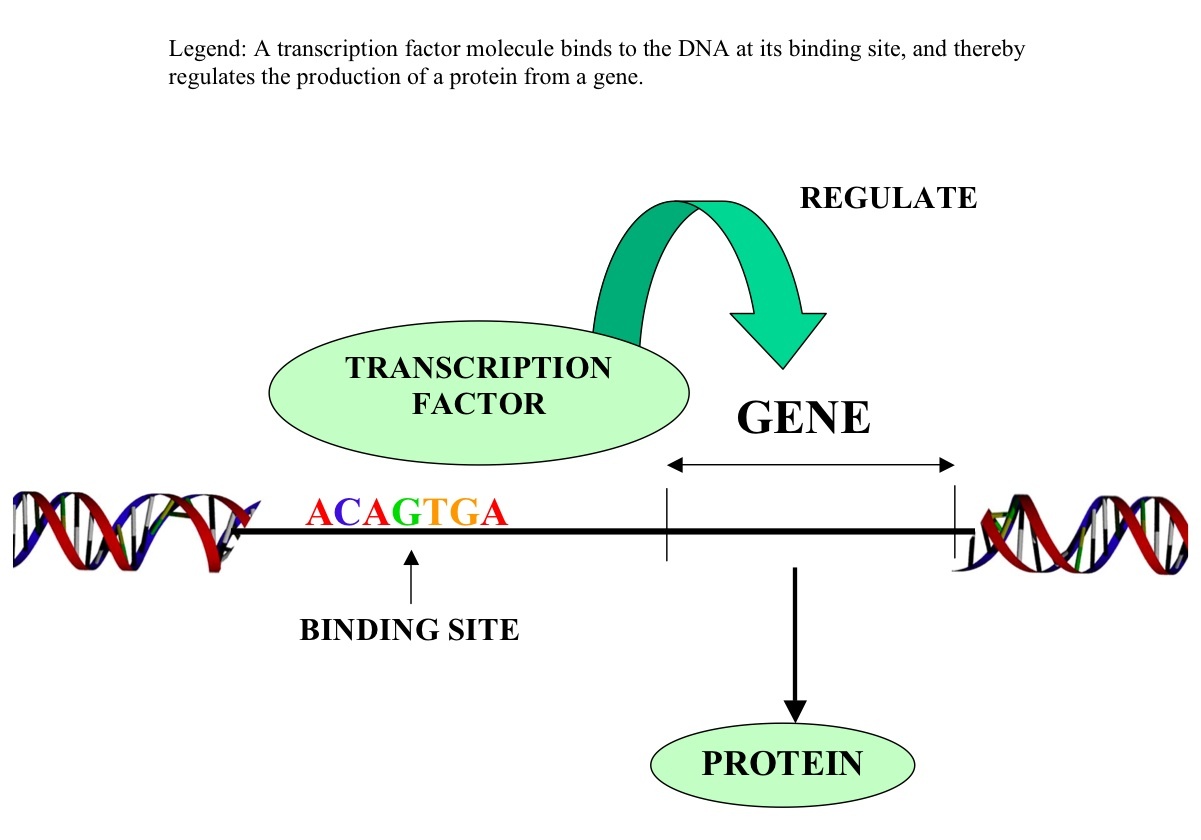
15.
What does this picture represent?
a)
amino acid
b)
base pairing
c)
nucleotide
d)
the DNA molecule
16.

Adenine (A) bonds with ______________.

a)

Guanine (G)

b)

Thymine (T)

c)

Cytosine (C)

d)

Adenine (A)

17.

What is the job of ribosomes?

a)

make proteins

b)

store energy

c)

create covalent bonds

d)

create hydrogen bonds

18.

What is the matching nitrogen base sequence for the gene below?

A-

T-

C-

a)

T-

G-

T-

b)

G-

C-

A-

c)

T-

A-

G-

19.

Which organelle is DNA usually found in?

a)

cell membrane

b)

vacuole

c)

chloroplast

d)

nucleus

20.

Which image is DNA?

a)
b)
c)
21.
the process of making a copy of DNA
a)
transcription
b)
double helix
c)
DNA replication
d)
replication fork
22.
When DNA makes a copy of itself, the new strands are identical or different?
a)
identical
b)
different
23.

Which of following matches with Cytosine?

a)

Adenine

b)

Thymine

c)

Guanine

d)

Uracil

24.

Which of the following is NOT a base in RNA?

a)

Adenine

b)

Thymine

c)

Uracil

d)

Cytosine

25.
A process in which DNA has the unique ability to make an exact copy of itself.
a)
Replication
b)
Translation
c)
Transcription
26.
Which sequence of DNA bases would pair with this partial strand
ATG TGA CAG
a)
ATG TGA CAG
b)
TAC ACT GTC
c)
GTA AGT GAC
d)
CAT TCA CTG
27.
Which of the following best describes a DNA molecule?
a)
double helix
b)
contains ribose
c)
made of amino acids
d)
contains Uracil
28.
Which of the following units are repeatedly joined together to form a strand of DNA?
a)
amino acids
b)
nucleotides
c)
fatty acids
d)
polysaccharides
29.
Guanine bonds with ______________.
a)
Adenine
b)
Guanine
c)
Cytosine
d)
Thymine
30.
What are the three components of a nucleotide?
a)
sugar, hydrogen, nitrogen base
b)
sugar, oxygen, nitrogen base
c)
sugar, phosphate, nitrogen base
d)
sugar, phosphate, protein
31.

There are 3 types of RNA. What are they? (Select all that apply)

a)

tRNA

b)

rRNA

c)

mRNA

d)

xRNA

32.
RNA contains the sugar
a)
ribose
b)
deoxyribose
c)
glucose
d)
lactose
33.
Which of the following statements is true?
a)
DNA is single-stranded
b)
RNA is single-stranded
c)
DNA contains uracil
d)
RNA contains deoxyribose
34.
What is the product of translation?
a)
DNA
b)
mRNA
c)
tRNA
d)
proteins
35.

The Process of creating RNA from DNA

a)

Transcription

b)

Translation

c)

Replication

36.

In RNA the base T is replaced with

a)

U

b)

G

c)

C

d)

A

37.

What combines together to make a protein?

a)

Amino Acid

b)

RNA

c)

Ribosome

d)

DNA

38.

What organelle is the site of translation?

a)

Nucleus

b)

Ribosome

c)

Mitochondria

d)

Chloroplast

39.

What is the order for Protein Synthesis?

a)

Transcription -> Translation -> Protein

b)

Translation - > Transcription -> Protein

c)

Protein -> Transcription -> Translation

d)

Translation -> Protein -> Transcription

40.
Which type of RNA takes the instructions from the nucleus to the cytoplasm?
a)
mRNA
b)
tRNA
c)
rRNA
d)
RNA polymerase
41.
What is the product of transcription?
a)
DNA
b)
mRNA
c)
tRNA
d)
proteins
42.
What is the template for mRNA?
a)
DNA
b)
tRNA
c)
rRNA
d)
proteins
43.

Carries the amino acid used to make a protein

a)

mRNA

b)

rRNA

c)

tRNA

44.

Factory for making a protein

a)

mRNA

b)

rRNA

c)

tRNA

45.

What type of RNA is shown in this image?

a)

rRNA

b)

mRNA

c)

tRNA

46.

What type of RNA is shown in this image?

a)

rRNA

b)

mRNA

c)

tRNA

47.

This image shows a picture of a ribosome - what type of RNA is this?

a)

rRNA

b)

mRNA

c)

tRNA

48.

What do we call the shape a DNA molecule takes?

a)

double-stranded

b)

double helix

c)

sugar-phosphate backbone

d)

pentagon

49.

Which of the following tells the Ribosome to STOP?

a)

UAC

b)

UGG

c)

UGA

d)

UCA

50.

Which of the following tells the Ribosome to START?

a)

AUG

b)

UGG

c)

UGA

d)

UCA

51.

In what process is mRNA synthesized?

a)

Transcription

b)

Translation

c)

DNA Replication

d)

Mitosis

52.

Where does TRANSCRIPTION occur?

a)

Nucleus

b)

Ribosome

c)

Cytoplasm

d)

Mitochondria

53.

Why must transcription occur where DNA can be found?

a)

because DNA can't leave

b)

because ribosomes are in the nucleus

c)

because DNA polymerase is found there

d)

because helicase unzips the DNA

54.

How many nucleotides equal 1 amino acid?

a)

1

b)

2

c)

3

d)

4

55.

A polypeptide is a sequence of ____________________ held together by a ______________ bond.

a)

amino acids; peptide

b)

fatty acids; ionic

c)

proteins; hydrogen

d)

fatty acids; covalent

56.

TRANSCRIBE this DNA sequence: TACGTTACT

a)

AUGCAAUGA

b)

ATGCAATGA

c)

AUGGATUGA

d)

TACGTTACT

57.

TRANSLATE this RNA sequence: AUGCAAUGA

a)

Met-Glu-Stop

b)

Met-His-Stop

c)

Thr-Glu-Stop

d)

Thr-Pro-Stop

58.
Does the order of amino acids in a protein matter?
a)
YES!
b)
NO!
59.
A sugar, a phosphate group, and a nitrogen base form the building blocks of which organic compound?
a)
carbohydrates
b)
nucleic acids
c)
lipids
d)
proteins
60.
Which of the following is the template for the production of RNA within a cell?
a)
DNA
b)
protein
c)
ATO
d)
carbohydrate
61.
Which of the following best describes how DNA and RNA are similar?
a)
they both contain A and T
b)
They both have a double helix
c)
They are both composed of 5 different nucleotides
d)
they both have C and G
62.
The DNA sequence ATCAGCGCTGGC is part of a gene. how many amino acids are coded for by this message?
a)
4
b)
8
c)
12
d)
20
63.
Choose the nucleotide sequence of the RNA strand that would be complementary to the following strand: 
GTAGTCA
a)
UATUAGA
b)
ACGACTG
c)
CAUCAGU
d)
CATCAGT
64.
The central dogma of biology states that information flows in one direction from 
a)
nuclei to RNA to cytoplasm
b)
ribosomes to proteins to DNA
c)
genes to nuclei to ribosomes
d)
DNA to RNA to proteins
65.
In RNA, Uracil pairs with ______. 
a)
cytosine
b)
adenine
c)
guanine
d)
thymine
66.
What amino acid is represented by the codon UUA?
a)
Phenylalanine
b)
Tyrosine
c)
Leucine
d)
Stop codon
67.
What are the backbones (sides) of the DNA structure made up of?
a)
repeating phosphates and sugars
b)
nitrogen bases
c)
nucleotides
d)
adenine and thymine
68.
Which is the mRNA molecule that would be transcribed from this DNA template:
TGGCAAGTACGT
a)
ACCGTTCATGCA
b)
UGGCAAGUACGU
c)
UCCGUUCUUGCU
d)
ACCGUUCAUGCA
69.
What is the correct amino acid sequence for the mRNA code AUGCCAGUAUGA
a)
Met-Pro-Ala-Val
b)
Met-Pro-Val
c)
Tyr-Gly-His
d)
Tyr-Gly-Arg-His
70.

When the mRNA sequence leave the nucleus, what organelle does it travel to?

a)

mitochondria

b)

smooth ER

c)

ribosome

d)

vacuole

71.

What best explains the interaction between tRNA and mRNA during translation?

a)

anticodons on the mRNA line up with complementary codons on the tRNA

b)

anticodons on the tRNA line up with complementary codons on the mRNA

c)

tRNA attach amino acids to the complementary mRNA sequence

d)

mRNA attach amino acids to the complementary tRNA sequence

72.

What does tRNA "transfer"?

a)

amino acids

b)

nucleic acids

c)

nucleotides

d)

AUG

73.

What do amino acids come together to join?

a)

a growing polypeptide chain (protein)

b)

a growing lipid

c)

a growing carbohydrate

d)

a growing nucleic acid

74.

A polypeptide only becomes a functioning protein after it has folded into its exact 3D shape.

a)

True

b)

False

75.

codons are located on __________

a)

mRNA

b)

tRNA

c)

rRNA

d)

snRNA

76.

anti-codons are located on __________

a)

mRNA

b)

tRNA

c)

rRNA

d)

snRNA

77.

How many nucleotides make up a single codon?

a)

3

b)

5

c)

4

d)

1

78.

A mRNA sequence consist of 171 nucleotides. How many amino acids make up the protein this sequence will code for?

a)

57

b)

56

c)

58

d)

513

79.

What sequence of mRNA always begins a new polypeptide chain?

a)

UAG

b)

AUG

c)

GAU

d)

UGA

80.

How many codons code for phenylalanine?

a)

2

b)

3

c)

4

d)

1

81.

The following codon is translated into which amino acid?


AUG

a)

Methionine

b)

Isoleucine

c)

Histidine

d)

Arginine

82.

The following codon is translated into which amino acid?


AUU

a)

Methionine

b)

Isoleucine

c)

Histidine

d)

Arginine

83.

The following codon is translated into which amino acid?


CAU

a)

Methionine

b)

Isoleucine

c)

Histidine

d)

Arginine

84.

The following codon is translated into which amino acid?


AGG

a)

Methionine

b)

Isoleucine

c)

Histidine

d)

Arginine

85.

The following codon is translated into which amino acid?


UUU

a)

STOP

b)

Phenylalanine

c)

Valine

d)

Aspartic acid

86.

The following codon is translated into which amino acid?


UAA

a)

STOP

b)

Phenylalanine

c)

Valine

d)

Aspartic acid

87.

What is splicing

a)

Introns are removed and exons are joined in a defined order

b)

Intron are joined in a defined order and exon is removed

c)

Both intron and exon are removed

d)

Both intron and exon are added

e)

Introns are removed and exons are joined randomly

88.

The enzyme ____ connects the strands of DNA after replication.

a)

DNA Ligase

b)

DNA Helicase

c)

RNA Ligase

d)

DNA Polymerase

89.

These responsible for the general body pattern of most animals:

a)

introns

b)

Okazaki Fragments

c)

Hox Genes

d)

exons

90.

This is a permanent change that occurs in a cell’s DNA:

a)

operon

b)

intern

c)

intron

d)

mutation

91.

This is complementary to codon of mRNA (found on tRNA):

a)

anticodon

b)

lagging strand

c)

Okazaki fragment

d)

antiparallel

92.

This acts like an “operator” - it contains genes for a metabolic pathway:

a)

intron

b)

operon

c)

exon

d)

None of the responses are correct

93.

These are the special proteins in DNA:

a)

histones

b)

exons

c)

nucleosomes

d)

chromatins

94.

A DNA segment is changed from -AATTAGAAATAG- to -ATTAGAAATAG-. This is a ____.

a)

Inversion (both sequences are complimentary to each other)

b)

Frameshift Mutation (the second A in the original sequence was deleted- causing the "reading" of the whole sequence to change)

c)

Insertion (the second t in the original sequence was added)

d)

Translation (the last G in the original sequence was modified)

95.

A DNA segment is changed from-AATTAG- to -AAATAG-. This is a ____.

a)

Frameshift mutation (changes "reading" of entire sequence)

b)

Frameshift mutation (changes "reading" of entire sequence)

c)

Insertion (the third letter of the sequence is added to the original 6 base sequence)

d)

Substitution (the third letter of the sequence changes from a T to an A)

96.

This is the process of assembling proteins:

a)

duplication

b)

transcription

c)

translation

d)

retrocation

97.
What is a peptide bond?
a)
Bond that holds two amino acids together.
b)
A bond that holds hydrogen and oxygen molecules together.
c)
A bond that holds the phosphate group of one nucleotide and a sugar of a neighboring nucleotide.
d)
A bond that is formed by the sharing of electrons.
98.
The structure of proteins can be changed by environmental factors such as temperature or pH.
a)
True
b)
False
99.
When a protein unfolds, it is
a)
Denatured
b)
Building
c)
Adding amino acids
d)
Making food
100.
The primary sequence of a protein refers to the:
a)
Order of amino acids
b)
α-Helix or β-Pleated Sheet
c)
Interaction of subunits
d)
Hydrogen Bonding
101.
How many structures or stages are there in proteins?
a)
1
b)
2
c)
3
d)
4
102.
The two types of folding in the secondary structure are.....
a)
alpha-helix & beta-pleated sheets
b)
polypeptide & nucleotide
c)
globular & fibrous
103.
What gives a protein its unique shape?
a)
the unique sequence of amino acids in its polypeptide chain
b)
the unique folding due to the sequence of amnio acids in the polypeptide chain
c)
hydrogen bonding & unique interactions between the 'R' groups
d)
all of these
104.
The name of the initial chain of monomers in a protein is called.....
a)
polypeptide
b)
polysaccharide
c)
polyester
d)
polynucleotide
105.

which of the following terms refers to the order in which amino acids are linked together in a protein.

a)

Primary

b)

Secondary

c)

Tertiary

d)

Quaternary

106.

The chain of amino acids folds and coils on itself

a)

Primary

b)

Secondary

c)

Tertiary

d)

Quaternary

107.

The entire polypeptide forms a three-dimensional structure

a)

Primary

b)

Secondary

c)

Tertiary

d)

Quaternary

108.

Two or more polypeptides attached together and work as one unit

a)

Primary

b)

Secondary

c)

Tertiary

d)

Quaternary

109.
Any change in the sequence of DNA is...
a)
transgenic shift
b)
Single Genotype
c)
Monohybrid Trait
d)
Mutation
110.
What type of gene mutation has occurred here? Normal-
AGA-TTC-ATA-GCG
Mutant-
AGA-TTC-AAT-AGC-G
a)
deletion frameshift
b)
insertion frameshift
c)
substitution
d)
nonsense
111.
What type of gene mutation has occurred here? 
T-G-A-C-C-A
T-G-A-C-C-A-A
a)
Base Substitution
b)
Base Deletion
c)
Base Insertion
d)
Frameshift 
112.
Where do mutations occur?
a)
DNA and RNA
b)
DNA 
c)
RNA
d)
mRNA and tRNA
113.
A type of substitution in which no amino acids change is called 
a)
Missense
b)
Nonsense
c)
Silent
d)
Deletion
114.
What is the correct mRNA strand from this DNA?
CAC-GTG-ACA-GCG
a)
GTG-CAC-TGT-CGC
b)
CAC-GUG-ACA-GCG
c)
GUG-CAC-UGU-CGC
115.
In a molecule of double-stranded DNA, the amount of Adenine present is always equal to the amount of
a)
cytosine
b)
guanine
c)
thymine
d)
uracil
116.
Are all mutations bad?
a)
Yes
b)
No
c)
Maybe?
117.
What mutation has occurred here? 
T-G-A-C-C-A
T-G-A-G-C-A
a)
Substitution
b)
Deletion
c)
Insertion
d)
Frameshift 
118.

What type of mutation happens to just one base.

a)

Chromosome Mutation

b)

Point Mutation

c)

DNA Mutation

d)

Deletion Mutation

119.

What point mutation changes one base?

a)

Substitution

b)

Insertion

c)

Deletion

120.

What point mutation adds one base?

a)

Substitution

b)

Deletion

c)

Insertion

121.

What point mutation removes one base?

a)

Deletion

b)

Insertion

c)

Substitution

122.

What is it called when a point mutation messes up several amino acids?

a)

Chromosomal Mutation

b)

Reading Frame Mutation

c)

Frameshift Mutation

d)

Amino Acid Mutation

123.

What is it called when a point substitution mutation has no effect?

a)

Substitution Mutation

b)

No Mutation

c)

Silent Mutation

124.

What is a mutation?

a)

A change in a chromosomal region.

b)

A negative change in the nucleotide sequence of DNA.

c)

A change in one base pair in DNA.

d)

Any change in the nucleotide sequence of DNA.

125.
what is an operon?
a)
a part of a ribsome
b)
a part of a Rna
c)
a unit made up of linked genes that code for proteins needed to do a specific task
d)
needed for dna replication
126.
A protein that binds to the operator and blocks the RNA polymerase
a)
regulator
b)
repressor
c)
activator
d)
corepressor
127.
The "on/off" switch for an operon is called the
a)
promoter
b)
repressor
c)
operator
d)
gene
128.
What is the name of the stretch of DNA where RNA polymerase binds?
a)
operator
b)
promoter
c)
enhancer
d)
origin
129.
What is the role of operons in prokaryote gene expression?
a)
It makes the genes prokaryotes be turned on
b)
It accounts for the regulation of gene activity in response to the needs of the cells
c)
To make DNA for the gene
d)
To make the gene turn of and off
130.
The lac operon genes only become expressed if:
a)
lactose binds to the repressor
b)
glucose binds to the repressor
c)
lactose binds to the operator
d)
the repressor binds to the operator
131.
In the lac operon model the genes within the operon will be expressed if:
a)
lactose is absent in the cell
b)
glucose is present in the cell
c)
lactose is present in the cell
132.
Inducible negative control is when when the gene is transcribed by the ____ of a specific molecule
a)
presence
b)
absence
133.
Repressible negative control is when when the gene is transcribed by the ____ of a specific molecule
a)
presence
b)
absence
134.
What type of operon is the trp (tryptophan) operon?
a)
inducible
b)
repressible
c)
positive control
d)
promoible
135.
Operons are found in the cells of which of the following types of organisms?
a)
prokaryotes (bacteria)
b)
eukaryotes (plant and animals)
c)
animals only
d)
viruses
136.
How can a person's muscle cells have the same exact DNA sequences as their nerve cells even though the look and perform completely different?
a)
The two different cells become mutated
b)
The proteins expressed in each cell are different
c)
They actually have different DNA in the two types of cells.
d)
The genome of the different cells changes
137.
In eukaryotes, proteins that help the RNA polymerase bind to the regulatory region for transcription are called ____________.
a)
transcription factors
b)
topoisomerase
c)
regulatory genes
d)
activators
138.
A protein that binds to the operator and blocks the RNA polymerase
a)
regulator
b)
repressor
c)
activator
d)
corepressor
139.
In eukaryotes, a cluster of proteins that assemble on the promoter is called the
a)
transcription initiation complex
b)
control element
c)
activator
d)
protein blobby thing
140.
All of the following are true about DNA methylation EXCEPT
a)
takes place on the DNA
b)
enzymes add a methyl group
c)
when it occurs, transcription is more likely to occur
d)
chromatin becomes more tightly packed
141.
A substance that can cause a change in the DNA code of an organism is called a 
a)
toxin
b)
mutagen
c)
nitrogenous base
d)
nucleotide
142.
Blocking gene expression in eukaryotes with microRNA strands is called RNA
a)
transcription
b)
translation
c)
interference
d)
digestion