
 Worksheets
ENV SCI Chapter 2- Tools of ENV SCI
Total questions: 35
Worksheet time: 1hrs 4mins
Calculate the MEAN for the data set: 6, 7, 12, 8, 7, 4, 8, 8, 7
7
7.44
8
7 and 8
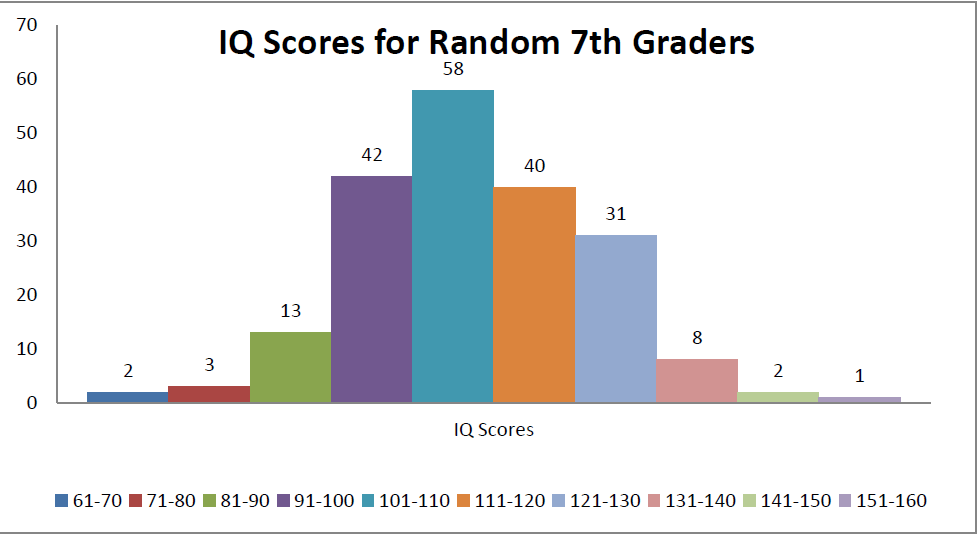
How many 7th graders had an IQ score in the 81-90 range?
13
6.5
3
42

How many data points are greater than 34?
10
11
12
13
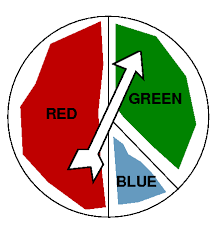
What do you call a representation of how something is built or how it works?
scientist
collaboration
model
system
What do we call models that are ideas in your head or words/drawings on paper?
conceptual model
physical model
role model
What is it called when people work together and everyone is equal and contributes?
conferencing
cooperation
collaboration
consensus
What is a system?
the correct way to draw a model
parts that work together or share space in a meaningful way
a 3D replica
data using numbers and measurements
What is qualitative data?
data using numbers and measurements
data using observations and descriptions
data using calculators and charts
What is it called when everyone comes to an agreement?
collaboration
consensus
brainstorming
engineering
Why do we create models?
to understand how something looks or works
to get data for an experiment
to create a compound of two or more solutions
to perform a simple task in a complicated way
Why do models change over time?
Because the person who created the model dies
Because of collaboration and new evidence
Because of consensus and disagreements
Because of a black box
Which of the following statements is true about thinking, decision making and problem solving?
Decision making is a part of problem solving - and both decision making and problem solving are examples of thinking.
Decision making is an aspect of thinking - but not part of problem solving.
Problem solving is a part of decision making - but only decision making is a true example of thinking.
Thinking, decision making and problem solving are three distinct cognitive processes with no overlap in what they do.
Mary believes that she is an excellent math student. In fact, her favorite unit is statistics. However, when she is asked to critically evaluate the data of a experiment in psychology class, she does not know how to do it. How does the Dual Process model explain this?
She has developed the System 2 thinking necessary for math class, but not for psychology class.
Her knowledge from mathematics is interfering with her knowledge in psychology.
She is not able to transfer her understanding in mathematics to a new context (situation). So, her approach to solving the problem shows System 1 thinking.
Mary's self-esteem in psychology class is interfering with her ability to solve the problem. It has nothing to do with System 1 and System 2 thinking.

When writing you hypothesis, what information follows IF?
dependent variable
how you know it will happen
independent variable
anything

When writing a hypothesis, what information do you fill in after THEN?
dependent variable
independent variable
how you know it will happen
anything good

Choose the correct hypothesis for "How will exercising affect your health?"
IF you have better health, THEN you will exercise.
IF you exercise, THEN you will have better health.
Exercising means you're healthy.

A students was doing an experiment using the scientific method. Every three days the student plans to count the green leaves. Which would be a good hypothesis for this experiment?
If plants are placed in direct sunlight, then they will grow more green leaves.
If plants are places in bright light, then they will grow more green leaves than in dim light.
If plants are place in clay pots, then they will grow more green leaves than plastic pots.
If plants are in warmer temperatures, then they will grow more green leaves.

A scientist hypothesizes the the temperature at which an alligator's egg is incubated will determine whether the alligator will be male or female. The independent variable is
the male alligators
the gender of the alligator
the temperature
the incubator
What two words should be in your hypothesis?
I think
If ...then...
It will
No idea
Which one is a good hypothesis?
If we mix blue and yellow water together, the water will turn green.
We'll mix blue and yellow water together, then the water will turn green.
If we mix blue and yellow water together, then the water will turn green.
Scientists form _________ hypothesis to answer questions.
accurate
short
mathematical
testable

