
 Worksheets
Enzymes that Manipulate DNA
Total questions: 16
Worksheet time: 11mins
1. The DNA base sequences recognized by Endonuclease are called
a).Restriction Site
b). Recognition Site
c).Fragmentation Site
d).cutting Site
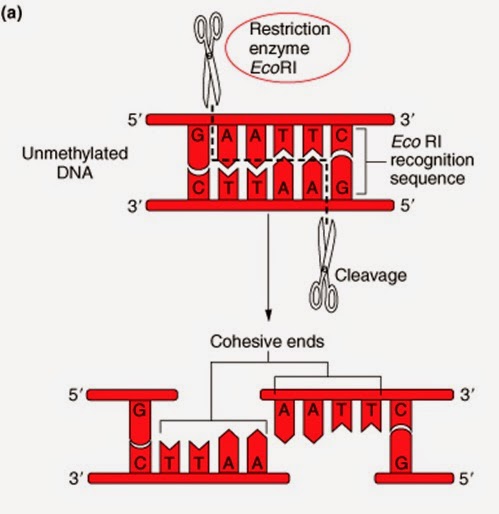
The recognition sites for restriction enzymes are :
a).Tautomer
b). Pallindrome
c).Metamere
d).Acronym
Restriction Enzymes are isolated from :
a).Protozoa
b). Bacteria
c).Virus
d).Fungi
Restriction Enzymes were primarily used as :
a).Defence by Protozoa against antibiotics
b).Tool by Virus to cleave Bacterial genome
c)Defence by Bacteria against bacteriophages viruses
d).All of the above
In molecular cloning, a __________ is used to insert a fragment of DNA into the host cell.
plasmid
DNA fragment
bacterium
virus
The enzyme used to join the DNA fragments
Topoisomerase
DNA ligase
DNA polymerase
Reverse transcriptase
Which of the following tools of recombinant DNA technology is INCORRECTLY paired with one of its uses?
restriction endonuclease - production of DNA fragments for gene cloning.
DNA ligase - enzyme that cuts DNA, creating sticky ends.
reverse transcriptase - production of cDNA from mRNA.
Taq polymerase - copies DNA sequences in the polymerase chain reaction.
Which of the following terms describes the process of the uptake of recombinant plasmids into bacteria cells?
amplification
insertion
transformation
screening
Which enzyme helps fuse the foreign into the new DNA?
DNA Polymerase
DNA ligase
To produce desired protein _____________ should be taken from any source like human, animal and plant.
recombinant DNA
Target DNA
plasmid
ligase

Which of the following enzymes can cut nucleic acids?
DNA polymerase
restriction endonuclease
modifying enzymes
reverse transcriptase

What type of cut is this photo?
Blunt
sticky

