wayground logo

Free Printable Worksheets

NEW

Font size

S
M
L
XL
Worksheets

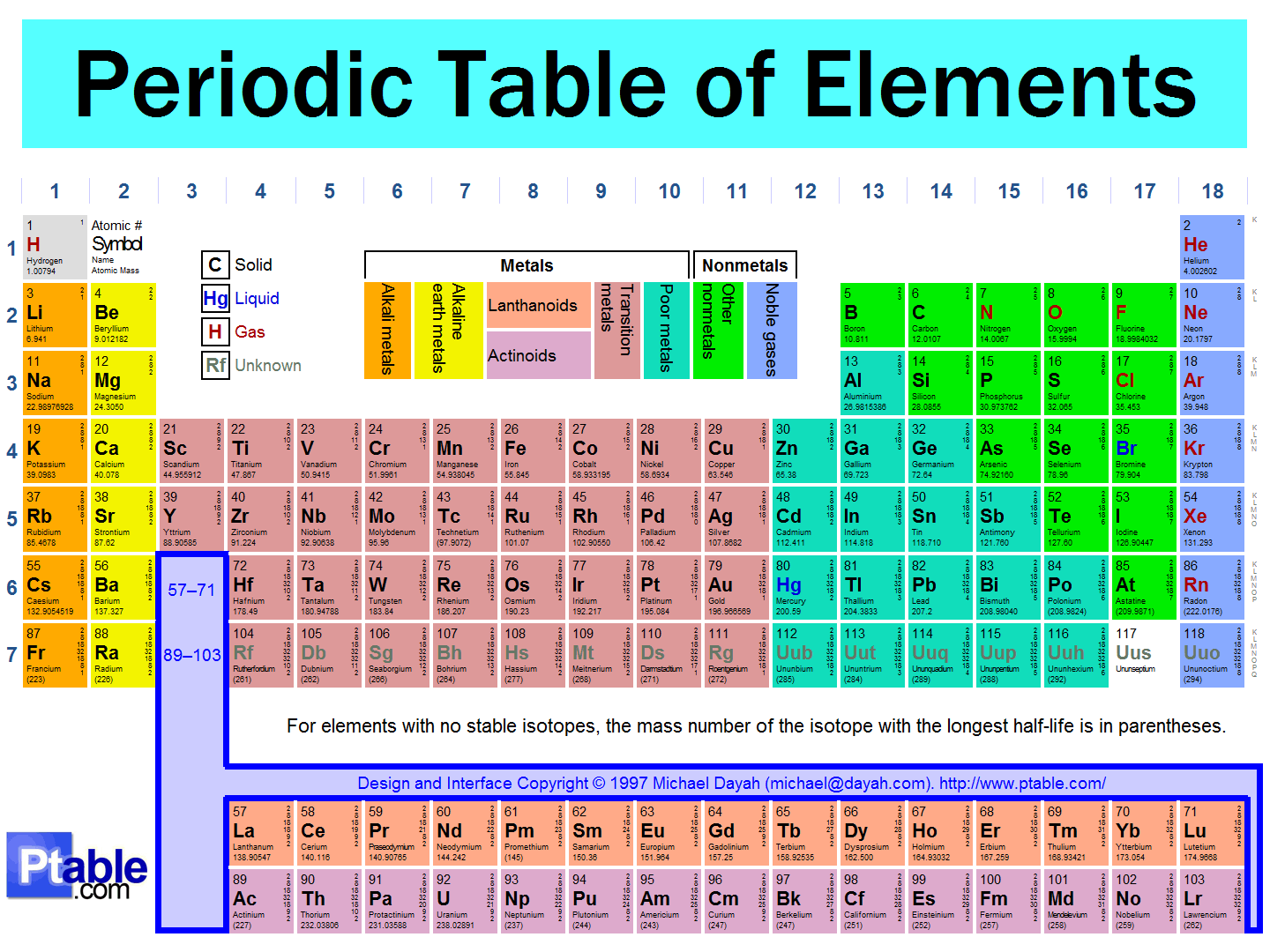
Trends in the Periodic Table

Total questions: 28

Worksheet time: 16mins

Name
Class
Date
1.
As you move down the periodic table atoms get bigger.  This is because ____________.
a)
The atoms have more mass.
b)
The atoms have more protons.
c)
The atoms have more energy levels
d)
The atoms have more nuetrons
2.
a)
2
b)
8
c)
3
d)
13
3.
a)
12
b)
7
c)
8
d)
14
4.
Valence electrons are the...
a)
Innermost electrons
b)
Middle electrons
c)
Outermost electrons
d)
Any electrons
5.
Elements in the same column of the periodic table always have the same # of _______ as one another.
a)
Protons
b)
Neutrons
c)
Electrons
d)
Valence Electrons
6.
Rows on the period table are called _____ while columns are called _____.
a)
groups, families
b)
groups, periods
c)
periods, groups
d)
families, groups
7.

The vertical (up and down) columns in the Periodic Table are called

a)

groups

b)

towers

c)

periods

d)

atomic numbers

8.
The Modern Periodic Table of Elements is arranged by
a)
atomic mass
b)
atomic number
c)
valence electrons
d)
number of isotopes
9.
Which group of the periodic table is composed of inert (not reactive)  gases?
a)
alkali metals
b)
alkaline earth metals
c)
halogens
d)
noble gases
10.
The atoms along the staircase are called 
a)
metals
b)
nonmetals
c)
metalloids
d)
noble gases
11.
Which is an alkali metal?
a)
Magnesium
b)
Iron
c)
Sodium
d)
Europium
12.
Elements in a ..................have similar chemical properties.  
a)
period
b)
group
c)
row
13.
As you move across the periodic table atoms tend to get smaller because, ______________.
a)
the atoms have more mass.
b)
the atoms have less mass
c)
the atoms have more protons.
d)
the atoms have less electrons.
14.

What type of elements are poor conductors of heat and electricity?

a)

transition metals

b)

inner transition metals

c)

metals

d)

nonmetals

15.

What is the arrangement of electrons in various orbitals around the nucleus of an atom in the ground state?

a)

cation

b)

anion

c)

electron configuration

d)

electron

16.

What is a horizontal (left and right) row of elements in the periodic table?

a)

group or family

b)

period

c)

periodic law

d)

octet rule

17.

What is the likelihood of a substance to undergo a chemical reaction, either by itself or with other materials, and absorb or release energy?

a)

group or family

b)

reactivity

c)

period

d)

octet rule

18.

What type of elements are malleable and ductile?

a)

noble gases

b)

nonmetals

c)

metals

d)

halogens

19.

What is a region of an atom where electrons with the same energy are found?

a)

electron

b)

orbital

c)

sublevel

d)

energy level

20.
Which atom has the largest atomic radius?
a)
potassium
b)
rubidium 
c)
francium
d)
cesium
21.
The chart scientists use to organize and classify all the known elements
a)
elements chart
b)
the chart
c)
Periodic Table of the Elements
d)
Period table
22.

What did Mendeleev use for arranging elements?

a)

atomic number

b)

atomic mass

c)

group number

d)

element name

23.

Which one is a very reactive nonmetal?

a)

Halogen

b)

Noble gas

c)

Metalloid

d)

Transition metal

24.

Which group are alkali metals in?

a)

1

b)

2

c)

17

d)

18

25.

How many valence electrons do alkali metals have?

a)

1

b)

2

c)

3

d)

4

26.

Valence electrons can be ...

a)

lost

b)

shared

c)

gained

d)

lost, gained, or shared

27.

The proton numbers of four elements are shown.

Element Proton number

W 9

X 16

Y 17

Z 20

Which two elements are in the same Group?

a)

W and X

b)

W and Y

c)

W and Z

d)

X and Z

28.

Element Z has the following properties:

1. It has a low boiling point.

2. It does not react with other elements.

What is element Z?

a)

alkali metal

b)

halogen

c)

noble gas

d)

transition metal

Similar Resources on Wayground