
 Worksheets
Chapter 1 - Foundations of Government
Total questions: 54
Worksheet time: 29mins
In this type of government power is concentrated in a strong, central government.
unitary
federal
confederal
In this type of government, power is shared between a central government and regional governments.
unitary
federal
confederal
In this type of government, the central government is weak and power is concentrated in regional governments.
unitary
federal
confederal
In this form of government, citizens have lots of power and actively participate in government.
authoritarian
autocracy
oligarchy
democracy
In this form of government, people have little voice in government. The leader has all of the power.
autocracy
oligarchy
democracy
anarchy
This form of government concentrates power in the hands of a few leaders. Citizens have little power.
autocracy
oligarchy
democracy
anarchy
In this form of government, citizens vote directly on laws.
direct democracy
representative democracy
In this form of government, citizens select people to vote on their behalf. (select 2)
direct democracy
representative democracy
republic
Which type of government best describes the United States?
unitary
federal
confederal
anarchy
Which type of government best describe the United States under the Articles of Confederation?
unitary
federal
confederal
Which political theory argues that the state arose out of a voluntary act of free people and that the state exists only to serve the will of the people?
Force Theory
Evolutionary Theory
Divine Right Theory
Social Contract Theory
Which political theory held that God created the state, and God had given those of "royal birth" the right to rule?
Force Theory
Evolutionary Theory
Divine Right Theory
Social Contract Theory
Which political theory of government is where a small group forces all people to submit to them?
Force Theory
Evolutionary Theory
Divine Right Theory
Social Contract Theory
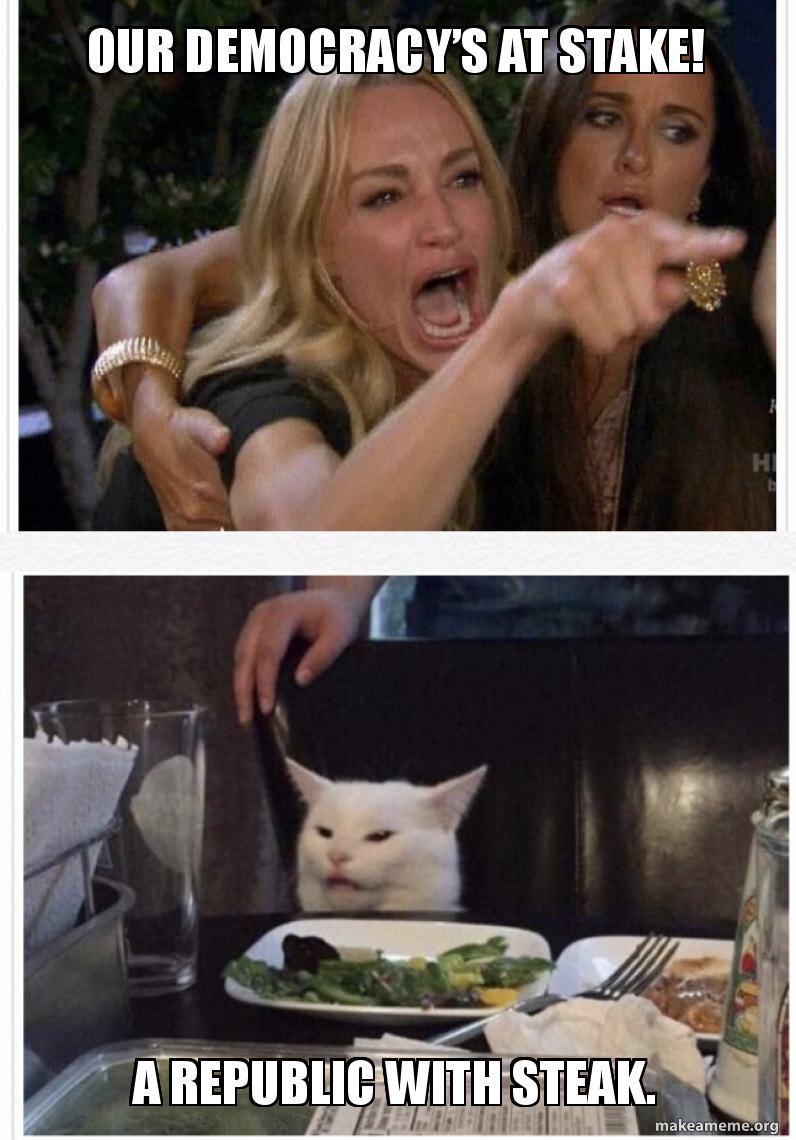
What is the difference between a democracy and a republic?
In a Democracy, people are represented by someone else. In a Republic, people get a direct say in government.
In a Republic, people are represented by someone else. In a Democracy, people get a direct say in government.
In a Democracy, people get a direct say in government. In a Republic, people are ruled by a King.
In a Republic, people are represented by someone else. In a Democracy, the government is based around religious law.
Definition: The government and those who govern are bound by the law, as are those who are governed.
Rule of Law
Republic
Democracy
Representative Government
Definition: The authority is divided between a central government and its political units (states).
Federalism
Democracy
Representative Government
Consent of the Governed
What is meant by the fundamental principle “limited government”?
Government may only do what the people have given it the power to do.
The number of people who work in the government is limited by law.
Presidents may serve no more than two terms.
The power of the federal government is limited by the power of state governments.
A state is a country that has a simpler type of government
True
False
A nation may wage war with another nation to protect its own national security.
True
False
Anarchy is a type of government in which one leader rules by force.
True
False
Governments often provide services that are designed to increase public safety.
True
False
Which of these statements is based on John Locke's definition of the social contract?
A government operates with the goal of promoting human rights.
A police state is necessary to protect people's belongings.
INdividuals should be free to do whatever they wish.
Once a government has been formed, its laws cannot be changed.
An army takes over a government and establishes its general as the supreme ruler. Which theory explains the origins of this new government?
divine ight theory
force theory
evolutionary theory
social contract theory
A nation can become a state when it has which of these
common language
organized government
standing army
unique customs
Which of the following activities in the US would most likely be paid for by a state government instead of a national government
enforcement of traffic laws
maintenance of interstate highways
inspection of agricultural products
production of spy satellites
The institutions and processes through which public policies are made for society is known as
sovereignty
territory
government
federalism
In a democratic government, the questions of "how should we govern" and "what should government do" are controlled by
the leaders.
the military.
the elected representatives.
the people.
In a representative democracy like the United States, the powers of government are
separated among three branches.
combined into one branch.
given to a small group of important people.
divided among the people.
All of the following are three basic powers that all governments possess except?
legislative
judicial
taxing
executive
The institutions and processes through which public policies are made for society is known as
sovereignty
territory
government
federalism
To be recognized as a state, what are the essential characteristics?
Territory
Sovereignty
Population
Government
All of these
Which political theory of government is where a small group forces all people to submit to them?
Force Theory
Evolutionary Theory
Divine Right Theory
Social Contract Theory
Which political theory developed naturally out of the evolution of the family?
Force Theory
Evolutionary Theory
Divine Right Theory
Social Contract Theory
Which political theory held that God created the state, and God had given those of "royal birth" the right to rule?
Force Theory
Evolutionary Theory
Divine Right Theory
Social Contract Theory
Which political theory argues that the state arose out of a voluntary act of free people and that the state exists only to serve the will of the people?
Force Theory
Evolutionary Theory
Divine Right Theory
Social Contract Theory
A government controlled by a single ruler or couple where power is inherited is called
a representative democracy
a dictatorship
a monarchy
a direct democracy
Government by the consent of the governed is called
public policy
democracy
popular sovereignty
self-perpetuating autocracy
In a dictatorship, where does the ultimate power come from?
the dictator
the police
the people
representatives
In a democracy, where does the ultimate power come from?
the dictator
the police
the people
representatives

