
 Worksheets
Unit 1 Test Review
Total questions: 47
Worksheet time: 53mins

The basic unit of structure and function in living things.
mitochondria
cell phone
cell
ribosome

The control center of a eukaryotic cell that directs the cell's activities and contains the information (DNA) that determines the cell's form and function
brain
nucleus
mitochondria
lipids

The gel-fluid like material within a cell apart from the nucleus. Organelles are suspended in the cytoplasm.
cytoplasm
cell membrane
cell wall
nucleus

The outside cell boundary found in both animal and plant cells that controls which substances can enter or leave the cell.
cell wall
cell membrane
cytoplasm
nucleus

A rigid layer of non-living material that surrounds the cells of plants and some other organisms.
cell membrane
cytoplasm
endoplasmic reticulum
cell wall

A small, round cell structure containing chemicals that break down large food particles into smaller ones. This is the digestive system of the cell.
ribosome
lysosome
nucleus
cytoplasm

A structure in the cells of plants and some other organisms that capture energy from sunlight and uses it to produce food through the process of Photosynthesis.
cytoplasm
green stuff
chloroplast
chlorine

An organism whose cells contain nuclei and other specialized organelles.
Plants, animals, fungi and protists are eukaryotes.
eukaryote
prokaryote

A tiny cell structure that carries out a specific function within the cell.
Nucleus, chloroplasts, mitochondria, etc.
organelle
organ
cell

A sac inside a cell that acts as a storage area. This can include storing water
vacuum
lysosome
vacuole
mitochondria

The genetic material that carries information about an organism and is passed from parent to offspring.
RNA
DNA
MNA
FMA
A green pigment found in the chloroplasts of plants, algae and some bacteria.
It "fills" the chloroplast.
chloroplast
verde
chlorophyll

The process in which some organisms use water, sunlight and carbon dioxide to make their own food internally.
photosnythesis
protein synthesis
analysis
thesis

An organism whose cells lack a nucleus and some other cell structures.
prokaryote
eukaryote
The maintenance of stable internal conditions in an organism.
homeostatis
zen
vibes

A rod-shaped cell structure that converts energy in food molecules to energy that the cell can use to carry out its functions. Also known as the powerhouse of the cell
lysosome
mitochondria
nucleus
ribsome

A cell structure that forms passageways in which proteins and other materials are carried through the cell.
Smooth - no ribosomes; Rough - ribosomes attached.
golgi body
nucleus
endoplasmic reticulum
lysosome

A structure in a cell that receives proteins and other newly formed materials from the endoplasmic reticulum, packages them and distributes them to other parts of the cell.
golgi body
endoplasmic reticulum
lysosome
ribosome

A small, grain-like structure in the cytoplasm of a cell where proteins are made/snythesized
lysosome
nucelus
golgi body
ribosome
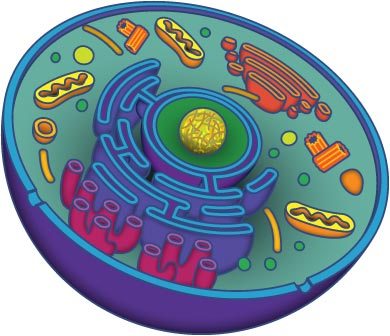
This organelle found in plants and aminal cells stores food, water, and chemicals
Vacuoles
mitochondria
ribosomes
Nucleus
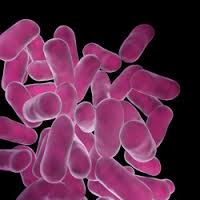
Bacteria is a good example of a
Prokaryote
Eukaryote
Cell membrane
Cytoplasm
Control center of the cell
chloroplast
function
nucleus
cytoplasm
An organelle found in plant and algae cells where photosynthesis occurs
vacuole
chloroplast
cytoplasm
function
Powerhouse of the cell
structure
vacuole
nucleus
mitochondria
A cell structure that controls which substances can enter or leave the cell.
cell membrane
cell wall
cytoplasm
chloroplast
A jellylike fluid inside the cell in which the organelles are suspended
cell membrane
structure
cytoplasm
multicellular
A small, round cell structure that contains chemicals that break down large food particles into smaller ones
Lysosome
Vacuole
Endoplasmic Reticulum
Cell Wall
A water-filled sac inside a cell that acts as a storage area
Ribosome
DNA
Vacuole
Golgi Body
A small grain-like structure in the cytoplasm of a cell where proteins are made
Ribosome
Vacuole
Endoplasmic Reticulum
Golgi Body

Cells get power from the _______.
Mitochondria
Cell Wall
Chloroplast

The organelle that turns sun energy into plant energy is ___________.
Chloroplast
Endoplasmic Reticulum
Nucleus
builds proteins, each cell contains thousands, found on ER and floating throughout cell
Ribosomes
Nucleus
Vacuole
Golgi Body
moves materials around in the cell, two types: smooth and rough
Cytoplasm
Nucleus
Vacuole
Endoplasmic Reticulum


I make proteins for the cell. What am I?
ribosome
mitochondria
chloroplast
lysosome
This is involved in protein and lipid synthesis.
endoplasmic reticulum
ribosome
lysosome
nucleus
collects, processes, and packages proteins for the cell
mitochondria
gogli apparatus
smooth ER
rough ER

