
 Worksheets
Fall Semester Quiz 2
Total questions: 52
Worksheet time: 59mins

Mixing sugar and water.
Is it a physical or chemical change?
Physical
Chemical

Is this an example of a physical or chemical change?
physical
chemical

Is this an example of a physical or chemical change?
physical
chemical
Which of the following could indicate that a chemical change took place?
Change in color
Formation of Gas
All are correct
odor change
A change in the STATE of matter is a....
Chemical Change
Physical Change
Permanent Change

A change in which NEW substances are formed.
Chemical change
Physical change
In what way does agitation affect the dissolution rate of a solute in a solvent?
It decreases the temperature of the solution.
It increases the solubility of the solute.
It increases the contact between solute and solvent particles.
It decreases the surface area of the solute.
Why might a chemist choose to use a powdered form of a solute rather than a solid block when preparing a solution?
To decrease the solubility of the solute.
To increase the rate of dissolution.
To make the solution more colorful.
To reduce the temperature of the solution.
If a solute dissolves faster in hot water than in cold water, what can be inferred about the effect of temperature on the dissolution process?
Temperature has no effect on dissolution.
Higher temperatures decrease the rate of dissolution.
Higher temperatures increase the rate of dissolution.
Temperature only affects gaseous solutes.
Which of the following best explains why stirring a solution increases the rate of dissolution?
Stirring decreases the temperature of the solution.
Stirring increases the surface area of the solute.
Stirring increases the interaction between solute and solvent particles.
Stirring decreases the solubility of the solute.
Which factor does NOT affect the rate of dissolution?
Temperature
Surface area
Agitation
Color of the solute
How does temperature generally affect the rate of dissolution for solids?
Higher temperatures decrease the rate
Higher temperatures increase the rate
Temperature has no effect
Lower temperatures increase the rate
In a saltwater solution, what is the solute?
Water
Salt
Both water and salt
Neither water nor salt
How can you distinguish between a physical and a chemical change?
By observing a change in color
By checking if the change is reversible
By determining if a new substance is formed
By measuring the temperature change
Which of the following is an example of a chemical change?
Melting ice
Dissolving sugar in water
Burning wood
Boiling water


You do not know an object's velocity until you know its
speed
reference point
speed and direction
acceleration
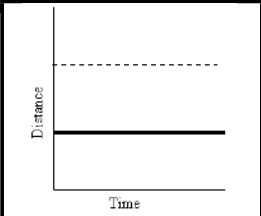


Why do the values on the graph form a straight line?
The speed is constant
The distance remains unchanged.
The direction of motion stays the same.
The speed gradually increases over time.


The movement of thermal energy from a warmer object to a cooler object is called
heat
temperatur
motion
momentum
Kinetic energy is
energy stored in chemical bonds
stored energy
the energy of motion
energy because of position

Heat transfers from an area of ________ temperature to an area of _______ temperature.
high to low
low to high
high to high
low to low
Heat transfer occurs
in many directions
both from warm objects to colder ones and from cold objects to warmer ones
only from warm objects to colder ones
only from cold objects to warmer ones
A substance that allows the flow of electrical charge or transfers energy through matter.
matter
energy
conductor
heat transfer
Heat transfer caused by the rising of hotter, less dense fluids and the falling of cooler denser fluids.
convection
conduction
energy
heat transfer
Transfer of thermal energy that occurs in solids, liquids, and gases, when two substances of different temperatures touch.
matter
energy
conduction
convection
The transfer of energy of movement by electromagnetic waves by subatomic particles.
matter
radiation
energy
convection
Material that does not transfer heat easily.
Conductor
Convection
Radiation
Insulator
Metals are great at allowing heat to flow through, we call these.
conductors
insulators
My spoon is hot after leaving it on the pot that was on the stove.
conduction
convection
radiation
The heat you feel when you put your hands ABOVE a fire.
conduction
convection
radiation
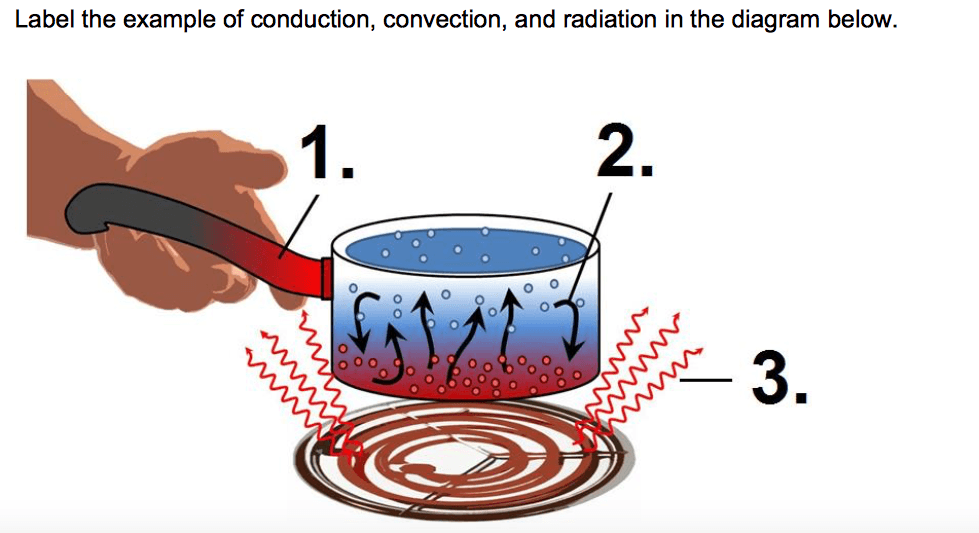
What type of thermal energy transfer is number 1 pointing to?
Convection
Conduction
Radiation
Insulation

Conduction
Convection
Radiation
How does heat energy reach the Earth from the Sun
Convection
Radiation
Conduction
Insulation
Label the states of matter
liquid
gas
solid
ice

Classify the following as Chemical Change or a Physical Change.
Chopping wood
Ice cube melting
Steam from a shower
Burning wood
A bike rusting

