Wayground logo

Free Printable Worksheets

Font size

S
M
L
XL
Worksheets

Periodic Table Intro

Total questions: 40

Worksheet time: 30mins

Name
Class
Date
1.

What properites do nonmetals have in common?

a)

Poor conductor of electricity

b)

Good conductor of thermal energy

c)

Soft and Malleable

d)

Shiny, lustrous surface

2.

This word is used to describe a substance that breaks apart easily and is weak and fragile

a)

Conductivity

b)

Ductile

c)

Malleable

d)

Brittle

3.

Metals are...

a)

dull, brittle, insulators.

b)

shiny or dull, brittle, semiconductor.

c)

shiny, malleable, conductors.

d)

shiny, dull, insulator.

4.

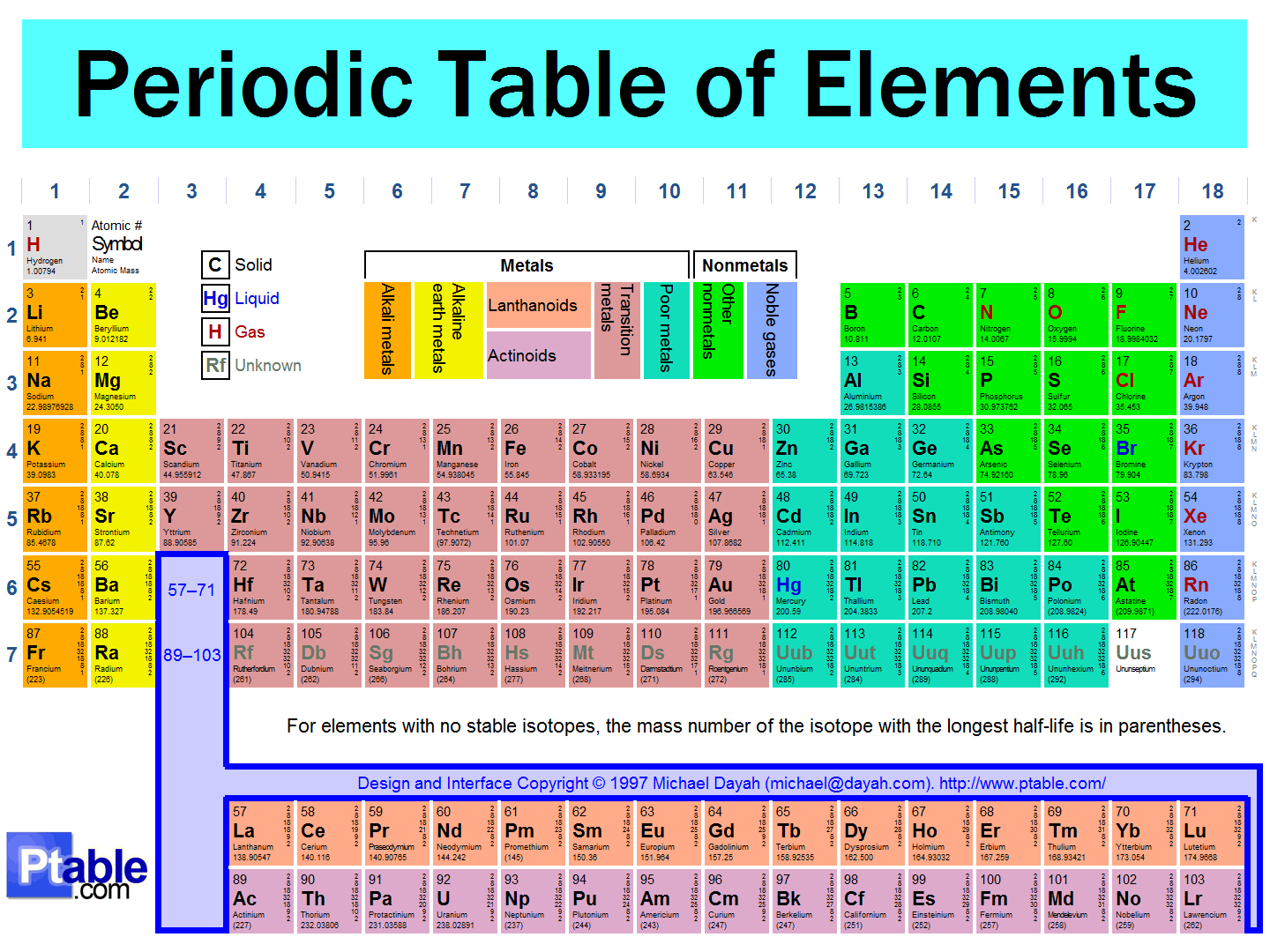
Where are the nonmetals located on the Periodic Table?

a)

On the right

b)

On the left

c)

On the stairstep

5.

Where are the metalloids located on the Periodic Table?

a)

On the right

b)

On the left

c)

On the stairsteps

6.

Gold is an element that is often used to make necklaces, rings, and other types of jewelry. What property of gold makes it useful in this way?

a)

Gold is a conductor

b)

Gold is an insulator

c)

Gold is malleable

d)

Gold has a high melting point

7.

Use your Periodic Table to help you. Boron would be classified as a...

a)

Metal

b)

Nonmetal

c)

Metalloid

8.
a)

Metal

b)

Nonmetal

c)

Metalloid

9.
Which element is a metalloid?
a)
Titanium
b)
Selenium
c)
Potassium
d)
Polonium
10.
Anytime you see the word SEMICONDUCTOR - what substance do you have?
a)
Metal
b)
Nonmetal
c)
Metalloid
11.
Most of the elements on the periodic table are classified as _____.
a)
Metals
b)
Nonmetals
c)
Metalloids
d)
Periods
12.
This class of elements are sometimes called "semiconductors."
a)
Metals
b)
Nonmetals
c)
Metalloids
d)
Groups
13.
These are found on the Periodic Table.
a)
Compounds
b)
Elements
c)
Mixtures
14.

Metals are found on the ______________ side of the periodic table.

a)

nonmetals

b)

left

c)

right

d)

metals

15.

This group of elements have properties that are opposite those of metals. ______________________

a)

luster

b)

nonmetals

c)

metalloids

d)

metals

16.

This group of elements sit along a stair step line on the periodic table and have properties of both metals and nonmetals. _________________________

a)

luster

b)

metals

c)

nonmetals

d)

metalloids

17.
Which of the following is a good conductor of heat?
a)
Metal
b)
Nonmetal
c)
Metalloid
18.
Which of these grouping of elements could have the characteristic of brittle?
a)
Metal
b)
Nonmetal
19.
Which of the following is a good conductor of heat?
a)
Metal
b)
Nonmetal
c)
Metalloid
20.
If a material can easily be drawn into the shape of a wire, it is
a)
Ductile
b)
Magnetic
c)
Malleable
d)
Reactive
21.

What element is Period 6, Group 2?

a)

Yrituim

b)

Barium

c)

Osmium

d)

Hafnium

22.

What does the C represent?

a)

atomic mass

b)

atomic number

c)

element name

d)

chemical symbol

23.

What does the 6 represent?

a)

atomic mass

b)

atomic number

c)

element name

d)

chemical symbol

24.

What does 12.011 represent?

a)

atomic mass

b)

atomic number

c)

element name

d)

chemical symbol

25.

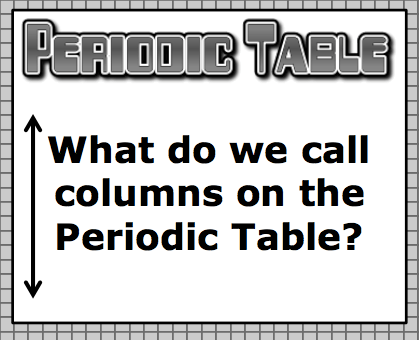
The vertical (up and down) columns in the Periodic Table are called

a)

groups

b)

towers

c)

periods

d)

atomic numbers

26.

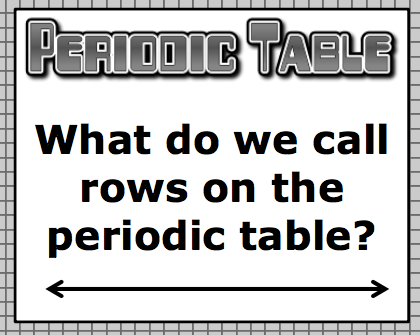
Elements in a .................. have similar chemical properties.

a)

period

b)

group

c)

row

27.
a)
Periods
b)
Groups
28.
a)
Periods
b)
Groups
29.

The number of electrons in an atom is equal to the...

a)

Atomic number

b)

Protons

c)

Atomic Mass

d)

Neutrons

30.

How many periods are on the periodic table?

a)

5

b)

6

c)

7

d)

8

31.
Density: Chemical or Physical Property
a)
Chemical Property
b)
Physical Property
32.
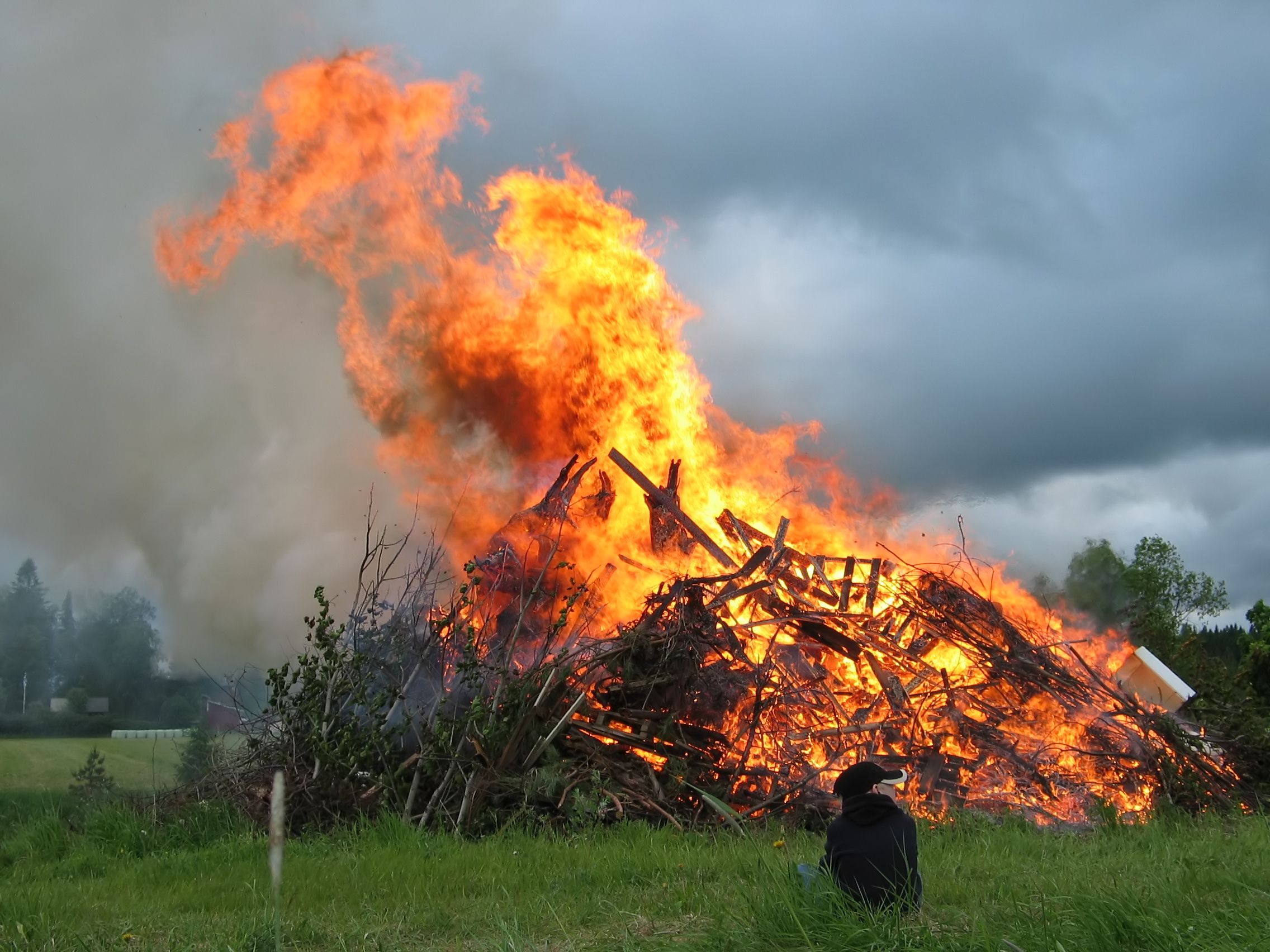
Flammability (burns): Chemical or Physical Property
a)
Chemical Property
b)
Physical Property
33.
Reacts with Acid: Chemical or Physical Property
a)
Chemical Property
b)
Physical Property
34.
Hardness: Chemical or Physical Property
a)
Chemical Property
b)
Physical Property
35.
Luster: Chemical or Physical Property
a)
Chemical Property
b)
Physical Property
36.
Which one of these is a chemical property?
a)
melting point
b)
boiling point
c)
color
d)
flammability
37.
Which of the following is not a chemical property? 
a)
rusting 
b)
boiling 
c)
rotting 
d)
burning 
38.
Ability to rust is this type of property:
a)
Physical property
b)
Chemical property
39.
Is wood burning a physical or chemical change?
a)
Physical 
b)
Chemical
40.
Physical properties are
a)
properties that can be observed without changing the identity of the substance
b)
properties that describe how a substance changes into a completely different substance