
 Worksheets
Chemistry I Chp. 1 Review
Total questions: 75
Worksheet time: 53mins
The study of carbon containing compounds.
Organic Chemistry
Inorganic Chemistry
Physical Chemistry
Biochemistry
The study of the properties and changes in matter and their relation to energy.
Physical Chemistry
Biochemistry
Organic Chemistry
Inorganic Chemistry
The identification of the components and composition of materials refers to___________________________
Biochemistry
Physical Chemistry
Organic Chemistry
Analytical Chemistry
The study of substances and processes occurring in living things.
Biochemistry
organic Chemistry
inorganic Chemistry
Applied Chemistry
____________ is the branch of chemistry that would study and develop new materials to improve existing products or make new ones that in general do not contain carbon.
Organic Chemistry
Inorganic Chemistry
Biochemistry
Physical Chemistry
Identifies an unknown material by determining its composition.
analytical
physical
organic
biochemistry
studying the process of photosynthesis in plants
biochemistry
inorganic
analytical
____________ is the branch of chemistry that would study enzymes used in the digestion of food.
Inorganic Chemistry
Biochemistry
Physical Chemistry
____________ is the branch of chemistry that would measure the amount of energy an atom absorbs in nuclear reaction.
Physical Chemistry
Organic Chemistry
Biochemistry
Which among the following is a NOT matter?
Air
Gold
Water
Heat

This diagram represents...
An element
A molecule
A compound
A mixture of elements and compounds


A liquid is poured from a narrow container to a wide container. The liquid changes its what?
mass
shape
density
volume
In which state does matter completely fill its closed container?
gas
liquid
solid
ice
When a chocolate bar melts, the chemical properties of that substance are....
Best
Worst
Opposite
Same

An atom is the smallest unit of
life
matter
design
protons

A molecule is the smallest unit of a/an
cell
atom
solution
compound
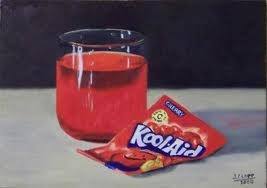
How would you classify this image?
homogeneous mixture
heterogeneous mixture

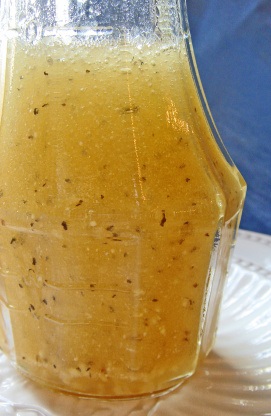
How would you classify this image?
homogeneous mixture
heterogeneous mixture
What is a pure substance made of 2 or more elements chemically combined in a specific ratio (Ex. Water)?
Element
Compound
Mixture
Solution
What is a type of mixture in which different parts can easily be seen (Ex. Vegetable soup)?
Heterogeneous mixture
Homogeneous mixture
Solution
Colloid
What is a type of mixture that is evenly mixed so you cannot see the parts and it looks all the same (Ex. Paint)
Element
Compound
Heterogeneous mixture
Homogeneous mixture


A metal being malleable (able to be drawn into wire) is an example of a _____________
physical property
visible property
real property
chemical property
H2SO4 is an example of which type of material?
compound
element
solution
mixture
Which of the following is a compound?
air
oxygen
carbon dioxide
coca cola
A homogeneous mixture can also be called a __________.
solution
colloid
suspension
fluid
Which of the following is evidence that a physical change has occurred?
broken glass
formation of bubbles
rust
formation of a precipitate
X is a substance made of only one type of atom. What type of matter is this?
homogeneous mixture
compound
element
heterogeneous mixture
Which of the following is an extensive property?
Hardness
Boiling Point
Density
Weight
Which of the following is an extensive property?
Color
Mass
Odor
Luster
Which of the following is an intensive property?
Color
Mass
Volume
Weight
What kind of physical property is this? Color
intensive
extensive
What kind of physical property is this? Hardness
intensive
extensive
What kind of physical property is this? Density
intensive
extensive
What kind of physical property is this? Odor
intensive
extensive
What kind of physical property is this? Volume
intensive
extensive
What kind of physical property is this? Mass
intensive
extensive
What kind of physical property is this? Length
intensive
extensive
Which pair of elements has the most similar properties? (They would need to be in the same group of the periodic table to have similar properties.)
Be and B
O and S
H and Hg
Na and F
Which group in the periodic table of elements has the greatest number of metals?
Group 1
Group 6
Group 13
Group 18
He, Ne, and Ar are all noble gases. What is common among these gases?
They are flammable.
They are highly reactive.
They are metals.
They are unreactive.
When elements fall under the same column, this means they belong to the same ______.
group
period
In which side of the periodic table are metals most likely found?
left
right
Which category of elements are also called semi-metals?
Alkali metals
Metalloids
Halogens
Noble gases
The vertical (up and down) columns in the Periodic Table are called
groups
towers
periods
atomic numbers
Elements in a .................. have similar chemical properties.
period
group
row
Which of the following could be properties of nonmetals? (Select all that apply)
Poor electrical conductivity
Poor thermal conductivity
Dullness
Brittleness
I am a nonmetal
I am in period 2
I am in group 16
Ba
Si
O
S
I am a metal
I am in group 2
I am in period 6
I am…
Mo
Re
S
Ba

Which elements are to the right of the zig zag?
metals
nonmetals
metalloids
Which element is above the element Strontium?
Calcium
Rubidium
Yttrium
Barium
Which of the following is not true.
Potassium= K
Silver= Ag
Sodium= S
Bromine= Br
Carbon is a type of
Metal
Nonmetal
Metalloid
The periodic table has 3 main types of elements. Which type of element is the most abundant?
Helium
Nonmetals
Metalloids
Metals
Which of the following is true?
Gold= Go
Lead= Pb
Scandium= Sm
Oxygen= O
How many metalloids are found in the row that starts with the element Rb?
14
2
4

