
 Worksheets
REVIEW - UNIT TEST 1 - BIOMOLECULES/INTRO TO BIOLOGY
Total questions: 45
Worksheet time: 46mins
Plants and animals store excess glucose. What are the names of these two stored glucose in plants and in animals?
Starch and Cellulose
Starch and Glycogen
A nucleotide has 3 parts: A phosphate group + five-ring sugar + __________.
nitrogen base
fatty acids
How do you know if a compound is most likely a sugar/carbohydrate?
if the name of the compound ends with -ose
if the name of the compound ends with -ase
if the name of the compound ends with -in
Which among the following refers to the totality of all the chemical reactions in an organism?
Homeostasis
Metabolism
What is the monomer for protein?
Glycerol
Amino acids

Which monosaccharide is being represented in this image? Clue: This is the sugar found in our blood. It is usually illustrated as a six-sided hexagon.
Glucose
Maltose
Which of the four major biological macromolecules can be easily identified by the nitrogen base and phosphate group found in its structure?
proteins
nucleic acids
Nucleotides are monomers of ________.
Nucleic Acids
Lipids
Glycerol + 3 fatty acids is the monomer of _______.
Lipids
Proteins
What is the main function of nucleic acids?
stores genetic information
build skin, hair, nails, muscles, bone, teeth
Carbohydrates are made of ________.
C-H-O-N
C-H-O
C-H-O-N-S
Lipids are made up of __________.
C-H-O
C-H-O-N
C-H-O-N-P
Nucleic Acids are made up of _________.
C-H-O-P
C-H-O
C-H-O-N
C-H-O-N-P
Which macromolecule stores energy, insulates us, and makes up the cell membrane?
Carbohydrates
Lipids
What are the 4 organic molecules of life?
Carbohydrates, Amino Acids, Sugar, Nucleic Acids
Carbohydrates, Lipids, Proteins, Nucleic Acids
Monosaccharides, Disaccharides, Polysaccharides, Nucleic Acids
Monomer, Dimer, Polymer, Metamer
Compounds/molecules that do NOT have Carbon and Hydrogen atoms in their structure.
Organic
Inorganic
The sum of all chemical reactions in the body is ___________.
homeostasis
metabolism
Homeostasis means _______.
balance
reaction
Which group of organic molecules contains starch and glucose?
Carbohydrates
Nucleic Acids
According to the hierarchy of organization in living things, what is the largest level of organization?
cell
organism
All organic compounds contain _________.
Carbon
nitrogen
Two types of reproduction:
Sexual and asexual
budding and regeneration
binary fission and elongation
a. Cell, tissue, organ, organ system, organism
a. Cell, organ, tissue, organ, organism, organ system
organ
tissue
Triglyceride
Amino Acid
Lipid
Carbohydrate
Excess sugar or carbohydrates are stored in plants and animals(liver) in the form of _____________ and _____________ respectively.
glucose and chitin
starch and glycogen
Protein
Carbohydrate
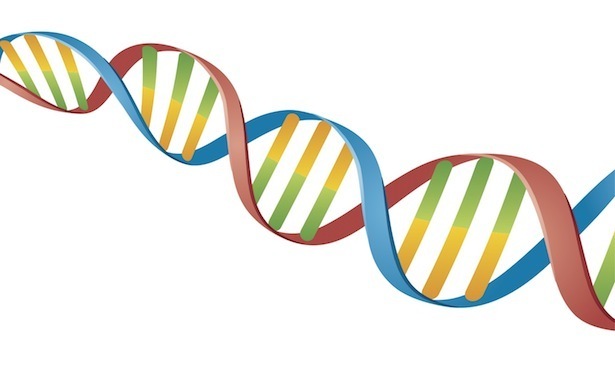
What are the functions of nucleic acid?
Stores genetic information
Builds structures
control traits
provides instruction for making proteins

Which biomolecule mostly makes up cell membranes?
Lipids
Nucleic acid

A student makes a Venn diagram to compare the functions of carbohydrates and lipids.
Which function of carbohydrates and lipids should be placed in the shared section of the Venn diagram?
Energy storage
Catalyst for chemical reactions
Cellulose provides structure for plants. Cellulose is a sugar/carbohydrates that is found in the _______ of the plants.
nucleus
cell wall
This is a protein found in your blood that is responsible in carrying/delivering oxygen throughout your body.
Hemoglobin
Insulin
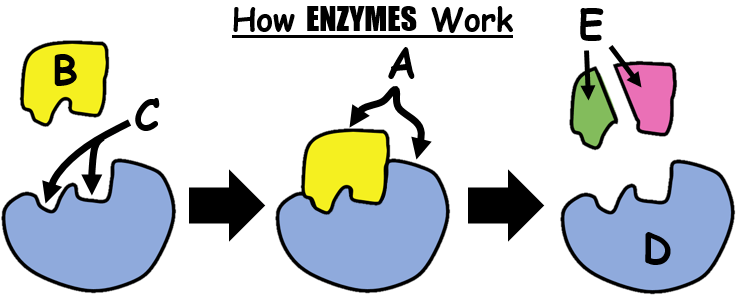
Enzymes are catalysts. How do they work?
They speed chemical reactions by lowering the activation energy required by that reaction.
They add more sugar so the reactions will be faster.
There are two forms of lipids found in cell membrane. What are they?
Phospholipids and cholesterol
Cholesterol and glycogen
Glucose and Amino acids
Stimulus or response: a moth travels towards the light
stimulus
response
A group that does NOT receive treatment in an experiment is called ___________.
experimental group
control group
What is the difference between independent and dependent variable?
independent = manipulated variable
dependent = the measurable variable
independent = measurable variable
dependent = manipulated variable
Which term describes organisms that CANNOT create their own food such as animals and humans?
autotroph
heterotroph
All of the following are CARBOHYDRATES except __________.
cellulose
chitin
insulin
glycogen

Look at the graph and look at the highest points. Which enzyme is most efficient in a basic/alkaline solution?

Which 2 factors can affect the rate of enzyme activity?
Light intensity
Temperature
pH
Oxygen concentration
When an enzyme is exposed to extreme temperature and pH, their active site will become inactive or destroyed. This is called _______________.
respiration
denaturation

