Wayground logo

Free Printable Worksheets

Font size

S
M
L
XL
Worksheets

Properties of Water

Total questions: 19

Worksheet time: 13mins

Name
Class
Date
1.
What word describes when water is attracted to other substances?
a)
cohesion
b)
adhesion
c)
capillary action
d)
surface tension
2.
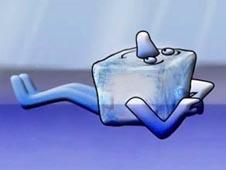
Why does ice float?
a)
As water freezes, it expands and its density decreases.
b)
As water freezes, it takes up more hydrogen from the atmosphere, causing it to have a greater buoyancy.
c)
As water freezes, air becomes trapped between the hydrogen bonds of water molecules.
d)
As water freezes, it takes up more oxygen from the atmosphere, causing it to have a greater buoyancy.
3.
Which end of the water molecule has a slightly positive charge?
a)
the oxygen end
b)
the hydrogen end
c)
both ends are slightly positive
d)
neither end is positive
4.
Water is a universal solvent because it...
a)
It can be found anywhere
b)
It freezes when it gets cold
c)
floats when frozen
d)
Dissolves most substances
5.
Which of the following is LEAST likely to dissolve in water?
a)
nonpolar fats and oils
b)
polar sugar molecules
c)
salt made of a positive sodium ion and a negative chloride ion
d)
all of the substances will dissolve easily in water
6.
Large bodies of water, such as lakes and oceans, do not quickly fluctuate in temperature. What is the reason for this phenomenon?
a)
Water is an acid.
b)
Water is a versatile solvent.
c)
Water has a high heat capacity.
d)
 Water acts as a buffer.
7.
The fact that ice floats on liquid water is due to the fact that water's solid is ___________ than it's liquid form
a)
less polar
b)
more polar
c)
less dense
d)
more dense
8.
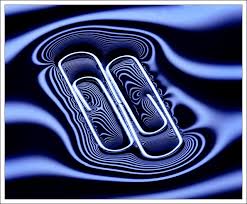
The tightness across the surface of water that enables paper clips to float is ____________.
a)
adhesion
b)
capillary action
c)
surface tension
d)
polarity
9.
Which statement explains why water molecules stick together?
a)
both sides are negative
b)
one side has a positive charge and the other side has a negative charge
c)
one side has a negative charge adn the other side has a neutral charge
d)
both sides are positive
10.
What is the most powerful agent in weathering and erosion?
a)
water
b)
soil
c)
grass
d)
wind
11.
When a molecule has an opposite electrical charge on each end, it is known as what?
a)
cohesion
b)
polar molecule
c)
hydrogen bond
d)
solution
12.
When water molecules stick easily to other water molecules, this is called what?
a)
cohesion
b)
adhesion
c)
solution
d)
polar molecule
13.

The ability of water molecules to stick to each other, creating surface tension is called:

a)

Cohesion

b)

Adhesion

c)

Insulation

d)

Ph

14.

The fact that water can stick to other substances is called:

a)

Ph

b)

Adhesion

c)

Cohesion

d)

Insulation

15.

What is the chemical symbol of water?

a)

H2O

b)

CO2

c)

O2

d)

N2

16.

True or False: Hydrogen bonds are very weak, which allows for many of the chemical characteristics found in water.

a)

True

b)

False

17.

What is cohesion?

a)

The ability of a molecule to "stick" to itself

b)

The ability of a molecule to "stick" to other molecules

c)

Large amounts of energy are required to change the temperature of a substance

d)

A well-organized and efficient team

18.

What characteristic is shown in the image?

a)

Polarity

b)

Hydrogen Bonds

c)

Cohesion

d)

Adhesion

19.

What property of water allows for water to act as a temperature regulator for the world?

a)

Cohesive Behavior

b)

Expansion Upon Freezing

c)

High Specific Heat

d)

Universal Solvent