
 Worksheets
Separating mixtures
Total questions: 25
Worksheet time: 12mins
This method separates dissolved substances based on differences in how well they dissolve in a solvent.
Filtration
Evaporation
Distillation
Chromatography
If a substance is insoluble in water, it ___________.
dissolves in water
cannot dissolve in water
forms a solution when mixed with water
cannot be separated from water
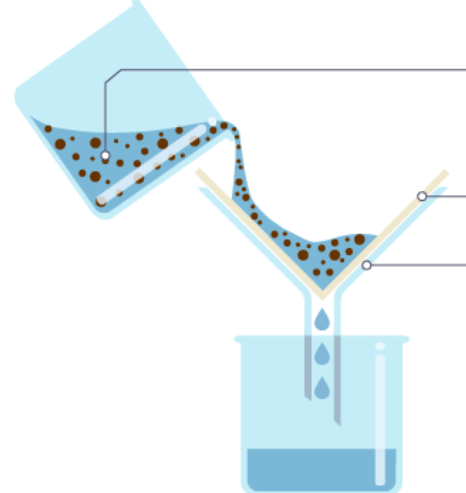
Which method is this a picture of?
Filtration
Evaporation
Distillation
Chromatography
True/False:
Mixtures are combinations of two or more substances.
True
False
What tool can be used to separate plastic beads and metal paper clips?
filter
magnet
strainer
cloth
John wants to separate salt from water. What separation technique should he use?
evaporation/condensation
filtration
decanting
magnetism
Grade 4 students are conducting an experiment with saltwater. A large quantity of sand was added to the container of saltwater. What do you expect to observe?
The salt floats to the top of the container
The sand dissolves.
The sand settles to the bottom of the container.
The salt and sand combine to form a solid.

A kind of mixture in which all the parts are mixed EVENLY?
energy
sand and saltwater
soil
solution

This method is a technique used in separating a less-dense substance from a denser one.
decantation
evaporation
distillation
filtration
Which environmental problems can be separated by physical manipulation?
garbage in the landfill
flood
global warming
contaminated rivers and lakes

What method of separation would work best to separate water and rubber pellets?
filtration
sifting
evaporation
magnetic attraction

What mixture could I use this type of tool to separate?
oil and water
sugar and sand
salt and corn flour
pebbles and baby powder
You are using a sieve and pouring a flour and sugar mixture through it. Both substances pass through. Why is this?
They are the same size.
They have different masses.
This separates them easily.
They are the same color.

This method is utilized in industries like junkyards to remove metal scraps from other materials.
chromatography
physical manipulation
use of magnet
distillation
Which of the following in NOT an example of an insoluble mixture?
rice and water
salt and water
sand and water
iron and sand
the process where a mixture is separated through spinning.
Centriquision
Centrigoosing
Centrimusing
Centrifuging

the process of separating the substances from a liquid mixture by using selective boiling and condensation
Decomposition
Decantation
Distillation
Demonization

What separation technique is used for separating blood into its 4 components?
Evaporation
decantation
filtration
centrifuging
You accidently mix your chocolate chips in with your flour during cooking. What separation technique is best to separate them again?
Filtration
Sieving
Gravity separation
Decantation
All of these can be separated easily EXCEPT -
nuts, bolts, and screws
powdered drink mix, sugar and water
sand and water
iron filings and sand

