
 Worksheets
Rate of reaction
Total questions: 185
Worksheet time: 4hrs 42mins
Increase in temperature causes the particles to
slow down
move faster
stay apart from each other
move in the correct order
Increase in temperature causes the particles to
slow down
move faster
stay apart from each other
move in the correct order
Why does a higher concentration increase the rate of reaction?
it increases the amount of reactants
it lowers the activation energy
it increases the energy of reactant particles
it increases the frequency of collision
Why does a higher temperature increase the rate of a reaction?
It increases both the frequency collision and energy of reactant particles
It only increases the frequency of collision
It only increases the energy of reactant particles
It reduces the activation energy of the reaction
Grinding an effervescent tablet into powder increases the rate of reaction due to increase of
concentration
total surface area
temperature
size

Which factors increase the rate of a reaction?
increasing temperature
increasing concentration
increasing total surface area
All of these
Increasing pressure causes the reacting particles
to bond together
to repel from each other
gain more kinetic energy
to move closer together
Increasing the temperature gives particles more __________.
time
energy
space
frequency
As the frequency of ________________ collision increases, the rate of reaction increases.
time
speed
effective
efficient
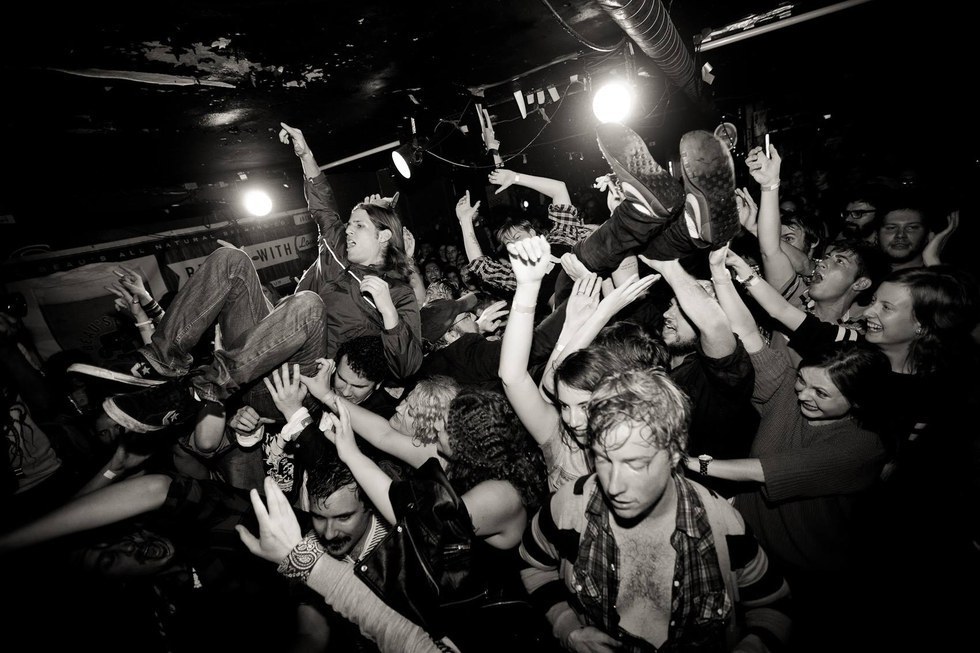
You add more bodies into a "mosh pit" to hope for more collisions. You have increased
temperature
concentration
pressure
catalyst
Why does a higher concentration increase the rate of reaction?
it increases the amount of reactants
it lowers the activation energy
it increases the energy of particle collisions
it increases the frequency of collisions
Which one shows that a chemical reaction has occurred?
dissolving
melting
formation of a gas
bending

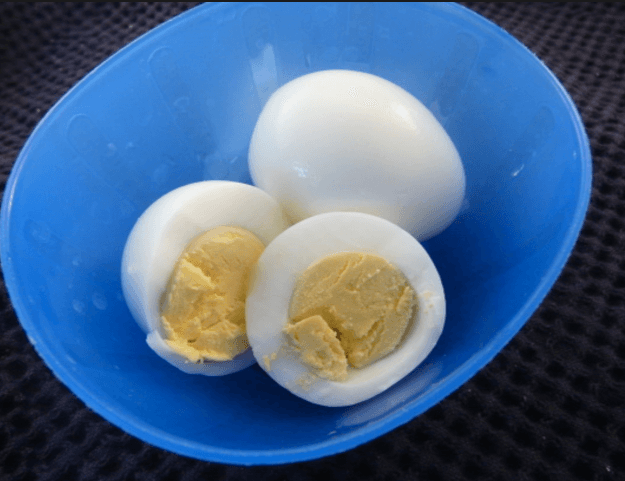
Hard-boiled eggs are the a result of a chemical change because
the eggs are the same size before vs after.
the eggs have different properties (smell, taste, color) before vs after.
the eggs weigh the same before vs after.
the eggs went through a phase change.
On a camping trip, Mr. Markowitz roasts a marshmallow in the campfire. He notices that the roasted marshmallow smells and tastes differently than the uncooked marshmallows. What change has taken place AND how does Mr. Markowitz know?
A chemical change because the marshmallow changed in taste, color, and smell
A chemical change because the marshmallow was heated up.
Only a physical change because the marshmallow changed in size
No change because the marshmallow is not a new substance
Which of the following is a clue that a chemical change has occurred? (Choose all correct answers.)
Formation of a gas (bubbles)
Color change
Phase change
Produces light or heat
Which of these is NOT a chemical reaction?
Single displacement
Synthesis
Decomposition
Stratification
Increase in temperature causes the particles to
slow down
move faster
stay apart from each other
move in the correct order
Why does a higher concentration increase the rate of reaction?
it increases the amount of reactants
it lowers the activation energy
it increases the energy of reactant particles
it increases the frequency of collision
Why does a higher temperature increase the rate of a reaction?
It increases both the frequency collision and energy of reactant particles
It only increases the frequency of collision
It only increases the energy of reactant particles
It reduces the activation energy of the reaction
Grinding an effervescent tablet into powder increases the rate of reaction due to increase of
concentration
total surface area
temperature
size
Which factors increase the rate of a reaction?
increasing temperature
increasing concentration
increasing total surface area
All of these
Increasing pressure causes the reacting particles
to bond together
to repel from each other
gain more kinetic energy
to move closer together
Increasing the temperature gives particles more __________.
time
energy
space
frequency
As the frequency of ________________ collision increases, the rate of reaction increases.
time
speed
effective
efficient
You add more bodies into a "mosh pit" to hope for more collisions. You have increased
temperature
concentration
pressure
catalyst
Why does a higher concentration increase the rate of reaction?
it increases the amount of reactants
it lowers the activation energy
it increases the energy of particle collisions
it increases the frequency of collisions
Which one shows that a chemical reaction has occurred?
dissolving
melting
formation of a gas
bending
Hard-boiled eggs are the a result of a chemical change because
the eggs are the same size before vs after.
the eggs have different properties (smell, taste, color) before vs after.
the eggs weigh the same before vs after.
the eggs went through a phase change.
On a camping trip, Mr. Markowitz roasts a marshmallow in the campfire. He notices that the roasted marshmallow smells and tastes differently than the uncooked marshmallows. What change has taken place AND how does Mr. Markowitz know?
A chemical change because the marshmallow changed in taste, color, and smell
A chemical change because the marshmallow was heated up.
Only a physical change because the marshmallow changed in size
No change because the marshmallow is not a new substance
Which of the following is a clue that a chemical change has occurred? (Choose all correct answers.)
Formation of a gas (bubbles)
Color change
Phase change
Produces light or heat
Which of these is NOT a chemical reaction?
Single displacement
Synthesis
Decomposition
Stratification
What are we trying to find out when investigating rate of reaction?
The speed of the reaction
The amount of gas the reaction produce
The change in color
The concentration of the solution
What instrument are needed to measure the speed of reaction?
Stopwatch or clock
Thermometer
Gas syringe
Which chemical reaction is the gas syringe useful?
Chemical reaction that produces gas
Chemical reaction that changes color
Chemical reaction that changes temperature
Chemical reaction that changes concentration
What is the function of gas syringe?
Collect and measure amount of gas produced
Collect and measure amount of liquid produced
Measure the time it takes to become full
A student use gas syringe to investigate rate of reaction for two chemical reactions.
How can he tell which one is faster?
Find out which one collect more gas in a shorter time
Find out which one collect the most gas after reaction ended
Find out the temperature of the chemical when no more gas are collected
Which of the following is the proper practical method when investigating rate of chemical reaction that produces gas?
Check the amount of gas collected every minute.
Check the amount of gas collected every hour.
Check the amount of gas collected after the reaction ended.

A student collects the data of two chemical reactions as shown.
How much gas is produced in experiment 1 after the reaction ended?
(a)
Which one have a higher rate of reaction?
Experiment 1
Experiment 2
Both have the same rate of reaction
How do we know experiment 1 have higher rate of reaction?
After 1 min, experiment 1 produce more gas than experiment 2
After 7 min, experiment 1 produce same amount of gas as experiment 2
Before it started, experiment 1 and experiment 2 have 0 cm3 of gas.

The graph shows two experiment done in different temperature of chemical.
What does the graph tells us?
Experiment A have higher rate of reaction
Experiment B have higher rate of reaction
Experiment A and B have the same rate of reaction
The graph shows two experiment done in different temperature of chemical.
How do we know experiment A have higher rate of reaction?
Experiment A have a steep graph
Experiment A have a flat graph towards the end
Experiment A is labelled in red
The graph shows two experiment done in different temperature of chemical.
What does the graph tells us?
The higher the temperature of chemical, the higher the rate of reaction
The higher the temperature of chemical, the higher amount of gas produced
The higher the temperature of chemical, the longer it takes to complete the reaction
A chemical reaction causes a color change and become opaque after a few minute.
How do we find the rate of reaction?
Find out which one become opaque faster
Find out which one become opaque slower
Find out which one change temperature faster
Find out which one change temperature slower
Which of the following is the proper practical method when measuring rate of chemical reaction that change color? (Pick 3 answers)
Put a mark under the beaker containing the chemicals
Look at the mark from above the beaker
Look at the mark from below the beaker
Measure the temperature until we cannot see the mark.
Measure the time until we cannot see the mark.

A student collects the data of five chemical reactions as shown.
How long does the chemicals in experiment 2 become opaque?
(a)
Which experiment have higher rate of reaction?
Experiment 5
Experiment 1
Experiment 2
Experiment 3
Experiment 4
How do we know experiment 5 have higher rate of reaction?
It take shorter time to become opaque
It have higher concentration of sodium thiosulfate
It take longer time to become opaque
What does the experiment tells us?
The higher the concentration of solution, the higher the rate of reaction
The higher the concentration of solution, the solution become more opaque
The higher the concentration of solution, the more experiment take place
What are we trying to find out when investigating rate of reaction?
The speed of the reaction
The amount of gas the reaction produce
The change in color
The concentration of the solution
What instrument are needed to measure the speed of reaction?
Stopwatch or clock
Thermometer
Gas syringe
Which chemical reaction is the gas syringe useful?
Chemical reaction that produces gas
Chemical reaction that changes color
Chemical reaction that changes temperature
Chemical reaction that changes concentration
What is the function of gas syringe?
Collect and measure amount of gas produced
Collect and measure amount of liquid produced
Measure the time it takes to become full
A student use gas syringe to investigate rate of reaction for two chemical reactions.
How can he tell which one is faster?
Find out which one collect more gas in a shorter time
Find out which one collect the most gas after reaction ended
Find out the temperature of the chemical when no more gas are collected
Which of the following is the proper practical method when investigating rate of chemical reaction that produces gas?
Check the amount of gas collected every minute.
Check the amount of gas collected every hour.
Check the amount of gas collected after the reaction ended.
A student collects the data of two chemical reactions as shown.
How much gas is produced in experiment 1 after the reaction ended?
(a)
Which one have a higher rate of reaction?
Experiment 1
Experiment 2
Both have the same rate of reaction
How do we know experiment 1 have higher rate of reaction?
After 1 min, experiment 1 produce more gas than experiment 2
After 7 min, experiment 1 produce same amount of gas as experiment 2
Before it started, experiment 1 and experiment 2 have 0 cm3 of gas.
The graph shows two experiment done in different temperature of chemical.
What does the graph tells us?
Experiment A have higher rate of reaction
Experiment B have higher rate of reaction
Experiment A and B have the same rate of reaction
The graph shows two experiment done in different temperature of chemical.
How do we know experiment A have higher rate of reaction?
Experiment A have a steep graph
Experiment A have a flat graph towards the end
Experiment A is labelled in red
The graph shows two experiment done in different temperature of chemical.
What does the graph tells us?
The higher the temperature of chemical, the higher the rate of reaction
The higher the temperature of chemical, the higher amount of gas produced
The higher the temperature of chemical, the longer it takes to complete the reaction
A chemical reaction causes a color change and become opaque after a few minute.
How do we find the rate of reaction?
Find out which one become opaque faster
Find out which one become opaque slower
Find out which one change temperature faster
Find out which one change temperature slower
Which of the following is the proper practical method when measuring rate of chemical reaction that change color? (Pick 3 answers)
Put a mark under the beaker containing the chemicals
Look at the mark from above the beaker
Look at the mark from below the beaker
Measure the temperature until we cannot see the mark.
Measure the time until we cannot see the mark.
A student collects the data of five chemical reactions as shown.
How long does the chemicals in experiment 2 become opaque?
(a)
Which experiment have higher rate of reaction?
Experiment 5
Experiment 1
Experiment 2
Experiment 3
Experiment 4
How do we know experiment 5 have higher rate of reaction?
It take shorter time to become opaque
It have higher concentration of sodium thiosulfate
It take longer time to become opaque
What does the experiment tells us?
The higher the concentration of solution, the higher the rate of reaction
The higher the concentration of solution, the solution become more opaque
The higher the concentration of solution, the more experiment take place
Which factors increase the rate of a reaction?
increasing temperature
increasing concentration
increasing surface area
all of these
Reactions that give out heat to the surrounding are classified as one of the following:
Spontaneous
Exothermic
sluggish
Which of the following increase the reaction rate?
less surface area
lower temperature
increased concentration
What is the rate of reaction?
How fast a reaction is
How big a reaction is
How loud a reaction is
How can you increase the rate of a reaction?
Decrease the pressure
Decrease the concentration
Increase the concentration

Icing sugar has a greater ______ _____ than a solid cube of
sugar.
Surface Area
Catalyst
Temperature
The word for a substance that you react at the start of a chemical reaction...
Reaction
Reactant
Product
The result
The word for a substance created in a chemical reaction...
Reaction
Reactant
Product
Mass
Objects hitting each other
Collision
Catalyst
Explosion
Reaction
The speed at which a chemical reaction occurs
Fast
Slow
Rate
Ratio

The amount of something; how many particles in a volume of a mixture
Rate
Collision
Catalyst
Concentration
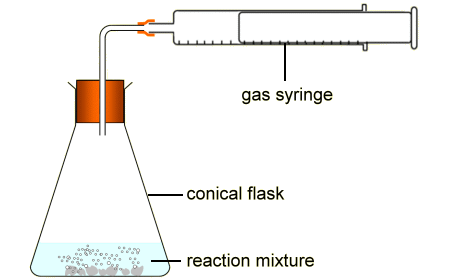
How is this equipment being used to measure the rate of reaction?
The gas syringe measures how much gas is produced in a certain time
The reaction mixture will increase in volume in a certain time
Which factors increase the rate of a reaction?
increasing temperature
increasing concentration
increasing surface area
all of these
Reactions that give out heat to the surrounding are classified as one of the following:
Spontaneous
Exothermic
sluggish
Which of the following increase the reaction rate?
less surface area
lower temperature
increased concentration
What is the rate of reaction?
How fast a reaction is
How big a reaction is
How loud a reaction is
How can you increase the rate of a reaction?
Decrease the pressure
Decrease the concentration
Increase the concentration
Icing sugar has a greater ______ _____ than a solid cube of
sugar.
Surface Area
Catalyst
Temperature
The word for a substance that you react at the start of a chemical reaction...
Reaction
Reactant
Product
The result
The word for a substance created in a chemical reaction...
Reaction
Reactant
Product
Mass
Objects hitting each other
Collision
Catalyst
Explosion
Reaction
The speed at which a chemical reaction occurs
Fast
Slow
Rate
Ratio
The amount of something; how many particles in a volume of a mixture
Rate
Collision
Catalyst
Concentration
How is this equipment being used to measure the rate of reaction?
The gas syringe measures how much gas is produced in a certain time
The reaction mixture will increase in volume in a certain time
what is the collision theory?
chemical reactions can only take place when the reacting particles collide with each other. the collisions must not have sufficient energy.
the speed at which a chemical reaction takes place this is defined as proportional to increase in concentration
physical reactions can only take place when the reacting particles collide with each other. the collisions must have sufficient energy.
chemical reactions can only take place when the reacting particles collide with each other. the collisions must have sufficient energy.
The higher the concentration, the more _______ in a given volume
solvent only
particles only
molecules only
all of the above
The _____ of a chemical reaction _____when the_____ of one or more of the reactants increases
rate, increases, concentration
particles, increases, concentration
rate, decreases, concentration
particles, decreases, concentration
the more particles, the higher the _____-
collisions
frequency of collisions
activation energy
temperature
the higher the frequency of collisions, the higher the ____
chance of collision
chance of unsuccessful collisions
chance of successful collisions
chance of energetic collisions
if the concentration of reactants is increased, there are more reactant particles moving together.
true
false
concentration is not from the factors that affect the rate of reaction.
true
false
decreasing the concentration of a reactant in a solution, will decrease the rate of a reaction
true
false
what is the collision theory?
chemical reactions can only take place when the reacting particles collide with each other. the collisions must not have sufficient energy.
the speed at which a chemical reaction takes place this is defined as proportional to increase in concentration
physical reactions can only take place when the reacting particles collide with each other. the collisions must have sufficient energy.
chemical reactions can only take place when the reacting particles collide with each other. the collisions must have sufficient energy.
The higher the concentration, the more _______ in a given volume
solvent only
particles only
molecules only
all of the above
The _____ of a chemical reaction _____when the_____ of one or more of the reactants increases
rate, increases, concentration
particles, increases, concentration
rate, decreases, concentration
particles, decreases, concentration
the more particles, the higher the _____-
collisions
frequency of collisions
activation energy
temperature
the higher the frequency of collisions, the higher the ____
chance of collision
chance of unsuccessful collisions
chance of successful collisions
chance of energetic collisions
if the concentration of reactants is increased, there are more reactant particles moving together.
true
false
concentration is not from the factors that affect the rate of reaction.
true
false
decreasing the concentration of a reactant in a solution, will decrease the rate of a reaction
true
false
List four factors that affects the rate of a reaction
temperature
concentration
surface area
volume
catalysts
How does a catalyst work in speeding up a reaction?
By lowering the activation energy or reaction
by giving them more energy
by making them more available
Why does a higher concentration increase the rate of reaction?
it increases the amount of reactants
it lowers the activation energy
it increases the energy of particle collisions
it increases the frequency of particle collisions
Why does a higher temperature increase the rate of a reaction?
it increases both the frequency and energy of particle collisions
it only increases the frequency of particle collisions
it only increases the energy of particle collisions
it reduces the activation energy of the reaction
what factors can affect the value of the activation energy of a reaction?
The presence of a catalyst
changes in temperature
changes in concentration of the reactants
changes in pressure
Grinding a effervescent tablet into powder increases the rate of reaction due to increased
concentration
surface area
temperature
reactants
The ______________is required to break the bonds of the reactants.
Carbonic energy
Activation energy
Plutonic energy
Energi Gaib
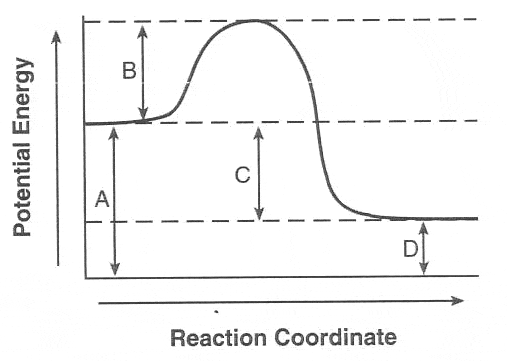
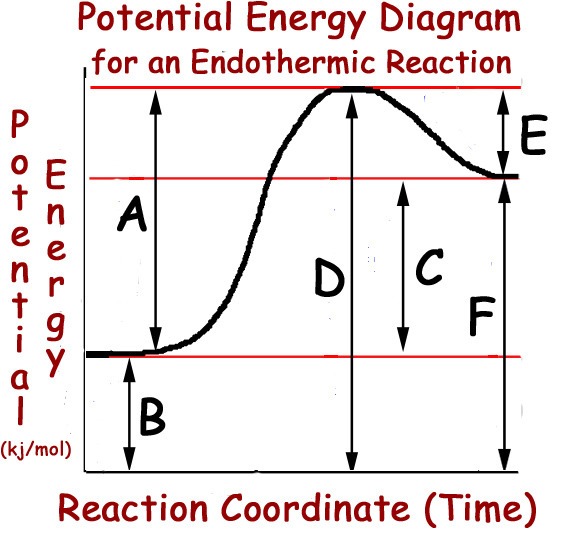
What type of reaction is this?
Endothermic
Exothermic
A chemical reaction in which energy is absorbed is ______________.
an endothermic reaction
an exothermic reaction
a single replacement reaction
a double replacement reaction

Table 4 shows the total volume of gas evolved at different intervals for the dissociation of hydrogen peroxide.
What is the average rate of reaction in the second minute?
14.0 cm3 min-1
16.0 cm3 min-1
18.0 cm3 min-1
28.0 cm3 min-1
When we investigate the rate of reaction we are looking at the...
amount of product formed
speed of reaction
concentration of reacting particles
combining reactants with products
What is the overall order of reaction?
What will happen to the rate of reaction if the concentration of A is doubled and the concentration of B is tripled?
Reaction order defines...
how many reactions a reactant can do
how the rate is affected by the concentration of that reactant
the weight of reactants of a chemical reaction
the order in which the reactants line-up to react and form products
What is the letter used to represent the Specific rate constant?
t
p
k
l
To find the reaction order of a reactant we...
look at the superscript number
look at the big numbers
add all the subscripts up together
How do we find the overall order of a chemical reaction?
Add all the reaction orders of each reactant
Subtract all the reaction orders of each reactant
Multiplyall the reaction orders of each reactant
We need to find moles, add them all together and multiply by 100
If the concentration of [A] is doubled, and the rate of the reaction also doubles. What reaction order is [A]?
Zero-order
First-order
Second-order
Triple-order
Look at the rate equation: Rate=k[H2O][HCl]
What is the overall order of the reaction?
first-order
second-order
third-order
fourth-order
List four factors that affects the rate of a reaction
temperature
concentration
surface area
volume
catalysts
How does a catalyst work in speeding up a reaction?
By lowering the activation energy or reaction
by giving them more energy
by making them more available
Why does a higher concentration increase the rate of reaction?
it increases the amount of reactants
it lowers the activation energy
it increases the energy of particle collisions
it increases the frequency of particle collisions
Why does a higher temperature increase the rate of a reaction?
it increases both the frequency and energy of particle collisions
it only increases the frequency of particle collisions
it only increases the energy of particle collisions
it reduces the activation energy of the reaction
what factors can affect the value of the activation energy of a reaction?
The presence of a catalyst
changes in temperature
changes in concentration of the reactants
changes in pressure
Grinding a effervescent tablet into powder increases the rate of reaction due to increased
concentration
surface area
temperature
reactants
The ______________is required to break the bonds of the reactants.
Carbonic energy
Activation energy
Plutonic energy
Energi Gaib
What type of reaction is this?
Endothermic
Exothermic
A chemical reaction in which energy is absorbed is ______________.
an endothermic reaction
an exothermic reaction
a single replacement reaction
a double replacement reaction
Table 4 shows the total volume of gas evolved at different intervals for the dissociation of hydrogen peroxide.
What is the average rate of reaction in the second minute?
14.0 cm3 min-1
16.0 cm3 min-1
18.0 cm3 min-1
28.0 cm3 min-1
When we investigate the rate of reaction we are looking at the...
amount of product formed
speed of reaction
concentration of reacting particles
combining reactants with products
What is the overall order of reaction?
What will happen to the rate of reaction if the concentration of A is doubled and the concentration of B is tripled?
Reaction order defines...
how many reactions a reactant can do
how the rate is affected by the concentration of that reactant
the weight of reactants of a chemical reaction
the order in which the reactants line-up to react and form products
What is the letter used to represent the Specific rate constant?
t
p
k
l
To find the reaction order of a reactant we...
look at the superscript number
look at the big numbers
add all the subscripts up together
How do we find the overall order of a chemical reaction?
Add all the reaction orders of each reactant
Subtract all the reaction orders of each reactant
Multiplyall the reaction orders of each reactant
We need to find moles, add them all together and multiply by 100
If the concentration of [A] is doubled, and the rate of the reaction also doubles. What reaction order is [A]?
Zero-order
First-order
Second-order
Triple-order
Look at the rate equation: Rate=k[H2O][HCl]
What is the overall order of the reaction?
first-order
second-order
third-order
fourth-order

